
Executive Overview
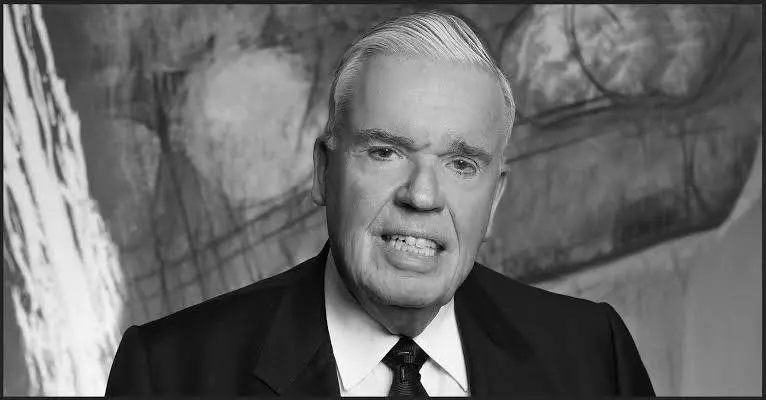
The global business community and the cultural heartland of Germany are in mourning following the announcement by the Hamburg State Opera confirming the death of Klaus-Michael Kühne. The billionaire entrepreneur, logistics titan, and extraordinarily generous cultural patron passed away at the age of 89 in his adopted home of Switzerland, following a protracted illness. Kühne’s death marks the end of an era for European commerce and philanthropy, closing the chapter on the life of one of Germany’s most influential industrial figures and financial powerhouses.
While globally recognized as the mastermind behind the multi-national transport and logistics colossus Kühne+Nagel, as well as a pivotal stakeholder in aviation giant Lufthansa and shipping line Hapag-Lloyd, Kühne’s impact on his native Hamburg transcends balance sheets and corporate boardrooms. He was a visionary who viewed wealth not merely as an instrument of economic power, but as a public trust—a vehicle through which to elevate human culture, architectural grandeur, and artistic excellence.
At the center of his philanthropic legacy stands a monumental undertaking: the commissioning and funding of a brand-new, state-of-the-art opera house for Hamburg. Planned in close collaboration with the Kühne Foundation, this architectural and cultural behemoth is destined to house the Hamburg State Opera, the Hamburg Ballet, and the Hamburg Philharmonic State Orchestra under one unified roof. Upon completion, the facility is slated to be handed over entirely as a gift to the Free and Hanseatic City of Hamburg—a crowning capstone to a lifetime of civic devotion.
As arts institutions, political leaders, and corporate titans come to terms with his passing, tributes have flooded in from across Europe. Kühne leaves behind a legacy defined by an unwavering commitment to Italian opera, an unmatched philanthropic footprint in the performing arts, and an economic footprint that helped anchor Germany’s position in global trade. This in-depth retrospective examines the extraordinary life, industrial empire, cultural patronage, and enduring legacy of Klaus-Michael Kühne.
Detailed Chronology: From Family Roots to Global Hegemony
Early Life and Familial Foundations
Born in Hamburg in June 1937, Klaus-Michael Kühne was destined to inherit a legacy built on the foundations of global trade. His grandfather, August Kühne, had co-founded Kühne+Nagel in Bremen in 1890 alongside Friedrich Nagel. Over the subsequent decades, the firm evolved from a regional forwarding agency into an international freight-forwarding powerhouse.
Kühne grew up immersed in the exacting disciplines of international commerce. Following the completion of his secondary education, he undertook rigorous banking and shipping apprenticeships in Germany and across Europe, absorbing the intricate mechanics of trade finance, maritime logistics, and corporate management.
Stepping into the Vanguard of Logistics
In 1958, at the young age of 21, Klaus-Michael Kühne joined the family business as a personally liable partner. It was a baptism by fire, but one for which he was uniquely prepared. Working alongside his father, Alfred Kühne, the young executive demonstrated a sharp instinct for expansion and modernization.
When Alfred Kühne passed away in 1981, Klaus-Michael assumed the mantle of leadership, taking absolute control of the company’s strategic vision. Under his stewardship, Kühne+Nagel underwent a radical transformation. He orchestrated the company’s structural pivot from traditional freight forwarding into an integrated global supply-chain manager, capitalizing early on the containerization revolution and the accelerating pace of globalization.
To optimize operational efficiency and secure favorable tax environments, Kühne engineered the relocation of the company’s corporate headquarters to Switzerland—first to Pfäffikon and later to Schindellegi—while maintaining deep, unbreakable emotional and structural ties to his native Hamburg. By the turn of the 21st century, Kühne had transformed Kühne+Nagel into one of the largest ocean and air freight forwarders on the planet.
Expanding the Empire: Aviation, Maritime, and Beyond
Kühne’s business acumen was not restricted to logistics. Armed with immense capital reserves, he evolved into an activist investor and corporate kingmaker within the German transport and aviation sectors.
- Hapag-Lloyd: Kühne maintained a profound interest in maritime shipping, eventually becoming the principal owner of Hapag-Lloyd, one of the world’s leading container shipping lines. Through calculated capital injections and strategic maneuvering, he helped steer the carrier through volatile shipping cycles and fierce international competition.
- Deutsche Lufthansa AG: During the existential crises faced by the aviation industry—most notably the COVID-19 pandemic—Kühne emerged as a crucial stabilizing force. By acquiring a substantial equity stake in Germany’s flag carrier, he secured significant influence over the nation’s aviation infrastructure, demonstrating a nationalist willingness to protect strategic corporate assets.
- Real Estate and Private Equity: Beyond transport, his holding entities managed vast portfolios of real estate and private equity investments, cementing his status among the wealthiest and most formidable members of the European economic elite.
Supporting Context & Metrics: The Scale of Kühne’s Influence
To truly comprehend the magnitude of Klaus-Michael Kühne’s passing, one must examine the hard metrics of his economic and philanthropic reach. He operated at a scale matched by very few industrialists of the modern era.
Economic Footprint
- Net Worth: At the time of his passing, financial indices consistently ranked Kühne among the richest individuals in the world, with an estimated net worth hovering in the tens of billions of dollars.
- Kühne+Nagel Market Dominance: Operating in over 100 countries with tens of thousands of employees, Kühne+Nagel handles millions of tons of cargo annually, serving as a critical artery of global commerce.
- Shareholder Power: As the honorary chairman and majority owner of Kühne+Nagel, alongside his substantial stakes in Hapag-Lloyd and Lufthansa, Kühne held a veto-like gravity within German transportation policy and corporate governance.
Philanthropic Impact and Cultural Metrics
The Kühne Foundation (Kühne-Stiftung), established by the family and heavily endowed by Klaus-Michael, serves as the primary engine for his philanthropic endeavors. While the foundation actively supports logistics education and economic research at institutions like the Kühne Logistics University (KLU) in Hamburg, its cultural footprint is legendary.
- The Hamburg Trinity: The foundation has provided uninterrupted, high-value financial support to the Hamburg State Opera, the Hamburg Ballet, and the Hamburg Philharmonic State Orchestra.
- International Perspectives: Kühne’s funding was instrumental in underwriting ambitious international touring schedules, high-concept modern productions, and artist-in-residence programs that elevated the global prestige of Hamburg’s cultural institutions.
- The New Opera House Project: The crown jewel of his philanthropy is the visionary initiative to construct a state-of-the-art lyric theater complex in Hamburg. Conceived to replace outdated infrastructure and provide a unified, acoustically peerless home for opera, ballet, and symphonic music, the project represents a multi-hundred-million-euro investment designed to rival any cultural facility in the world. True to his civic ethos, the entire complex is to be gifted outright to the city upon completion.
Official Statements: Tributes from the Cultural Vanguard
The cultural community of Hamburg and Germany at large responded to the news with profound grief, tempered by deep gratitude for Kühne’s transformative contributions.
Tobias Schock, General Director of the Hamburg State Opera, issued a deeply personal and emotionally resonant statement on behalf of the institution:
"A sad day for Hamburg State Opera! With Klaus-Michael Kühne, our institution is losing not only one of the longest-standing and most generous patrons in its history, but also a close friend. Klaus-Michael Kühne’s love for our art form, for the artists, especially for the great repertoire of Italian opera, was a defining characteristic that shaped his personality."
Schock emphasized the visionary nature of Kühne’s final gift to the city:
"With his initiative for a new opera house, Klaus-Michael Kühne gave this personal passion a form that served the common good. The endeavour to give his hometown a new home for opera, ballet and the orchestra was and is unique — an extraordinary expression of his connection to Hamburg and a legacy of great significance. His commitment to Hamburg’s culture was shaped by the convictions that art enriches a city, strengthens its international profile and at the same time creates something lasting for generations to come."
Additional statements poured in from political leaders in the Free and Hanseatic City of Hamburg, trade unions, and cultural directors across Europe, all highlighting his unique ability to bridge the worlds of unyielding capitalism and transcendent human artistry.
Future Outlook: Navigating the Post-Kühne Era
The passing of Klaus-Michael Kühne raises critical questions regarding the future governance of his vast corporate empire and the seamless completion of his monumental philanthropic projects.
Corporate Continuity
In the corporate sphere, Kühne had long anticipated the necessity of institutional permanence. Both Kühne+Nagel and his holding structures have been engineered with robust governance frameworks designed to weather ownership transitions. Professional management teams, seasoned executives, and tightly bound family trustees ensure that his operational philosophy will endure. His stakes in Hapag-Lloyd and Lufthansa are similarly anchored by long-term strategic agreements that insulate them from destabilizing shareholder flight.
The Completion of the Opera House
For the citizens of Hamburg, the immediate concern rests upon the realization of the new opera house project. Foundation representatives and municipal authorities have moved quickly to reassure the public that the initiative is fully financed and legally structured to proceed without interruption. The project, which embodies Kühne’s dying wish for his hometown, is legally bound by endowment agreements and foundational charters overseen by the Kühne Foundation board.
When the curtains finally rise on the new lyric theater, it will stand not merely as a venue for Verdi, Puccini, and contemporary ballets, but as a living monument to a man who understood that true greatness requires a city to nourish both its economic engines and its artistic soul.
Conclusion
Klaus-Michael Kühne was a man of distinct contradictions and extraordinary capabilities. He was a ruthless pragmatist in the boardroom, commanding vast logistical networks that kept the wheels of global trade turning through pandemics, recessions, and geopolitical shifts. Yet, away from the ledgers and shipping containers, he was a romantic deeply enamored with the soaring melodies of Italian opera and the ephemeral grace of the ballet.
His life demonstrates how private capital can be successfully harnessed for the public enrichment of society. As Hamburg and the international business community bid farewell to one of their most towering figures, Klaus-Michael Kühne’s legacy remains safely anchored—etched into the skyline of global commerce, vibrating through the orchestral halls of his beloved hometown, and immortalized in the bricks and mortar of a cultural future he fought so passionately to build.