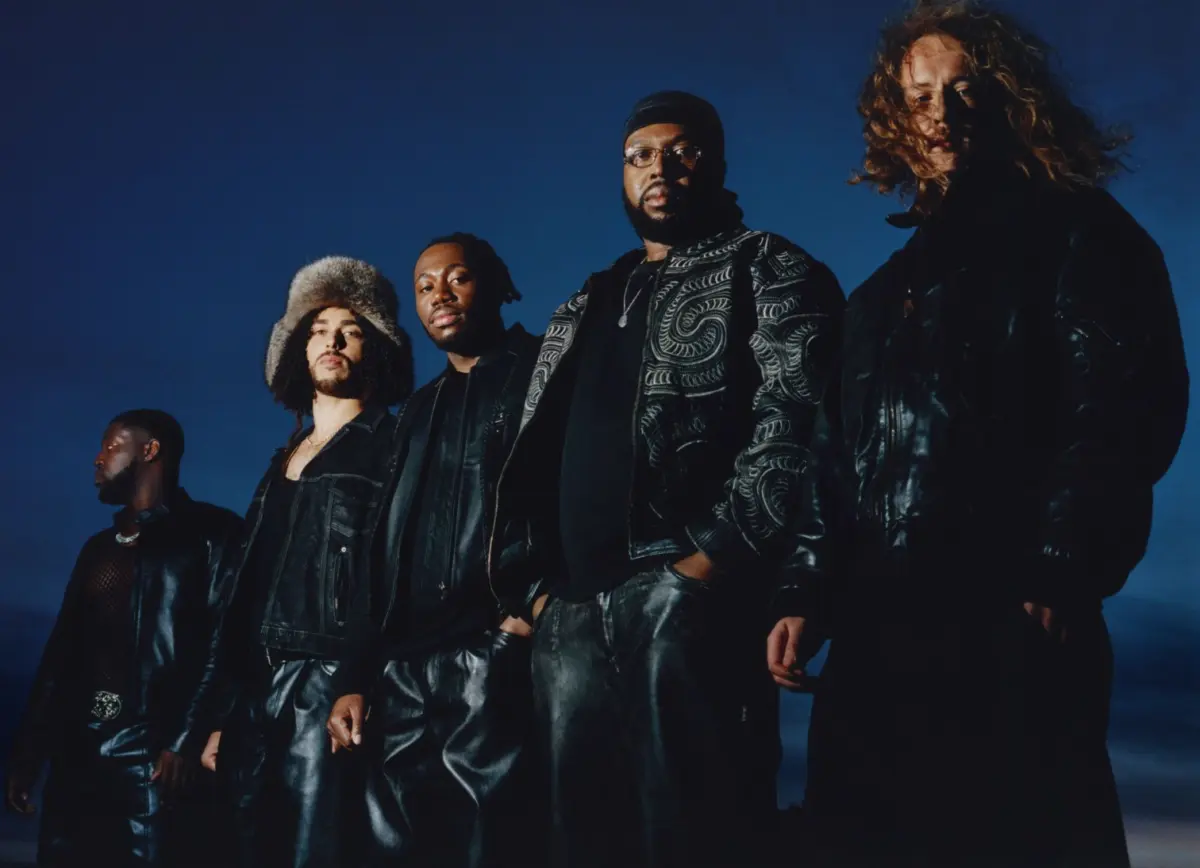

Executive Overview
In the contemporary landscape of British music, few acts have pushed the boundaries of genre, culture, and social commentary quite like the genre-defying ensemble Ezra Collective. As the group continues its relentless ascent—marked by Mercury Prize-winning triumph and a global fanbase—they have pulled back the curtain on their latest sonic exploration: a high-energy, deeply reflective single titled "Jubilee Feeling."
Positioned as the connective tissue of a grander transatlantic and transnational musical trilogy, "Jubilee Feeling" arrives on the heels of two critically acclaimed preceding singles: “Only Love,” which featured British-Gambian rapper Pa Salieu and drew heavily upon the vibrant rhythmic traditions of West Africa; and “Well Organised,” featuring Jamaican songstress Lila Iké, which infused the project with the rich, sun-drenched frequencies of the Caribbean.
Now, with "Jubilee Feeling," Ezra Collective brings these vast geographical and historical threads home to London. The track serves as a joyous, sweat-drenched celebration of the movement of people, culture, and sound across generations. It examines, with both academic reverence and dancefloor abandon, how these converging diasporic streams have fundamentally shaped the architecture of contemporary British music.
At its core, the song is an ambitious marriage of two distinct auditory worlds: the sophisticated, improvisational cadences of UK Jazz and the pulsing, nostalgic euphoria of the early-2010s UK Funky House movement. Spearheaded by the band’s visionary drummer and bandleader, Femi Koleoso, the track is much more than a club anthem; it is a philosophical exploration of grace, forgiveness, and unearned joy. In unpacking the biblical, personal, and cultural roots of the word "Jubilee," Koleoso and his bandmates have crafted a manifesto for collective liberation through rhythm.
Detailed Chronology: The Genesis and Evolution of a Trilogical Journey
To fully appreciate the cultural weight of "Jubilee Feeling," one must examine the chronological progression of the creative cycle that led to its creation. Ezra Collective has never operated in a vacuum; their art is deeply rooted in community, heritage, and the continuous exchange of ideas between London and the wider global diaspora.
Phase One: West African Roots and "Only Love"
The journey began with an intentional look toward the African continent, specifically West Africa, which has long served as a wellspring of rhythm for modern western popular music. Collaborating with Pa Salieu—an artist celebrated for his raw, uncompromising lyricism and his deep ties to both Coventry and The Gambia—the band released “Only Love.”
This opening salvo established the foundational thesis of the project: that British jazz cannot be understood without acknowledging its African roots. The track pulsed with polyrhythmic percussion, bridging the gap between highlife, Afrobeat, and the gritty realities of contemporary UK urban life. It was an exercise in homecoming, setting a high bar for the cultural depth of the subsequent releases.
Phase Two: Caribbean Currents and "Well Organised"
Following the West African exploration, the ensemble cast its gaze westward across the Atlantic to the Caribbean, partnering with reggae and dancehall luminary Lila Iké for “Well Organised.” This second installment introduced a different kind of warmth and rhythmic bounce to the project.
The Caribbean influence manifest in the track’s undulating basslines and off-beat skanks, highlighting the profound, historical cross-pollination between Caribbean sound system culture and London’s burgeoning underground music scenes. By the time “Well Organised” made waves across international radio stations, it was clear that Ezra Collective was building something systematic—a map of the black musical diaspora anchored by the capital city of the United Kingdom.
Phase Three: The London Convergence and "Jubilee Feeling"
With "Jubilee Feeling," the trilogy reaches its physical and spiritual climax. Bringing the journey back to London, the song acts as a melting pot where West African polyrhythms, Caribbean cadence, and British underground dance culture collide.
Chronologically, the track taps into a very specific era of UK dance music history: the early-2010s Funky House explosion. While many contemporary jazz acts shy away from commercial dance music of the recent past, Ezra Collective leans into it with full force. By fusing the harmonic complexity and instrumental virtuosity of UK Jazz with the four-on-the-floor, syncopated bounce of Funky House, the band has meticulously engineered a bridge between the concert hall and the rave.
Supporting Context & Metrics: The Anatomy of a Movement
To understand the cultural significance of "Jubilee Feeling," one must contextualize the musical ecosystems it draws from—specifically, the enduring legacy of UK Jazz and the golden era of UK Funky House.
The Renaissance of UK Jazz
Over the past decade, London has established itself as the undisputed epicentre of a global jazz renaissance. Spearheaded by artists such as Shabaka Hutchings, Nubya Garcia, Kokoroko, and, of course, Ezra Collective, this movement broke away from the traditional, academic stagnation that had occasionally plagued the genre. Instead, these musicians infused jazz with hip-hop, grime, afrobeat, and broken beat.
According to industry metrics and streaming data compiled by organizations like the BPI (British Phonographic Industry), jazz consumption in the UK has experienced a staggering upward trajectory, largely driven by younger demographics. Audiences aged 18 to 35 now make up the lion’s share of jazz gig attendees. Ezra Collective has been at the vanguard of this demographic shift, proving that jazz can be both intellectually rigorous and fiercely danceable.
The Undervalued Legacy of UK Funky House
While jazz has received critical re-evaluation, the early-2010s UK Funky House movement has often been overlooked in mainstream music histories, despite its massive impact on British club culture. Emerging from the ashes of 2-step garage and grime, UK Funky combined Latin-infused percussion, tribal house rhythms, and soulful vocal hooks (famously championed by artists like Crazy Cousinz, Katy B, and Donae’o).
By resurrecting this sonic palette, Ezra Collective is performing a vital act of musical preservation. They are arguing that UK Funky House is just as valid a component of Britain’s modern jazz-adjacent heritage as bebop or post-bop. The integration of these genres metrics-wise translates into high-energy live sets capable of converting festival crowds into massive, synchronized dance parties.
Official Statements & Philosophical Insights: Deconstructing the "Jubilee Feeling"
At the heart of the single’s conceptual framework is a deeply personal and philosophical meditation by drummer and bandleader Femi Koleoso. Speaking on the inspiration behind the song, Koleoso opens up about the linguistic, spiritual, and emotional dimensions of the word "Jubilee."
"The word Jubilee is very precious to me," Koleoso explains. "Not just because it’s the name of the church I grew up at, and the name of the youth group I work at, but its actual meaning — ‘the year of Jubilee, a year when everyone’s debts are settled, all prisoners set free’ — is almost like an equalisation day, a celebration to say we can start all over again."
This definition moves the concept of jubilee far beyond royal celebrations or calendar milestones, returning it to its radical biblical roots: a systemic reset button where societal hierarchies are temporarily dismantled, debts are forgiven, and the marginalized are liberated.
Koleoso extends this theological and social concept into the realm of human emotion, tying it directly to the listener’s internal state:
"I often think about what that feeling of Jubilee must be like; being someone who maybe doesn’t even deserve to be set free, to have your debts wiped, but it happens anyway. I think that is such a picture of euphoric joy."
It is this specific brand of joy—unmerited, overwhelming, and liberating—that the band sought to capture in the recording studio. For Ezra Collective, that exact emotional resonance was mirrored in the dancefloors of their youth.
"Something that brought me serious, euphoric joy is the Funky House movement of the early 2010s," Koleoso continues. "Ezra Collective, we as a band, love this music — it makes us dance, it makes us feel great. So, ‘Jubilee Feeling’ is a song that marries UK Jazz and Funky House to embody this feeling that we’ve called the Jubilee Feeling: a joy that you almost don’t deserve."
This quote crystallizes the genius of the track. It treats the visceral, physical release of a dancefloor drop with the same gravitas and spiritual depth as a profound theological redemption.
Future Outlook: What "Jubilee Feeling" Portends for Ezra Collective and British Music
As "Jubilee Feeling" makes its way into the rotation of international DJs, streaming playlists, and live concert setlists, it signals an exciting chapter for the future of Ezra Collective and the broader contemporary music scene.
Redefining Genre Boundaries
The success of this three-part single release strategy—traversing West Africa, the Caribbean, and London—proves that modern British music refuses to be pigeonholed. As artists increasingly draw from hyphenated identities and global musical lineages, rigid genre boundaries continue to dissolve. Ezra Collective is showing that jazz is not a museum piece; it is a living, breathing language capable of absorbing any rhythm it encounters.
Live Performance Evolution
For a band renowned globally for their electrifying live shows, "Jubilee Feeling" is destined to become a permanent staple of their concert repertoire. The synergy between the intricate, live instrumentation of a jazz quintet and the hypnotic, driving percussion of UK Funky House creates an irresistible live dynamic. Festival organizers and venue bookers can anticipate packed fields and sweaty, euphoric crowds as the band takes this material on the road.
A Lasting Cultural Blueprint
Ultimately, "Jubilee Feeling" offers a cultural blueprint for how artists can honor their roots while innovating for the future. By connecting the spiritual gravity of jubilee with the sweat and syncopation of UK club culture, Ezra Collective has delivered more than just a hit single—they have provided a soundtrack for collective healing and unearned, radical joy. As listeners dive into this latest chapter, they are invited not just to listen, but to dance, to remember, and to experience their own personal year of release.