
Executive Overview
For generations, music educators facing underfunded departments, limited performance spaces, and an absence of robust feeder programs have shared a familiar, dispiriting refrain: "I don’t have the budget, the venue, or a massive feeder program to build a thriving music department." It is a narrative of scarcity that has forced countless fine arts programs into stagnation or outright elimination.
Yet, exceptions to this rule exist—narratives driven not by deep financial pockets, but by sheer pedagogical vision, community outreach, and an unyielding commitment to student agency.
Enter Chelsey Sweatman. Twelve years ago, Sweatman stepped into Bridgetown Middle School facing a reality familiar to educators nationwide: a practically non-existent choir program, a non-existent booster budget, a complete lack of a grand auditorium, and a meager roster of enrolled singers. Today, Bridgetown Middle School boasts a staggering 170-student choral powerhouse—representing nearly 30% of the entire student body. Her singers routinely sell out three-night runs of musical theater productions in an intimate "black box" theater and consistently bring home top ratings at competitive regional festivals.
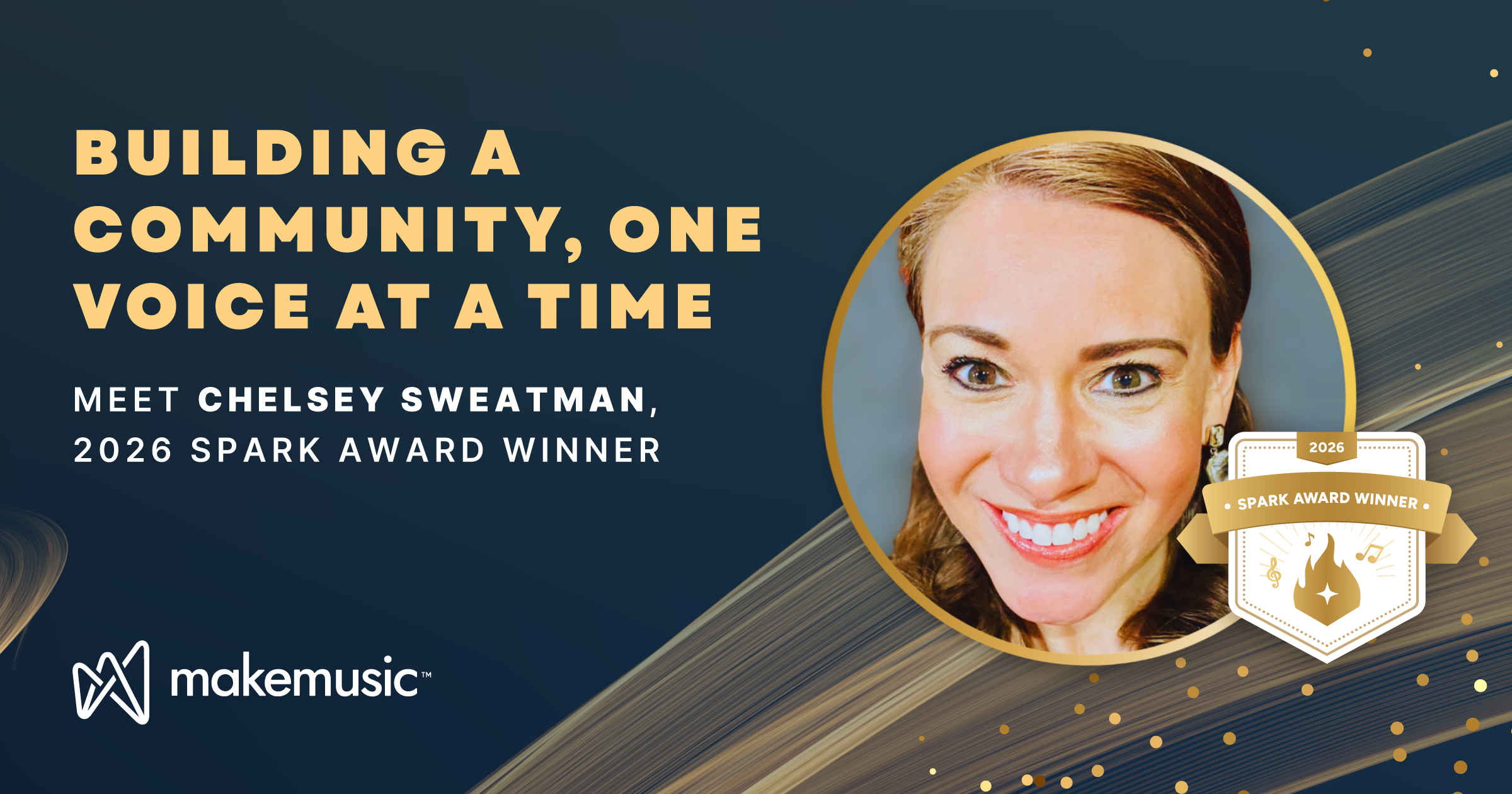
Presented jointly by Alfred Music and MakeMusic, the 2026 Spark Award recognizes Sweatman not merely for her enrollment numbers, but for her blueprint of resilience. Her triumph proves a vital counter-narrative to modern educational pessimism: culture, human connection, and student-led empowerment can consistently outpace financial deficits. This report examines Sweatman’s journey from isolation to institutional cornerstone, offering a masterclass in modern music education leadership.
Detailed Chronology: From Zero to 170
The Early Years: Navigating the Scarcity Paradigm
When Sweatman accepted her position at Bridgetown Middle School over a decade ago, she inherited a blank slate. There was no established tradition of choral excellence, no corporate sponsorships, and no rich pipeline of students matriculating from elementary feeder programs. For many educators, this environment serves as a justification for lowered expectations. For Sweatman, it served as a creative mandate.
Recognizing that she could not wait for external funding or administrative windfalls, Sweatman adopted a localized, grassroots approach to curriculum building. She understood that if the program could not rely on an existing school culture, she would have to manufacture that culture herself, one student and one family at a time.
The Cincinnati Reds Partnership: Scaling Community Presence
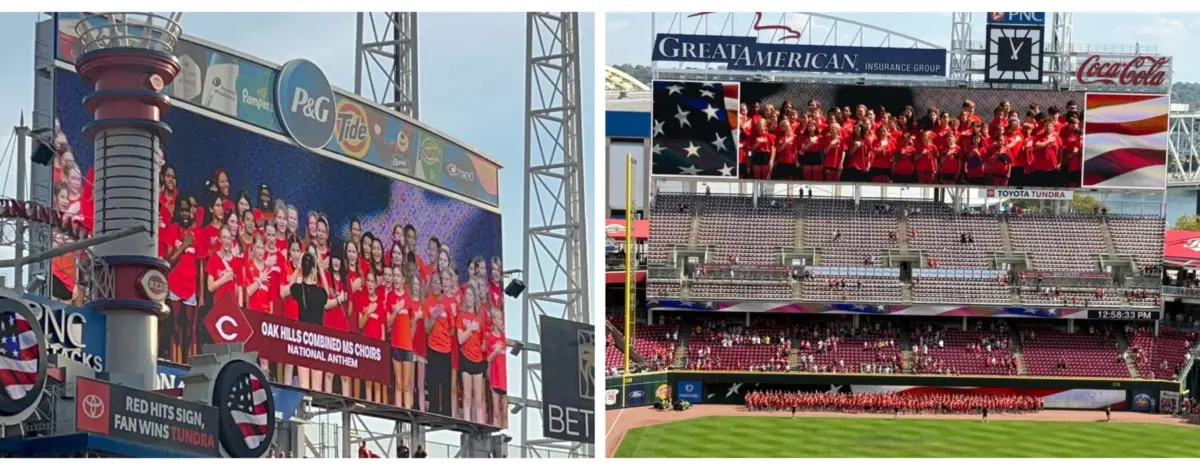
One of Sweatman’s most pivotal early strategies involved looking beyond the school walls to establish organizational visibility. She engineered an annual tradition uniting all three middle schools in her district to perform the National Anthem at a Cincinnati Reds baseball game.
This initiative served a dual purpose. Musically, it provided middle school students with a high-stakes, professional performance venue that immediately elevated their aspirations. Logistically and financially, it transformed into a powerhouse community builder and a recurring, effortless fundraiser. By embedding her students directly into the civic fabric of Cincinnati, Sweatman bypassed traditional school fundraising bottlenecks.
"I love the quote, ‘If you build it, they will come.’ Once the program started building, more students got involved, and the fundraising took off," Sweatman reflects. "There are ways other than massive budgets to get your program out into the community so people see what you do and want to support you."
This philosophy—building visibility first, thereby attracting institutional and community buy-in—became the cornerstone of the Bridgetown choral ecosystem.
Supporting Context & Metrics: The Anatomy of a Choral Sanctuary
Cultivating the "BMS Choir Family"
Walking into Sweatman’s classroom today reveals an environment built on radical inclusion and emotional safety. The walls are lined with years of student letters, heartfelt posters, and motivational quotes. From the moment incoming sixth graders step into her space, they are inducted into what students and faculty affectionately call the "BMS Choir Family."
This sense of belonging is not accidental; it is structurally engineered. To foster genuine confidence and deep-seated student ownership, Sweatman introduced specialized Vocal Artistry classes. In these collaborative, student-led sessions, middle schoolers are given the autonomy to:
- Arrange vocal charts
- Build and execute choreography
- Direct peers through peer-led feedback loops
- Produce and perform independent recitals
Furthermore, Sweatman forged a decade-long educational partnership with Playhouse in the Park, a renowned local regional theater. Through this collaboration, professional actors and directors visit Bridgetown to teach choir students advanced improvisation and stagecraft, bridging the gap between traditional middle school choir and professional theatrical performance.
The Pedagogical Framework: The 3 Ps (and a 4th)
Classroom management in an elective space packed with nearly 200 adolescents requires ironclad consistency. Sweatman anchors her daily instruction on her signature foundational tenets, known simply as The 3 Ps.
While the precise mechanics of these foundational pillars adapt to daily lesson plans, their overarching goal remains fixed: accountability, mutual respect, and focused execution. The impact of this culture is so profound that her students recently pushed for an addition to the methodology, successfully lobbying to add a 4th P: Be Prepared. This student-driven amendment highlights the ultimate success of Sweatman’s pedagogy—her students do not just follow the rules; they take ownership of them.
Reclaiming Time and Driving Student Autonomy
Managing 170 choir students, multiple vocal artistry sections, co-directing the school musical, and organizing community masterclasses is a recipe for catastrophic educator burnout. Sweatman’s longevity in the profession is a testament to her mastery of systemic efficiency and delegation.
Rather than attempting to micromanage every facet of rehearsal, Sweatman leverages technology and student leadership to shoulder the load. By integrating interactive sight-singing tools, digital practice software, and structured peer-led sectional groups, she shifts the burden of learning from the teacher to the collective ensemble.
Students learn to self-assess, run sectional rehearsals, and step up as section leaders. This rigorous scaffolding accomplishes two critical objectives: it accelerates student musical literacy while strictly protecting Sweatman’s personal time outside of contract hours, allowing her to maintain a healthy work-life balance and protect her family life at home.
Official Statements and Industry Recognition
The 2026 Spark Award, sponsored jointly by foundational educational publishers Alfred Music and MakeMusic, received hundreds of competitive nominations from across the United States. Following a rigorous review process by a panel of adjudicators, ten finalists were selected, drawing thousands of public votes from educators, administrators, and community members.
In officially announcing Chelsey Sweatman as the 2026 recipient, representatives from Alfred Music and MakeMusic emphasized the broader implications of her work. The award was designed specifically to highlight educators who overcome systemic barriers—whether budgetary, geographic, or administrative—to ignite a lifelong passion for music in their students.
"Chelsey’s journey demonstrates that systemic roadblocks do not have to dictate artistic ceilings," noted a representative from the award committee. "She took a program with zero momentum and transformed it into a vibrant community anchor. She doesn’t just teach music; she teaches agency, leadership, and human connection."
The award underscores a shifting paradigm in arts education advocacy: while systemic funding reform remains an ongoing political necessity, individual educators can—and do—build exceptional programs through localized resourcefulness and relational equity.
Future Outlook: Lessons for the Modern Music Educator
As public school systems nationwide grapple with fluctuating budgets, shifting curricular priorities, and post-pandemic engagement challenges, the Bridgetown Middle School model offers a replicable roadmap for departmental survival and expansion.
Sweatman’s trajectory offers several actionable takeaways for educators operating in resource-scarce environments:
- Prioritize Culture Before Complexity: High-level performance metrics are impossible without a foundational culture of trust. By branding her classroom as a "family," Sweatman secures emotional buy-in that transcends musical interest.
- Monetize and Mobilize Community Visibility: Do not wait for audiences to find the auditorium. Take the ensemble into the civic sphere—whether through athletic stadium performances, local theater partnerships, or public showcases—to build organic community advocacy.
- Institutionalize Student Agency: Relieve teacher burnout by distributing leadership responsibilities. Empowering students to lead sectionals, curate micro-performances, and co-own classroom norms fosters sustainable ensemble independence.
- Leverage Scalable Technology: Utilize digital practice tools and interactive sight-reading software to facilitate self-directed learning, freeing the educator to focus on nuance, interpretation, and individual student mentorship.
Looking Ahead
Nominations for the next educational award cycle will open in the spring of 2027, inviting educators across the globe to highlight unsung heroes in their own districts.
For now, Chelsey Sweatman continues her work at Bridgetown Middle School, preparing her next generation of singers for the stage, the community, and life beyond the classroom. Her story remains an enduring testament to the power of resilient teaching: you do not need an elite, high-budget setup to make a generational impact. You simply need consistency, deep-rooted passion, and the willingness to start right where you are.