
Executive Overview
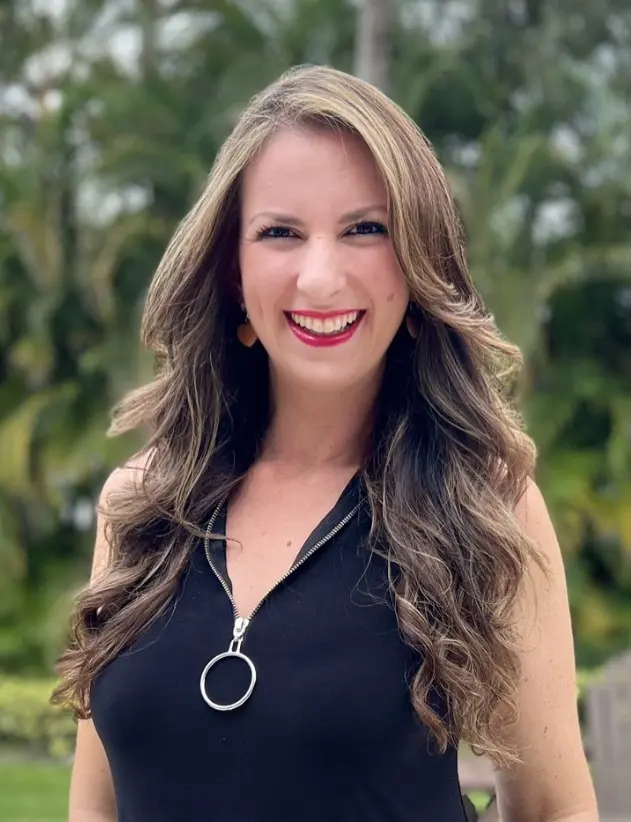
The modern landscape of vocal performance, voice science, and forensic acoustics stands at a fascinating intersection of art, medicine, and technology. Few figures navigate this multidisciplinary terrain with the precision, authority, and global impact of Dr. Ana Flávia Zuim. Recognized recently by CBS for her groundbreaking contributions to voice science, Dr. Zuim represents a rare breed of academic and practitioner: a world-class musical director, a rigorous voice scientist, an internationally sought-after educator, and an expert witness in forensic voice analysis.
With credits spanning over 70 musical theater productions—including iconic mainstays like Hamilton and Billy Elliot—Dr. Zuim has cemented her status as a titan of the stage. Yet, her influence extends far beyond the footlights. Her academic pedigree includes leadership roles as the Director of Vocal Performance at New York University’s Steinhardt School, and faculty positions at the University of Miami’s Frost School of Music and Miller School of Medicine. A truly global scholar, she has shared her expertise across continents, conducting seminars and workshops in Israel, Japan, Taiwan, Brazil, Turkey, Greece, Canada, and Australia, with upcoming engagements in Thailand, Italy, and Scotland.
This comprehensive profile explores the trajectory of Dr. Zuim’s career, examining her contributions to voice science, her extensive theatrical and academic milestones, her emerging work in forensic audio analysis, and the prestigious recognition she has garnered from leading institutions such as The Voice Foundation and the National Association of Teachers of Singing (NATS). Through an investigative lens, we trace how her mastery of acoustics and deep passion for languages have converged to redefine what it means to be a modern voice expert.
Detailed Chronology: A Life Dedicated to the Human Voice
Early Foundations and Musical Mastery
Dr. Zuim’s journey into the professional world of music and acoustics began with an uncompromising dedication to the piano and conducting. Developing an early fluency in the mechanics of sound, she quickly transitioned into the high-pressure world of musical theater. Over a career spanning decades, she has contributed to more than 70 musical theater productions. Her role as a musical director, conductor, rehearsal pianist, and vocal coach has placed her at the heartbeat of some of the most demanding and culturally significant theatrical works of the 21st century.
Among her most notable commercial credits is her work on the blockbuster cultural phenomenon Hamilton, where she served as a rehearsal pianist and vocal coach, demanding razor-sharp rhythmic precision and deep vocal agility from casts. Prior to that, her work as musical director and pianist on productions such as Billy Elliot demonstrated her capacity to shape young and adult voices alike to meet the punishing physical and artistic demands of long-running theatrical runs.
Academic Leadership: Miami to New York
As her practical mastery of performance matured, Dr. Zuim sought to bridge the gap between empirical science and artistic execution. This dual pursuit propelled her into elite academic leadership roles.
Before her tenure at NYU, Dr. Zuim served as the Director of Contemporary Voice at the prestigious Frost School of Music, located at the University of Miami. Recognizing the interconnected nature of vocal anatomy and performance, she secured a secondary appointment as Lecturer of Otolaryngology at the Miller School of Medicine within the same institution. This rare dual appointment—straddling the lines of conservatory music education and clinical medicine—allowed her to investigate the physiological mechanics of the singing voice with clinical precision.
In 2016, Dr. Zuim brought this unique interdisciplinary toolkit to New York University’s Steinhardt School, stepping into the role of Director of Vocal Performance. For six years, she guided the department through periods of curricular evolution, pedagogical modernization, and artistic excellence. In 2022, in recognition of her ongoing research contributions, teaching excellence, and global standing, she was promoted to Associate Professor of Music at NYU Steinhardt, where she continues to mold the next generation of vocal performers and pedagogues.
Supporting Context & Metrics: Global Reach and Interdisciplinary Impact
Global Pedagogical Footprint
Dr. Zuim’s influence is not confined to North American classrooms. As an internationally recognized scholar, she has crossed cultural and geographic boundaries to lecture, conduct workshops, and lead masterclasses. Her itinerary reads like a map of the global artistic community:
- Middle East & Asia: Israel, Japan, Taiwan, and upcoming engagements in Thailand.
- Europe: Turkey, Greece, Italy, and Scotland.
- The Americas: Brazil, Canada, and the United States.
- Oceania: Australia.
These international seminars focus on marrying advanced voice science with practical studio pedagogy, helping teachers and performers worldwide understand the acoustic properties of the vocal tract, vocal health preservation, and contemporary stylistic demands.
Forensic Voice Analysis: The Intersection of Sound and Law
One of the most fascinating extensions of Dr. Zuim’s career is her work as an expert witness in forensic voice analysis. Driven by a lifelong passion for languages and a rigorous understanding of acoustics, she has leveraged her scientific training to analyze audio evidence within legal frameworks.
Forensic voice analysis requires an uncompromising grasp of psychoacoustics, speech pathology, phonetics, and signal processing. Dr. Zuim’s ability to decode the nuances of human speech—coupled with her multilingual capabilities—positions her as a trusted authority in legal proceedings where audio authentication, speaker identification, and acoustic environment analysis are critical.
Editorial and Institutional Leadership
In addition to her professorial duties at NYU, Dr. Zuim serves as Co-Editor for NCVS Insights, the publication of the National Center for Voice and Speech (NCVS). In this capacity, she helps curate and disseminate cutting-edge research regarding voice production, respiratory kinematics, and vocal hygiene to a worldwide audience of speech-language pathologists, laryngologists, and vocal coaches.
Official Statements & Recognitions: The Van L. Lawrence Fellowship
Honoring Excellence in Voice Education
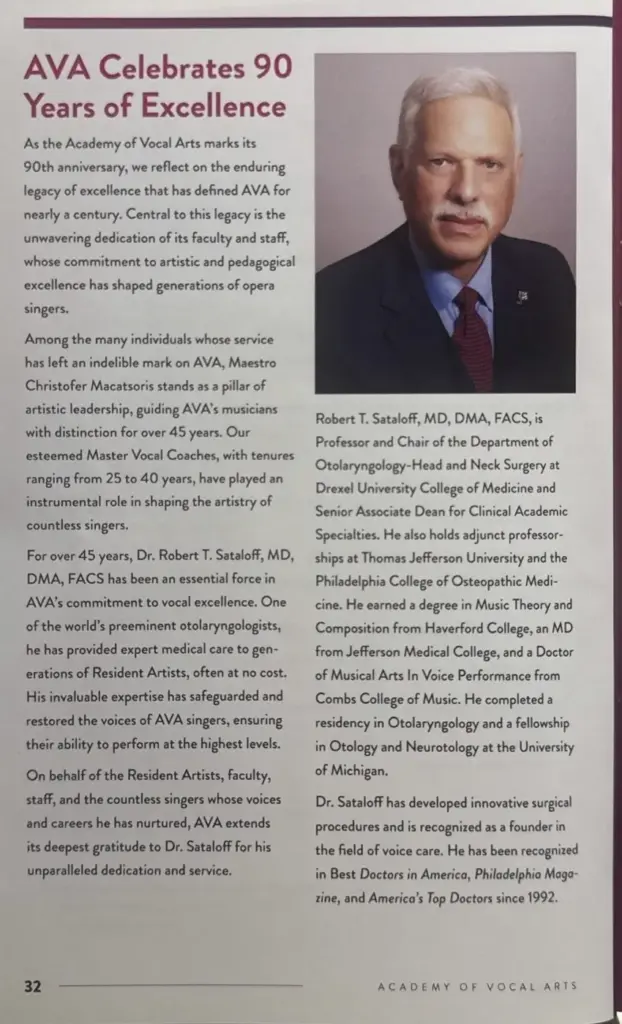
A landmark moment in Dr. Zuim’s academic trajectory is her recognition by the Van Lawrence Fellowship Committee. The fellowship is chaired by Robert T. Sataloff, alongside a committee of esteemed professionals including Diana Allan, Margaret Baroody, Lynn Helding, Adam Rubin, and Josef Schlömicher-Thier.
The Van L. Lawrence Fellowship was established to honor the immense contributions of Van L. Lawrence, M.D., to the field of voice care. Most importantly, the award was created to champion the interdisciplinary education that Dr. Lawrence tirelessly fostered between laryngologists (ear, nose, and throat medical specialists) and singing teachers.
Jointly awarded by The Voice Foundation and the National Association of Teachers of Singing (NATS) Foundation, the fellowship is one of the most prestigious accolades available in the vocal arts community.
Fellowship Privileges and Responsibilities
The Van L. Lawrence Fellowship provides its recipient with a $2,000 award and a suite of professional development opportunities designed to bridge the gap between clinical medicine and studio pedagogy:
- Symposium Attendance: The Fellow is fully supported in attending the annual Symposium on Care of the Professional Voice, hosted by The Voice Foundation.
- Clinical and Research Visits: During the fellowship year, the recipient visits premier laryngologists, speech-language pathologists, voice scientists, and research laboratories associated with The Voice Foundation.
- Expedited Publication: Research resulting from the fellowship experience is considered for expedited publication in premier peer-reviewed journals, specifically the Journal of Voice or the Journal of Singing.
- Interdisciplinary Application: The program is specifically tailored for NATS members who are actively teaching, possess a demonstrated excellence in studio pedagogy, and exhibit a deep curiosity for voice science. The ultimate goal is to equip educators with the technological and scientific literacy needed to conduct meaningful interdisciplinary research and apply empirical findings directly to the voice studio.
Future Outlook: The Next Frontier in Voice Science and Pedagogy
As Dr. Zuim looks toward the future, her agenda remains characteristically ambitious. With upcoming paper presentations and workshops scheduled in Thailand, Italy, and Scotland, her global academic footprint continues to expand.
The convergence of art and science that defines her career points toward several emerging trends in vocal pedagogy:
- Data-Driven Studio Instruction: Integrating real-time acoustic feedback tools into everyday singing lessons, allowing students to visualize their vocal resonance, formant tuning, and spectral balance as they sing.
- Cross-Disciplinary Collaboration: Fostering deeper institutional partnerships between medical schools (such as her former ties to the Miller School of Medicine) and conservatory music programs to proactively prevent vocal pathologies in professional performers.
- Advanced Forensic Applications: Expanding the boundaries of forensic voice identification through machine learning, spectral analysis, and cross-linguistic phonetic comparisons.
Conclusion
Dr. Ana Flávia Zuim’s career stands as a masterclass in versatility. Whether she is driving a cast through the complex rhythms of a Broadway score, analyzing acoustic waveforms for a legal proceeding, lecturing to packed auditoriums in Tokyo or São Paulo, or collaborating with leading laryngologists on the mechanics of mucosal waves, her work is unified by an unwavering reverence for the human voice.
Through honors like the Van L. Lawrence Fellowship and her ongoing leadership at New York University, Dr. Zuim continues to dismantle the historical silos separating art and science, ensuring that the future of vocal performance is as scientifically sound as it is emotionally resonant.