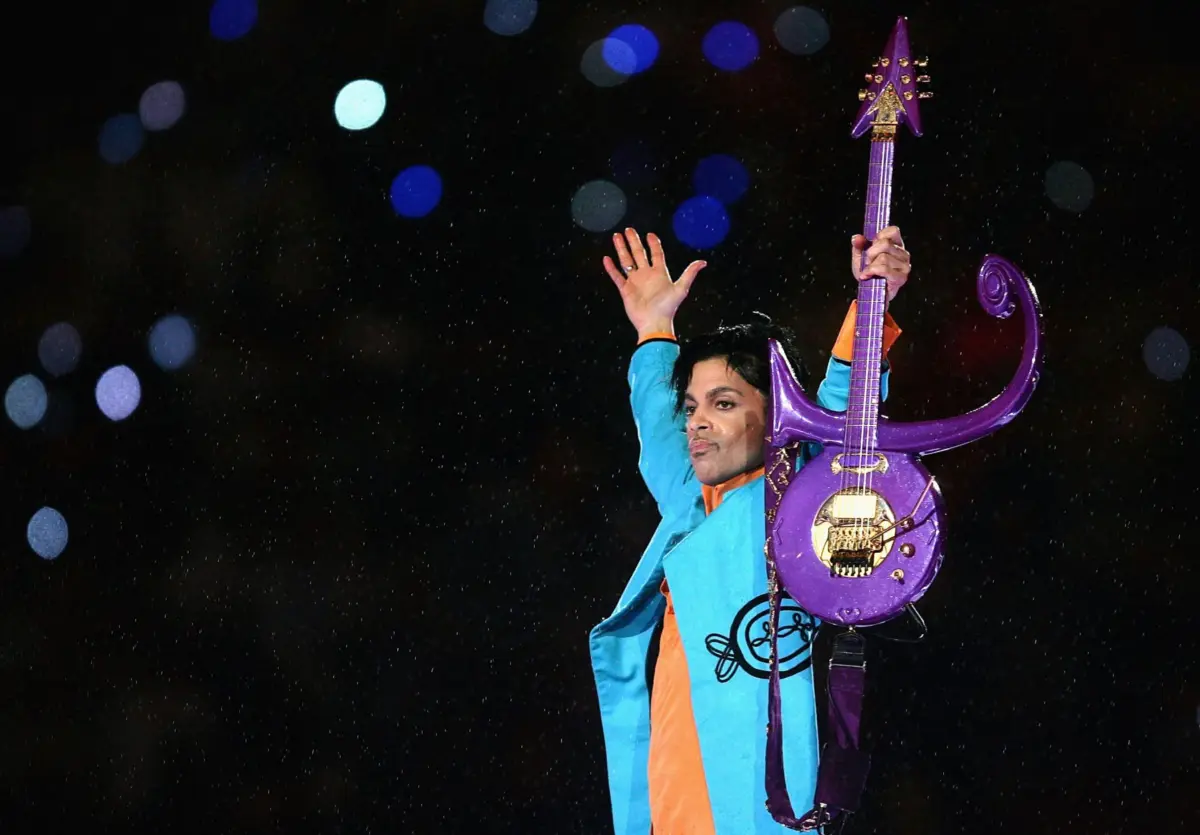
In the meticulous universe of Prince Rogers Nelson’s recorded legacy, details are currency. The late rock and funk icon—a legendary musical polymath whose perfectionism was matched only by the staggering volume of material he left behind in his legendary vault—guarded his sonic identity with fierce jealousy. Therefore, when the newly released career-spanning vault collection Timeless hit the market, it did not take long for eagle-eared devotees to spot a potential anomaly.
At the center of a burgeoning digital controversy is "Calabama," a soul-soaked, horn-spiked jam recorded by Prince in 2003. According to vigilant fans and audio analysts, the track featured elements that appeared to have been tweaked and updated with posthumously added instrumental parts. To a segment of the fanbase, any synthetic addition or post-mortem tinkering feels entirely anathema to the artist’s foundational ethos—a betrayal of the sacred rule that archival material should be presented precisely as it was left behind on the master tapes.
The outcry prompted a swift and authoritative response from NPG Records and Prince’s management team. Breaking their silence via an official statement on Instagram, representatives for the estate defended the production choices on "Calabama," confirming that horns were indeed overdubbed onto the original multitrack session. However, the estate pushed back against framing the move as unauthorized interference. Instead, they argued that the addition was executed in strict alignment with Prince’s explicit creative intentions, using hand-picked musicians who had worked closely with the artist during his lifetime.
As the debate rages across social media platforms like X and dedicated fan forums, this episode highlights a much broader, ongoing existential dilemma in the modern music industry: How should estates handle the unfinished works of perfectionist icons? Where is the ethical line between completing an artist’s vision and rewriting their history? Timeless—released during a yearlong international commemoration of the tenth anniversary of Prince’s tragic passing—serves as a high-profile case study in the delicate politics of vault curation.
Detailed Chronology: From Paisley Park Multitracks to the Timeless Tracklist
To understand the friction surrounding "Calabama," one must trace the evolutionary path of Timeless and the specific recording history of the track in question.
Timeless arrived as a landmark achievement in the administration of Prince’s estate. Spanning 10 carefully selected songs, the compilation represents the very first time an official Prince release has successfully mapped out every major era of his mercurial career. The sequencing is a sweeping historical document: it opens with "I Am You," a delicate and revelatory recording cut in 1977 when Prince was just 19 years old, and culminates with a searing live version of his classic 1999 B-side, "How Come U Don’t Call Me Anymore?," captured live in Oakland merely a month before his untimely death from an accidental fentanyl overdose at his Paisley Park estate on April 21, 2016.
Within this broad historical sweep, "Calabama" occupies a fascinating micro-chapter. Recorded during the prolific sessions of 2003, the song is a classic exercise in Prince’s organic, groove-driven soul architecture. However, archival multitracks revealed a notable production gap. During the bridge of the song, Prince can be heard clearly calling out twice for "horns."
Instead of an organic brass section answering the call in the original tracking session, however, the archival tape featured a temporary synthesizer filling that sonic space. Over two decades later, when producers began assembling the elements for Timeless, they faced a curatorial fork in the road: leave the placeholder synthesizer track as Prince had temporarily stored it, or fulfill the vocal cue by bringing in live horns.
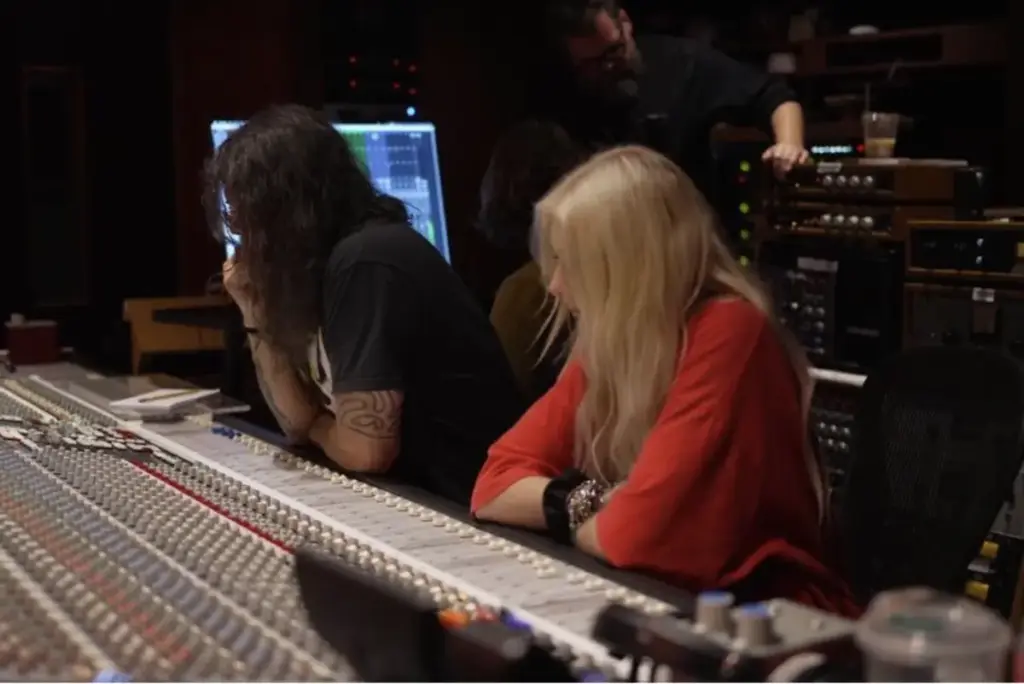
Choosing the latter path, the estate convened a trio of world-class musicians with deep historical ties to the Purple One: trombonist Greg Boyer, saxophonist Adrian Crutchfield, and trumpeter Lynn Grissett. These players were brought into the studio to overdub Prince’s original synthesizer track with a fully realized horn line. According to the estate, this arrangement was explicitly designed to mirror the exact songwriting and production methodology Prince had utilized on countless previous recordings throughout his legendary career.
Supporting Context & Metrics: The Weight of the Vault and the Fan Divide
The debate over "Calabama" is not happening in a vacuum. It is amplified by the sheer mythology of the Prince Vault—a legendary, subterranean treasure trove located beneath Paisley Park that is said to hold thousands of unreleased master tapes, completed albums, and alternate takes. For years following his death, fans have debated the ethics of opening the Vault, balancing their hunger for new music against a protective instinct for the artist’s legacy.
When a purported original mix of "Calabama" featuring zero added horns leaked and circulated widely on X (formerly Twitter), the digital backlash crystallized into two distinct ideological camps.
On one side are purist fans who argue that historical accuracy must supersede modern editorial polish. One prominent fan wrote on X:
"I think the ask from the fans is the fact that even if Prince called for horns he never added them… he threw that track in the vault the way it was. Never added. And that’s what the fans want. The original version the way he stored them."
Another user echoed this sentiment, framing the overdubbing as an unnecessary alteration:
"Ridiculous. There are plenty of Prince songs with synth horns even with him explicitly saying ‘horns.’ He never added them. They should just release what is on tape!! Absurd."
On the other side of the ledger are defenders of the estate’s methodology, who point out that Prince was notorious for leaving tracks in various states of undress, often tinkering with them across decades or deciding to flesh them out only when specific projects demanded it. They argue that bringing in his trusted circle of horn players—musicians who understood his phrasing, dynamic range, and musical language—is a far cry from cold, algorithmic studio doctoring.
Crucially, the estate moved quickly to neutralize one of the most volatile anxieties haunting modern music consumers: the specter of artificial intelligence. In their official statement, administrators firmly drew a line in the sand, emphasizing that no AI technology was utilized in any capacity on Timeless. Furthermore, they assured listeners that, with the sole exception of the horn overdubbing on "Calabama," every single original instrument, vocal take, and performance recorded by Prince himself remains completely untouched and intact.
Official Statements: NPG Records and Management Address the Controversy
Faced with mounting scrutiny from a notoriously detail-oriented and protective fanbase, NPG Records and Prince’s management team opted for total transparency. Their official Instagram dispatch provided a granular breakdown of the production decisions behind Timeless, directly addressing the ghost in the machine.
The statement read, in part:
"Consistent with Prince’s songwriting and production approach on numerous previous recordings, a group of horn players who played with Prince were assembled to overdub Prince’s synthesizer track with the intended horn line, and this version was released on Timeless."
Acknowledging the philosophical rift among the fanbase, the estate closed its communication with a measured reflection on the complexities of administering a posthumous catalog of this magnitude:
"Some may object to the completing of the unfinished portion of ‘Calabama’ (even using Prince’s hand-picked musicians and aligned with his creative intent). While others have been very supportive of it and the music overall (which we thank you). We understand that not everyone will agree on every decision made regarding Prince music and business matters yet your passion, knowledge, and thoughtful questions are appreciated."
This direct engagement represents a strategic shift in how legacy management teams interact with hyper-engaged fan communities. Rather than ignoring criticisms or issuing sterile, corporate press releases, the estate leaned into the specifics of the production workflow, validating the fans’ deep knowledge while defending the artistic integrity of the choices made.
Future Outlook: Navigating the Unfinished Masterpieces of Paisley Park
The controversy surrounding "Calabama" and Timeless serves as a crucial bellwether for the future of Prince’s archival releases. As the estate continues to mine the depths of the Paisley Park vault, curators will inevitably encounter thousands of hours of music that exist in liminal states—songs with missing vocal tracks, placeholder instrumentation, rough mixes, or incomplete arrangements.
In response to the feedback generated by Timeless, the estate has signaled that it will adopt a more communicative posture for future drops. Administrators promised to provide "even more details regarding the release of the music," openly acknowledging a fundamental truth about the vault: many of the recordings left behind by the Purple One are, by definition, unfinished.
However, the estate offered a bold philosophical stance regarding these unpolished gems, asserting that an incomplete state "should not prevent them from being released."
This sets the stage for an ongoing cultural negotiation between the gatekeepers of Prince’s catalog and his global audience. As subsequent archival projects are planned—especially as the estate moves further away from the decade mark of his passing and deeper into the uncharted territories of his unreleased sessions—curators will have to walk a razor-thin tightrope.
On one hand, they must honor the absolute sanctity of the master tapes, respecting the archival record just as it was left in the vault. On the other hand, they have a responsibility to present music in a way that honors the towering artistic standards of a man who spent his life chasing perfection. Whether future releases will lean toward pristine, unvarnished historical documents or carefully completed conceptual realizations remains to be seen. But if the passionate discourse over Timeless proves anything, it is that Prince’s music remains as vital, contested, and fiercely loved today as it was when he was alive to command the stage.