
Executive Overview
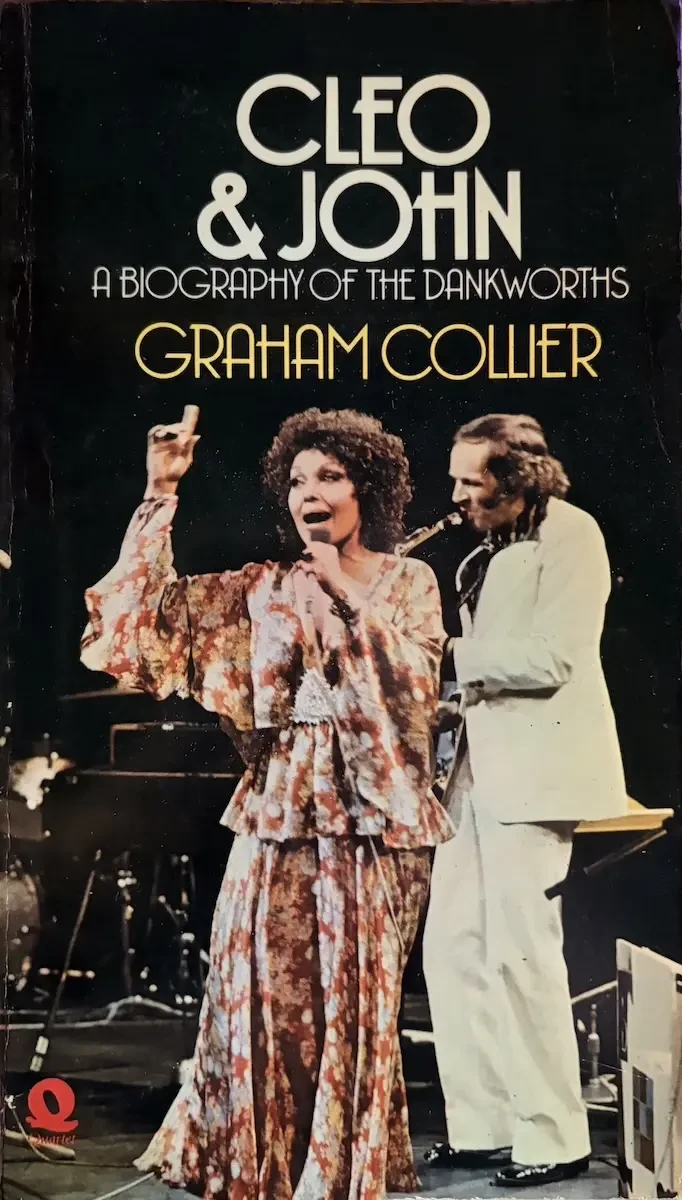
In the landscape of British jazz historiography, biographies of homegrown icons frequently succumb to hagiography. Authors eager to capture the magic of mid-century modernism often trip over the hurdle of uncritical adoration, transforming complex artists into untouchable cultural deities. It is precisely against this predictable backdrop that Graham Collier’s newly published volume, Cleo and John: A Biography of the Dankworths (Quartet Books, £4.95), emerges as an unexpected triumph.
Collier, an esteemed figure within the jazz community, has crafted a factual, deeply objective, and refreshingly critical study of two of Britain’s most enduring musical royals: saxophonist-composer John Dankworth and vocalist Cleo Laine. Rather than relying on rose-tinted nostalgia, Collier constructs his narrative through an artful curation of press cuttings, direct archival quotations from the subjects themselves, and candid commentary from musical contemporaries such as Don Rendell, the late Dudley Moore, and others. The resulting text strips away the superficial veneer of celebrity cultism, presenting the Dankworths not as mythical entities, but as dedicated, hard-working artisans who navigated the volatile waters of the British and international music industries with integrity.
This review explores the structural mechanics of Collier’s book, examining its portrayal of musical authenticity, its charting of a remarkable professional trajectory, and the vital historical corrections it brings to light regarding the Golden Age of British jazz.
Detailed Chronology: From Dartford Roots to International Stardom
The Genesis of a Musician: John Dankworth’s Formative Years
Collier’s biography traces John Dankworth’s journey from his early musical influences through his pioneering work with the Dankworth Seven, his subsequent big bands, and his eventual foray into the lucrative yet demanding film-scoring business. One of the book’s greatest strengths lies in its refusal to graft an artificial, imported identity onto Dankworth’s artistic persona.
As Collier astutely highlights—and as long-term critics of the genre have long argued—Dankworth’s musical output is an honest reflection of his own upbringing in the United Kingdom, completely devoid of affected mannerisms. He was not an American bluesman from a Harlem tenement block; he was an ambitious British instrumentalist shaped by his native environment. This uncompromising commitment to authenticity runs as a golden thread through Dankworth’s career, distinguishing him from contemporaries who attempted to mimic American idioms without cultural resonance.
Forging the Phenomenon: Cleo Laine’s Transformation
Perhaps the most illuminating narrative arc within Collier’s chronicle is his detailed examination of the creative and personal partnership between John and Cleo. Collier makes a compelling, well-argued case that it was John Dankworth’s meticulous guidance and artistic vision that transformed Cleo Laine from a capable, solid band singer with a comparatively limited vocal range into the globally celebrated musical phenomenon she became.
The biography systematically documents their collective ascent up the social and cultural ladders of British society. This climb is vividly illustrated through rare photographs and narrative accounts detailing their interactions with the royal family, John’s receipt of the CBE in 1974, and a tantalizing chapter appropriately titled: “Sir John and Lady Cleo . . .?” Through these pages, the reader witnesses the gradual institutionalization of a jazz act into British cultural aristocracy, all while maintaining their core artistic principles.
Supporting Context & Metrics: Inside the Publication and Historical Corrections
Book Specifications & Metrics
For collectors and academic researchers, Cleo and John: A Biography of the Dankworths is published by Quartet Books (located at 27 Goodge Street, London W.1).
- Format: Hard cover
- Price: £4.95
- Length: 187 pages
- Visuals: 45 archival photographs
- Index: Comprehensive four-page index
Setting the Record Straight: Archival Nuances and Corrections
While Collier’s archival research is undeniably impressive, a critical examination of jazz history inevitably unearths minor discrepancies and missed opportunities for primary sourcing. Notably, Collier omits any reference to or quotation from Mike Butcher, a former writer for this publication who famously served as the manager of the Dankworth Seven. Given Butcher’s frontline perspective, his absence is a curious oversight.
Furthermore, seasoned jazz historians will catch a few fascinating historical corrections embedded within the contemporary reception of the book:
- The Newport Myth: Collier accepts the live album Dankworth At Newport (Top Rank 30/019) as a direct transcription of the band’s historic appearance at the Newport Jazz Festival in 1959. However, archival reality—far enough removed now to be safely brought to light—reveals that the performance was actually taped at a concert in Hammersmith after producers discovered the original Newport field tapes were technically below par.
- The Ronnie Chamberlain Timeline: On page 16, Collier incorrectly identifies Ronnie Chamberlain as “Ted Heath’s alto star” in 1949. In truth, Chamberlain was performing with Vic Lewis during that period.
Despite these minor factual hiccups—and a slightly informal prose style that occasionally permits colloquial contractions like “I’ve” and “they’ve” outside of direct quotations—Collier’s exhaustive research shines through.
Official Statements and Critical Perspectives: Honesty in Music
A cornerstone of Collier’s analytical framework is the unwavering emphasis on musical integrity. John Dankworth’s own voice, captured generously through direct quotations in the biography, reveals a man given to severe self-criticism regarding his abilities as an instrumentalist. These passages are balanced by genuinely amusing, self-deprecating accounts of his early brushes with the cutthroat film-music industry.
Music critics and long-standing observers of the scene have long championed Dankworth’s philosophy. As one veteran critic noted:
"Dankworth is not an American negro from a Harlem tenement block and his music is a reflection of his own upbringing, not someone else’s. A pop singer from Dartford who affects a New York accent makes me reach for the off switch very quickly. Honesty in music is something which has always been very important to John."
This commitment to authenticity is precisely what separates the Dankworth legacy from fleeting pop trends. Collier does not shy away from using third-party quotes to challenge the "cult of personality" that often surrounds the couple, yet his hatchet work—when it occurs—is backed by unassailable logic. The resulting portrait is one of two flawed, brilliant, fiercely hardworking individuals who earned every accolade thrown their way.
Future Outlook: The Enduring Legacy of the Dankworths
As Cleo and John hits bookstore shelves, its timing coincides with a broader resurgence of interest in classic British jazz heritage. Proof of this enduring appetite is found in the immediate commercial pipeline: no sooner is the Dankworth Seven’s historical importance reaffirmed in print than word arrives that eight of the ensemble’s original Seven recordings are slated for imminent re-issue as part of a new Esquire LP.
Graham Collier’s biography serves as more than just a retrospective; it acts as a foundational blueprint for how jazz biographies ought to be written. By rejecting sycophancy in favor of rigorous documentation, critical analysis, and emotional honesty, Collier has ensured that the true measure of John Dankworth and Cleo Laine remains visible beneath the gloss of their royal honors and glittering fame.
For jazz aficionados, historians, and casual listeners alike, this 187-page hardbound volume is an indispensable addition to the library—a testament to the fact that genuine musical achievement requires no artificial accents, only uncompromising truth.