

Executive Overview
In his final cinematic performance, voicing the world-weary canine sheriff Wylie Burp in the animated feature An American Tail: Fievel Goes West, legendary actor Jimmy Stewart delivered a line that would quietly encapsulate his own existence: "Maybe a real hero is the last one to hear about it."
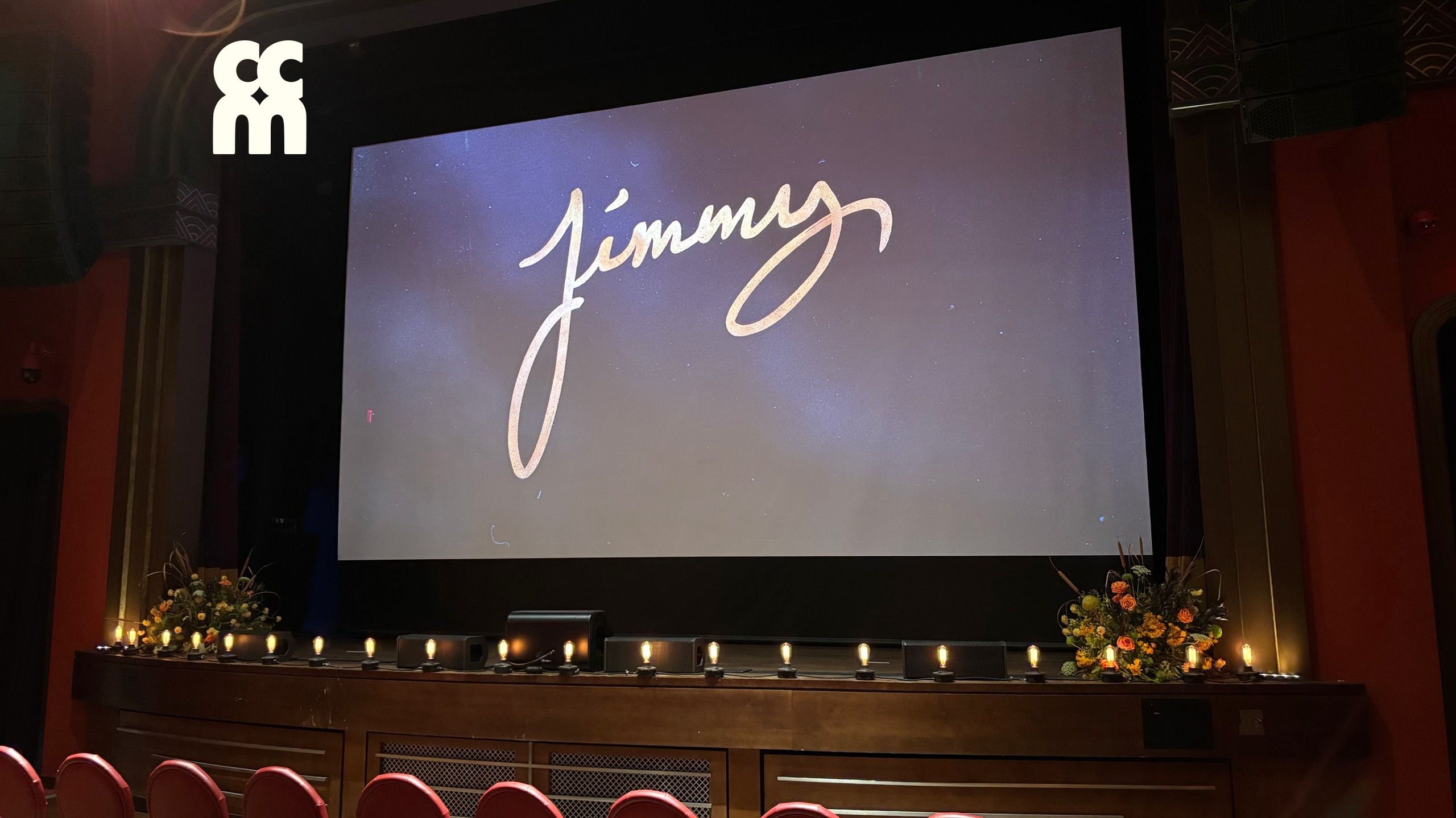
Nearly thirty years after his passing in 1997, a powerful new biographical feature film titled Jimmy—directed by Aaron Burns and produced by Papaian Studios—arrives in theaters to reintroduce this iconic figure to a generation that knows him primarily through holiday television broadcasts, impressionists’ caricatures, and his distinctive, hesitant vocal cadence. Rather than serving as a cradle-to-grave biopic that neatly packages a lifetime of cinematic achievements, Jimmy narrows its lens onto a singular, profoundly transformative chapter of Stewart’s life: his departure from the safe, glamorous heights of Hollywood stardom to pilot B-24 bombers over Nazi-occupied Europe during World War II.
Starring KJ Apa as the titular screen legend, Jimmy explores the heavy psychological and emotional tolls of combat, the crisis of faith that followed Stewart home from the front lines, and the agonizing internal battle over whether he could—or even wanted to—return to the make-believe world of motion pictures. Buoyed by an ensemble cast that features Lara Kilmer, Jen Lilley, Jason Alexander, Christopher McDonald, and Max Casella, alongside an evocative score by composer Grant Fonda and a standout theme by contemporary Christian artist Moriah, the film opens nationwide on Friday, November 6. It positions itself not merely as a historical retrospective, but as a timely meditation on duty, trauma, and the enduring resilience of the human spirit at a cultural juncture uniquely hungry for authentic heroism.
Detailed Chronology: From Hollywood Heights to the Skies Over Europe
To understand the profound stakes captured in Burns and Papaian Studios’ Jimmy, one must retrace the harrowing biographical trajectory that upended James Maitland Stewart’s life in the early 1940s. By 1941, Stewart was already a Hollywood darling. Having clinched the Academy Award for Best Actor for The Philadelphia Story (1940) and cemented his everyman persona in Frank Capra’s classic Mr. Smith Goes to Washington (1939), he stood at the absolute summit of the entertainment industry.
Yet, long before the Japanese attack on Pearl Harbor plunged the United States into active global conflict, Stewart harbored a deep-seated private ambition rooted in aviation. Licensed as both a private and commercial pilot well before the war, he actively sought enlistment in the United States Army Air Corps. Standing 6-foot-3 and notoriously gangly, Stewart initially failed the physical examination due to being severely underweight. Undeterred, he packed on the necessary pounds by consuming high-calorie diets and leveraging his celebrity status to demand a re-evaluation. By late 1940, he was officially enlisted as a private, stepping away from million-dollar studio contracts and the adoration of millions.
The Crucible of Combat
Jimmy focuses intensely on the psychological pressure cooker that followed. Unlike many of his Hollywood peers who utilized their fame to sell war bonds or produce morale-boosting propaganda films comfortably stateside, Stewart insisted on active combat duty. Commissioned as an officer, he transitioned to multi-engine heavy bombers, eventually deploying to England with the 445th Bombardment Group as a squadron commander and operations officer.
Piloting B-24 Liberators over Germany and occupied territories, Stewart participated in harrowing daylight bombing raids characterized by brutal anti-aircraft flak and vicious Luftwaffe interceptor attacks. The film graphically depicts the unglamorous, terrifying reality of these missions: the freezing temperatures at high altitudes, the claustrophobia of the flight deck, and the agonizing weight of leadership when subordinates failed to return from a run.
Stewart’s faith—a bedrock of his upbringing in Indiana, Pennsylvania—was tested daily as he faced mortality thousands of feet above the earth. While his public image remained untarnished, the man who returned to the United States in 1945 was fundamentally altered. He carried severe post-traumatic stress, suffering from chronic insomnia and haunted by the loss of his crew members. Upon his return to Tinseltown, the glittering lights of Hollywood felt hollow. Stewart quietly contemplated abandoning acting entirely, paralyzed by the conviction that the triviality of filmmaking paled in comparison to the grim realities he had witnessed overseas.
Supporting Context & Metrics: Cast, Crew, and Creative Architecture
The cinematic execution of Jimmy relies heavily on a delicate balancing act: avoiding hagiography while authentically portraying an intensely private man who viewed his military service not as a marketing campaign, but as a solemn national duty.
Performance and Casting Dynamics
At the center of this narrative is KJ Apa, widely recognized for his work in Riverdale. Taking on the mantle of Jimmy Stewart is a formidable task; the actor’s vocal patterns, physical mannerisms, and gentle demeanor are etched into the global cultural consciousness. However, early reviews and production insights indicate that Apa deftly captures the internal turbulence behind the famous drawl. Rather than delivering a simplistic impression, he anchors his performance in Stewart’s quiet vulnerability.
The supporting cast brings substantial dramatic weight to the production:
- Lara Kilmer (Chicago Fire): Portrays Lady Julia, a compassionate British widow who encounters Stewart while he is stationed in England. Her character serves as an emotional sounding board, helping Stewart process the grief and trauma of wartime losses.
- Jen Lilley (Days of Our Lives, Mingle All the Way): Takes on the challenging role of Gloria McLean, the woman who would eventually become Stewart’s wife and a foundational stabilizing force in his post-war life.
- Jason Alexander (Seinfeld, Pretty Woman): Steps into the formidable shoes of MGM studio head Louis B. Mayer, capturing the calculated, high-stakes pressure exerted by Hollywood executives desperate to harness Stewart’s pre-war box office draw once more.
- Christopher McDonald (Happy Gilmore): Delivers a memorable, sharp performance as legendary character actor Lionel Barrymore.
- Max Casella (The Sopranos, Tulsa King, Disney’s The Lion King on Broadway): Delivers a standout turn as director Frank Capra. Casella, whose versatile career spans generations of television and stage work, captures the complex creative partnership between Capra and Stewart—a relationship that ultimately yielded It’s a Wonderful Life (1946), the film that symbolically served as Stewart’s cinematic and emotional resurrection.
Sonic Landscape and Musical Direction
Because the film bridges the gap between mid-century Hollywood aesthetics and modern cinematic storytelling, its soundscape is critical. Composer Grant Fonda constructs a score that echoes the brass-heavy, soaring orchestrations of the 1940s while integrating contemporary harmonic sensibilities to resonate with modern audiences.
Of particular note is the film’s theme song, "Home to Me," performed by contemporary Christian artist Moriah. The track achieves a rare musical duality: it is produced with the pristine clarity of a modern radio hit, yet it evokes the smoky, timeless atmosphere of a 1940s supper club where big band orchestras played under dimmed lights for soldiers on their final leave.
Official Statements and Industry Reception
In interviews surrounding the rollout of Papaian Studios’ latest project, director Aaron Burns has emphasized that Jimmy is not designed to be a traditional biopic checklist.
"We live in an era where public personas are carefully curated, often detached from real sacrifice," Burns noted during early press screenings. "James Stewart’s story reminds us that true integrity is forged in silence and suffering. He didn’t want a medal; he wanted to do his job, protect his men, and return home with his soul intact. That is a narrative our contemporary culture desperately needs to revisit."
Industry analysts have noted that Jimmy arrives at a particularly advantageous moment for character-driven historical dramas that prioritize emotional depth over intellectual property franchising. The film’s focus on veterans’ mental health—long ignored or suppressed in the immediate post-WWII era—lends the narrative an urgent, contemporary resonance. By highlighting the invisible wounds carried by even the most celebrated members of the Greatest Generation, the film bridges an empathetic gap between the 1940s and the 2020s.
Future Outlook: Legacy, Cultural Impact, and Theatrical Release
As Jimmy prepares for its nationwide theatrical release on Friday, November 6, expectations are high for its reception among both cinephiles and general audiences seeking substantive, values-driven entertainment.
The film’s broader cultural footprint will likely manifest in several ways:
- Re-evaluating Post-War Cinema: By framing It’s a Wonderful Life not merely as a heartwarming holiday staple, but as the therapeutic exorcism of a traumatized veteran, Jimmy invites film historians and casual viewers alike to re-watch Stewart’s post-war filmography with renewed appreciation. George Bailey’s breakdown on the snowy bridge in Bedford Falls takes on an entirely new biographical weight when viewed through the prism of Stewart’s actual combat experiences.
- Bridging Generational Dials: With Gen-X and Millennial audiences introducing classic Hollywood to Gen-Z through streaming platforms, accessible narrative filmmaking like Burns’ project serves as an educational bridge, transforming historical trivia into visceral emotional experiences.
- A New Benchmark for Independent Studio Biopics: Papaian Studios’ focused, chapter-specific narrative approach may well establish a new blueprint for biographical filmmaking, proving that deep character studies often yield more truth than sweeping, episodic overviews.
Ultimately, Jimmy brings full circle the philosophy voiced by Stewart’s animated alter ego in Fievel Goes West. James Maitland Stewart spent his life running away from the label of "hero," quietly absorbing the trauma of war, the pressures of fame, and the responsibilities of citizenship without complaint. Through this new feature film, contemporary audiences are invited to look past the iconic drawl, the caricatures, and the silver screen sheen to discover the resilient, deeply human heart of a man who found out—against his own modest inclinations—that he was indeed the hero the world needed.