
Executive Overview
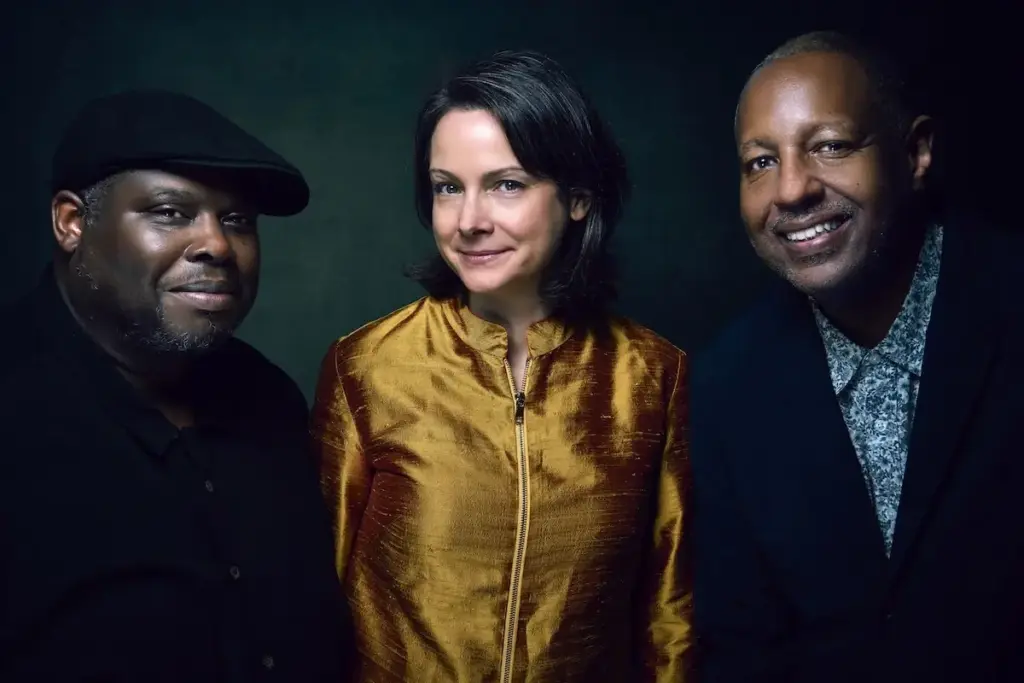
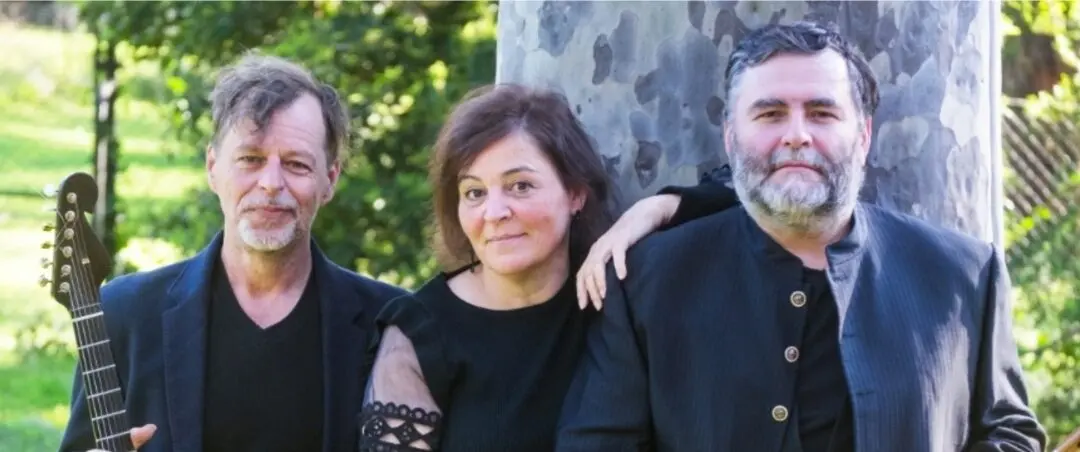
Why Baroque? Why now? These are the foundational questions driving Tripudiis Sonis Variis, the visionary debut album from the Australia-based ensemble Hyperbaroq. Comprising three of the contemporary jazz and improvised music scene’s most celebrated talents—vocalist Ilaria Crociani, multi-instrumentalist Mirko Guerrini, and guitarist Stephen Magnusson—the trio has crafted a sonic artifact that defies rigid genre categorizations.
By fusing the intricate counterpoint and deep emotional resonance of 14th- to 17th-century European masterworks with the unbounded elasticity of free-jazz, avant-garde electronics, and global instrumentation, Hyperbaroq has delivered a masterclass in cross-temporal collaboration. Across the album’s thoughtfully curated tracklist, centuries-old compositions are not merely covered; they are excavated, recontextualized, and brought into urgent, vibrating conversation with the 21st century.
The project itself was born out of profound isolation—conceived during the heavy fog of Melbourne’s COVID-19 lockdowns—and ultimately transformed into a universal meditation on grief, resilience, and the healing power of sound. Through an intoxicating cocktail of Moog guitars, ancient wind instruments like the duduk and chalumeau, classical strings, and soaring vocal interpretations, Tripudiis Sonis Variis stands as a monumental achievement in modern experimental musicology.
Detailed Chronology & Track Analysis: A Journey Through Time and Tone
The architecture of Tripudiis Sonis Variis is designed as a temporal bridge, transporting listeners from the dawn of Western polyphony through the height of the Baroque era, all while utilizing a distinctly modern improvisational lens.
The Ancient Foundations: From Gregorian Chants to Renaissance Elegies
The album opens with an ambitious statement of purpose: an experimental reimagining of “Stella Caeli Extirpavit,” an anonymous 14th-century composition. Here, Stephen Magnusson builds an enveloping ison using a Moog guitar, establishing an immediate, hypnotic spell anchored by the ostinato of Gregorian chant. This track sets a cinematic precedent, successfully bridging the medieval and the contemporary through atmospheric tonalities.
Moving into the 17th century, the ensemble tackles Martim Codax’s “Ay Ondas Que Eu Vim Veer” and Robert Johnson’s 1616 masterpiece, “Have You Seen But A White Lily Grow” (featuring text by Ben Jonson). The latter serves as the album’s poignant closer, utilizing understated instrumentation to reflect on true love as nature’s purest, most fragile form. Similarly, Raffaello Rontani’s 1622 “Caldi Sospiri” injects a sudden, refreshing breeze into the tracklist, utilizing Mirko Guerrini’s soprano saxophone to pivot the centuries-old melody into a rhythmically uplifting, quasi-bossa nova cadence.
The Baroque Core: Drama, Lement, and Emotional Precision
At the beating heart of the record are masterworks from the Baroque period’s most influential figures, each filtered through Hyperbaroq’s distinct improvisational ethos.
- Claudio Monteverdi’s “Lamento Della Ninfa” (1638): With a libretto by Ottavio Rinuccini, this piece opens via an electronic soundscape that constructs an alternate, dreamlike universe. Ilaria Crociani’s voice acts as a steadfast throughline, guiding the narrative text while a wash of electric guitar opens the door for free-jazz exploration.
- Barbara Strozzi’s “Che Si Può Fare” (1644): As the sole female composer represented on the record, Strozzi receives a brilliant, deeply respectful nod. Crociani’s immaculate Italian diction is paired with the haunting, reedy timbre of the duduk, perfectly matching the intense underlying meanings of Gaudenzio Brunacci’s text.
- Antonio Cesti’s “Disserratevi Abissi” (1655): Featuring a libretto by Giovanni Filippo Apolloni, this track highlights the trio’s vibrant jazz flair. The musicians luxuriate in the dramatic harmonies, lingering within Cesti’s bold compositional framework.
- Giacomo Carissimi’s “No No Non Si Speri” (c. 1664): This cantata serves as the emotional genesis of the entire project. Born from a late-night lockdown walk in Melbourne, its stark message—“Leave every hope. Hope is dead”—mirrored the collective psychological weight of a global pandemic. Stephen Magnusson’s guitar work here ranks among the finest on the album, while the historical chalumeau grounds the modern grief in ancient tradition.
- Alessandro Scarlatti’s “O Cessate Di Piagarmi” (1683): Drawn from the opera Il Pompeo, this piece pairs Crociani’s voice with classical guitar and saxophone. The relaxed tempo allows Crociani to illuminate Nicolò Minato’s verse with profound gentleness, punctuated by a brilliant mid-song free-jazz sax improvisation by Guerrini.
- Henry Purcell’s “Music for a While” (1692): Perhaps the most faithful interpretation on the album, this setting of John Dryden’s text leans into the ancient concept of music as medicine—a therapeutic modality dating back to Pythagoras. Recognizing the inherent perfection of Purcell’s melody, the trio deliberately steps back, allowing a 300-year-old composition to execute its timeless, psychological healing.
Supporting Context & Metrics: Instrumentation and Ensemble Dynamics
To understand the sonic density of Tripudiis Sonis Variis, one must examine the staggering versatility of the trio. Hyperbaroq is not a standard voice-and-accompaniment jazz outfit; it is a collaborative laboratory where historical preservation meets avant-garde timbre exploration.
The Instrumentation Matrix
- Ilaria Crociani (Voice): Serving as the emotional anchor of the ensemble, Crociani brings exceptional linguistic precision, stylistic adaptability, and a deep intellectual grasp of historical texts to every performance.
- Mirko Guerrini (Piano, Soprano Sax, Duduk, Chinese Flute, Chalumeau, Moseño, Sound Art): Guerrini acts as a multi-instrumental chameleon. By seamlessly swapping between Western jazz horns and ancient, folk-derived reed and woodwind instruments (such as the Armenian duduk and the European chalumeau), he expands the tonal vocabulary of the Baroque repertoire far beyond its original European parameters.
- Stephen Magnusson (Electric Guitar, Moog Guitar, Classical Guitar): Magnusson bridges acoustic tradition and electronic experimentation. His command of the Moog guitar allows him to conjure sustained harmonic drones (ison) that evoke sacred cathedral acoustics while simultaneously driving modern jazz phrasing.
Cross-Disciplinary Metrics
- Temporal Span: The album bridges over 700 years of musical history, stretching from 14th-century anonymous plainchant to late-17th-century Baroque opera.
- Geographic & Cultural Synthesis: Melding European classical notation traditions with the spontaneous, exploratory nature of Australia’s world-renowned contemporary jazz scene.
- Linguistic Diversity: Encompasses centuries-old Italian, English, and Galician-Portuguese texts, delivered with strict stylistic authenticity.
Official Statements & Artistic Philosophy
The philosophy underpinning Hyperbaroq’s boundary-pushing work is rooted in deep listening and emotional continuity.
Reflecting on the psychological genesis of the project, Ilaria Crociani explains:
"What I’ve discovered is that baroque music has an astounding capacity to move human emotions, now as much as it did centuries ago. It’s about how the music is built, but just as much about listening awareness. Listening, in that deep sense, is really at the centre of what we do."
This ethos of active, empathetic listening was particularly vital during the creation of the album’s focal point, Carissimi’s No No Non Si Speri. Recalling the Melbourne lockdowns, Crociani notes:
"Late one night during Melbourne’s Covid lockdown, after a walk in the fog, we sat at the piano with this cantata, having just heard a recording of it by Teresa Berganza. Something about it would not let us go. ‘Leave every hope. Hope is dead:’ four-hundred-year-old lyrics describing exactly what the world, and we too, were experiencing during the pandemic."
Regarding their reverent approach to Purcell’s Music for a While, the ensemble outlines a philosophy of intentional restraint in their album liner notes:
"Despite the modern textures surrounding it, we play this piece almost exactly as Purcell wrote it. The song delivers the ancient idea of music as medicine—a concept of music therapy for mental and physical wellbeing that goes as far back as Pythagoras. With its central message that ‘music shall all your cares beguile,’ the piece acts as a spell cast to soothe and trick the mind out of its grief. It required very little from us beyond trust, so we deliberately stepped back here, letting a three-hundred-year-old melody do exactly what it was designed to do: heal."
Future Outlook: The Evolution of Hyperbaroq
As Tripudiis Sonis Variis makes its mark on the international music landscape, Hyperbaroq has firmly established that historical repertoire is not a static museum piece, but a living, breathing blueprint for contemporary creative expression.
The success of this cross-genre experiment opens exciting new vistas for the ensemble and the broader improvised music community. By proving that free-jazz sensibilities and avant-garde electronic soundscapes can coexist harmoniously with the rigorous counterpoint of Scarlatti, Monteverdi, and Purcell, Hyperbaroq has mapped out a compelling new direction for early music interpretation.
Looking forward, the trio’s commitment to deep listening and cross-temporal dialogue positions them at the vanguard of a burgeoning global movement: one that looks backward into history not out of nostalgia, but to unearth the eternal emotional truths necessary to navigate the complexities of the modern world.