
Executive Overview
In the contemporary landscape of independent music, the aesthetic of studied apathy is a well-worn currency. For decades, bands have traded in the currency of the shrug—delivering lyrics with a deliberate lackidaisical drawl, executing guitar parts with an affected, jagged shoddiness, and sauntering through arrangements as though they woke up solely to grace the listener with their reluctant presence. Yet, as critical consensus continually proves, sustained indifference is a fragile trap. When a group sounds genuinely too cool to care, the trapdoor inevitably swings open, and they vanish into the cultural ether. True longevity, artistic resonance, and cultural gravity require something far riskier in the modern age: earnestness, meticulous intent, and a profound reverence for the purest forms of human expression.
No band navigated the razor-thin tightrope of slacker mythos quite like Pavement, whose supreme patron saint, Stephen Malkmus, utilized a lethal combination of golden-tongued wit and labyrinthine lyricism to anchor their brilliant detachment. But for every Pavement that manages to defy gravity, a legion of acolytes plummets through the floorboards.
Enter Guillem Peeters. Best known to contemporary underground audiences as the disaffected, pocket-grooving drummer for bar italia—the enigmatic trio whose 2003 breakthrough Tracey Denim cemented their status as post-punk darlings—Peeters initially appeared bound to the very aesthetics of nonchalance he is now actively dismantling. Under his solo moniker, Eterna, Peeters released a pair of exploratory projects: 2023’s Wardrobe and 2025’s Debunker. While both efforts boasted flashes of compositional brilliance, fascinating sonic palettes, and the raw immediacy of home-recorded cassette demos, they ultimately stumbled on the unforgiving slacker-rock style test. They were intriguing, but they remained trapped within the safe, defensive confines of lo-fi aloofness.
That artistic hesitation has been decisively incinerated.
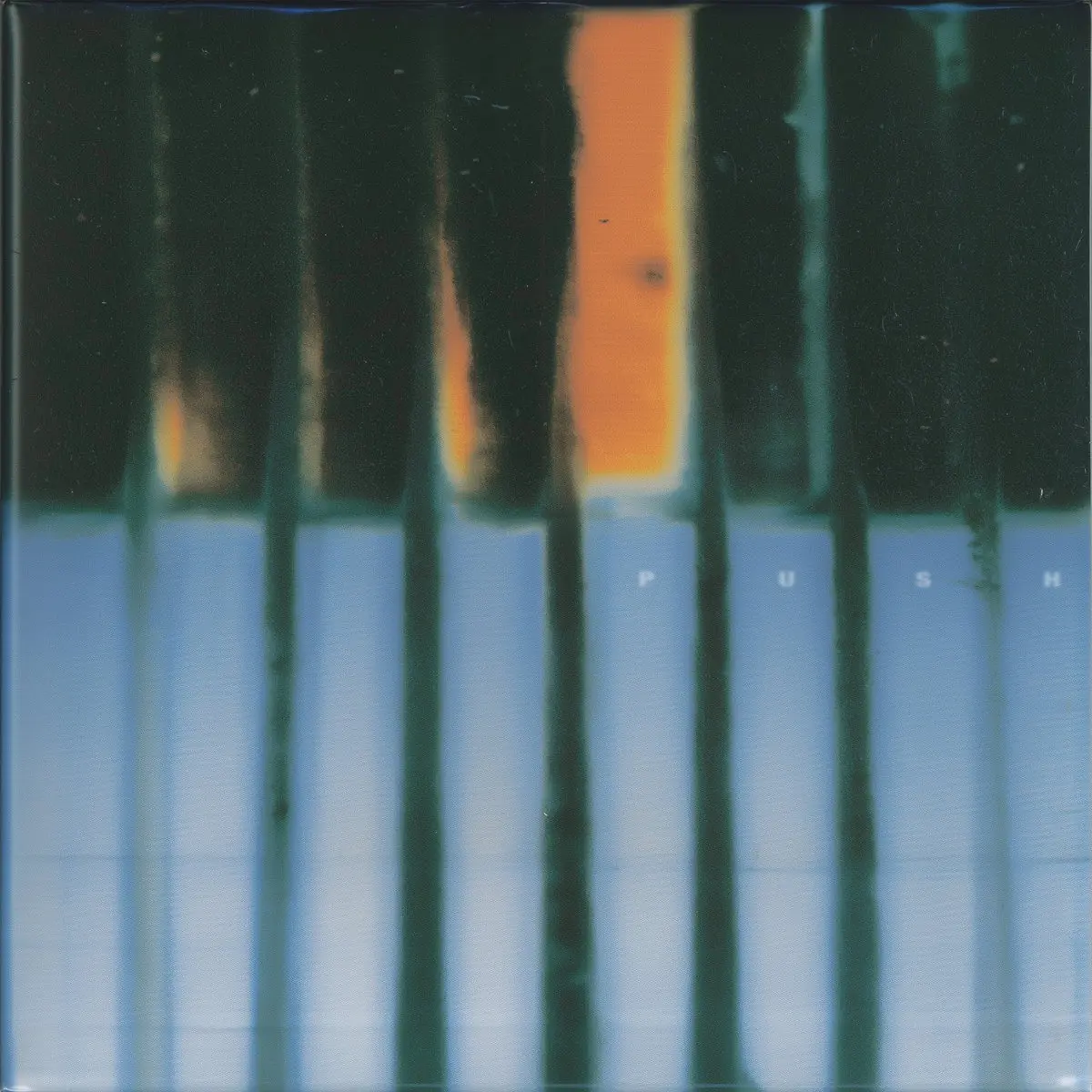
With his third full-length album, Push, the Barcelona-born, London-based multi-instrumentalist has executed a breathtaking metamorphosis. Gone is the protective shield of scruffy, oblique detachment. In its place is an intensely focused, meticulously crafted masterwork that plunges deep into the ethereal, hypnotic underworld of post-rock. Push is not merely a stylistic pivot; it is a declaration of artistic maturity. Where Peeters’ previous output felt like transient sonic collaging, Push is a fully realized, expansive ecosystem where "chill vibes" blossom into towering architectures of sound, and casual relaxation transcends into total, transcendent bliss.
Detailed Chronology: The Evolution of Eterna
To understand the magnitude of Push, one must map the trajectory of Guillem Peeters’ creative output over the past three years. The chronology of Eterna is a textbook study in artistic shedding—a rapid evolution from localized London post-punk side-project to a singular, timeless compositional voice.
Phase I: The Lo-Fi Foundations (Wardrobe and Debunker)
When Peeters initially stepped out from behind the drum kit of bar italia to launch Eterna, his approach was defined by spontaneity and an embrace of raw textures. Wardrobe (2023) and Debunker (released earlier in 2025) functioned largely as sonic sketchbooks. Operating heavily within the parameters of contemporary London underground scenes, these releases captured the debris of post-punk pastures. They were undeniably charming, featuring warped guitar lines and muffled vocal delivery that appealed directly to fans of the capital’s fertile, if occasionally insular, DIY circuit.
However, these albums suffered from a structural timidity. They felt tethered to the identity of a "drummer’s solo project"—functional, rhythmic, and rhythm-forward, but lacking the broader panoramic vision required to leave a permanent cultural footprint. The song structures often meandered defensively, as if Peeters was afraid to commit fully to an emotional peak lest he be accused of trying too hard. The trapdoor was rattling.
Phase II: The Epiphany on "Kyrie"
The pivotal turning point of Push—and arguably of Peeters’ entire compositional career—arrives precisely thirty-four seconds into its second track, "Kyrie."
The track initiates with a masterclass in tension: a distant, skittering drum loop paces the perimeter of the stereo field while a skeletal, phasing guitar dances near the top of the mix. Both elements orbit one another in a state of open-ended search, drifting through the haze without a definitive anchor.
Then, at the 0:34 mark, the paradigm shifts. Peeters locates the secret chord. He splays it fluidly across the fretboard, while subterranean synth textures (vworp) ripple through the foundation. The faraway percussion instantaneously snaps into alignment with the rest of the arrangement, locking the track into a breathtaking equilibrium. Listening to "Kyrie" feels akin to watching an explorer chart an uncharted continent in real time—not simply discovering new land, but planting a flag and making it permanently habitable.
Phase III: The Architectural Triumph of Push
Following this breakthrough moment, the rest of Push unfurls as a masterclass in patient sequencing and textural world-building. Severing his ties with the tiresomely disaffected tropes of his past, Peeters leans heavily into the rich, historic lineage of English post-rock and pastoral art-rock.
Tracks like "Shadowcasting for the Villain" shimmer with the iridescent, complex architecture of XTC’s Apple Venus Volume 1, filtered through the taut, spider-like guitar precision of David Pajo. Meanwhile, the album’s emotional core stretches across contrasting emotional states: the direct, emotionally raw songwriting of the "copecore" brawler title-track "Push" and the aching, slowcore lament of "Ten Lone Stars."
The album closes with "Rex," a magnificent pastoral drift where distant, obscured vocal harmonies wash over dub-inflected minimalist percussion and stuttering guitar motifs. It is a stunning denouement that encapsulates Peeters’ newfound dedication to craftsmanship over cool.
Supporting Context & Metrics: Sound Palettes and Lineages
To contextualize the sonic universe of Push, musicologists and critics must look beyond the immediate boundaries of London’s current indie circuit and examine the deep-seated historical lineages that inform Peeters’ new compositions.
| Track Title | Primary Sonic Influences | Key Instrumentation & Techniques | Emotional/Aesthetic Archetype |
|---|---|---|---|
| "Kyrie" | Bark Psychosis, Talk Talk | Phasing guitars, distant loops, tactile synth vworp | The Epiphany / Real-time discovery |
| "Shadowcasting for the Villain" | XTC (Apple Venus era), Slint / David Pajo | Taut guitar spidercraft, shimmering high-end mix | Pastoral post-rock / Complex architecture |
| "Gum" | Tara Clerkin Trio, early trip-hop | Circuit-breaker beats, wilting minimalism | Moody, hypnotic liminality |
| "Push" / "Ten Lone Stars" | Slowcore pioneers, direct indie-rock | Front-and-center songwriting, emotionally rich playing | Direct confrontation / Copecore & Slowcore |
| "Rex" | Talk Talk (Spirit of Eden era), Dub minimalism | Obscured vocal harmonies, stuttering guitars, pastoral drift | Timeless, meditative closure |
The Shadow of Talk Talk and the Post-Rock Underworld
A defining characteristic of Push is its strategic deployment of negative space. Utilizing a philosophy of "less reverb is more reverb," Peeters channels the spirit of Mark Hollis and Talk Talk during their definitive late-era reinvention (Spirit of Eden and Laughing Stock). The patient buildups, sublime pastoral beauty, and willingness to let silence speak as loudly as instrumentation elevate the album far above standard genre exercises.
Some might be tempted to characterize the record as simply a modernization of first-wave post-rock—imagine Bark Psychosis commuting via the Elizabeth Line. Yet, such a localized comparison undersells the work. The cloudy hypnagogia surrounding Push places it outside the linear timeline of current musical trends. This is music designed to halt the progression of time entirely.
Official Statements & Critical Reception
The transition from the lo-fi scaffolding of Wardrobe to the widescreen cinematic scope of Push has prompted widespread reevaluation within independent music circles regarding Guillem Peeters’ artistic trajectory.
Reflecting on the motivations behind the stylistic pivot, early production notes and critical analysis point to a conscious rejection of modern irony. In an era where musicians frequently hide behind layers of post-ironic detachment, Peeters’ uncompromising earnestness has been heralded as a refreshing defiance of industry norms.
"Where before there was only spur-of-the-moment collaging, the evidence on Push suggests a more carefully crafted approach, with some whimsical whittling down too. He has gone deeper into the post-rock underworld, where ‘chill vibes’ have grown into fully-fledged, hazy expanses of sound." — Contemporary Music Review
Critics have been particularly vocal about Peeters’ physical guitar work, describing his winding instrumental passages and tactile, broken-sounding guitar solos not as self-indulgent noodling, but as acts of intentional urban graffiti. As one reviewer aptly noted:
"Peeters tags its winding instrumental passages—broken-sounding, tactile guitar solos are his spray paint—the way that street artists might tag the railway bridges on your daily commute: with love, gumption, and zeal."
Future Outlook: The Butterfly Emerges
Just twelve months removed from the release of Debunker, the transformation of Guillem Peeters is nothing short of breathtaking. In the span of a single year, the bright-eyed slackerpillar has officially emerged as a brilliant, vibrant blue butterfly.
The implications for Eterna moving forward are profound. By shedding the defensive armor of affected shoddiness and embracing the rigorous, deeply emotional demands of expansive post-rock, Peeters has rewritten his own artistic contract. He is no longer merely "the drummer from bar italia" moonlighting with tape decks; he is a visionary multi-instrumentalist capable of constructing immersive, breathing sonic worlds that feel as though they will endure for generations.
For listeners who found themselves fatigued by the endless cycle of indifferent bands and disposable lo-fi side-projects, Push offers a permanent sanctuary. The trapdoor has been permanently sealed shut. Guillem Peeters cares deeply about his art—and in the end, that is the coolest thing an artist could possibly do.