
Executive Overview
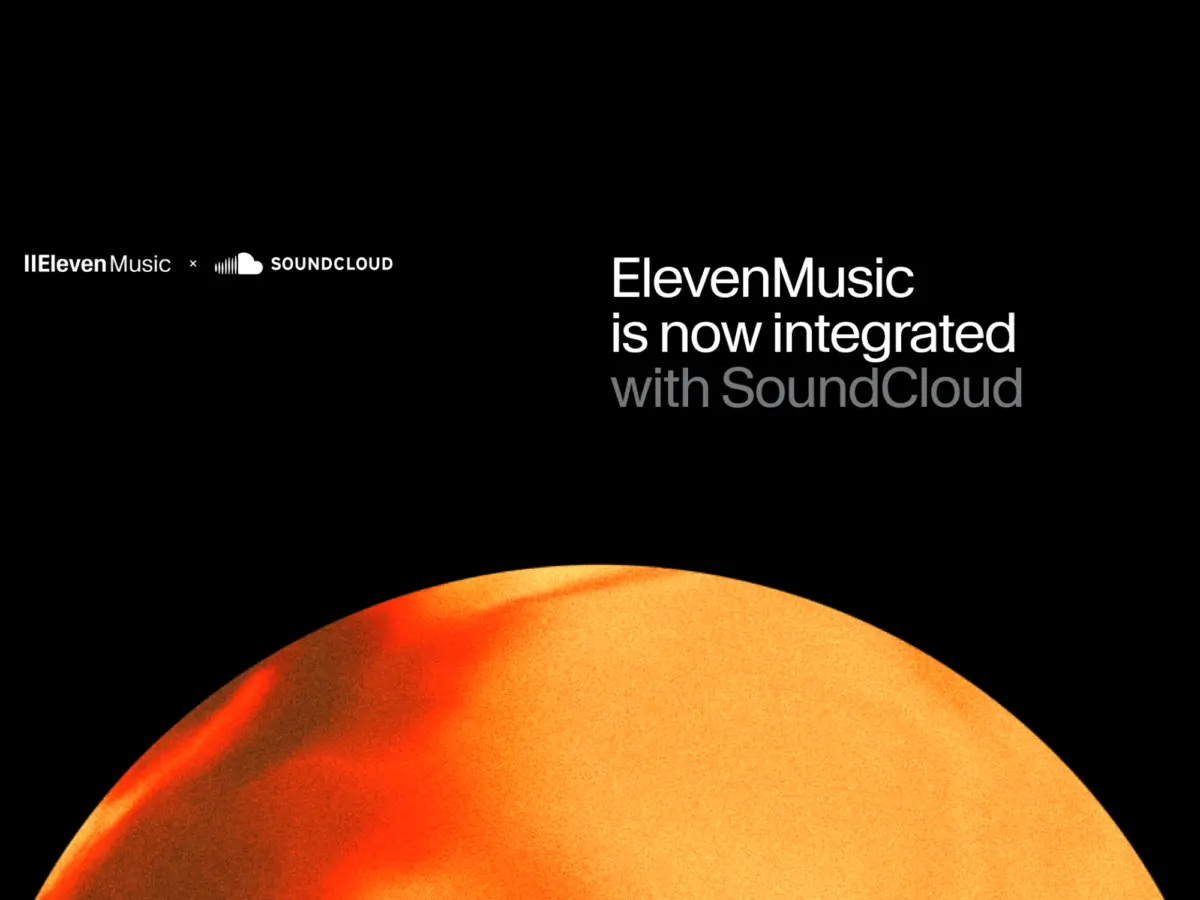
In a bold and strategically provocative move that highlights the widening chasm between traditional music publishing and generative artificial intelligence, streaming platform SoundCloud has announced a groundbreaking partnership with artificial intelligence pioneer ElevenLabs. The collaboration integrates ElevenLabs’ innovative generative audio service, ElevenMusic, directly into SoundCloud’s expansive ecosystem. This integration establishes a direct, frictionless pipeline for users to publish AI-generated tracks straight to the streaming service, effectively blurring the lines between human-crafted composition and machine-generated soundscapes.
This announcement arrives at a profoundly tense moment for the global music industry. Across the board, major rightsholders, independent record labels, and prominent artists’ advocacy groups are actively campaigning against the proliferation of unvetted, algorithmic audio. Industry heavyweights have repeatedly urged digital service providers (DSPs) to adopt aggressive measures against synthetic creations—advocating policies that de-recommend, demonetize, and, in many cases, entirely purge AI-generated music from mainstream distribution platforms.
Against this volatile backdrop, SoundCloud’s decision to embrace an AI audio pipeline can be characterized as nothing short of audacious. Yet, both companies are signaling a commitment to a measured, compliant, and transparent approach. By emphasizing strict adherence to copyright policies, mandatory content disclosures, and a concurrent milestone joining the digital music standards organization DDEX, ElevenLabs and SoundCloud are attempting to chart a sustainable path forward. This partnership forces a critical question: Can the music industry successfully integrate generative AI as a legitimate creative tool, or will platforms like SoundCloud face a severe backlash from a creator community increasingly protective of its economic and artistic sovereignty?
Detailed Chronology of the Partnership
To understand the weight of the SoundCloud and ElevenLabs integration, it is essential to trace the rapid evolution of generative AI tools within the consumer audio market and the concurrent defensive posture adopted by the traditional music industry.
The Rise of Generative Audio
Over the past twenty-four months, generative artificial intelligence has transitioned from a niche computer science experiment into a powerful consumer-facing utility. Companies like ElevenLabs initially dominated the market through hyper-realistic text-to-speech and voice-cloning technologies before pivoting heavily into the musical domain. ElevenMusic, the specific vertical involved in the SoundCloud agreement, was engineered to allow creators—ranging from bedroom producers to multimedia hobbyists—to generate complete musical compositions, melodies, and sound beds using advanced neural networks.
As these tools became more sophisticated, the bottleneck shifted from creation to distribution. While users could easily conjure complex audio files locally, sharing them required uploading them manually to hosting platforms. Recognizing an opportunity to streamline this workflow, ElevenLabs initiated discussions with streaming platforms to create native integrations, ultimately landing on SoundCloud—a platform historically celebrated for championing independent, DIY, and underground creators.
The Parallel Industry Pushback
Concurrently, the broader music industry has been on a war footing regarding unmanaged AI. Trade bodies such as the International Federation of the Phonographic Industry (IFPI), the Recording Industry Association of America (RIAA), and various independent music publisher networks have grown increasingly vocal. Their primary concern centers on unauthorized data scraping—where AI models are trained on copyrighted works without permission or compensation—and the flood of low-quality, synthetic tracks diluting streaming monetization pools.
Major rightsholders have issued stern directives to DSPs, demanding the implementation of rigorous filtering mechanisms. These demands include automated detection of synthetic watermarks, the complete removal of tracks that mimic specific commercial artists without consent, and algorithmic penalties that bury AI tracks deep within recommendation queues.
The Dual Announcements
It was within this charged environment that the partnership materialized. On the exact same day that SoundCloud and ElevenLabs publicized their workflow integration, ElevenLabs made another strategic announcement designed to appease the institutional music business: the company officially became the first pure-play artificial intelligence firm to join DDEX (Digital Data Exchange) as a full member. By adopting these global industry standards for data exchange, ElevenLabs positioned itself not as an insurgent disruptor looking to bypass copyright law, but as a willing participant eager to integrate into the established institutional frameworks of the digital music supply chain.
Supporting Context & Metrics: The AI vs. Rightsholder Battleground
The collision between streaming platforms and artificial intelligence companies is underpinned by significant economic stakes, shifting consumer behaviors, and a complex web of legal uncertainties.
The Economics of the Streaming Pool
At the heart of the rightsholders’ resistance lies the "pro-rata" streaming payment model utilized by most DSPs, including SoundCloud. In this model, all subscription fees and ad revenues are pooled together and distributed to rightsholders based on their percentage of total streams. When millions of low-cost or free AI-generated tracks flood a platform, critics argue that they siphon vital micro-pennies away from human songwriters, session musicians, and independent artists who rely on streaming revenue for their livelihoods.
Furthermore, the sheer volume of daily uploads makes manual curation and policing nearly impossible for moderation teams. SoundCloud hosts hundreds of millions of tracks uploaded by a vast global community. Adding an automated bridge from a powerful text-to-music engine like ElevenMusic threatens to exponentially accelerate this volume, creating unprecedented strain on copyright detection algorithms like SoundCloud’s Content Protection System.
ElevenLabs’ Proactive Compliance Strategy
Despite operating in a sector frequently accused of intellectual property theft, ElevenLabs has systematically sought to differentiate itself through proactive engagement. Unlike several of its competitors who have adopted a "move fast and break things" philosophy regarding copyright, ElevenLabs has consistently pursued formal partnerships with rightsholders, voice actors, and media companies.
By prioritizing ethical data sourcing, offering compensation frameworks for voice models, and now embedding itself within DDEX standards, ElevenLabs is attempting to build a compliant bridge between Silicon Valley tech development and Tin Pan Alley legal realities. The integration with SoundCloud represents the logical extension of this philosophy: building legitimate pathways for users to share AI-assisted creations while maintaining traceability.
Official Statements and Industry Reactions
The reception to the partnership has laid bare the deep ideological divisions currently plaguing the digital music landscape. Stakeholders are attempting to balance the promise of technological innovation with the stark reality of creator protection.
Leadership Perspectives: SoundCloud
SoundCloud’s leadership has walked a careful rhetorical tightrope, acknowledging the powerful capabilities of the new technology while heavily centering the human artist in their public messaging.
Eliah Seton, CEO of SoundCloud, addressed the partnership by emphasizing the platform’s historical ethos of creative empowerment. In an official statement, Seton remarked:
"We’re opening up new possibilities for artists to experiment, share their work, and build an audience."
Crucially, Seton also sought to reassure the platform’s foundational user base—human musicians and independent creators—by outlining future corporate strategy:
"We will continue exploring how responsibly developed AI can expand creative possibilities while keeping artists at the centre."
To reinforce these assurances, SoundCloud issued explicit operational guidelines regarding the integration. The platform stressed that music published through the integration will be subject to SoundCloud’s existing content policies, including applicable ownership and rights requirements. Additionally, SoundCloud confirmed that all tracks generated via ElevenMusic and published to the platform will carry mandatory disclosures detailing their synthetic origins, ensuring total transparency for listeners browsing the platform.
The Creator Community and Rightsholder Apprehension
Despite these regulatory safeguards, the initial reaction from the broader independent music community has been mixed, leaning toward cautious skepticism. Many artists and managers have expressed concern that mandatory disclosure labels are insufficient to combat listener fatigue or the dilution of algorithmic discovery.
Music industry analysts point out that while SoundCloud has implemented robust rules on paper, the enforcement mechanisms will face immense stress tests. If users discover ways to bypass ElevenMusic’s guardrails or if the automated origin disclosures fail to register correctly on third-party aggregators, SoundCloud could quickly find itself at the center of an artist boycott. The platform’s community management team will be forced to monitor sentiment meticulously over the coming months to preemptively quell any backlash.
Future Outlook: Where Goes the Music Industry?
The SoundCloud and ElevenLabs partnership serves as a watershed moment for the digital audio economy. It forces industry observers to confront an inevitable reality: generative artificial intelligence cannot be legislated or wished out of existence; it must be integrated, regulated, and managed.
A Blueprint for Future DSP-AI Partnerships?
If the SoundCloud-ElevenLabs integration succeeds without triggering a mass exodus of human creators, it could serve as a vital blueprint for other major streaming services. Platforms like Spotify, Apple Music, and YouTube are watching closely to see how consumers and rightsholders respond to transparently labeled, platform-integrated AI music.
Should the model prove viable, we may witness a standard industry framework emerge—one where AI creation tools are tethered directly to digital distributors that enforce strict metadata tagging, ownership verification, and automated revenue-sharing models that compensate the creators of the underlying training data.
The Ongoing War for Authenticity
However, formidable challenges remain. The fundamental tension between algorithmic efficiency and human artistic authenticity will not be resolved by a single API integration or DDEX membership. As generative models become virtually indistinguishable from human performances, the music industry must grapple with existential questions concerning copyright law, the definition of authorship, and the cultural value of human emotion in art.
For now, SoundCloud has taken a calculated gamble. By positioning itself at the bleeding edge of the AI audio revolution rather than burying its head in the sand, the streaming pioneer is betting that the future belongs to platforms that can successfully harmonize technological capability with ethical governance. Whether that gamble pays off or sparks a revolt among the very artists who built SoundCloud’s cultural cachet remains one of the most compelling narratives in modern media.