
Executive Overview
In an era defined by hyper-accelerated digital cycles, hyper-targeted algorithmic recommendations, and the relentless pursuit of the elusive overnight viral moment, the music industry is experiencing a profound identity crisis. Emerging artists are frequently told that their survival depends on their ability to feed the content beast—churning out vertical video snippets, optimizing metadata, and chasing fleeting playlist placements that can vanish as quickly as they appear.
However, according to Jaddan Comerford, the founding CEO and visionary behind Unified Music Group, this sprint-to-the-top mentality is fundamentally flawed. With decades of experience steering the global success stories of major Australian acts, Comerford has witnessed firsthand the dizzying highs and devastating lows of modern artist development. In a recent, wide-ranging interview with Artist Ally, he offered a radically grounded perspective that challenges the prevailing wisdom of the digital-first music economy.
Comerford’s core message is both a warning and an invitation: stop rushing, abandon the pursuit of hollow virality, and return to the fundamentals of long-term career building. By prioritizing authentic artistic identity, deep-rooted fan engagement, tangible offline experiences, and old-school scarcity, emerging creators can bypass the exhausting treadmill of algorithmic dependency. This comprehensive report examines Comerford’s strategic insights, contextualizes them within the broader landscape of modern music marketing, and explores how the industry is pivoting toward sustainable, community-driven models of growth.
Detailed Chronology: The Evolution of Modern Music Promotion and the Rise of Algorithmic Fatigue
To fully understand the weight of Comerford’s advice, it is essential to trace how the music industry arrived at its current intersection of digital saturation and cultural exhaustion.
Phase I: The Democratization Era (Early 2010s)
When streaming services first began to achieve mass adoption, the narrative was overwhelmingly utopian. Independent artists no longer needed the gatekeepers of major record labels to reach a global audience. Digital distribution platforms democratized access, allowing anyone with a digital audio workstation and an internet connection to upload music to Spotify, Apple Music, and SoundCloud. In this nascent environment, early-adopter artists could leverage social media platforms like Facebook, Twitter, and early Instagram to cultivate direct connections with fans. Playlists—both editorial and algorithmic—became the new radio dials.
Phase II: The Algorithmic Panopticon (Late 2010s to Early 2020s)
As the streaming marketplace became saturated with tens of thousands of new tracks daily, platforms shifted their focus from human curation to machine-learning algorithms. Discovery was no longer just about organic sharing; it became a mathematical game of retention rates, skip rates, and audio-feature analysis. Concurrently, the explosion of short-form video platforms altered the attention economy. Music was no longer evaluated solely on its sonic merit or emotional resonance; it had to double as a 15-second soundbed capable of capturing attention in a vertically scrolling feed.
Phase III: The Breaking Point and the Call for Offline Realism (Present Day)
By the mid-2020s, both artists and consumers began exhibiting clear symptoms of digital fatigue. Audiences, bombarded by an infinite stream of algorithmic recommendations and parasocial noise, started craving tactile, authentic, and localized experiences. For emerging creators, the realization set in that millions of streams do not automatically translate into ticket sales, merchandise movement, or sustainable livelihoods. It is within this historical pivot point that Jaddan Comerford’s recent advisory interventions arrive. By stepping back to re-evaluate what makes a career endure, Comerford is championing a return to the foundational blueprints that sustained legendary acts long before the internet existed.
Supporting Context & Metrics: The Reality of the Independent Artist Economy
To appreciate why Comerford advises against pinning hopes on viral moments and playlist placements, one must analyze the stark economic and psychological realities facing today’s independent creators.
The Myth of the Viral Lifespan
While a viral TikTok trend or a high-profile playlist slot can introduce an artist to millions of listeners overnight, data consistently shows that the retention rate for these "accidental" fans is abysmal. According to industry analyses tracking passive streaming cohorts, listeners acquired via algorithmic pushes exhibit significantly lower lifetime value (LTV) metrics compared to those who discover an artist organically through community word-of-mouth or live performances.
- High Churn Rates: Listeners who find a song via a viral challenge or a mood-based playlist often treat the track as disposable background audio rather than a piece of work by an artist they wish to follow.
- The "One-Hit Wonder" Trap: Artists who build their initial momentum on a single viral hook frequently struggle to release subsequent material that resonates with an audience that was never truly invested in their broader artistic vision.
The Psychology of Digital Fatigue
Consumer research highlights a growing weariness regarding digital overload. The average music consumer is exposed to thousands of marketing impressions, push notifications, and video clips daily. This saturation has paradoxically created a hunger for scarcity and physical permanence.
- The Vinyl and Cassette Renaissance: The continuous, multi-year surge in physical music sales—particularly vinyl records and cassettes—proves that modern fans place a high premium on tangible ownership.
- The Premium on Intimacy: In an age where digital content can be easily replicated, generated, or endlessly streamed for fractions of a cent, live local scenes, intimate pop-ups, and limited-edition physical releases feel exclusive, valuable, and deeply human.
Official Statements and Strategic Insights: Breaking Down Comerford’s Blueprint
Jaddan Comerford’s dialogue with Artist Ally provides a masterclass in modern artist development. Below, we break down his primary strategic pillars for building a resilient, enduring music career.
1. Rejecting the Short-Cut Mentality
“This feeling of, ‘If only I could go viral,’ or, ‘If only I could get on a playlist, everything would be okay.’ These sorts of things can be great, but without building foundations, those things can often be very short-lived.”
Comerford immediately targets the psychological trap that ensnares many young artists. The illusion that a single digital break will solve all career hurdles prevents creators from doing the hard, unglamorous work of audience construction. True career longevity requires a solid structural base—much like building a house, where pouring a deep foundation takes significantly more time and effort than erecting temporary scaffolding.
2. Authenticity, Belief, and the Live Performance Test
“Are you making music that you believe in, that you can authentically sell, and perform live, and convince people? Can you then build audience? Can you take that audience on a journey? These things take time, and things that take time are generally the things that last longer.”
Here, Comerford outlines a rigorous litmus test for new material. Before an artist worries about algorithmic optimization, they must ask themselves fundamental questions:
- Internal Conviction: Does the music reflect the artist’s true identity, or is it merely engineered to fit a current trend?
- Live Execution: Can the song translate effectively to a live stage in front of an empty or hostile room?
- Narrative Arc: Can the artist guide a listener from being a casual observer to an invested community member over the course of multiple releases?
3. Escaping the Algorithm via Offline Action
For artists exhausted by the endless demand to feed recommendation algorithms, Comerford advocates for a strategic retreat into the physical world. Rather than trying to outsmart a constantly changing platform code, creators should focus their energy where competition is lower and emotional impact is higher.
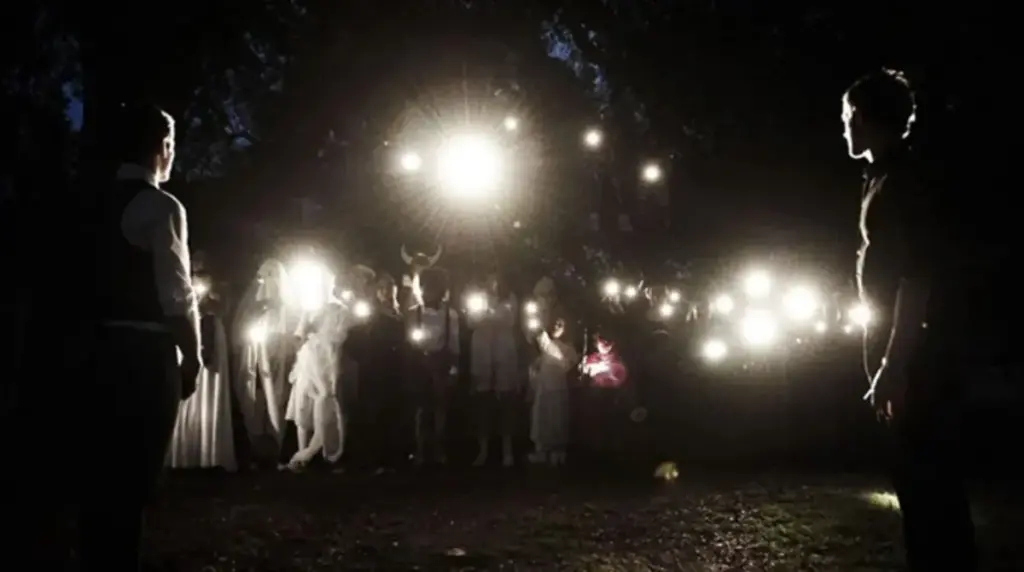
- Pop-Up Performances in Public Spaces: Taking music directly to the streets, local parks, or unconventional venues creates memorable, unmediated moments that algorithms cannot replicate or monetize away.
- Cross-Pollination Showcases: Teaming up with local peers to host independent showcases builds localized creative ecosystems. Instead of competing for digital attention on the same crowded feeds, artists can pool their local networks to draw real crowds.
4. Reintroducing Manufactured Scarcity
Perhaps Comerford’s most provocative piece of advice involves deliberately restricting access to early work through old-school physical mediums.
“Release the first songs just on a CD, and just sell them to your 50 fans, or 100 fans… and make it limited, and make it scarce. It’s not an incredibly original idea – it’s been done forever. But fans increasingly want these experiences as we just get maybe slightly fatigued with all the various things coming at us digitally.”
By limiting a release to an edition of 50 or 100 physical compact discs or cassettes sold directly to an initial core group of supporters, an artist transforms a routine music drop into an elite, coveted collector’s event. This strategy engenders deep loyalty: those first 50 buyers no longer feel like passive consumers; they feel like foundational investors in the artist’s journey.
Future Outlook: The Next Paradigm in Independent Music
As we look toward the future of the global music industry, the philosophy championed by Jaddan Comerford points the way toward a healthier, more sustainable ecosystem for independent creators. Several key trends are likely to emerge as artists and managers apply these slow-growth, community-first principles:
The Hyper-Local Micro-Scene Renaissance
Rather than striving for immediate global ubiquity, future breakout stars will increasingly emerge from tightly knit, highly active local micro-scenes. By dominating their home markets physically before expanding digitally, artists will build resilient fanbases capable of supporting international touring and merchandise sales from day one.
The De-Algorithmicization of Fandom
As audiences grow weary of algorithmic curation dictating their tastes, direct-to-fan platforms, physical newsletters, private communities, and localized real-world events will reclaim their status as the premier vehicles for career development. Artists who master the art of offline engagement will find themselves insulated from the volatility of platform algorithm updates.
Redefining Success Metrics
The industry metric for success is slowly shifting away from raw, unmonetized stream counts toward more holistic indicators of health: community engagement rates, ticket sales, physical product sell-through speeds, and direct revenue generation. In this emerging paradigm, an artist with 1,000 true fans who buy physical goods and attend shows will be recognized as far more successful and financially secure than an artist with millions of passive, algorithmic streams who cannot fill a local club.
Conclusion
Jaddan Comerford’s insights serve as a timely anchor in a sea of industry noise. By reminding emerging artists that lasting art cannot be rushed, manufactured by an algorithm, or sustained by a momentary flash of digital virality, he champions a return to timeless musical values: authenticity, patience, scarcity, and genuine human connection. For those willing to put in the hard work of building foundations from the ground up, the future belongs not to the fastest content creators, but to the most enduring artists.