
Executive Overview
The contemporary jazz landscape continues to thrive through a delicate tension between archival reverence and forward-thinking sonic experimentation. Recent releases from bassist Tyrone Allen II, guitarist Ryan Meagher, and flutist Anggie Obin offer a panoramic view of an art form that refuses to remain static. Spanning structural recycling, cross-idiomatic synthesis, and deeply personal homages, these three recordings demonstrate how modern artists navigate both personal memory and global upheaval.
Tyrone Allen II’s Upward acts as a mosaic-like psychological portrait of pandemic-era isolation, utilizing recursive motifs and electronic textures to evoke the claustrophobia and resilience of lockdown. Conversely, Ryan Meagher’s Snakes marks over two decades of artistic maturation, channeling a buoyant camaraderie through folk, rock, and bebop idioms. Meanwhile, Panamanian flutist Anggie Obin anchors her debut live album, Luz, in a deeply nurturing, patient aesthetic that bridges classical discipline with jazz improvisation.
Together, these albums illustrate a vibrant ecosystem where technical mastery serves emotional resonance. This review provides an exhaustive examination of these three distinct releases, analyzing their structural frameworks, collaborative dynamics, and thematic underpinnings.
Detailed Chronology and Artistic Analysis
Tyrone Allen II: Upward — The Architecture of Memory
Recorded in Brooklyn, New York, in April 2024 and released via Dreams & Fears Records (DF 9101 CD), Tyrone Allen II’s Upward is an exercise in recursive composition. The album challenges conventional linear narrative structures by treating musical motifs as recyclable materials. Motifs and rhythms introduced in early tracks resurface transformed on later compositions, creating a structural loop where what goes around inevitably comes around.
At the core of Upward is a five-track suite dedicated to exploring the psychological contours of pandemic lockdown. This sequence begins with Stuck, a piece characterized by exhausted, cooped-up energy emphasized by Allen’s use of arco bass. The atmosphere shifts slightly with the introduction of Samantha Feliciano’s harp, which injects a tentative thread of hope before the ensemble plunges back into the agitated, angrier sentiments of Alt. Stuck.
Allen’s approach to leadership is notably understated. Throughout the 14-composition tracklist—which includes Early 2020’s, Smp Sng, Cassia, Upward, Art Day, The A-Side (Dedicated To R. P.), 2020’s Intro, Stuck, Harp Solo, Mood: 1a-1b, Mood: 1c, Alt. Stuck, When Is It Ever Really Smp / Smp 4 Me, and Bass Unlimited—the bassist functions as a subtle architect rather than an overbearing soloist. He offers only necessary nudges, allowing his six-person ensemble to fluidly drift in and out of the spotlight.
A prime example of this collaborative fluidity occurs on Smp Sng, where harpist Feliciano takes a momentary leave, making space for trumpeter Aidan Lombard. This particular track stands out for its prominent deployment of electronic effects and samples, with Allen swapping his upright bass for a synthesizer. The result is a fidgety, restless composition built around a simple rhythmic cell that is further pared down in the subsequent piece, When Is It Ever Really Smp / Smp 4 Me.
Conversely, the title track Upward serves as the album’s most conventional modern jazz offering. As the record’s longest and oldest tune, it features a smudged, atmospheric melody delivered in unison by trumpet and saxophone before breaking into a series of overlapping solos. Pianist Lex Korten seizes this moment, delivering an extensive spotlight turn defined by scampering right-hand lines cascading over punchy, muscular chord shapes.
Ultimately, Upward succeeds by using fragmentation as a unifying device. As the album progresses, listeners are left with the distinct outline of a thoughtful, soulful composer whose work transcends the sum of its patchwork parts.
Ryan Meagher: Snakes — Two Decades of Cross-Idiomatic Synthesis
Marking more than 20 years since guitarist Ryan Meagher (pronounced "Marr") launched his professional career, Snakes (released in June 2025 via PJCE Records, PJCER 075) is a masterclass in stylistic integration. Recorded in Portland, Oregon, the album distills decades of accumulated insight, seamlessly blending structural elements drawn from folk, rock, bebop, and swing.
Meagher’s studio core comprises an elite cadre of collaborators: tenor saxophonist Noah Preminger, pianist George Colligan, bassist Michael Feinberg, and drummer Jonathan Pinson. This tight-knit ensemble—augmented on live cuts by saxophonist Joe Manis—exhibits a profound interpersonal chemistry that infuses the recording with a free-and-easy, unforced momentum.
This camaraderie is immediately palpable on Snakin’ It, a title born from an in-joke shared between Preminger, Feinberg, and Meagher within their fantasy baseball league. Beginning with an introductory passage of rustic, country-inflected guitar, the track rapidly evolves into a light-swinging groove. Preminger stretches across the full range of his instrument, probing both its lowest grunts and highest registers in a smooth-romping display.
The album’s dynamic range expands further through its inclusion of live performance recordings. On Pillage A Village, Meagher establishes a folk-oriented backdrop through patient, cyclical guitar noodling before his bandmates enter one by one, gradually stoking a pent-up, cantankerous spirit. The companion live track, Mongoose Of Damascus, pivots toward hard-bop territory, anchored by a bubbling, muscular bass solo from Feinberg.
Interspersed among these spirited romps are moments of stark emotional vulnerability. Bruiser boasts an infectious forward momentum, with Preminger’s tenor saxophone articulating the central melody with deliberate, weighty precision on every syllable. Meanwhile, Uncle Paul offers a somber, mournful counterweight—a composition that progressively slows, quiets, and sinks into an introspective depth.
Comprising seven tracks (Snakin’ It, The Boss, Rope Burn, Pillage A Village [live], Bruiser, Mongoose Of Damascus [live], and Uncle Paul), Snakes delivers a rich, highly repeatable listening experience that balances waggish humor with profound sincerity.
Anggie Obin: Luz — The Patient Tides of a Debut Leader
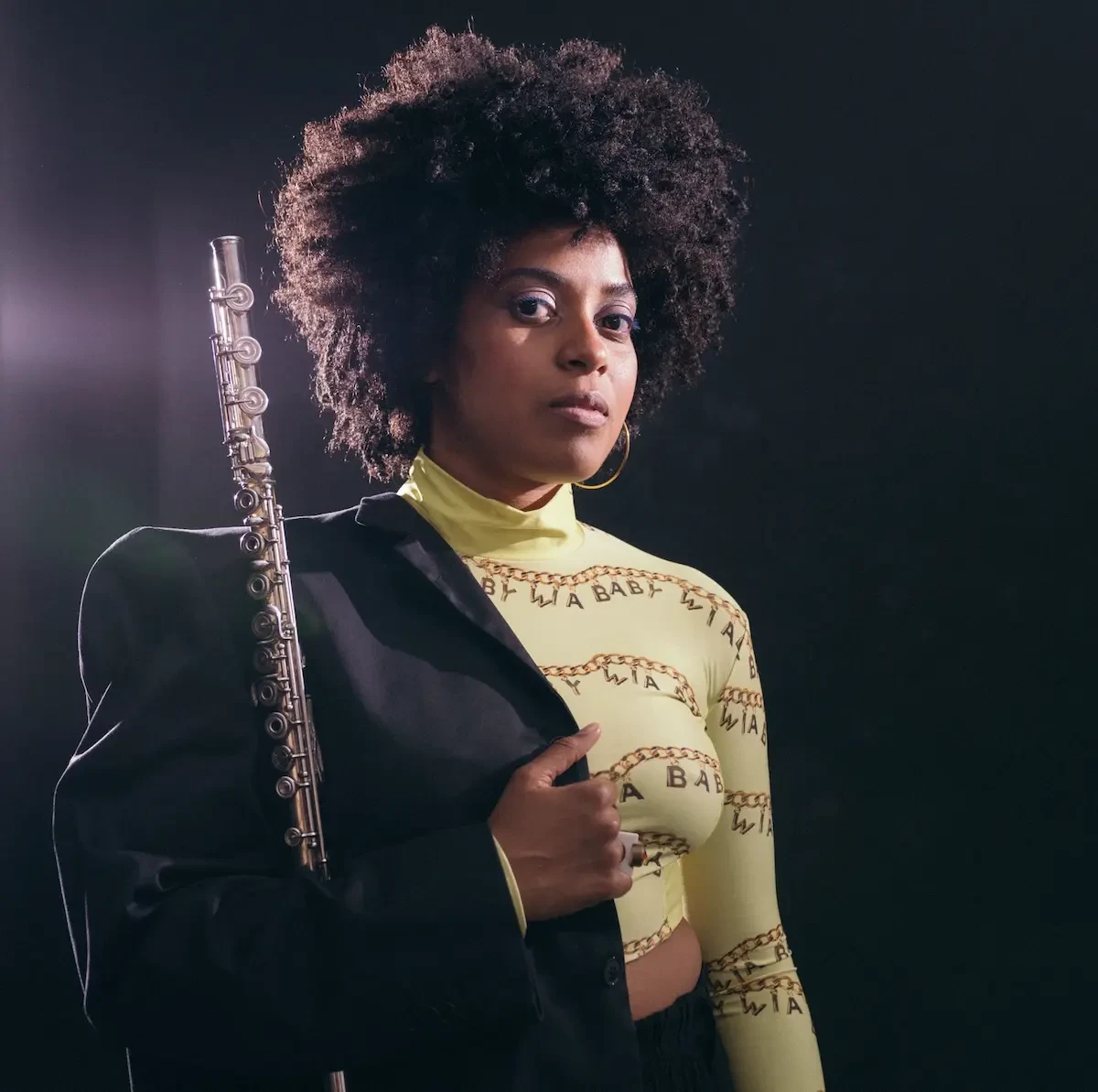
Captured live during the Estival de Jazz in Igualada near Barcelona in June 2025, Luz (released via UnderPool) introduces Panamanian flutist Anggie Obin as a formidable new compositional voice. Named in honor of her great-grandmother, this five-track debut (For Mr. G, Flash Of The Spirit, La Eucaristía, Luz, and Ballot Or The Bullet) is a feelings-first record characterized by watchful, nurturing, and selfless musicianship.
Obin assembled an international powerhouse rhythm and horn section for the performance, featuring American tenor saxophonist Bill McHenry, Cuban pianist Miguel “Wiwi” García, Japanese bassist Masa Kamaguchi, and Spanish drummer Estéfania Chamorro. Though the live setting occasionally introduces the subtle rustle of audience applause, the room largely maintains a hushed, reverent silence that suits the music’s meditative pacing.
A prevailing characteristic of Luz is its slow-creeping momentum. La Eucaristía exemplifies this approach, presenting a forlorn, hesitant melody jointly voiced by flute and saxophone. Obin generates an undercurrent of anxious energy through a quivering, delicate vibrato, while Chamorro provides sensitive, restless drumming that simmers beneath the surface.
The album also pays homage to jazz lineage through Flash Of The Spirit, composed by Panamanian bassist Santi Debriano. Drawing heavily upon the harmonic and rhythmic architecture of Thelonious Monk, the piece features a labyrinthine melody and an eccentric, wonky rhythm. McHenry navigates these turns with a stop-start solo defined by expansive silences and abrupt, concentrated bursts of melodic material.
In stark contrast, the record closes with Ballot Or The Bullet, a swaggering, heavy-grooved blues. Here, Obin steps forward with a howling, high-register solo marked by knife-like peaks and overtones that imbue her flute with a serrated, fierce vocal quality—prompting ecstatic whoops from the live audience.
Luz marks the arrival of a mature artist who understands the power of patience. By permitting her compositions to hang suspended in space and evolve on their own terms, Obin crafts a deeply insightful statement that defies the typical limitations of a debut recording.
Supporting Context & Metrics
To contextualize the commercial and artistic positioning of these releases, several structural metrics and production parameters must be considered:
- Geographic and Institutional Diversity: The featured artists represent a truly globalized jazz network. Tyrone Allen II operates out of the East Coast jazz incubator of Brooklyn, New York; Ryan Meagher anchors his work in the vibrant Pacific Northwest scene of Portland, Oregon; and Anggie Obin synthesizes Panamanian heritage with European infrastructure, recording live near Barcelona.
- Format and Runtime Distribution:
- Upward (Dreams & Fears Records DF 9101 CD): 14 tracks spanning a compact, dense narrative arc (Total Time: ~39:48).
- Snakes (PJCE Records PJCER 075): 7 extended tracks offering a sprawling, expansive listening experience (Total Time: 58:08).
- Luz (UnderPool): 5 immersive, long-form live compositions capturing a festival environment (Total Time: 44:39).
- Collaborative Density: Across all three records, a total of 17 distinct sidemen and guest artists are utilized, emphasizing the collaborative, ensemble-driven nature of modern jazz performance over solipsistic bandleader vehicles.
Official Statements and Artistic Intentions
While formal liner notes and press releases accompany each of these records, the overarching artistic statements reveal a shared commitment to authenticity over commercial conformity.
In discussions surrounding the conception of Upward, Tyrone Allen II has emphasized the necessity of reflecting psychological reality rather than idealized studio cleanliness. By recycling motifs across the album’s chronology, Allen sought to mirror how human beings process trauma and confinement—not through clean breaks, but through recurring, cyclical thoughts that demand re-examination.
Ryan Meagher’s approach to Snakes reflects an ethos of longevity and stylistic fearlessness. Celebrating over two decades in the discipline, Meagher has consistently maintained that jazz must remain porous to outside influences. The inclusion of folk structures and rock-inflected cadences is not a dilution of the jazz idiom, but rather an expansion of its expressive vocabulary, driven by decades of trusted collaboration with players like Noah Preminger and George Colligan.
Anggie Obin’s dedication of Luz to her great-grandmother establishes an immediate framework of matriarchal strength, patience, and selflessness. Obin has noted that the decision to record her debut live was a deliberate choice to embrace vulnerability. By exposing her compositions to the unpredictable energy of a live audience in Igualada, she ensured that the music’s organic, breathing quality remained uncorrupted by the sterile perfectionism often found in modern studio editing.
Future Outlook
The trajectory of modern jazz, as mapped by these three vital releases, points toward a future characterized by fearless cross-pollination and emotional sincerity. As artists increasingly reject rigid boundaries between idioms—integrating folk, rock, electronic soundscapes, and classical discipline—the genre continues to expand its cultural footprint.
Looking ahead, we can anticipate a continued rise in live-recorded conceptual albums, as artists seek the organic electricity of unedited audience interaction, exemplified by Obin’s Luz and Meagher’s live cuts. Simultaneously, the structural recycling pioneered by Allen on Upward suggests a movement toward more unified, long-form suites that treat albums not merely as collections of singles, but as comprehensive psychological journeys.
Ultimately, the works of Tyrone Allen II, Ryan Meagher, and Anggie Obin prove that modern jazz is in safe hands. By honoring their lineages while boldly interrogating their presents, these artists ensure that the genre will remain a vital, restless, and deeply human art form for decades to come.