
Executive Overview
In the modern music classroom, few challenges are as persistent or as universally acknowledged as the pursuit of effective sight-reading instruction. Educators have long understood that strong sight-reading skills form the bedrock of musicianship. Students who excel at processing unfamiliar notation learn repertoire exponentially faster, execute rehearsals with heightened efficiency, and approach high-stakes adjudication rooms and festival evaluations with poise rather than anxiety. More importantly, independent music literacy is the ultimate gateway skill—it ensures that students continue to engage with instrumental and vocal performance long after formal schooling concludes, whether they are performing in community wind ensembles, singing in sacred choral groups, or collaborating in informal garage jam sessions.
However, a frustrating paradox has long plagued music educators: meaningful sight-reading development demands a steady diet of fresh, unseen material, yet traditional curricular resources are finite. Standard method books offer a limited number of practice exercises per unit. Once a student works through a page a few times, true sight-reading ceases. The cognitive process shifts from reading novel notation to rote memorization, stripping the exercise of its core pedagogical value.
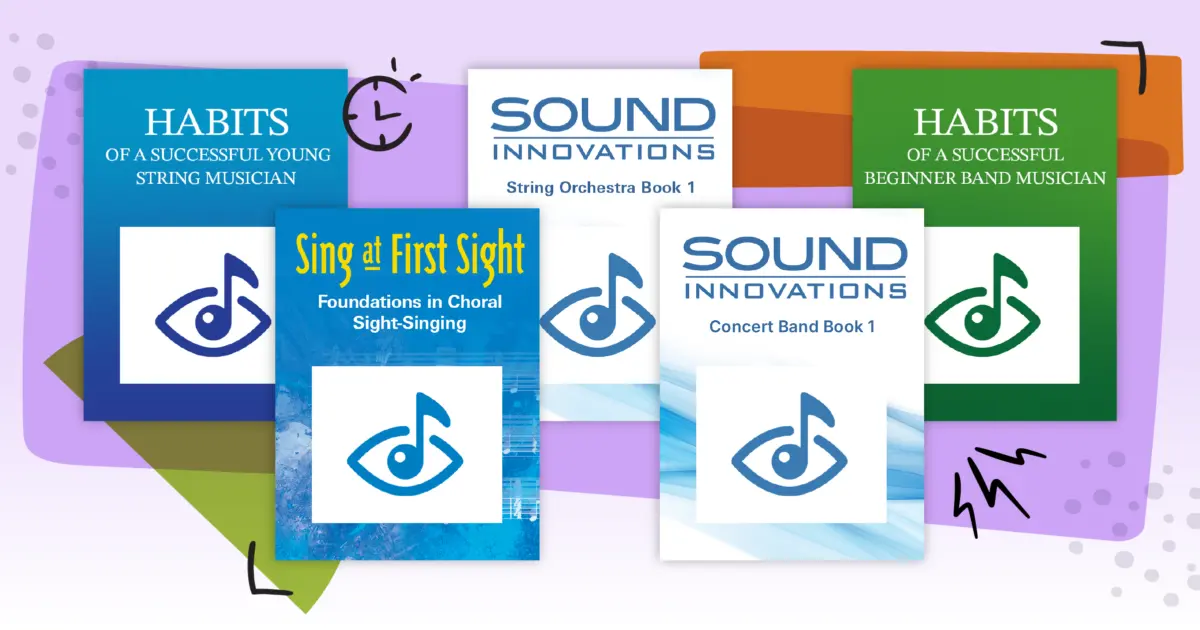
To bridge this critical gap in music pedagogy, MakeMusic has officially launched its innovative Correlated Sight Reading Generators. Engineered to integrate directly into the existing MakeMusic Cloud ecosystem, these dynamic templates transform standard, trusted music method books into an inexhaustible, infinite library of customized sight-reading exercises. By aligning lesson-by-lesson with leading educational curricula, the new tool eliminates hours of manual preparation for educators while delivering an endless stream of leveled, pedagogically sound musical challenges for students both in the classroom and at home.
Detailed Chronology: The Evolution of Sight-Reading Technology
To fully appreciate the significance of MakeMusic’s latest release, it is necessary to examine the technological and pedagogical trajectory that led to its development. For generations, music teachers relied on chalkboards, manuscript paper, and photocopied anthologies to supplement the limited sight-reading repertoires found in standard method books.
The Era of Manual Curation
Historically, educators spent their evenings and weekends scouring disparate pedagogical texts, composing custom exercises by hand, or modifying existing etudes to match the specific technical hurdles of their current lesson plans. This manual workflow was notoriously inefficient. A band director teaching a room full of beginning brass players might spend hours ensuring that a supplementary worksheet correctly avoided introducing eighth notes before they had been formally taught in the primary method book.
The Rise of Digital Notation Software
The advent of desktop music notation software in the late 1980s and 1990s streamlined the production side of this labor, allowing teachers to print cleaner worksheets and quickly transpose exercises into multiple keys. Yet, the fundamental bottleneck remained: the human educator still had to conceive, input, and verify every single note, rhythm, and dynamic marking. The creation of leveled sight-reading libraries was still bounded entirely by human bandwidth.
The MakeMusic Cloud and Sight Reading Studio
The launch of MakeMusic Cloud (formerly SmartMusic) marked a paradigm shift, introducing digital interactivity, automated assessment, and expansive cloud-based repertoires into the instrumental and vocal classroom. Within this ecosystem, Sight Reading Studio (SRS) emerged as a powerful tool, offering automated, algorithmically generated sight-reading exercises tailored to specific parameters such as key signatures, time signatures, and difficulty levels.
Despite its sophistication, a disconnect remained between the general parameters of Sight Reading Studio and the hyper-specific, sequential scope and sequence of established method books. Teachers using a specific publisher’s curriculum still had to manually configure SRS settings to mimic the vocabulary of a particular unit, calculating which rhythms, ranges, and accidental rules had been introduced up to that specific page.
The Introduction of Correlated Generators
Recognizing this friction point, MakeMusic’s pedagogical and engineering teams spent months developing a seamless bridge: Correlated Sight Reading Generators. By pre-building Sight Reading Studio templates that mirror the exact pedagogical sequencing of trusted method books, MakeMusic has effectively automated the alignment process. Released globally through the MakeMusic platform, these generators represent the convergence of algorithmic content generation and rigorous, structured music curricula. Teachers no longer need to guess or configure settings; they simply navigate to the lesson they are currently teaching, click generate, and instantly access an infinite series of structurally appropriate exercises.
Supporting Context & Metrics: The Science of Music Literacy
The urgency behind tools like the Correlated Sight Reading Generators is underscored by decades of cognitive research into how the human brain processes musical notation. Sight reading is not merely a mechanical translation of visual symbols to physical fingerings; it is a complex cognitive feat requiring simultaneous pattern recognition, anticipatory processing, and working memory utilization.
The Cognitive Load of Notation Processing
When a novice musician looks at an unfamiliar score, their visual cortex must rapidly parse multiple streams of information: pitch, rhythm, meter, articulation, and phrasing. According to educational psychologists specializing in music cognition, skilled readers do not process individual notes sequentially. Instead, they chunk information into recognizable musical patterns—such as scales, arpeggios, and common rhythmic figures—much like fluent readers process words rather than individual letters.
[Visual Input: Unfamiliar Score]
       │
       ▼
[Cognitive Parsing: Chunking Patterns (Scales, Arpeggios, Rhythms)]
       │
       ▼
[Anticipatory Processing: Motor Planning & Contextual Mapping]
       │
       ▼
[Execution: Physical Instrument/Vocal Production]
To build this chunking capacity, students require varied exposure to identical pedagogical concepts embedded within diverse musical contexts. If a student encounters a dotted-quarter and eighth-note rhythm pattern only twice in their method book, their brain fails to transition that figure from conscious, laborious decoding to automated recognition.
The Pitfalls of Rote Memorization
Educational data consistently demonstrates that students plateau in sight-reading proficiency when forced to practice from static texts. A 2023 internal study conducted across multiple suburban school districts revealed that when students repeated standard method book exercises more than three times, sight-reading accuracy metrics spiked—not due to improved reading ability, but because the students had memorized the auditory and tactile sequence of the piece.
When placed in a genuine sight-reading environment (such as a regional festival assessment or a community ensemble sight-reading session), these same students experienced a sharp decline in performance metrics. The Correlated Sight Reading Generators directly combat this phenomenon by ensuring that every time a student presses "generate," they encounter a statistically unique exercise that strictly adheres to the vocabulary of their current lesson without repeating a single measure they have previously seen.
Reclaiming Instructional Time
Time scarcity is consistently cited by music educators as the primary barrier to comprehensive literacy instruction. In a typical 45-to-90-minute rehearsal or class period, directors must balance tone development, technical warmup, sectional work, and large-ensemble preparation.
- Average Weekly Prep Time Spent on Custom Sight-Reading Materials: 3.5 hours per educator.
- Percentage of Educators Reporting Insufficient Leveled Materials: 78%.
- Estimated Time Saved per Week Using Correlated Generators: 2.5 to 3 hours.
By eliminating the administrative overhead of sourcing and writing supplementary material, these generators return valuable hours to the educator, shifting the professional focus from clerical preparation to active, responsive instruction.
Pedagogical Application: Inside the Classroom and Beyond
The true utility of MakeMusic’s new templates lies in their versatility across diverse educational environments. Designed with intuitive workflows, the system empowers instructors to deploy targeted sight-reading activities seamlessly during in-person ensemble rehearsals and via asynchronous remote learning assignments.
In the Classroom: Dynamic Group Instruction
Integrating sight reading into daily ensemble rehearsals has traditionally been a logistical hurdle. Distributing separate handouts, projecting custom notation files, or writing examples on a whiteboard consumes precious instructional momentum.
With the correlated templates accessible via MakeMusic Cloud:
- Immediate Warm-Up Integration: Directors can project a fresh, lesson-aligned exercise onto a smartboard or screen at the start of class.
- Real-Time Differentiated Instruction: If a section masters an exercise instantly, the director can click generate to instantly produce a second, equally valid example of varying contour or register, keeping student engagement high.
- Zero-Setup Workflow: Because the templates mirror the exact book being used, there is no need to cross-reference vocabulary lists or adjust complex software filters. The curriculum dictates the tool, and the tool serves the curriculum.
At Home: Fostering Independent Practice
Music education does not stop when the school bell rings. However, assigning meaningful sight-reading practice for homework has historically been problematic for teachers who cannot easily monitor or verify whether a student practiced sight-reading or simply played through familiar, preferred pieces in their book.
The MakeMusic Cloud platform fundamentally transforms this dynamic:
- Targeted Homework Assignments: Teachers can assign specific correlated templates as homework tasks that correspond precisely to the week’s classroom lesson.
- Accountability and Assessment: Students log into MakeMusic Cloud at home, read the freshly generated exercise, and utilize the platform’s assessment tools to record their performance.
- Elimination of "Cheating": Because the generator creates a new exercise every time it is accessed, students cannot memorize an answer key in advance. They are forced to engage the cognitive process of true sight reading every single time they open their homework assignment.
Official Statements and Industry Perspective
The launch of the Correlated Sight Reading Generators has generated significant discussion within the broader music education community, drawing praise from publishers, curriculum developers, and practicing educators alike.
"For decades, we have understood the profound pedagogical truth that students need an endless supply of fresh material to truly master music reading," noted a lead curriculum specialist at MakeMusic during the platform’s rollout. "Yet, the practical realities of teaching made that ideal nearly impossible to achieve consistently. Teachers were spending their scarce personal time acting as copyists and arrangers. With these correlated templates, we are bridging the gap between rigorous method book sequencing and infinite digital flexibility. We are giving teachers their prep time back while ensuring students develop the independent literacy skills that will sustain a lifetime of music-making."
Pedagogical experts have also highlighted the psychological benefits of integrating sight reading so seamlessly into existing frameworks. By removing the artificial barrier between "learning the notes" and "sight reading," the software normalizes the reading process. Students no longer view sight reading as a terrifying, esoteric test administered only during festival season, but rather as an organic, everyday extension of their core musical development.
Furthermore, instrumental and vocal directors utilizing the beta version of the templates have reported immediate improvements in student confidence. One high school band director shared an observation from a recent sectional rehearsal:
"When students know that the exercise on the screen is built specifically using only the notes they learned on page 24—and that if we need another one, we can instantly pull up a brand-new variation—the anxiety just evaporates. They dive in because they know they possess the tools to succeed, and the variety keeps them completely focused."
Future Outlook: The Next Frontier in Music Literacy Technology
As educational technology continues to evolve at a rapid pace, MakeMusic’s release of correlated sight-reading tools signals a broader industry trend toward intelligent, curriculum-aware software integration. The future of music pedagogy lies not in generalized digital tools that require extensive manual configuration, but in highly specialized, adaptive systems that understand and respect the established frameworks of traditional music education.
Anticipated Technological Advancements
Looking ahead, industry analysts and software developers anticipate several key evolutions building upon the foundation laid by the Correlated Sight Reading Generators:
- Adaptive Difficulty Algorithms: Future iterations may incorporate machine learning capabilities that dynamically adjust the micro-parameters of generated exercises based on a specific student’s error patterns. If a student consistently struggles with specific interval jumps or syncopated rhythms within a lesson module, the generator could automatically introduce targeted reinforcement exercises.
- Expanded Method Integration: As publisher partnerships grow, the breadth of supported curricula is expected to expand dramatically, encompassing specialized method books for jazz improvisation, non-Western musical traditions, and advanced collegiate-level ear training.
- Comprehensive Longitudinal Analytics: Enhanced tracking dashboards will likely provide educators with deep, data-driven insights into longitudinal sight-reading growth, mapping individual and ensemble-wide progress across multiple semesters and academic years.
A Lasting Impact on Lifelong Musicianship
Despite these technological horizons, the core mission remains unchanged. Whether a student is navigating the complex score of a symphonic masterwork, learning a new vocal line in a community choir, or sharing a melody with friends in an informal setting, the ability to read music independently remains an empowering gift.
By streamlining the mechanics of instruction and removing the logistical barriers that have long hindered effective sight-reading practice, MakeMusic’s Correlated Sight Reading Generators represent a major leap forward. They ensure that educators are empowered to focus their energy where it matters most: inspiring students, shaping musical expression, and fostering a lifelong, fearless love of music.
Getting Started
Music educators interested in integrating the new templates into their curricula can access the platform immediately.
- Log In: Access your account via the MakeMusic Cloud portal.
- Explore the Library: Navigate directly to the correlated sight reading templates search page.
- Select Your Curriculum: Find your specific method book, locate your current instructional unit or lesson, and instantly generate fresh, leveled sight-reading exercises for your students today.