
Executive Overview
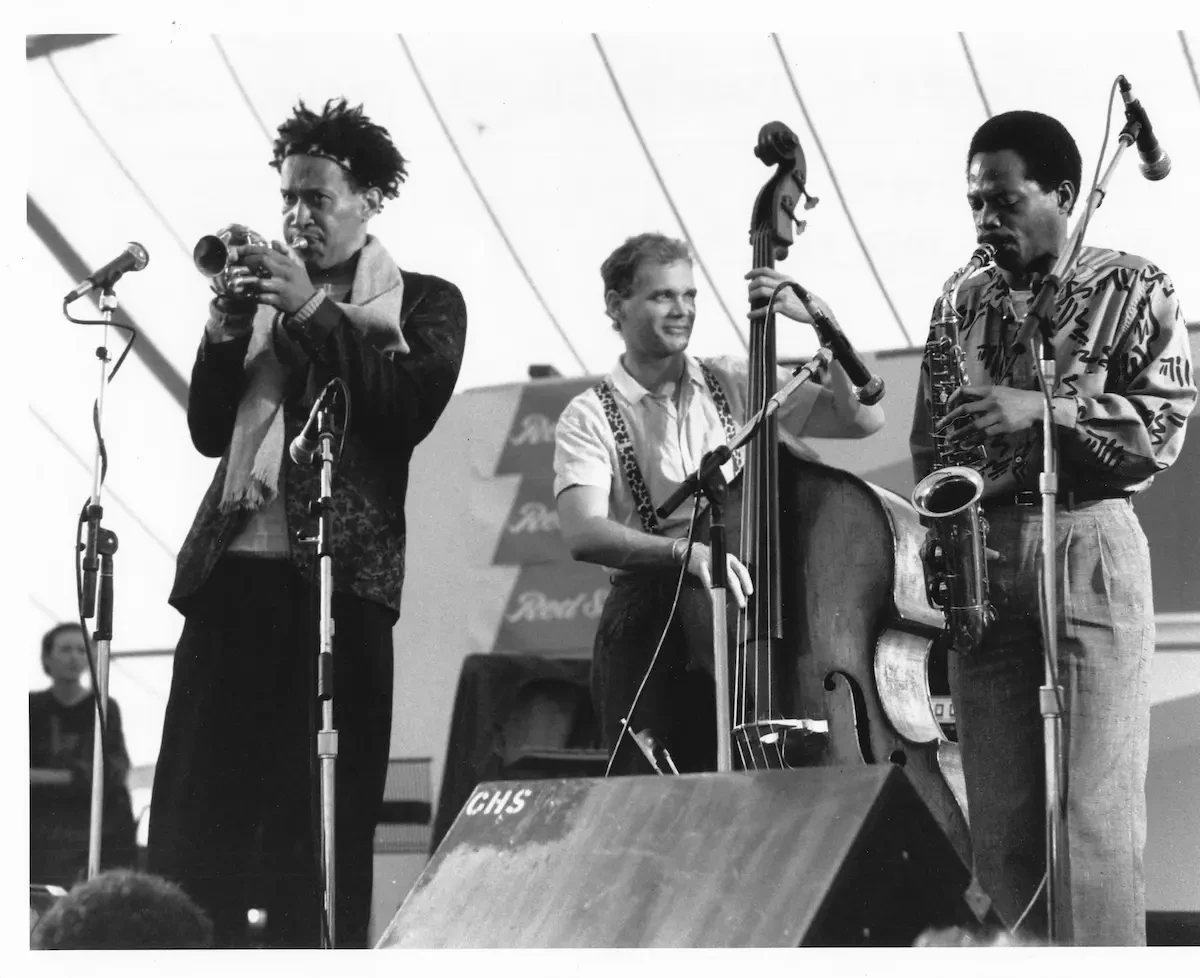
The contemporary jazz landscape exists in a perpetual state of dynamic tension between the relentless pursuit of the avant-garde and the comforting, yet perilous, reverence for the established canon. Recent releases offer a compelling study in contrasts, highlighting how artists from different eras negotiate the boundaries of composition, improvisation, and cultural identity. At one end of this spectrum lies a monumental archival recovery: the international reissue of The Third World-Underground, capturing a legendary 1972 live performance by pianist Dollar Brand (later known as Abdullah Ibrahim), trumpeter Don Cherry, and saxophonist Carlos Ward. Originally issued exclusively in Japan in 1974 via Trio Records, this historic recording documents a transcendent convergence of free-jazz radicalism, Ellingtonian sophistication, and pan-African consciousness.
At the other end of the spectrum sits Walrws, a contemporary studio outing led by guitarist James Chadwick. Promoted as an exploration of "60s Pop Classics with a Jazz Twist," Chadwick’s quintet grapples with the well-trodden terrain of pop deconstruction—specifically the timeless songbooks of Lennon and McCartney, alongside other mid-century staples. However, where the 1972 Copenhagen summit burns with spontaneous urgency and deep-rooted cultural resonance, Chadwick’s modern endeavor illustrates the persistent pitfalls of translating familiar pop architecture into the jazz idiom without sufficient harmonic or rhythmic daring.
This review provides a comprehensive examination of both releases, exploring the socio-musical contexts of Brand’s visionary trio and rigorously assessing the structural successes and shortcomings of Chadwick’s contemporary quintet. Through detailed chronological analysis, contextual metrics, and critical evaluations, we unpack how these two distinct recordings illuminate the enduring challenges of jazz improvisation, historical preservation, and artistic reinvention.
Detailed Chronology & Track-by-Track Analysis
Part I: Dollar Brand, Don Cherry, Carlos Ward – The Third World-Underground (Wewantsounds)
Recorded live at the legendary Jazzhus Montmartre in Copenhagen on November 14, 1972, The Third World-Underground captures three titanic musical minds at a fascinating crossroads of their respective artistic evolutions. Although Brand had converted to Islam four years prior to this recording, adopting the name Abdullah Ibrahim, this release finds him still officially billed under his birth name, reflecting the transitional phase of his international career. Yet, the music itself is fully realized, projecting an unshakeable spiritual and geographic rootedness that transcends nomenclature.
The album commences mid-stream, thrusting the listener immediately into the kinetic center of the performance with Don Cherry’s composition, Don’s Song. Brand wastes no time establishing authority, hammering out the bold, declarative theme with percussive intensity. Cherry enters in his signature style—unpredictable, buoyant, and deeply lyrical. He delivers two distinct solos, the second of which showcases his mastery of extended notes embellished by trademark microtonal flutters and fluid runs. Just as the momentum reaches a fever pitch, the piece is abruptly severed by the onset of Brand’s Cherry.
Cherry shifts the dynamic into a medium-tempo groove underpinned by the composer’s insistent, repetitive keyboard figures. This anchoring ostinato provides a stable foundation for the horns. Both Cherry and Ward seem visibly energized by the structural grounding, opting for a relatively melodic developmental path before engaging in a lively, conversational call-and-response with Brand’s piano.
The mood pivots dramatically with Bra Joe From Kilimanjaro, a masterclass in pianistic architecture. The track is defined entirely by Brand’s measured, rock-solid left hand, which anchors a sprawling solo saturated with blues inflections, thunderous percussive passages, and expansive harmonic flights. True to the restless spirit of the evening, this tour-de-force segues hastily into Jabulani-Easter Joy. Its angular, jagged opening serves as a thematic springboard for Cherry and Ward to spar playfully, weaving intricate counterpoint around the jagged skeletal framework of the tune.
The set’s textural palette broadens with the inclusion of vocals on Waya-Wa-Egoli and Swazi. Both tracks are comparatively brief, serving as incantatory bridges that highlight the trio’s deep connection to South African vocal traditions. They are followed by Wayeah-Wayeah-O, a compact piece carrying a semi-stately theme. While the arrangement bears all the hallmarks of a classic Brand original, it was actually penned by Victor Ndilzwana, further illustrating the trio’s expansive repertoire of pan-African source material. Clocking in at a taut 40 minutes and 3 seconds, the album is a masterclass in concision, leaving the listener breathless and wanting more.
+-------------------------------------------------------------------------+
|                THE THIRD WORLD-UNDERGROUND: PERFORMANCE FLOW            |
+-------------------------------------------------------------------------+
| [Don's Song] ---> [Cherry] ---> [Bra Joe From Kilimanjaro]              |
|       |                                                                 |
|       v                                                                 |
| [Wayeah-Wayeah-O] <--- [Swazi / Waya-Wa-Egoli] <--- [Jabulani-Easter Joy] |
+-------------------------------------------------------------------------+
Part II: James Chadwick – Walrws (33 Records)
The intersection of popular song and jazz improvisation is as old as the recording industry itself. Since the dawn of shellac, jazz musicians have raided the pop marketplace for suitable source material. Some artists apply a light veneer of harmonic modernization, others use pop melodies as springboards for radical original compositions, and a select few completely dissect a tune until its original DNA is rendered entirely unrecognizable.
James Chadwick’s Walrws steps directly into this venerable tradition, presenting an ambitious slate of 13 tracks marketed as "60s Pop Classics with a Jazz Twist." Notably, seven of these selections originate from the Lennon and McCartney catalog, comprising melodies that are instantly recognizable even to the most casual listener. The explicit mandate of the project is to rework, reharmonize, and imprint personal stylistic stamps onto these cultural touchstones. Given that the Lennon-Mencartney songbook has been thoroughly mined by generations of jazz luminaries—from the swinging arrangements of the 1960s to modern post-bop explorations—any new contribution faces an exceptionally high bar for originality.
Unfortunately, the quintet led by guitarist and arranger James Chadwick—featuring Mark Sambell on piano, Aidan Thorne on bass, Liz Exell on drums, and Josh Heaton on tenor saxophone—struggles to clear this bar. Despite earnest, manfull attempts to expand upon the chosen source material, the album ultimately falls short of its ambitions.
The primary structural weakness lies within the ensemble sections, which frequently lack the forward momentum and rhythmic drive necessary to revitalize these familiar melodies. Furthermore, the improvised solos tend to follow predictable, routine trajectories rather than subverting listener expectations. When the core melodies are stated, they lack the boldness and conviction required to make the arrangements stand apart from countless antecedents.
Compounding these musical shortcomings is a surprising lack of editorial care in the physical packaging. The album’s tracklisting on the CD case suffers from typographical errors and untidy formatting—most notably misspelling the opening track as I Am The Walrys—a minor administrative detail that unfortunately mirrors the lack of polish found within the sonic execution.
Supporting Context & Metrics
To fully appreciate the weight of these two releases, one must examine their respective production metrics, historical contexts, and stylistic lineages.
Comparative Release Metrics
| Metric / Feature | The Third World-Underground | Walrws |
|---|---|---|
| Artist(s) | Dollar Brand, Don Cherry, Carlos Ward | James Chadwick Quintet |
| Primary Genre | Avant-Garde / Post-Bop / African Jazz | Contemporary Pop-Jazz / Reinterpretation |
| Recording Location | Jazzhus Montmartre, Copenhagen | Abergavenny, Wales |
| Recording Date | November 14, 1972 | September 3–4, 2025 |
| Original Release | 1974 (Trio Records, Japan) | 2025 (33 Records) |
| Current Label | Wewantsounds (WWSCD125) | 33 Records (33JAZZ321) |
| Total Runtime | 40 minutes, 03 seconds | 69 minutes, 44 seconds |
| Core Instrumentation | Piano, Trumpet, Alto Sax, Percussion, Vocals | Guitar, Piano, Bass, Drums, Tenor Sax |
| Critical Standing | Masterclass in spontaneous cross-cultural jazz | Overly cautious, uninspired arrangements |
Historical Context: The 1972 Copenhagen Summit
The convergence of Dollar Brand, Don Cherry, and Carlos Ward in Copenhagen during the autumn of 1972 represents a vital intersection in the evolution of global jazz. By 1972, the American free-jazz movement of the 1960s had fractured, scattering its primary practitioners across Europe and North Africa. Don Cherry, a foundational figure in Ornette Coleman’s historic quartet, had fully embraced a nomadic, globalist approach to improvisation, incorporating pocket trumpet, multi-ethnic folk instruments, and vocal chants into his musical lexicon.
Dollar Brand, hailing from Cape Town, South Africa, brought a unique synthesis of township jive, Cape jazz, traditional African church hymns, and the sophisticated harmonic language of Duke Ellington and Thelonious Monk. Having fled the oppressive apartheid regime of South Africa in the early 1960s, Brand’s music was inherently political, spiritual, and deeply restorative. Carlos Ward, an exceptionally versatile alto saxophonist and flutist born in the Panama Canal Zone and raised in New York, spent years forging a telepathic musical bond with Brand, anchoring the melodic and harmonic upper register with searing intensity and rhythmic elasticity.
When these three musicians shared the bandstand at the Jazzhus Montmartre—a venue historically revered as Europe’s premier temple for visiting American jazz masters—they were not merely playing tunes; they were mapping out a nascent "Third World" aesthetic. This aesthetic bypassed traditional Eurocentric jazz parameters in favor of cyclical rhythms, modal openness, and an unyielding commitment to emotional and spiritual authenticity. The fact that this performance sat sequestered on a Japanese vinyl pressing for half a century makes its international CD reissue via Wewantsounds a major cultural event for jazz historians and collectors alike.
The Pop-Jazz Conundrum
In contrast, James Chadwick’s Walrws operates within a commercial and artistic framework that has long courted listener accessibility. Translating pop hits into jazz vehicles is a commercial staple, designed to bridge the gap between casual listeners and jazz aficionados. However, success in this sub-genre relies entirely on subversion or profound recontextualization. When an ensemble tackles over-exposed material—such as Lennon and McCartney’s Eleanor Rigby, Paul Simon’s The Sound Of Silence, or Burt Bacharach’s Walk On By—standard chord-scale improvisations over unaltered song forms rarely suffice.
Chadwick’s quintet approaches these classics with an almost reverential caution. Rather than tearing down the structural walls of songs like Strawberry Fields Forever or Daydream Believer and rebuilding them into startling new architectural forms, the arrangements often hover in a middle ground. The rhythm section provides competent, clean backing, but the lack of dynamic tension and adventurous harmonic reharmonization leaves the performances feeling pedestrian. In jazz, familiarity without friction often breeds disinterest; without the bold harmonic risks taken by innovators like Thelonious Monk or Brad Mehldau when interpreting pop standards, the resulting music struggles to sustain listener engagement across an expansive 69-minute runtime.
Official Statements & Critical Reception
Archival Preservation and Global Access
Industry observers and jazz critics have universally praised the archival recovery of The Third World-Underground. In press statements surrounding the international release, representatives for Wewantsounds emphasized the critical importance of rescuing overlooked master tapes from regional obscurity:
"For too long, crucial chapters of jazz history have remained locked behind regional distribution walls, accessible only to dedicated vinyl collectors willing to pay exorbitant import prices. Bringing Dollar Brand, Don Cherry, and Carlos Ward’s 1972 Montmartre session to an international audience is not merely an archival exercise; it is an urgent reminder of how global artists were redefining the parameters of improvised music long before ‘world jazz’ became a marketing category. This recording vibrates with an untamed energy that challenges contemporary listeners."
Jazz historians have similarly noted that the recording fills a vital gap in understanding Abdullah Ibrahim’s artistic transition during the early 1970s. While his later recordings with large ensembles (such as Ekaya) heavily emphasized composed township suites, The Third World-Underground captures a rare, raw improvisational environment where free-blowing avant-garde sensibilities merged seamlessly with South African folk roots.
Contemporary Studio Realities
Reaction to James Chadwick’s Walrws highlights the ongoing debate surrounding accessibility versus artistic risk in modern jazz production. While record labels and promotional networks frequently champion such releases for their immediate cross-over appeal, critical reception within specialized jazz journalism has been more circumspect.
Reviewers evaluating the album have pointed out the inherent difficulties of breathing new life into heavily adapted pop repertoires. Critical commentary underscores that technical competence alone cannot compensate for a lack of interpretive daring:
"When an ensemble sets out to reinterpret foundational pop classics, technical proficiency is merely the baseline entry fee. What separates a memorable crossover album from background mood music is the willingness to deconstruct, interrogate, and fundamentally reimagine the source material. Chadwick and his quintet clearly hold deep respect for these 1960s anthems, but that very reverence acts as a creative anchor, preventing the ensemble from taking the kinds of structural and harmonic risks that elevate great jazz interpretations into art."
Future Outlook
As the global jazz ecosystem continues to navigate the complexities of the digital age, these two releases point toward divergent paths for the genre’s preservation and evolution.
The Value of Archival Vigilance
The successful international rollout of The Third World-Underground underscores a growing market demand for deep historical curation. As physical record stores and digital streaming platforms alike grapple with an overwhelming volume of newly generated content, the most vital contributions to the jazz discourse often come from looking backward. Labels specializing in archival excavation play an indispensable role in safeguarding master tapes that might otherwise succumb to physical degradation or corporate obscurity.
Looking ahead, archivists and independent producers are expected to place increased emphasis on unreleased European radio broadcasts, private collections, and short-run international pressings from the 1960s through the 1980s. These recordings offer younger generations of musicians and listeners an unvarnished window into the socio-political and spiritual imperatives that drove the post-bop and avant-garde movements. The enduring brilliance of Brand, Cherry, and Ward serves as a timeless benchmark: proof that when technical mastery meets deep cultural conviction, improvised music achieves permanent relevance.
The Imperative for Rigor in Contemporary Arranging
Conversely, the critical reception of projects like Chadwick’s Walrws serves as a cautionary tale for contemporary artists working within established idioms. As economic pressures on jazz musicians mount, the temptation to record familiar, highly recognizable songbooks in search of wider commercial traction remains strong. However, audiences—and critics—are increasingly intolerant of safety-first arrangements that prioritize comfort over discovery.
For contemporary bandleaders and arrangers, the lesson is clear: interpreting the popular canon requires either total structural deconstruction or a startlingly fresh harmonic perspective. Without these elements, even the most proficient musicianship risks being swallowed by the vast, undifferentiated sea of background jazz recordings.
Ultimately, whether through the rediscovery of long-lost radical summits from Copenhagen or the critical appraisal of modern studio dates, the health of the jazz genre relies on uncompromising artistic ambition. As long as artists continue to interrogate tradition—whether by channeling pan-African liberation struggles or aggressively rewriting pop history—the music will retain its vital, restless pulse.