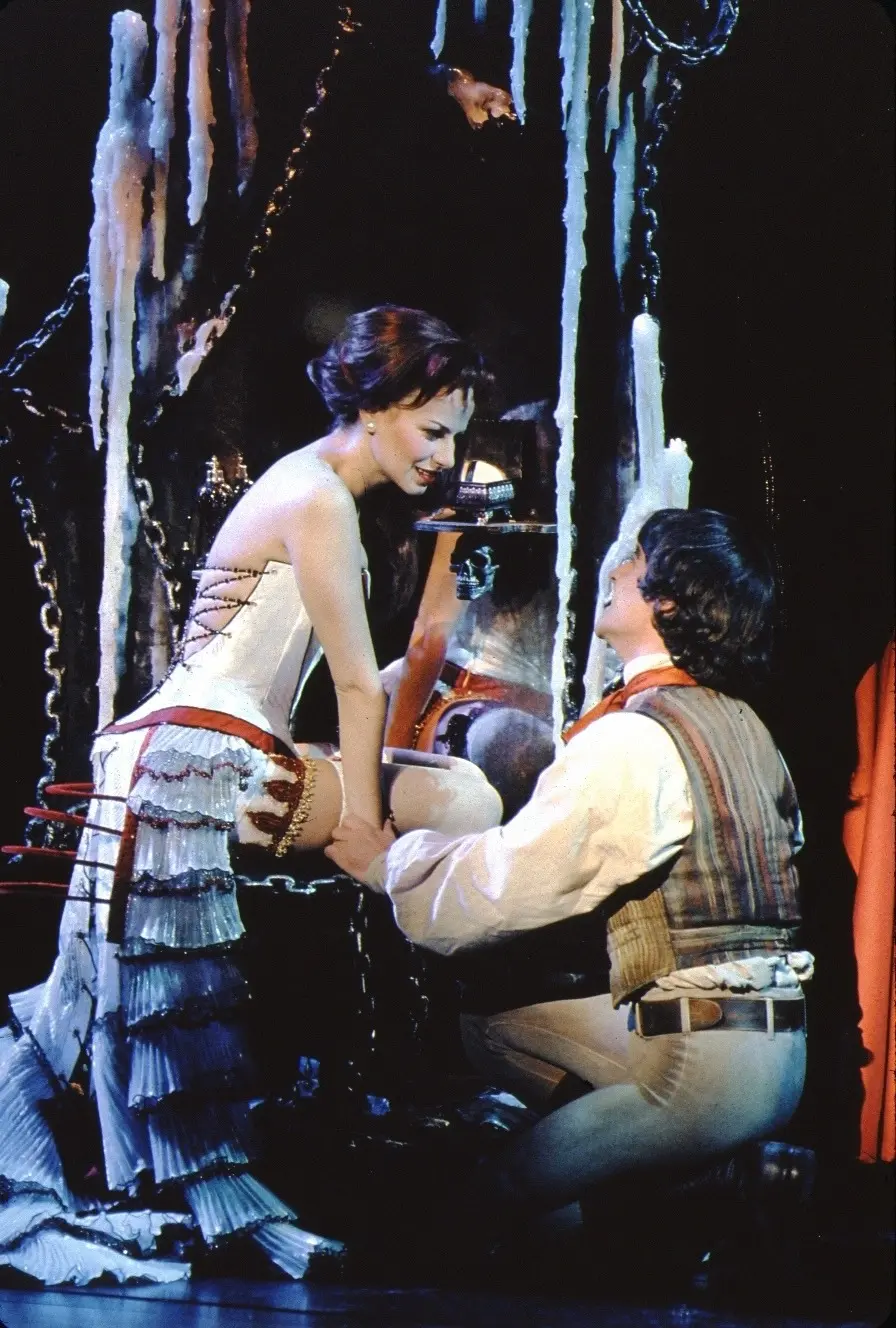

“Listen to them, the children of the night. What music they make!”
As autumn leaves cascade over Times Square and the amber glow of the Palace Theatre marquee pierces the October chill, Broadway finds itself under a spell of an entirely different kind. Halloweekend is fast approaching, but within the theatrical district, the true celebration is far more historic. The Lost Boys, the pulse-pounding, high-octane musical adaptation of the 1987 cult classic film, has officially shattered one of the most stubborn and costly hexes in modern theatrical history.
With over 200 regular performances and 30 previews under its belt since its first performance on March 27, The Lost Boys has officially claimed the crown as the longest-running vampire musical in Broadway history. For nearly a century, theatrical prognosticators treated the bloodsucker genre on the Main Stem as an immutable cycle of doom—a narrative space where the undead could seemingly never sink their fangs in for long. From high-concept European imports to multi-million-dollar pop-rock collaborations featuring music royalty, vampire musicals had historically limped across the finish line, leaving in their wake catastrophic financial losses, blocked cast recordings, and critical post-mortems that read like autopsies.
Yet, The Lost Boys has bucked the trend entirely. By marrying a sharp creative vision, a surging pop-rock score by The Rescues, and a cultural landscape increasingly hungry for genre fiction, the production has proved that the theatrical underworld can indeed be a goldmine. To mark this monumental milestone, we are looking back at the doomed lineage of Broadway’s past vampires—examining how Dance of the Vampires, Dracula the Musical, and Lestat paved a rocky road, and how The Lost Boys finally figured out how to raise the dead.
Detailed Chronology: A History of Theatrical Undoing
To understand the magnitude of The Lost Boys’ triumph, one must first explore the graveyard of its predecessors. Historically, theatrical adaptations of vampire lore have occupied a bizarre paradox. Non-musical treatments of Bram Stoker’s classic have enjoyed rich, decades-spanning lifespans. Bela Lugosi famously originated the role of Count Dracula on Broadway in 1927, establishing an archetype that returned to the Main Stem in 1931, 1937, and triumphantly in 1977 in a revival starring Frank Langella, David Dukes, Raul Julia, and Jean LeClerc. Regionally and Off-Broadway, works like Steven Dietz’s adaptation, Kate Hamill’s versions, Dracula, A Comedy of Terrors, and Drunk Dracula have consistently proven that audiences love theatrical fangs.
The moment music enters the equation, however, the spell shatters.
1. Dance of the Vampires (2002): The European Import Lost in Translation
The first domino to fall on Broadway was one of the most infamous misfires in the annals of the Main Stem. Dance of the Vampires, an adaptation of Roman Polanski’s 1967 satirical horror film The Fearless Vampire Killers, began as an unqualified triumph. Premiering in Vienna in 1997 as Tanz der Vampire, the show was a European mega-hit. Featuring a soaring, gothic-pop score by Jim Steinman—the undisputed master of the theatrical power ballad—the Austrian production starred The Phantom of the Opera’s original Raoul, Steve Barton, as the dark, alluring Count Krolock.
When producers attempted to transplant this grand gothic romance to Broadway in 2002, however, nearly every variable imploded. Because director Roman Polanski was a fugitive from U.S. law, he could not cross the Atlantic. The resulting leadership vacuum caused the production to undergo an identity crisis so severe it defied belief. What began as a lush, atmospheric romance was aggressively retooled into a broad, slapstick Mel Brooks-style comedy. Steve Barton was ousted and replaced by Michael Crawford—another Phantom alumnus whose comedic stylings clashed violently with the material—while the English-language book took on a remarkably regressive, misogynistic, and homophobic tone.
Despite the tonal wreckage, the production did feature moments of genuine theatrical brilliance. In her Broadway debut, Mandy Gonzalez brought down the house night after night with her powerhouse rendition of "Total Eclipse of the Heart"—a Steinman ballad originally penned for an abandoned adaptation of the silent vampire film Nosferatu. Though audiences initially giggled at the opening strains, Gonzalez wielded the number with such raw vocal command that by the final note, the house was entirely under her spell.
Unfortunately, one show-stopping performance could not salvage a sinking ship. Following 61 previews and 56 regular performances, Dance of the Vampires closed with a staggering $12 million loss—ranking among the largest financial failures in Broadway history. (Conversely, the original Tanz der Vampire continues to pack houses across Europe to this day).
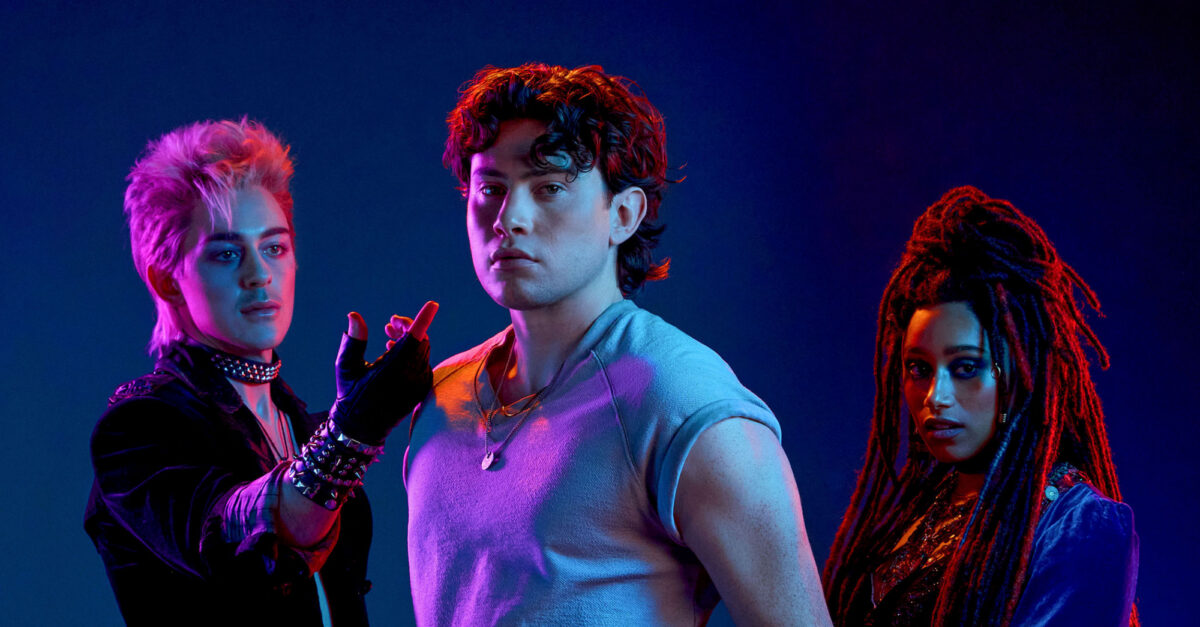
2. Dracula the Musical (2004): A Stuffed Bat on a Stick
Undeterred by the financial bloodbath of 2002, Broadway producers quickly sought to right the ship by returning to pure, unadulterated source material: Bram Stoker’s 1904 gothic epistolary novel, combined with the talents of composer Frank Wildhorn, best known for Jekyll & Hyde.
On paper, Wildhorn’s penchant for melodramatic, soaring vocal lines and tragic protagonists should have made him an ideal match for the Prince of Darkness. Unfortunately, personal turbulence—including a concurrent divorce from his longtime muse, Linda Eder—left Wildhorn’s score feeling uninspired and structurally adrift.
Director Des McAnuff attempted to mask the musical’s structural weaknesses with sheer theatrical pyrotechnics: massive swathes of fabric draped over every stationary object, deafening sound design, and even a memorable nude scene featuring stars Kelli O’Hara and Melissa Errico. But word of mouth acted like a wooden stake through the heart. Particular derision was reserved for lyricist Christopher Hampton’s purple prose, specifically lines like: "Give me your mouth upon my mouth / Give me your skin to savor / Give me your breath upon my breast / Taste our immortal flavor." The couplet earned a merciless spot in New York Magazine’s compilation of "songs to make your blood curdle."
As legendary critic Ben Brantley observed in his review for The New York Times, the production loomed over the stage "like a giant stuffed bat on a stick, the easiest target on Broadway." Dracula shed $7.5 million before shutting its doors within five months of its August 2004 opening. Like its predecessor, however, the musical found a surprising second life overseas; heavily revised iterations have become wildly popular October fixtures in Asian markets, with various J-pop and K-pop idols eagerly donning the Count’s cape.
3. Lestat (2005): The Elton John Collaboration That Bled Out
Faced with two of the most catastrophic box office failures in modern theatrical history, the Broadway community did what any glutton for punishment would do: they immediately chased a third vampire venture, giving audiences not even a single season to recover.
By every logical metric, Lestat should have been an unstoppable juggernaut. Based on Anne Rice’s immensely popular Vampire Chronicles, the musical united music icon Elton John with his legendary songwriting partner Bernie Taupin for what remains their sole theatrical collaboration. During its pre-Broadway tryout at the Curran Theatre in San Francisco, it smashed box-office records, becoming the highest-grossing out-of-town engagement in the city’s history, out-earning even Wicked and Cats. Hugh Panaro and Carolee Carmello earned rave notices from purist Rice fans for their respective portrayals of Lestat de Lioncourt and his mother, Gabrielle.
Yet, this West Coast mandate of fan confidence was systematically dismantled in New York. Without John’s knowledge or consent, producers dramatically overhauled the show prior to its Broadway bow, drastically truncating the sweeping mythos John had composed in order to lean harder into the aesthetic of the 1994 cinematic adaptation of Interview with the Vampire.
By the time Lestat officially opened in April 2005, it was creatively dead on arrival. Despite earning Tony nominations for Carolee Carmello and costume designer Susan Hilferty, the experience left Elton John deeply disillusioned. Humiliated by the production’s botched trajectory, John blocked the release of the official cast recording, effectively consigning the score to the shadows. Despite two decades of fervent fan campaigns—including public pleas from Carmello—John has remained immovable: Lestat will stay locked in its coffin unless revived in its original, uncompromised form.
Supporting Context & Metrics: The Shift in the Cultural Landscape
Why, then, has The Lost Boys succeeded where Dance of the Vampires, Dracula, and Lestat met their untimely ends? The answer lies in a convergence of demographic shifts, technological evolutions, and narrative self-awareness.
In the twenty years since a vampire musical last trod the boards of a Broadway theatre, the pop-culture landscape has undergone a seismic metamorphosis. Audiences have traversed two massive vampire revivals: the ubiquitous Twilight and True Blood mania of the late 2000s, followed by the contemporary resurgence of adult horror fantasy, exemplified by AMC’s acclaimed Interview with the Vampire and The Vampire Lestat series.
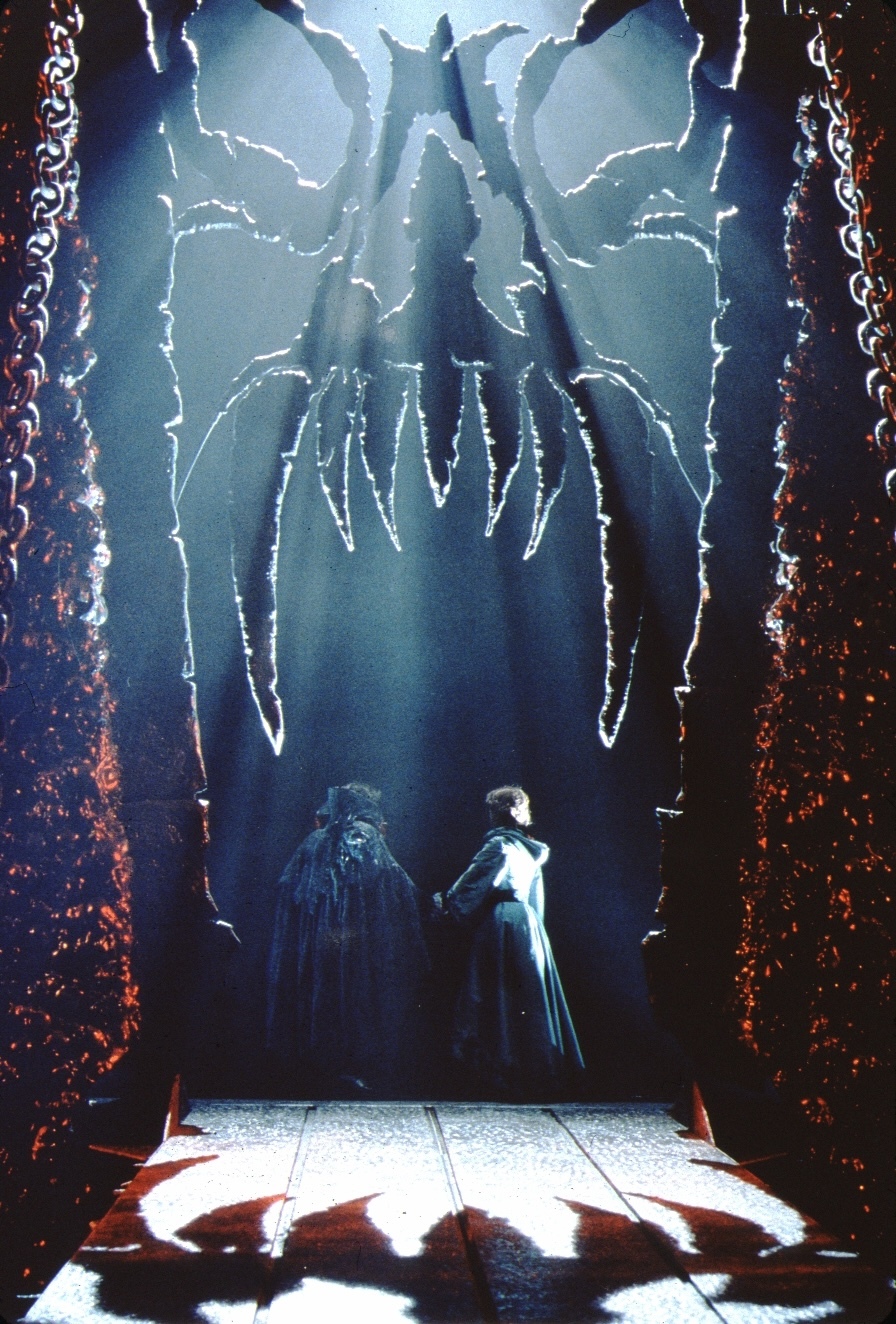
Furthermore, theatrical technology has evolved by leaps and bounds. Illusions, projection mapping, and advanced rigging now allow creative teams to manifest the supernatural with cinematic fluidity, transforming fantasy from a campy theatrical liability into an immersive asset.
Most crucially, Broadway’s demographic profile has skewed significantly younger. Today’s ticket-buyers possess a voracious appetite for genre fiction—horror, science fiction, and fantasy elements that were once relegated to niche markets. The Lost Boys, with its adolescent protagonists, rock concert aesthetic, and high-stakes coming-of-age narrative, fits comfortably into a theatrical ecosystem where shows like The Outsiders and Stranger Things: The First Shadow dominate the cultural conversation.
| Production | Opening Year | Previews / Reg. Performances | Financial Outcome | Primary Legacy |
|---|---|---|---|---|
| Dance of the Vampires | 2002 | 61 Previews / 56 Reg. | $12 Million Loss | Mandy Gonzalez’s powerhouse vocal; European success. |
| Dracula the Musical | 2004 | 22 Previews / 157 Reg. | $7.5 Million Loss | Memorable design choices; thriving Asian regional life. |
| Lestat | 2005 | 33 Previews / 39 Reg. | Undisclosed Major Loss | Blocked cast recording; Elton John’s theatrical heartbreak. |
| The Lost Boys | 2024–2026 | 30 Previews / 200+ Reg. | Record-Breaking Hit | Longest-running vampire musical in Broadway history. |
Official Statements & Creative Anatomy
A close examination of The Lost Boys reveals that the production essentially functioned as an archeological study of its predecessors’ failures, methodically correcting each misstep:
- Unified Vision: Unlike Dance of the Vampires, which fractured under conflicting directorial intentions, The Lost Boys operates under the cohesive, visionary guidance of Tony-winning director Michael Arden.
- Respectful Adaptation: Rather than treating the 1987 Joel Schumacher film as a literal blueprint or overwriting its DNA, the creative team drew inspiration from its stylish camp and atmospheric dread while carving out a distinct theatrical language.
- Embracing Melodrama: Past productions often faltered because their performers seemed embarrassed by the inherent melodrama of singing bloodsuckers. The Lost Boys leans directly into the operatic grandeur of the genre. Ali Louis Bourzgui commands the proscenium with dangerous allure, earning wide critical acclaim alongside Shoshana Bean, who serves as the emotional, maternal anchor of the piece.
Speaking on the production’s unique tone, director Michael Arden noted in early press statements that the goal was never to apologize for the genre, but to elevate it. "When you walk into the theatre, you have to surrender to the blood, the beats, and the sheer theatricality of it all," Arden shared. "Vampires are inherently theatrical creatures. If you try to play them with ironic detachment, the audience smells the fear. You have to commit completely."
Future Outlook: A New Dawn for Broadway Horror
As The Lost Boys celebrates its milestone run at the Palace Theatre, the production stands not merely as an isolated anomaly, but as a watershed moment for the commercial viability of horror and fantasy on the Main Stem.
In a theatrical culture that has occasionally favored ironic distance and self-referential detachment, The Lost Boys has proven that audiences are hungry for unbridled earnestness. Bolstered by Dane Laffrey’s Tony-winning set design, the intricate harmonies of The Rescues’ score, and a fearless young ensemble, the musical demonstrates that emotions can indeed serve as the very lifeblood of a successful theatrical enterprise.
The "curse" of the Broadway vampire has officially been staked through the heart. As the curtain rises night after night on the neon-drenched boardwalk of Santa Carla, New York audiences are reminded of a simple theatrical truth: when executed with vision, heart, and a complete lack of embarrassment, the children of the night make the sweetest music of all.
Happy hunting, fanged friends, and congratulations on the record.