
Executive Overview
The contemporary jazz landscape is currently defined by a profound tension between structural rigor and unadulterated emotional expression. Across the global scene, bandleaders are increasingly utilizing the recording studio not merely as a commercial storefront, but as a crucible for psychological processing, historical reckoning, and sonic experimentation.
This review-essay examines three significant new releases from late 2025 that sit at the very apex of this artistic movement:
- Pianist Kris Davis Trio’s Lost In Geneva (4166 Records), a masterclass in rhythmic disorientation, textural innovation, and collective telepathy;
- Pianist John Donaldson’s We Were Together, I Forget The Rest (Hexagonal Records), a devastating and ultimately redemptive multi-media tribute born of profound personal loss; and
- Bassist and multi-instrumentalist Billy Mohler’s Covell (Contagious Music), an exercise in unvarnished acoustic confession featuring saxophonic titan Mark Turner.
Taken together, these three albums articulate the multi-faceted state of modern creative music. While Davis pushes the boundaries of avant-garde composition and trio interplay, Donaldson marshals an all-star sextet and dual vocalists to navigate the visceral geography of grief. Mohler, conversely, pares back his illustrious genre-spanning resume to present a stripped-down, deeply reflective chamber-jazz trio project.
This survey provides a rigorous investigation into these releases, mapping out their production contexts, compositional methodologies, emotional architectures, and enduring significance within the contemporary jazz canon.
Detailed Chronology: The Genesis of Three Masterworks
To fully understand the weight of these 2025 releases, one must trace the chronological arcs that brought these artists to their respective recording desks.
Kris Davis Trio: From Tribute to Autonomous Identity
Pianist Kris Davis has long been recognized as one of the most intellectually curious and technically formidable forces in improvised music. Following the critical acclaim of her 2024 debut album—a conceptual homage to six pioneering women pianists—Davis recognized that her newly formed trio needed the crucible of the road to forge a singular, collective voice.
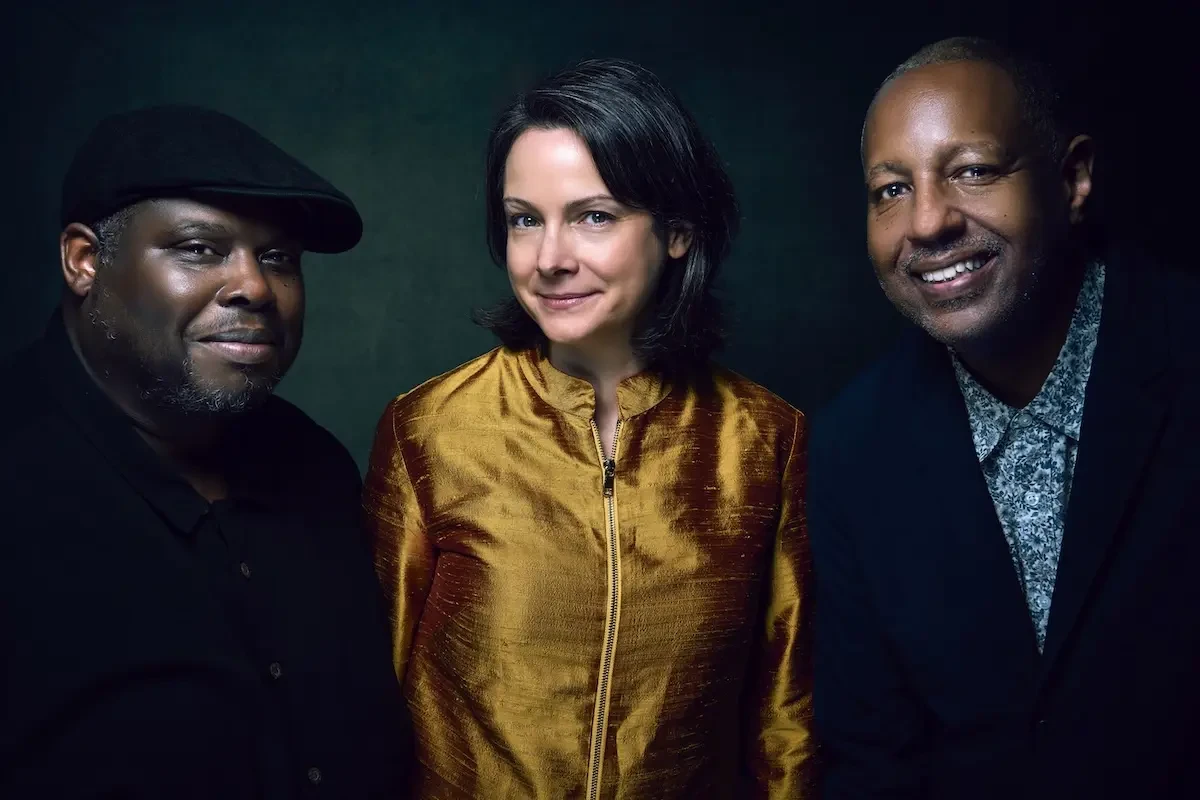
- The Maturation Period: Throughout 2024, Davis, bassist Robert Hurst, and drummer Johnathan Blake toured extensively. They sought to distill their individual virtuosic histories into a unified organism.
- The Breakthrough: This touring cycle culminated in a celebrated, critically lauded residency at New York’s legendary Village Vanguard in January 2025. Reviewers noted an uncanny, telepathic cohesion.
- The Recording Session: Armed with a hard-won clarity regarding their sonic identity, the trio entered a studio in Mount Vernon, New York, on September 15, 2025. There, they captured the lightning-in-a-bottle energy that would become Lost In Geneva.
John Donaldson: Processing Lockdown’s Toll
For pianist John Donaldson, the timeline of his latest project is intimately bound to the global tragedies of the COVID-19 pandemic.
- The Loss: In 2021, during the height of lockdown restrictions, Donaldson suffered the devastating loss of his wife, Agatha Coffey.
- The Compositional Phase: The years that followed were marked by deep introspection, resulting in a suite of original compositions and lyrics designed to honor Coffey’s memory. Donaldson gathered an exceptional ensemble—including vocalists Norma Winstone and Rebecka Edlund, guitarist Rob Luft, saxophonist Iain Ballamy, trumpeter Graeme Flowers, bassist Tom Mason, and drummer Jeff Ballard.
- The Recording Session: Over two intensive days, September 3–4, 2025, in Box, Wiltshire, the ensemble brought Donaldson’s deeply personal songbook to life, balancing sorrow with moments of transcendent grace.
Billy Mohler: Stripping Back the Layers
Bassist, songwriter, and producer Billy Mohler occupies a unique space in modern music. Since graduating from the prestigious Berklee College of Music and launching his jazz career in 2019, Mohler’s resume has read like a history of modern popular and improvised music. He has shared stages and recording studios with icons ranging from jazz titan Herbie Hancock and avant-garde luminary Ornette Coleman to pop-rock royalty Nile Rodgers, Mavis Staples, the Smashing Pumpkins, and even country legend Dolly Parton.
- The Pivot: Following years of high-profile, cross-genre collaborations, Mohler felt a compelling need to return to absolute acoustic purity.
- The Ensemble Construction: He enlisted saxophonist Mark Turner, whose intellectually charged, breathy tone has defined modern saxophone for decades, alongside the endlessly inventive, historically grounded drumming of Joe LaBarbera.
- The Recording Session: Captured at the atmospheric Hotel Covell in Los Angeles over the course of 2025, the resulting album, Covell, stands as Mohler’s most restrained and emotionally exposed statement to date.
Supporting Context & Metrics
An analysis of these albums reveals distinct production metrics, compositional frameworks, and thematic threads that unite them under the broader umbrella of 2025 contemporary jazz.
Comparative Structural Metrics
| Album Title | Artist | Primary Ensemble Format | Total Running Time | Recording Location & Date | Primary Label |
|---|---|---|---|---|---|
| Lost In Geneva | Kris Davis Trio | Piano Trio (p, b, d) | 54 minutes, 28 seconds | Mount Vernon, NY — Sept 15, 2025 | 4166 Records (R1) |
| We Were Together… | John Donaldson | Sextet with 2 Vocalists | 43 minutes, 14 seconds | Box, Wiltshire — Sept 3–4, 2025 | Hexagonal Records (HRCD 102) |
| Covell | Billy Mohler | Piano-less Trio (b, ts, d) | 39 minutes, 51 seconds | Hotel Covell, LA — 2025 | Contagious Music (CGM017) |
Compositional Innovations and Thematic Motifs
Kris Davis: Topography of the Disorienting Modern World
Lost In Geneva is notable for its thematic engagement with dislocation, contemporary urban anxiety, and the natural world.
- Congestion Pricing stands as arguably the world’s first jazz ode to New York City’s contentious traffic toll system implemented in Lower Manhattan, translating infrastructural gridlock into knotty, dramatic rhythmic shifts.
- The opening track, Subtext, mimics the paranoid vernacular of double-talk, utilizing jagged piano crosstalk to evoke hidden meanings.
- Jet lag and the logistical nightmares of international touring inform the disorienting title track, while Robert Hurst’s contribution, The Bluesy Bird In Bob’s Backyard, feeds into Davis’s long-standing obsession with ornithology. This avian inspiration directly sparked two entirely spontaneous group improvisations: Mourning Dove and Northern Flicker.
John Donaldson: The Poetry of Mourning
Donaldson’s We Were Together, I Forget The Rest operates on a literary and emotional plane rarely attained in contemporary instrumental music.
- By writing almost all the lyrics himself—supplemented by Norma Winstone’s evocative contribution on Into The Night—Donaldson bridges the gap between classic Great American Songbook introspection and contemporary European chamber jazz.
- The interplay between vocalists Norma Winstone and Rebecka Edlund provides a striking textural duality. Whether singing in tandem or solo (as Edlund does on the delicate Chanterelle and Winstone on Into The Night), their voices maintain a crystalline purity that offsets the surging, McCoy Tyner-esque piano rolls of the bandleader.
Billy Mohler: Confessional Chamber Jazz
Mohler’s Covell derives its power from subtraction rather than addition.
- The opening track, The Reckoning, directly confronts the seismic emotional shock of his father’s passing—a moment Mohler described as one where "Everything I thought I understood shifted beneath me."
- Tracks like Ceremony and Slowdive explore Mohler’s Native American heritage and ancestral roots, with the former serving as an extended percussion showcase for Joe LaBarbera, and the latter acting as a slow-burning masterclass in atmospheric tension.
Official Statements & Critical Reception
The critical reception accompanying these three releases underscores their immediate impact on the global jazz community. Industry tastemakers and the artists themselves have framed these works as career-defining statements.
Kris Davis on Collective Evolution
Reflecting on the journey from her 2024 tribute album to the self-assured, avant-garde architecture of Lost In Geneva, Kris Davis noted in interviews surrounding their Village Vanguard residency:
"We needed that time on the road to feel a real clarity about who we are as a trio. When you play night after night, the artifice drops away. What you are left with is a shared nervous system. On this record, we weren’t just playing charts; we were mapping our own psychological territory in real-time."
Critics have echoed this sentiment. Reviewing the album’s structural audacity—particularly its thrilling, angular reinterpretation of Morton Feldman’s final Nature Piece—jazz publications have hailed the trio as a gold standard for modern piano-trio interplay, praising Johnathan Blake and Robert Hurst for balancing ferocious swing with radical abstraction.
John Donaldson on Vulnerability and Tribute
Creating an album dedicated to a late spouse during a global crisis is an act of supreme emotional exposure. John Donaldson addressed the delicate nature of the project in production notes:
"It is hard to review a tribute like this, because the music is intensely personal, and our involvement as listeners is necessarily circumspect. Agatha’s presence shaped every chord, every lyric, every breath taken by the vocalists. I didn’t want to write a requiem of pure despair; I wanted to build a bridge toward a new dawn."
Reviewers have singled out guitarist Rob Luft’s molten, fluid virtuosity across all seven tracks as a revelation, noting how his playing seamlessly anchors the soaring vocal arrangements of Winstone and Edlund while giving space to hard-punching contributions from saxophonist Iain Ballamy and trumpeter Graeme Flowers.
Billy Mohler on Restraint and Truth
Having spent decades backing pop royalty and avant-garde icons alike, Billy Mohler viewed Covell as a necessary return to his artistic core:
"When you spend years servicing other people’s visions—whether it’s Herbie [Hancock] or Nile [Rodgers] or the Smashing Pumpkins—you accumulate a lot of noise. Covell was my way of clearing the room. With Mark [Turner] and Joe [LaBarbera], I didn’t need to hide behind production tricks or dense arrangements. The truth had to live in the negative space."
Jazz critics have lauded this restraint, emphasizing that while albums that make an immediate, flashy impression often fade quickly, Covell is an understated grower—a record that yields deeper emotional dividends with every successive listen.
Future Outlook
As we look toward the remainder of 2025 and into 2026, the releases from Kris Davis, John Donaldson, and Billy Mohler offer a compelling roadmap for where improvised music is heading. They demonstrate that jazz remains our most adaptive and psychologically sophisticated art form.
1. The Elevation of the Piano Trio
Kris Davis’s ongoing evolution with Robert Hurst and Johnathan Blake proves that the traditional piano-trio format is far from exhausted. By incorporating contemporary urban themes (like congestion pricing) alongside rigorous classical nods (Morton Feldman) and spontaneous ornithological improvisations, Davis is setting a high-water mark for avant-garde composition. Future iterations of this trio will undoubtedly continue to blur the lines between structured composition and wild, unhinged sonic exploration, influencing a new generation of conservatory-trained improvisers.
2. The Integration of Chamber Jazz and Lyricism
John Donaldson’s deeply personal project points toward a fertile intersection between contemporary vocal jazz, European chamber aesthetics, and personal narrative. As audiences increasingly crave authentic, human stories behind the music, Donaldson’s blueprint—utilizing dual vocalists, stellar guitar work, and deeply confessional lyricism—will likely inspire more bandleaders to use the recording studio as an architectural space for grief, memory, and healing.
3. Acoustic Intimacy in an Over-Produced Age
Billy Mohler’s pivot toward unadorned, piano-less trio intimacy signals a broader industry fatigue with over-production. As artists with multi-genre resumes seek refuge in acoustic purity, projects like Covell demonstrate that master musicianship requires no pyrotechnics. The future of creative music may well lie in these quiet, deliberate, and emotionally transparent spaces, where every note is weighed, measured, and delivered with surgical precision.
Ultimately, these three albums remind us that jazz is not merely a historical artifact frozen in amber, but a living, breathing pulse. Whether navigating the chaotic gridlock of modern cities, mourning the loss of a soulmate, or confronting the ghosts of ancestry, these artists have delivered masterworks that demand not just our ears, but our whole hearts.