
Executive Overview
In an era where cultural institutions face mounting pressures to diversify audiences and secure the future of the performing arts, ABAO Bilbao Opera continues to set a gold standard for institutional foresight and community engagement. The organization has officially unveiled its comprehensive educational programming for the eagerly anticipated 2026–27 season, headlined by the 22nd consecutive installment of its flagship family initiative, the ABAO Txiki program.
Designed to demystify lyric theater for young minds, the upcoming season represents a masterclass in arts education, blending literary timelessness, historical rediscovery, and high-caliber artistic production. The 22nd ABAO Txiki season will feature a meticulously curated lineup comprising four distinct theatrical productions spread across 15 total performances. Notably, three of these productions have been specifically tailored to capture the imaginations of preschool and primary school children, bridging the gap between high culture and early childhood development.
This year’s unveiling underscores ABAO Bilbao Opera’s deep-rooted commitment to cultural democratization. By introducing children to the multifaceted world of opera—where music, literature, visual arts, and dramatic performance converge—the institution is not merely entertaining youth; it is actively cultivating the next generation of culture-bearers, critical thinkers, and passionate art consumers. The 2026–27 slate promises to take young audiences on magical journeys through ancient Arabian folklore and the rediscovered lyrical gems of local history, proving that the operatic medium remains as vibrant, adaptable, and relevant as ever.
Detailed Chronology of the 2026–27 Season
The structural backbone of the ABAO Txiki program’s 22nd season relies on a progressive, thoughtfully timed calendar that spans the academic year, offering families and school groups structured touchpoints to engage with the performing arts. The 2026–27 schedule has been meticulously planned to maximize accessibility while maintaining the rigorous production standards synonymous with the ABAO Bilbao Opera brand.
January 2027: Opening with Ali Baba and the Forty Thieves
The operational and artistic launch of the 2026–27 ABAO Txiki season kicks off right after the winter holidays, offering families an enriching cultural alternative during the festive season’s wind-down.
On January 3 and January 4, 2027, the stage lights will rise on Ali Baba and the Forty Thieves. This enchanting production is an imaginative, highly accessible operatic adaptation of the traditional, universally beloved tale originating from the legendary One Thousand and One Nights corpus. The musical score is composed by the acclaimed contemporary composer Iñigo Casalí, whose ability to weave complex instrumental textures with earworm melodies makes him exceptionally suited for young audiences.
Produced as a brand-new staging by the Navarra Chamber Opera—a company renowned for its innovative approaches to lyric theater for youth—this opening production promises dynamic stagecraft, colorful costume designs, and an engaging narrative arc that emphasizes cleverness, morality, and adventure. Performances are strategically scheduled over a weekend to accommodate family units, working parents, and children eager to experience live theater during their holiday break.
March 2027: Historical Depth with The Arab Princess
As the academic and cultural calendar progresses into the brisk days of early spring, the ABAO Txiki season pivots toward historical homage and local artistic heritage.
From March 13 to March 15, 2027, ABAO Bilbao Opera will present The Arab Princess, a captivating work composed by the celebrated Basque prodigy Juan Crisóstomo de Arriaga. Often referred to in musicological circles as the "Spanish Mozart" due to his astonishing precocity and untimely death at the age of 19, Arriaga’s compositions hold a special place in the hearts of Bilbao’s cultural community.
Like the season opener, The Arab Princess arrives as a brand-new production courtesy of the Navarra Chamber Opera. This collaboration highlights a regional solidarity among Northern Spain’s premier cultural producers, pooling creative and logistical resources to bring rare historical works to contemporary stages. The March residency will feature a mix of school-exclusive performances during weekdays—allowing regional educators to integrate the opera directly into their music and history curricula—alongside public weekend performances for families.
Supporting Context & Metrics: The Scale and Impact of ABAO Txiki
To fully appreciate the significance of the 2026–27 educational season, one must examine the quantitative and qualitative metrics that define the ABAO Txiki initiative. Over more than two decades, this program has evolved from a modest outreach experiment into a cornerstone of the Basque Country’s educational and cultural infrastructure.
Program Scale and Volume
- Season Milestone: The 2026–27 cycle marks the 22nd anniversary of the ABAO Txiki initiative.
- Production Volume: A total of four distinct shows will be mounted over the course of the theatrical year.
- Performance Count: Across these productions, 15 individual performances will be staged, ensuring ample seating capacity and scheduling flexibility for both schools and individual families.
- Target Demographics: Crucially, three of the four scheduled productions are specifically calibrated for the developmental stages of preschool and primary school children (ages typically ranging from 3 to 11), ensuring that content, narrative pacing, and sensory elements are age-appropriate.
The Pedagogical Framework of Opera Education
Modern arts education research consistently demonstrates that early exposure to multidisciplinary performing arts yields profound cognitive, emotional, and social benefits. ABAO Bilbao Opera’s pedagogical framework for ABAO Txiki is built upon several core pillars:
- Multisensory Engagement: Opera is the ultimate synthesis of art forms. Children attending ABAO Txiki productions are simultaneously exposed to orchestral arrangements, vocal mastery, dramatic acting, choreographic movement, lighting design, and narrative literature. This holistic exposure stimulates neural pathways associated with pattern recognition, emotional empathy, and linguistic comprehension.
- Breaking Down Elitism: One of the historic barriers to opera attendance has been the perception of the art form as inaccessible, elitist, or archaic. By introducing children to the genre in environments specifically designed for them—featuring relatable themes, interactive elements, and digestible runtimes—ABAO Bilbao Opera effectively strips away the intimidation factor. For a child who experiences Ali Baba or The Arab Princess, the opera house is not a fortress of solemnity, but a magical house of storytelling.
- Curricular Integration: The inclusion of weekday performances allows regional schools to use ABAO Txiki as an extension of the classroom. Teachers are frequently provided with pedagogical dossiers and preparatory guides that link the operas to literature, history, and music curricula, transforming a simple field trip into an immersive, cross-disciplinary learning experience.
Artistic Spotlight: Reinterpreting Tradition and Heritage
The 2026–27 educational season is particularly noteworthy for its artistic ambition, deftly balancing exotic fantasy with local classical heritage through the creative partnership with the Navarra Chamber Opera.
Ali Baba and the Forty Thieves: Sonic Adventure and Moral
Fable
The opening production, Ali Baba and the Forty Thieves, taps into an archetypal narrative deeply embedded in global literary consciousness. The story of the humble woodcutter who discovers the magical cave secured by the phrase "Open Sesame" offers rich thematic material for young audiences: the consequences of greed versus the rewards of resourcefulness, the importance of loyalty, and the triumph of wit over brute force.
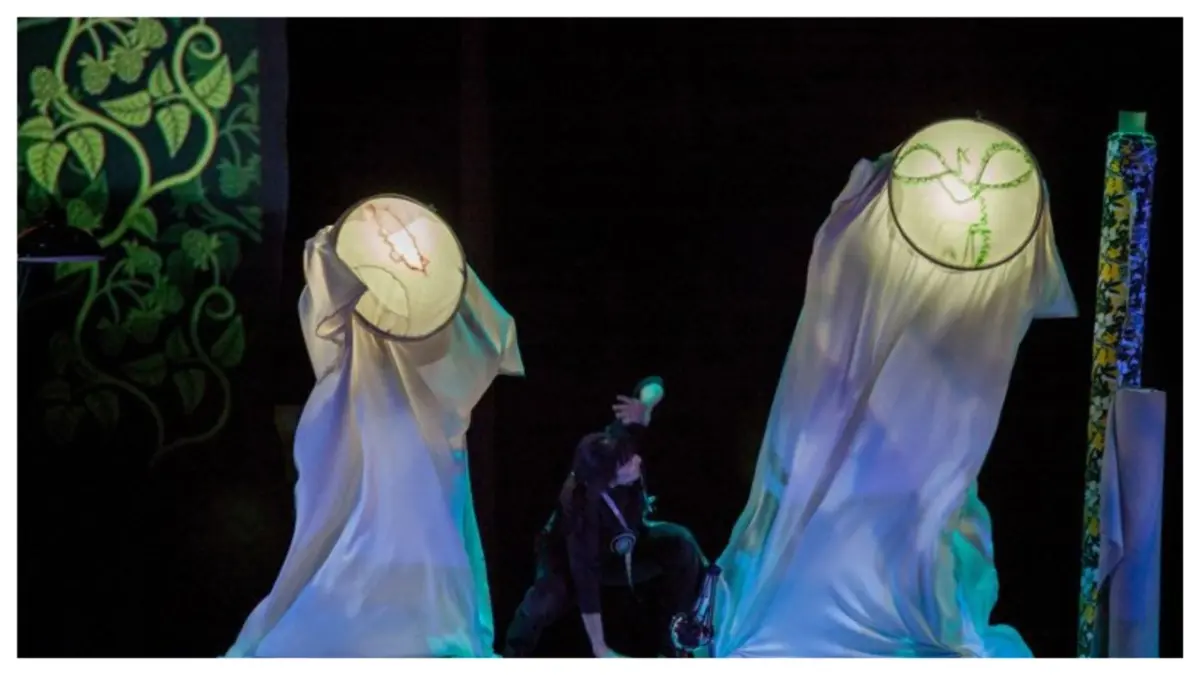
Composer Iñigo Casalí has crafted a score that respects the sophisticated ear of the modern child while maintaining melodic accessibility. Eschewing simplistic pastiche, Casalí incorporates rhythmic motifs and instrumental colorations that evoke the atmospheric soundscapes of the Middle Eastern tales while anchoring the music in contemporary classical idioms. The new production by Navarra Chamber Opera utilizes imaginative set designs, clever puppetry, and vibrant costume aesthetics to bring the magical cave, the bustling marketplace, and the clever servant Morgiana to life without relying on overwhelming digital projections, ensuring that the magic remains fundamentally theatrical and immediate.
The Arab Princess: Celebrating Juan Crisóstomo de Arriaga
While Ali Baba offers global folklore, The Arab Princess anchors the season in profound local pride. Juan Crisóstomo de Arriaga (1806–1826), born in Bilbao, remains one of the most brilliant footnotes in European music history. Despite living for less than two decades, his string quartets, symphonic overtures, and vocal works earned the admiration of masters like Luigi Cherubini in Paris.
Staging The Arab Princess as part of a youth educational series is an act of cultural stewardship. It teaches young Basque children that their local heritage includes towering artistic figures whose works stand shoulder-to-shoulder with their European contemporaries. The Navarra Chamber Opera’s new production approaches Arriaga’s lyrical gem with a reverence for historical authenticity tempered by modern theatrical pacing, ensuring that 21st-century children can connect with the emotional depth and vocal elegance of early 19th-century Spanish music.
Official Statements and Institutional Vision
Behind the operational mechanics of the 2026–27 season lies a passionate leadership team committed to the transformative power of the arts. While specific seasonal press conferences yield ongoing commentary, the foundational philosophy of ABAO Bilbao Opera’s educational directives remains clear, authoritative, and forward-looking.
In past reflections on the ABAO Txiki initiative, institutional leadership has consistently emphasized that cultivating young audiences is not merely a marketing strategy, but a fundamental cultural responsibility.
"An opera house that does not look to the children of its community is building its house on sand," noted a senior institutional representative during discussions on long-term audience development. "Our mission with ABAO Txiki is to plant seeds of curiosity that will bloom decades from now. When a child sits in our theater and feels the vibrations of a live orchestra, or gasps at the entrance of a magical set, that experience becomes a permanent part of their emotional architecture. We are building the opera lovers of 2050 today."
Furthermore, the ongoing collaboration with the Navarra Chamber Opera has been praised by artistic directors as a vital model of inter-regional cultural cooperation. By pooling creative visions, technical expertise, and financial resources, both organizations are able to mount productions of a scale and polish that would be difficult to achieve independently in the specialized youth market. This partnership ensures that regional children receive world-class artistic products that rival those found in major European capitals like Madrid, Paris, or London.
Future Outlook: The Horizon of Basque Operatic Culture
As ABAO Bilbao Opera looks ahead to the 2026–27 season, the broader implications of its educational programming point toward a resilient and dynamic future for the lyric arts in Northern Spain.
The sustained success of the ABAO Txiki program—now entering its 22nd year—proves that classical music and opera can thrive outside of traditional, adult-centric frameworks if institutions are willing to invest in creative risk-taking and pedagogical innovation. By selecting works like Casalí’s imaginative adaptation of Ali Baba and rediscovering the patrimonial treasures of Arriaga through The Arab Princess, ABAO Bilbao Opera is charting a course that honors history while aggressively embracing the future.
Looking forward, the institution aims to expand its digital outreach and preparatory workshops, ensuring that children from all socioeconomic backgrounds across the Basque Country can access the magic of the stage. School districts, community leaders, and cultural preservationists alike are watching the rollout of the 2026–27 season with high expectations—expectations that, given ABAO’s storied track record, are certain to be met with resounding artistic triumph.
As the curtain prepares to rise in January 2027, Bilbao reaffirms its status not only as a global hub of contemporary architecture and gastronomy, but as a vibrant sanctuary where the timeless, living traditions of opera are lovingly, expertly handed down to the leaders of tomorrow.