
Executive Overview
In the rapidly evolving landscape where consumer technology and the music industry intersect, a fascinating new frontier of marketing has emerged. As tech giants race to deploy personalized artificial intelligence agents directly to consumers, independent creators are discovering unconventional methods to bypass traditional advertising bottlenecks.
Meta’s recent introduction of Muse—a personal AI agent designed to appeal to mainstream, non-technical audiences through its plush, friendly mascot known as "Jolly"—has inadvertently opened the door to grassroots creative interventions. Rather than waiting for official platform integrations, major corporate partnerships, or costly advertising spends, independent label Edged Out Records has executed a masterclass in guerrilla tech-marketing.
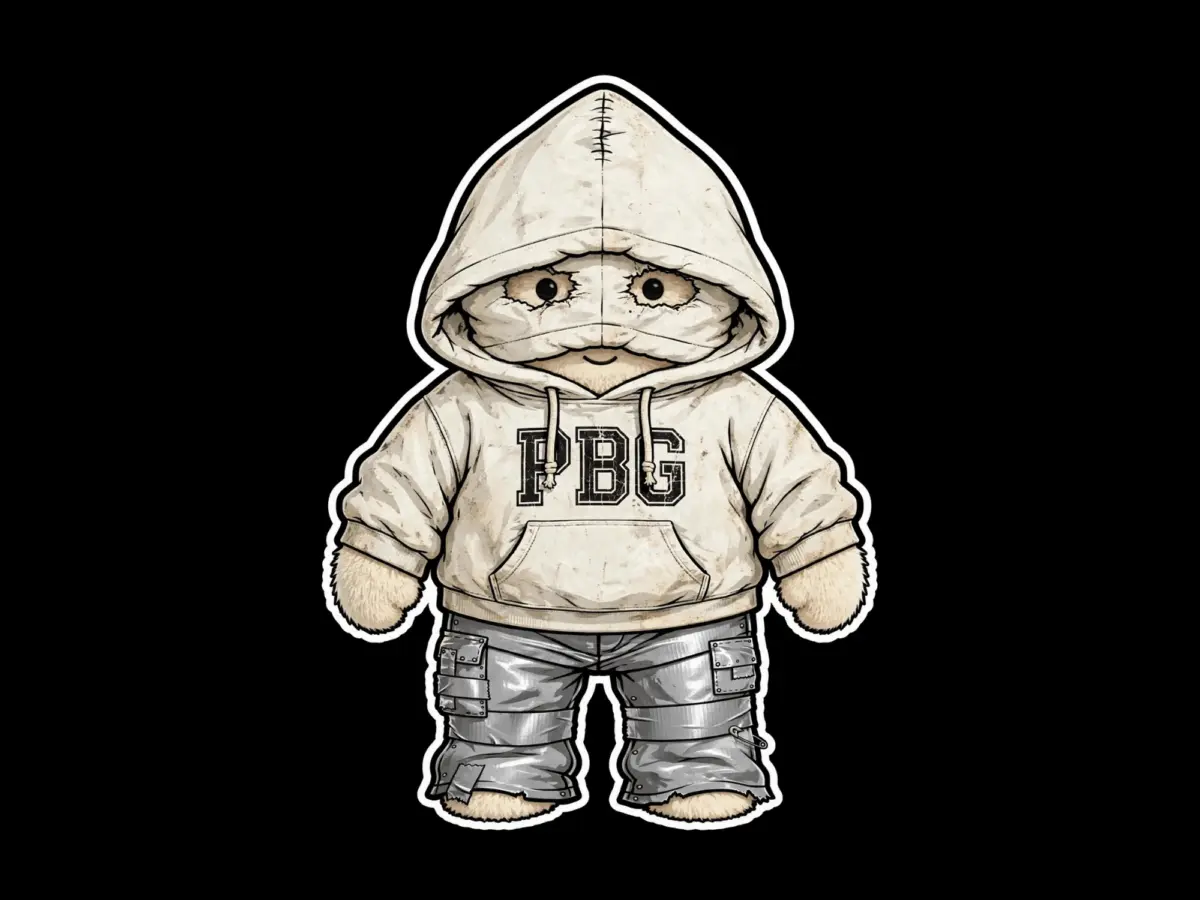
By developing the world’s first open-source "costume shop" for AI avatars, Edged Out—via its tech division, Koryuai (under parent company Liberty Rose Studios)—has found a way to merge viral internet culture, generative AI customization, and music promotion. Founder Mattske recognized a friction point in Meta’s user interface: while users could technically customize Jolly, the process was neither obvious nor streamlined. By creating physical, real-world style guides (such as white hoodies and duct-tape pants modeled after the alternative pop-punk act Pretty Boy Ghosts) and translating them into prompt-based avatar skins, the label engineered a viral loop.
Users do not need complex application programming interfaces (APIs), software plugins, or platform integrations to participate. They simply feed visual cues into Meta’s Muse and issue a direct instruction: "Wear this for Halloween."
This article explores the mechanics, implications, and future trajectory of this campaign—examining how a clever Halloween-themed stunt has laid the blueprint for a new era of interactive, AI-driven music marketing.
Detailed Chronology: From Concept to the AI Costume Shop
To understand how a small independent record label managed to deploy what are believed to be the first custom-designed garments for Meta’s AI avatars, it is necessary to examine the timeline of events leading up to this digital phenomenon.
September 2026: The Arrival of Meta’s Muse
The groundwork for this marketing campaign was laid in September 2026, when Meta officially unveiled Muse. Built to act as a ubiquitous, highly accessible personal assistant for everyday consumers, Muse was carefully branded to avoid the cold, sterile reputation of early generative AI. At the heart of this strategy was "Jolly"—a soft, plushy-style mascot designed to make interacting with an AI agent feel friendly, approachable, and fun, particularly for non-tech-savvy demographics.
Meta intended Jolly to be a constant companion across its ecosystem. However, tech ecosystems are rarely immune to subculture appropriation, and independent music executives are notoriously quick at spotting gaps in corporate walled gardens.
October 2026: The Pretty Boy Ghosts Release
Fast-forward to late October 2026. Edged Out Records was preparing to push a major release from one of its flagship indie acts, Pretty Boy Ghosts. The band’s new music video featured a distinct, highly stylized visual motif: members wore matching white hoodies paired with crudely applied duct-tape pants. It was a signature, DIY aesthetic designed to capture Gen-Z and millennial counter-culture sensibilities.
As label founder Mattske brainstormed ways to drive digital engagement for the release, he began experimenting with Meta’s newly launched Muse agent. He realized that while Meta had baked customization capabilities into the Jolly mascot, the feature lacked intuitive pathways for mainstream users. The interface was there, but the user experience required insider knowledge or tedious prompt engineering.
The GitHub Breakthrough
Recognizing an opportunity, Mattske bypassed traditional promotional routes. Instead of launching a branded app or petitioning Meta for an official feature partnership, he utilized GitHub—the open-source developer platform—to publish a minimalist guide.
The core innovation of the campaign was its absolute simplicity. The GitHub repository did not offer downloadable software or plug-ins. Instead, it provided images of the Pretty Boy Ghosts’ signature attire. The instructions were brutally efficient:
- View the images of the white hoodie and duct-tape outfit.
- Show them to your Meta Muse agent.
- Type the prompt: "Wear this for Halloween."
This frictionless interaction became the foundational "skill" of the campaign.
Expansion into the "AI Costume Shop"
What started as a single guerrilla marketing stunt for a music video quickly snowblown into a broader cultural artifact. Buoyed by the immediate community response, Mattske and Koryuai—the tech division of Liberty Rose Studios—expanded the initiative into a fully fledged digital "costume shop."
While the shop mimics the layout of a commercial e-commerce platform, every single item is completely free. Users browsing the repository can find a wide array of historical, pop-cultural, and classic Halloween outfits designed specifically to fit and skin Meta’s Muse avatars. The catalog rapidly expanded to include:
- Classic horror tropes: Dracula, a Mummy, and Frankenstein’s monster.
- Literary and pop-culture icons: Sherlock Holmes, Popeye, and Betty Boop.
- Of course, the anchor attraction remained the Pretty Boy Ghosts’ signature hoodie-and-duct-tape ensemble.
Supporting Context & Metrics: The Mechanics of Viral Audio Promotion
To appreciate the brilliance of Edged Out Records’ strategy, one must analyze the unique intersection of AI agent customization and organic music discovery.
The Psychology of Consumer-AI Co-Creation
In the current era of consumer technology, users form parasocial relationships with their digital assistants. Whether it is a voice assistant, a chatbot, or an embodied AI agent like Meta’s Muse, people enjoy personalizing their digital extensions. By transforming the AI mascot from a corporate-approved, neutral avatar into a customizable canvas, the campaign tapped into deep-seated internet subcultures—specifically the tradition of dressing up digital avatars (reminiscent of early web forums, MMORPG character customization, and VTuber skin modding).
By introducing classic Halloween tropes alongside indie band merchandise, Koryuai achieved two things simultaneously:
- Utility & Delight: Users received fun, high-quality, seasonal digital costumes for free.
- Subliminal Promotion: Every user who dressed their Muse avatar in the Pretty Boy Ghosts hoodie effectively turned their personal AI agent into a walking billboard for the band.
The Marketing Flywheel
Edged Out Records summarized the mechanics of this campaign in their public announcement, highlighting a closed-loop marketing ecosystem:
"It is a tech solution, a toy for Muse users, and music marketing at once: the band wears the uniform in the video, the public’s Muses wear it for Halloween, and every wearing promotes the song."
In traditional music marketing, driving visibility requires a multi-tiered funnel: paid social media ads, playlist pitching, influencer partnerships, and geo-targeted display campaigns. These methods are expensive, highly competitive, and often suffer from ad fatigue.
By contrast, the AI Costume Shop leverages decentralized user agency. The fans do the heavy lifting. By voluntarily applying the band’s aesthetic to their daily AI companion, they actively participate in the promotion. Furthermore, because the campaign lives on GitHub and spreads organically across social media and developer forums, customer acquisition costs for the label were effectively reduced to zero.
Official Statements & Industry Perspectives
The campaign has garnered significant attention within both independent music circles and digital tech communities, largely due to its unprecedented nature.
Edged Out Records and Koryuai
In statements released alongside the launch of the GitHub repositories, representatives for Koryuai emphasized that these digital assets represent a structural first for the platform:
"These are the first actual garments made for Muse avatars and shared openly with the public."
By refusing to lock the digital apparel behind a paywall or a proprietary app download, Liberty Rose Studios positioned itself as a champion of open-source creativity. This open-access philosophy disarmed skeptics who might otherwise have dismissed the campaign as a transparent, heavy-handed corporate cash grab. Instead, it was received as a clever, community-first "hack" of Meta’s ecosystem.
Tech and Music Industry Observers
Digital media analysts have pointed out that this campaign highlights a broader shift in how artists must think about platform architecture. As tech giants deploy autonomous AI agents, text-to-image generators, and immersive spatial environments, the boundary between consumer software and brand marketing will continue to blur.
Labels that rely solely on traditional streaming platforms (Spotify, Apple Music) and short-form video apps (TikTok, Instagram Reels) risk being left behind as user attention migrates toward conversational AI agents and autonomous assistants. By successfully injecting an independent band’s aesthetic into Meta’s agentic infrastructure—without asking for permission or writing a single line of proprietary integration code—Edged Out Records has demonstrated that agility and creative prompt-engineering can sometimes outmaneuver multimillion-dollar corporate marketing budgets.
Future Outlook: What the AI Costume Shop Means for the Future of Music
As the dust settles on the Halloween 2026 season, industry analysts are left asking a crucial question: Is this a one-off viral stunt, or does it represent the dawn of a new sector in music merchandising?
1. The Rise of "Prompt-Based" Merchandise
For decades, music merchandising has been anchored in the physical world: t-shirts, hoodies, vinyl records, posters, and tour memorabilia. In the digital age, this expanded into virtual skins for gaming platforms like Fortnite, Roblox, and Minecraft.
However, the proliferation of personal AI agents suggests that the next major frontier for artist merchandise will be algorithmic apparel. Just as fans proudly wear a band’s t-shirt in physical reality, they will soon want their digital avatars, personal AI assistants, and automated agents to reflect their musical tastes in virtual spaces. Campaigns like the Pretty Boy Ghosts costume shop prove that fans are eager to dress their AI companions in artist-branded gear—provided the mechanism to do so is accessible and frictionless.
2. Decentralized Interoperability vs. Walled Gardens
Meta, Apple, Google, and OpenAI are currently building vast ecosystems for their respective AI agents. Naturally, these tech giants prefer users to stay within their proprietary stores and approved asset libraries.
However, campaigns that utilize open-source frameworks (like GitHub repositories containing visual style guides and prompt recipes) demonstrate a powerful workaround. By relying on the multimodal capabilities of modern AI—where an agent can "look" at an image and replicate its stylistic properties—creators can bypass official app stores entirely. This sets up an intriguing future where guerrilla marketing campaigns continuously exploit the perceptual and generative flexibility of AI models.
3. What’s Next for Edged Out Records and Koryuai?
Following the unexpected success of the Muse Costume Shop, sources close to Liberty Rose Studios indicate that Koryuai is already exploring permanent expansions of the concept. Future iterations may not be limited to Halloween costumes; seasonal wardrobe updates, tour-specific digital merch drops, and interactive AI companion features tied to upcoming album rollouts are reportedly in development.
Furthermore, other independent labels are taking notes. The barrier to entry for AI-native marketing has been permanently lowered. Artists no longer need a massive tech partnership to integrate into an AI ecosystem; they simply need a distinct visual identity, a clear prompt recipe, and a community willing to experiment.
Conclusion
The story of Edged Out Records hacking Meta’s Muse AI agent with duct-tape pants and white hoodies is more than just a quirky Halloween anecdote. It is a harbinger of how creativity, technology, and commerce will intertwine in the latter half of the 2020s.
By turning an indie music video’s wardrobe into a downloadable, prompt-ready AI costume, the label proved that the most effective marketing strategies of the future will not rely on brute-force advertising. Instead, they will rely on cultural resonance, open-source accessibility, and empowering fans to co-create the digital world around them. As AI agents become standard fixtures of daily life, the bands that learn how to dress the algorithm will command the attention of the future.