
Executive Overview
In the realm of musical pedagogy, few hurdles prove as persistent—or as universally frustrating—as the mastery of sight reading. For generations of instrumentalists, vocalists, and composers, the initial encounter with an unfamiliar score triggers a cascading series of cognitive bottlenecks. Students and seasoned professionals alike frequently fall victim to a foundational psychological trap: fixating exclusively on pitch identification at the absolute expense of temporal integrity.
When a musician becomes mired in the labyrinthine task of deciphering individual notes, accidentals, and ledger lines, the underlying rhythmic engine of the piece invariably collapses. The results are instantly recognizable to any teacher or audience member: abrupt pauses, hesitation stutters, erratic tempos, and a complete dissolution of musical cohesion. Without a driving pulse, music ceases to function as a living, breathing art form; it becomes a static archive of disconnected graphical symbols.
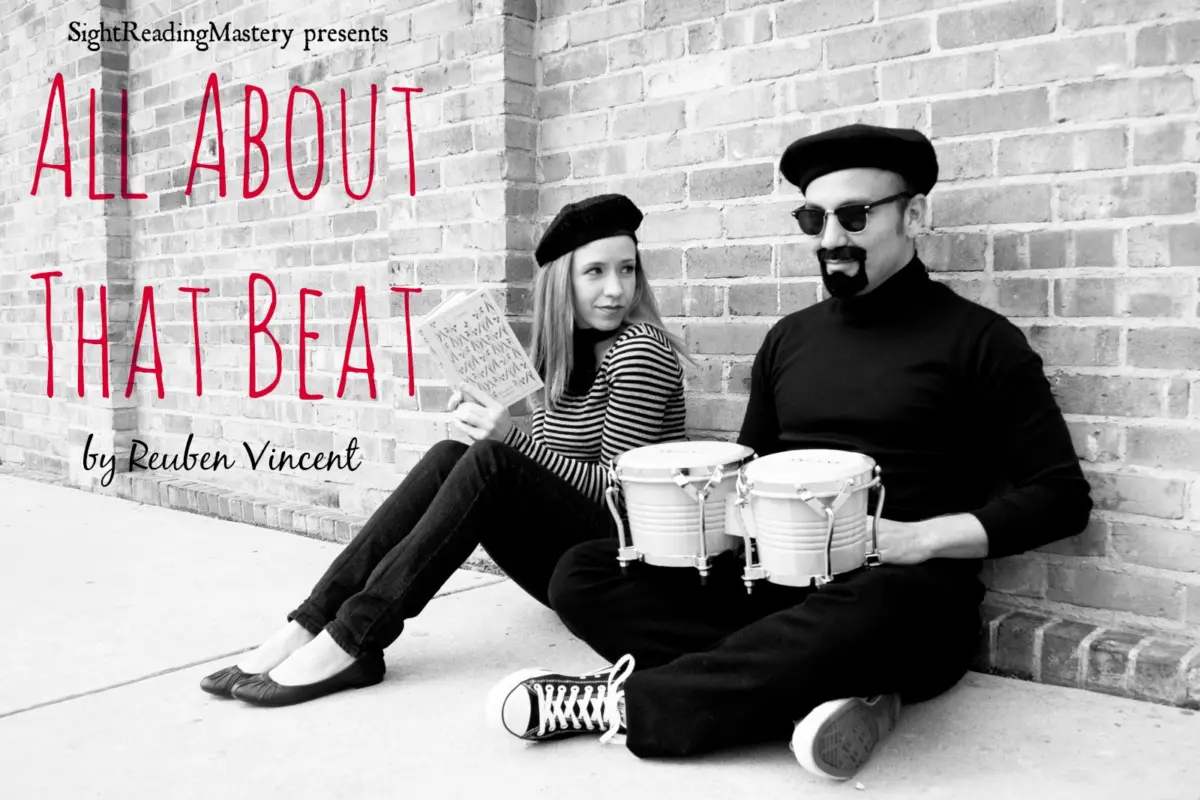
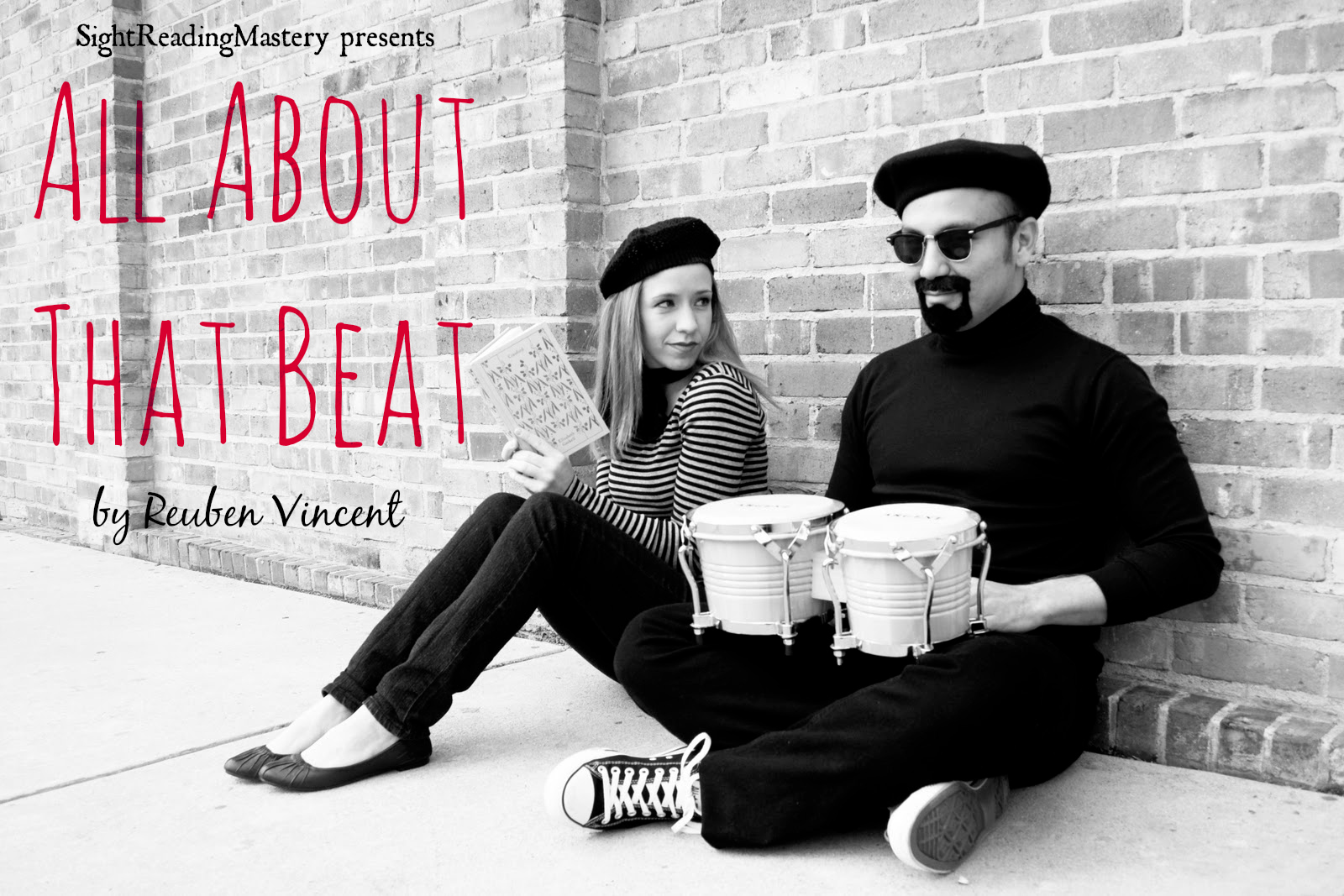
Challenging contemporary pop culture axioms—with apologies to Meghan Trainor—when it comes to navigating a new score, it is unequivocally "all about that beat."
This exhaustive analytical report explores the pedagogical mechanics of rhythmic anchoring during the sight-reading process. Drawing upon insights from music educators, cognitive psychology, and established instructional frameworks such as SightReadingMastery, this article outlines a rigorous, three-step operational methodology designed to retrain the musician’s internal clock. By reframing the psychological hierarchy of the score—positioning the steady pulse as the absolute master and individual pitches as compliant servants—performers can systematically eliminate sight-reading paralysis, build unshakable rhythmic resilience, and unlock fluid, expressive musicianship.
Detailed Chronology: The Anatomy of a Sight-Reading Breakdown
To understand how to correct sight-reading failures, one must first dissect the temporal progression of a typical sight-reading attempt. The breakdown rarely happens at the final measure; rather, it is baked into the initial microseconds of engagement between the human eye, the cognitive processing centers of the brain, and the physical execution apparatus of the hands, mouth, or vocal cords.
Phase 1: The Visual Shock and Pitch fixation
When a fresh piece of sheet music is placed on a music stand, the musician’s visual field is immediately flooded with data: clefs, key signatures, time signatures, dynamic markings, articulation symbols, and a dense forest of noteheads scattered across the staff.
For the developing musician, the natural survival instinct is to decode the pitches first. The brain initiates a frantic visual scan, attempting to match symbols to fingerboard positions, keyboard keys, or vocal intervals. During this initial phase of the chronology—often lasting only a fraction of a second—the concept of time is tacitly suspended. The internal metronome is switched off while the brain wrestles with geography: Is that an F-sharp or a G-natural? Does this ledger line represent high C or B?
Phase 2: The Erroneous Entry and Rhythmic Acceleration
Having laboriously deduced the first two or three notes, the performer initiates physical execution. However, because no prior temporal framework was established, the entry is tentative. The tempo is dictated not by a steady, external or internal pulse, but by the speed of cognitive retrieval.
If a note is easy to read, the performer accelerates; if a complex chord or unexpected accidental appears, the brain hits a processing bottleneck, causing the entire physical performance to grind to a sudden, jarring halt. The musician stops, scans ahead, corrects the finger placement, and resumes playing—effectively destroying any illusion of continuous musical flow.
Phase 3: The Spiral of Temporal Degradation
As the performance stumbles forward, the compounding errors accumulate. Each stoppage resets the psychological clock, forcing the performer to re-evaluate where they are in the measure. The tempo fluctuates wildly, slowing down dramatically before difficult passages and racing through familiar scales.
By the final double barline, the performance bears little resemblance to the composer’s rhythmic intent. The underlying culprit throughout this chronological breakdown is a fundamental inversion of musical priorities: treating the notes as the absolute governors of time, rather than subordinates bound to an unyielding metronomic framework.
Supporting Context & Metrics: The Cognitive Mechanics of Rhythmic Priming
To reverse this destructive chronological cycle, educators must leverage principles of cognitive psychology and motor learning. Why is maintaining a steady beat so profoundly difficult for the human brain, and how can structured preparation rewire our physiological response to notation?
The Conflict Between Instinct and Metronomic Discipline
Human beings are rhythmic creatures by nature—we possess a heartbeat, a walking cadence, and an innate response to dance and groove. Yet, when confronted with a complex visual stimulus like a musical score, our fine-motor control systems frequently override our natural rhythmic instincts.
Cognitive studies in music education demonstrate that visual decoding consumes significant working memory. When working memory is saturated with the task of decoding pitches and intervals, secondary tasks—such as tapping a foot, maintaining a steady internal pulse, or monitoring tempo—are routinely deprioritized by the brain.
To counteract this, the physical manifestation of the beat must be made automatic and muscular. It cannot remain an abstract mental concept; it must be grounded in physical feedback loops involving the vestibular and proprioceptive systems.
The Pedagogical Framework: A Three-Step Corrective Strategy
To transition from a reactive reader to an authoritative, pulse-driven performer, musicians must implement a disciplined, three-stage operational protocol.
[Step 1: Environmental Rhythmic Awareness]
                     ↓
[Step 2: Pre-Performance Two-Bar Count-In]
                     ↓
[Step 3: Unyielding Momentum ("Never Stop")]
Step 1: Tap Into the Beat Everywhere
Rhythmic fluency begins long before the musician sits down at the piano or lifts a brass instrument to their lips. It requires cultivating an acute, hyper-aware relationship with the steady pulses that saturate our everyday environment.
- Ticking clocks
- Industrial machinery hums
- The rhythmic propulsion of recorded music in transit
- The cadence of footsteps on pavement
Musicians serious about improving their sight reading are encouraged to actively externalize these ambient pulses. Whether listening to the radio, watching a cinematic production, or sitting through a live concert, the aspiring sight reader should habitually tap their foot, nod their head, or silently subdivide the underlying beat. While this may occasionally elicit curious glances from uninformed observers, it builds the crucial neural pathways required to keep time independently of pitch execution.
Step 2: The Mandatory Two-Bar Count-In
The single most common point of failure in sight reading occurs in the transition from silence to sound. Performers look at a piece, decide on a tempo in their head, and immediately dive into the first measure without a runway.
A foolproof pedagogical remedy developed by experienced educators is the implementation of a slow, deliberate two-bar count-in before playing a single note.
- Analyze the Time Signature: Determine the metric structure. If the piece is in $4/4$ time, there are four beats per bar. Two bars equal eight total beats of preparation.
- Establish the Tempo: Set a speed that is intentionally conservative—slower than the ultimate performance goal, ensuring that every subsequent rhythmic subdivision can be executed without panic.
- Physicalize the Count: Vocalize or mentally project the count with heavy emphasis on the downbeats: "1, 2, 3, 4, 1, 2, 3, 4."
- Engage Proprioception: Simultaneously tap a foot or nod the head in strict alignment with the vocalized count. The speed established during this two-bar runway is the sacred law; it must remain absolute once execution begins.
Step 3: Absolute Momentum (The "Master and Slave" Paradigm)
Once the count-in concludes and the performance begins, the psychological imperative shifts to a singular, non-negotiable directive: DO NOT STOP.
In this pedagogical framework, a strict hierarchical relationship must be maintained:
- The Master: The steady, unyielding beat (pulse, foot tap, internal metronome).
- The Slaves: The notes, pitches, and articulations that must conform to the rhythmic grid.
If a performer misreads a pitch, hesitates on an accidental, or fumbles a fingering, the "slave" must be sacrificed to preserve the "master." The fingers or voice must simply skip the erroneous note and catch up with the ongoing pulse. Stopping to correct a mistake is strictly forbidden during a sight-reading drill.
While learning to suppress the human instinct to correct errors in real-time is psychologically agonizing, it is the single most effective catalyst for long-term sight-reading mastery. By forcing the brain to process ahead of the current execution point, the performer develops peripheral visual span and proactive scanning skills.

Official Perspectives: Insights from Music Educators and Composers
The philosophy of placing the pulse above all else is deeply rooted in the pedagogical traditions of classical and contemporary music institutions worldwide. Music educators and composers consistently emphasize that rhythm is the skeleton of musical architecture; without it, harmony and melody collapse into meaningless noise.
Reuben Vincent, a prominent music educator, composer, and curriculum contributor based in North Wales, UK, has written extensively on the psychological barriers facing developing instrumentalists. Reflecting on his years of teaching young pianists and editing complex sheet music for publication, Vincent highlights the deep tension between human instinct and rigorous metronomic discipline:
"Learning to count aloud is challenging. Learning to get to the end without correcting mistakes and letting the beat slow down is really tough. It takes time and patience. Such discipline simply goes against our natural human instincts, but it is the single, best way to improve your skills as a sight reader! Remember, from now on, you are a ‘slave’ to the beat!"
This perspective is echoed across conservatory faculties globally. Sight reading is rarely taught as a passive intellectual exercise; instead, it is treated as a martial art of time management. Instructors stress that examiners and bandleaders would infinitely prefer a musician who maintains a relentless, driving groove while missing or guessing a few notes, rather than a musician who achieves pitch perfection at the expense of time, bringing the entire ensemble or mental framework to a grinding halt.
Furthermore, professional orchestral audition panels routinely prioritize rhythmic stability and sight-reading resilience over sterile accuracy. An applicant who demonstrates the composure to maintain a steady tempo through an unfamiliar contemporary score displays the exact collaborative reliability required in professional ensembles.
Future Outlook: The Evolution of Sight-Reading Pedagogy and Technology
As the musical landscape continues to evolve in the 21st century, the tools and methodologies surrounding sight-reading instruction are undergoing a digital transformation. Understanding how future innovations will shape rhythmic training provides context for why foundational pulse-mastery remains indispensable.
The Rise of Interactive Digital Scores and Smart Metronomes
Traditional paper sheet music is rapidly being augmented—and in some contexts replaced—by digital tablets and interactive scoring software. These platforms offer advanced pedagogical features that reinforce the "beat-first" philosophy:
- Dynamic Tempo Limiting: Software can lock a scrolling score to a predetermined metronome speed, visually forcing the performer to keep pace with the digital cursor.
- Automated Accompaniment Tracking: Modern MIDI-enabled applications listen to the performer via microphone, adjusting accompaniment tracks in real-time only if the underlying tempo remains stable, thereby penalizing temporal hesitation.
- Gamified Rhythmic Training: Apps designed specifically for sight-reading drills incorporate scoring mechanisms that reward continuous pulse maintenance over micro-accuracy, directly gamifying the psychological discipline advocated by master educators.
The Indispensability of the Human Element
Despite technological advancements in artificial intelligence and real-time audio analysis, the core cognitive hurdle of sight reading remains fundamentally human. Software can measure timing deviations down to the millisecond, but it cannot override the panic response in a student’s brain when confronted with an intimidating score.
Consequently, the pedagogical emphasis on physicalizing the beat—tapping feet, vocalizing counts, and embracing the "master and slave" paradigm—will remain the gold standard of music education. Future curricula will likely integrate these analog physical techniques even more deeply with digital analytics, allowing students to visualize their temporal stability through biofeedback and real-time metric graphs.
Conclusion: Embracing the Tyranny of the Pulse
Ultimately, mastering sight reading is an exercise in psychological liberation through disciplined submission. By stripping away the ego-driven desire for immediate perfection and surrendering entirely to the tyranny of a steady beat, musicians transform themselves from anxious, reactive decoders into confident, expressive performers.
The path forward is clear: absorb the rhythm of the world, count meticulously before every single note, and above all else—never stop the pulse. From this moment onward, honor the master, whip the notes into line, and let the music move forward with uncompromising momentum.