
Executive Overview
In the realm of instrumental and vocal performance, sight-reading remains one of the most intellectually demanding yet indispensable competencies a musician can acquire. At the heart of this discipline lies note recognition—the cognitive and visual mechanism of instantly identifying a musical pitch as it appears positioned upon the staff. While novice musicians often struggle simply to match a visual symbol to an instrumental key or vocal pitch, even advanced professionals continually seek to refine the speed and accuracy of this foundational process. Faster note recognition translates directly to superior sight-reading fluency, reducing cognitive load and allowing performers to focus on expression, phrasing, and ensemble dynamics.
To bridge the historical gap between tedious paper flashcards and effective digital pedagogy, developer, musician, and educator Evan R. Murphy introduced a specialized digital solution: the SightReadingMastery Note Recognition application. Launched originally as a streamlined web utility and subsequently refined through rigorous user feedback, this free online tool was engineered to help musicians of all levels systematically overcome cognitive bottlenecks in sight-reading.
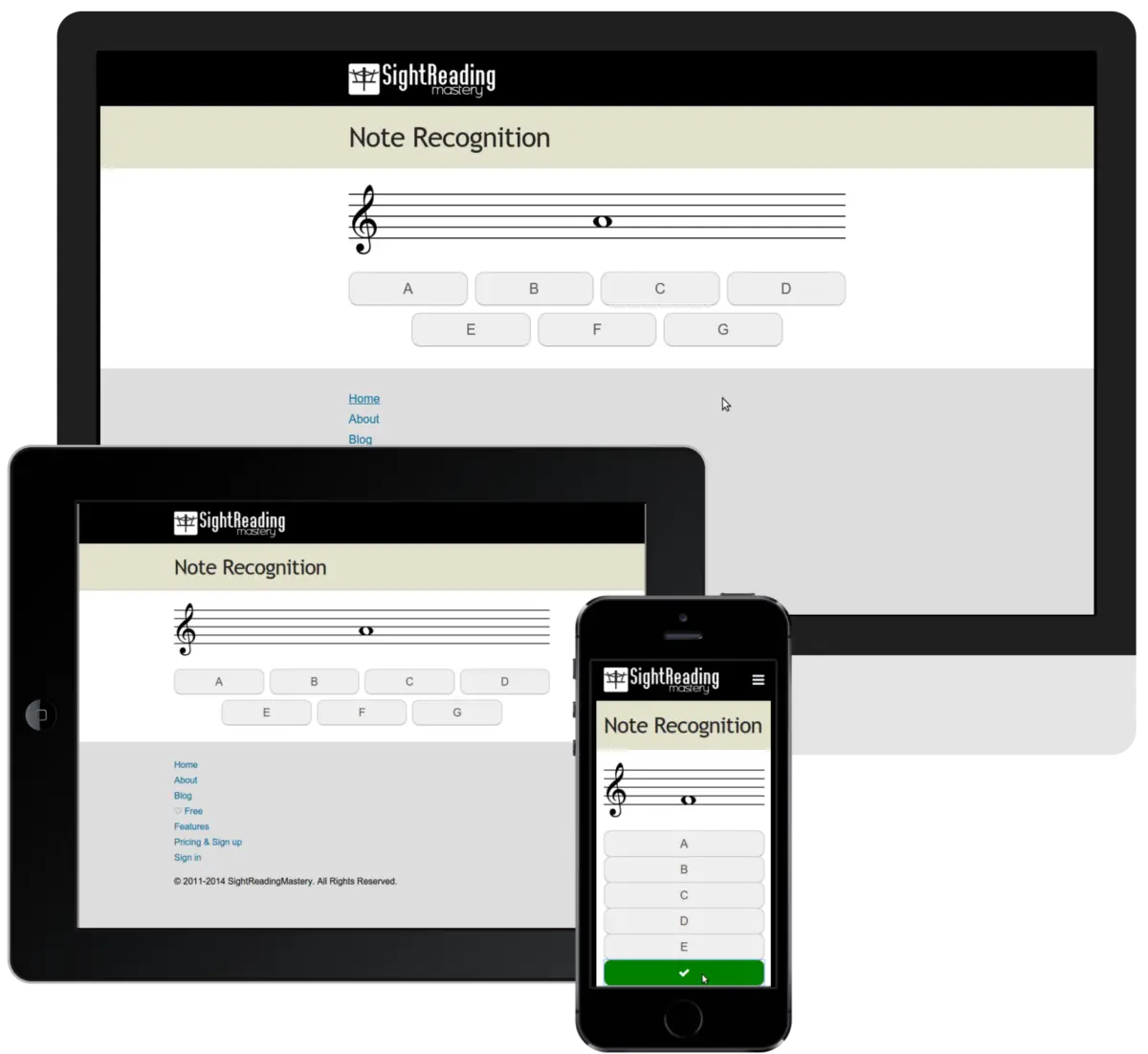
Accessible across a diverse array of hardware ecosystems—ranging from desktop computers to mobile smartphones and tablets—the application democratizes access to professional-grade ear and eye training. Although initial iterations featured deliberate constraints, continuous developmental updates have transformed the software into a comprehensive platform supporting both treble and bass clefs, as well as complex ledger lines. This comprehensive report explores the architectural genesis of the application, the pedagogical science underpinning rapid note recognition, the iterative evolution of the software, and its enduring footprint within the modern music education landscape.
Detailed Chronology
The trajectory of digital music education tools over the past decade reflects a profound shift toward accessibility, responsiveness, and platform independence. The development and refinement of the SightReadingMastery Note Recognition tool offer a compelling case study in iterative software engineering driven by pedagogical necessity.
May 2015: The Genesis of a Digital Pedagogical Tool
On May 1, 2015, SightReadingMastery officially unveiled its dedicated online note recognition application. Spearheaded by founder Evan R. Murphy, the release was designed to address a persistent pain point reported by students and self-taught musicians alike: the lack of low-friction, highly repetitive tools for drilling basic musical literacy.
In its initial deployment, the software functioned as a web-based utility hosted at sightreadingmastery.com/note-recognition/. The design philosophy prioritized minimalism and immediate utility. Musicians could navigate to the URL via standard desktop browsers and immediately begin testing their visual recognition speed. However, technological and scope limitations defined this initial release. Most notably, the version 1.0 architecture was strictly confined to the treble clef, omitting the bass clef entirely. Furthermore, the rendering engine did not yet support ledger lines—those crucial extension lines that allow musicians to read pitches existing above or below the standard five-line staff.
Despite these functional boundaries, the response from the music education community was overwhelmingly positive. The utility was praised for its instant-feedback mechanism, clean user interface, and cross-platform compatibility, which ensured that users could practice on smartphones and tablets just as easily as they could on full-scale desktop computers.
September 2018: Major Architectural Overhauls and Feature Expansions
Recognizing that a comprehensive sight-reading curriculum cannot exist in isolation within a single clef, Murphy and his development team initiated a major overhaul of the application in the autumn of 2018.
- September 14, 2018: The engineering team deployed a substantial backend and frontend update that officially eliminated the platform’s most prominent historical limitation. Bass clef support was successfully integrated into the application environment, instantly multiplying the utility’s audience to include pianists, cellists, bassoonists, trombonists, and tuba players who spend the majority of their reading lives navigating the lower register.
- September 23, 2018: Just over a week later, a subsequent update rolled out support for ledger lines. This addition transformed the application from a purely rudimentary flashcard replacement into an advanced training ground capable of testing extended ranges. Musicians could now practice identifying notes high above the treble staff or deep below the bass staff without relying on external physical materials.
These cumulative updates marked a maturation point for the project, reflecting an agile development methodology that prioritized direct user feedback over rigid, predetermined feature roadmaps.
Supporting Context & Metrics: The Science of Sight-Reading and Cognitive Processing
To truly understand the value proposition of a dedicated note recognition application, one must examine the neurocognitive mechanisms involved in reading Western musical notation. Sight-reading is not merely a mechanical translation of visual symbols to physical actions; it is a complex cognitive orchestration involving visual perception, working memory, pattern recognition, and motor execution.
The Cognitive Bottleneck of Note Identification
When a musician gazes at a musical score, light reflected from the page hits the retina, initiating a cascade of neural signals processed primarily by the occipital lobe. The brain must rapidly categorize the vertical and horizontal position of the notehead relative to the five lines and four spaces of the staff.
For beginners, this process is serial and conscious: Line 1 from the bottom is E; space 1 is F. Each note requires a discrete mental lookup. However, professional sight-readers process notation globally and implicitly. Through thousands of hours of pattern recognition, expert musicians chunk notes into intervals, chords, and scalar passages, bypassing conscious individual note-naming.
Nevertheless, the baseline speed of individual note recognition remains the primary rate-limiting step in this cognitive chain. If a musician hesitates for even 200 milliseconds to identify a single ledger-line pitch, the rhythmic momentum of the entire musical phrase collapses. Tools like the SightReadingMastery application target this exact neurological bottleneck. By enforcing high-speed, high-repetition drills, the application forces the brain to myelinate the neural pathways responsible for pitch identification, shifting the task from conscious deduction to automatic reflex.
Responsive Design and Cross-Platform Accessibility
In the modern educational technology landscape, software utility is inextricably linked to accessibility. Educational tools that require complex installations, expensive proprietary hardware, or desktop-bound software invariably suffer from low user retention.
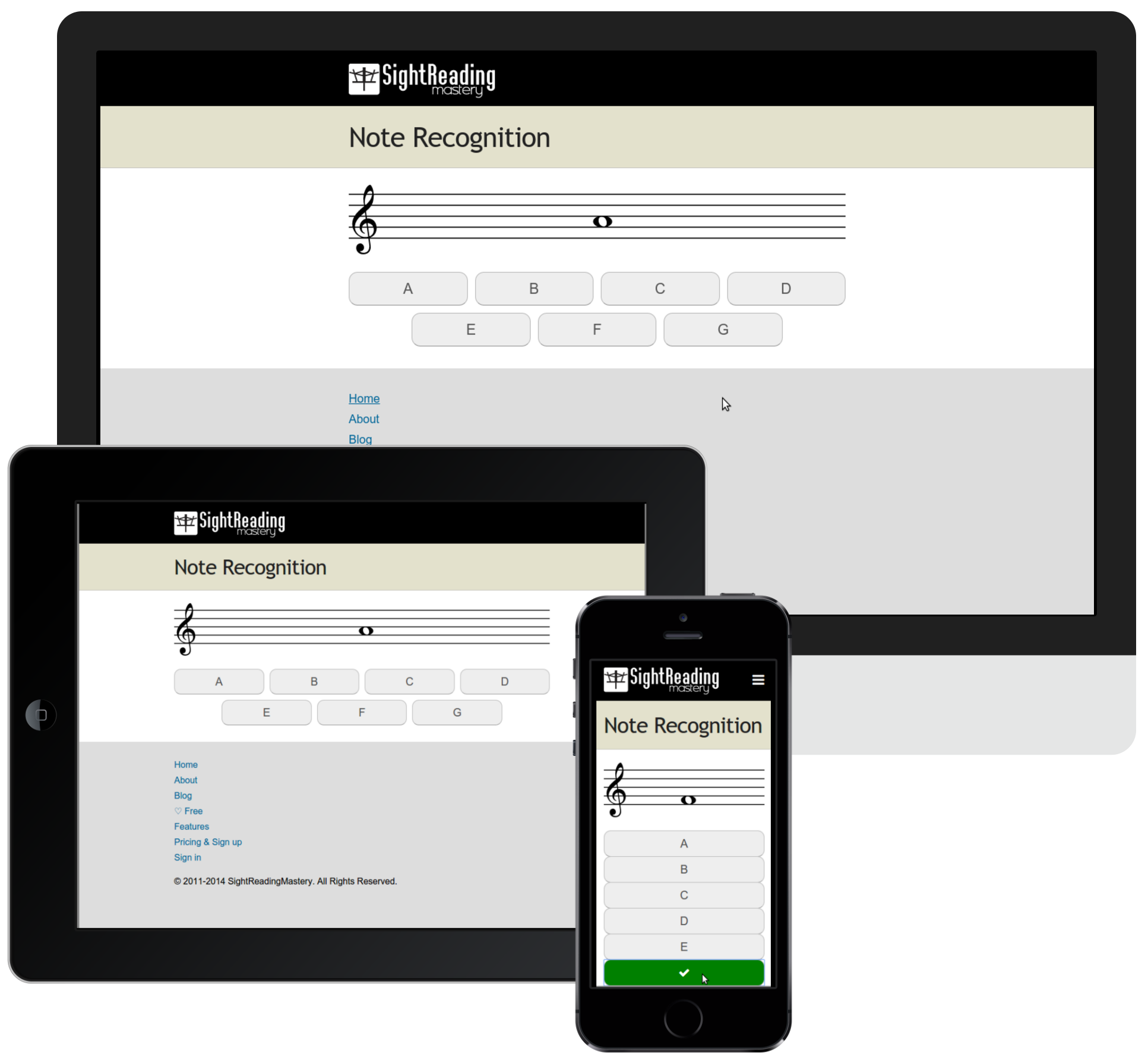
The SightReadingMastery application was architected from the ground up to be responsive, deploying seamlessly across:
- Desktop Workstations: Allowing conservatory students and formal teachers to integrate drills into structured studio practice sessions using large, high-resolution monitors.
- Tablets (iPads and Android Devices): Providing a tactile, portable experience that can rest comfortably on a music stand next to an acoustic piano or digital keyboard.
- Smartphones: Enabling micro-learning sessions. Musicians can utilize downtime—such as commuting on public transit or waiting for an appointment—to complete a few minutes of note recognition drills.
This omnipresence ensures that deliberate practice is no longer confined to the formal studio space, aligning with modern psychological findings on the efficacy of spaced repetition and micro-learning.
Official Statements and Pedagogical Philosophy
The ethos driving the development of the note recognition app is deeply rooted in the personal and professional philosophy of its creator, Evan R. Murphy. As a musician, software engineer, and dedicated educator, Murphy’s approach bridges the often-disconnected worlds of computer science and traditional music pedagogy.
Perspectives on Sight-Reading Literacy
Reflecting on the motivations that led to the founding of SightReadingMastery in 2011, Murphy has consistently emphasized that sight-reading is the ultimate gateway to musical freedom.
"Realizing how important sight reading is to unlocking opportunities in music, the core mission has always been to remove the friction between the written page and the musical instrument," internal project documents and editorial notes state. "When a musician stumbles over basic note reading, the joy of discovery is suffocated by technical frustration. Our goal with digital tools is to automate the mundane so that human creativity can take center stage."
The Developer-Educator Synergy
Murphy’s dual background as a software engineer based in Seattle, Washington, and an active music educator uniquely positions him to identify pedagogical challenges and construct elegant, frictionless software solutions to solve them. Rather than building bloated, feature-heavy applications that overwhelm the user, the development philosophy behind SightReadingMastery favors hyper-focused utilities. Each tool—whether a graded sight-reading etude library or a specialized note recognition drill—is engineered to solve one specific pedagogical problem with absolute efficiency.

The transition from a treble-only utility in 2015 to a fully realized multi-clef, ledger-line-inclusive application in 2018 demonstrates a commitment to responsive engineering. By listening to the demands of pianists, string players, and wind instrumentalists who expressed a need for comprehensive lower-register and extended-range training, the platform evolved into a truly universal resource.
Future Outlook: The Ongoing Evolution of Digital Music Pedagogy
As we look toward the future of music education, the role of web-based applications and digital utilities will only expand. The foundational work established by tools like the SightReadingMastery Note Recognition app points toward several emerging trends in pedagogical technology:
1. Integration of Artificial Intelligence and Adaptive Algorithms
Future iterations of digital note recognition tools are poised to move beyond static random generation. By incorporating adaptive learning algorithms, software can dynamically track a user’s historical error rates—identifying, for example, that a student consistently confuses high ledger-line notes in the bass clef with low ledger-line notes in the treble clef—and automatically adjust the frequency of those specific stimuli. This personalized approach mirrors the methodologies of advanced language-learning applications, maximizing the efficiency of every practice minute.
2. MIDI and Audio Input Integration
While visual-only recognition drills are exceptionally powerful for cognitive speed, the ultimate goal of music reading is physical execution. The next frontier for web-based music applications involves native WebMIDI and microphone pitch-detection support. This will allow musicians to play notes on an actual acoustic instrument or digital keyboard to answer prompts, seamlessly bridging visual recognition with physical muscle memory and auditory feedback.
3. Gamification and Community Metrics
To combat practice fatigue, modern educational software increasingly leverages ethical gamification—streaks, timed challenges, and global leaderboards. While maintaining a serious focus on pedagogical outcomes, integrating subtle competitive and tracking elements can drastically improve student engagement and long-term retention rates.
Conclusion
The evolution of the SightReadingMastery Note Recognition application serves as a testament to the power of targeted, user-driven software development in the arts. What began in May 2015 as a straightforward, treble-clef-only web utility has matured into a sophisticated, multi-register training platform supporting bass clef, treble clef, and extensive ledger lines.
Under the guidance of founder Evan R. Murphy, the platform successfully addresses one of the most stubborn hurdles in instrumental and vocal training: the cognitive lag inherent in visual pitch identification. By making rapid note recognition accessible across smartphones, tablets, and desktop computers—completely free of charge—SightReadingMastery continues to empower musicians worldwide to unlock new levels of fluency, confidence, and artistic expression.
For musicians seeking to elevate their sight-reading proficiency, the tool remains an essential digital companion. Practitioners are encouraged to experience the software firsthand by visiting the official application portal at sightreadingmastery.com/note-recognition/, where decades of traditional pedagogical wisdom meet the clean, responsive efficiency of modern web engineering.