
Executive Overview
The Dutch National Opera (DNO) has officially announced a major new staging of Dmitri Shostakovich’s rarely performed operetta, Cherry Town (Moscow, Cheryomushki, Op. 105). Scheduled to run from October 8 to October 20, 2026, at the Dutch National Opera & Ballet in Amsterdam, this highly anticipated production promises to breathe new life into one of the Soviet master’s most eccentric and lighthearted theatrical works.
Known primarily for his monumental, deeply tragic symphonies and harrowing dramatic operas such as Lady Macbeth of Mtsensk, Shostakovich took a delightfully satirical detour with Cherry Town. Premiering in 1959, the work is a bubbly, biting musical comedy that takes aim at the absurdities of Soviet housing bureaucracy, urban planning, and bureaucratic red tape during the Khrushchev thaw.
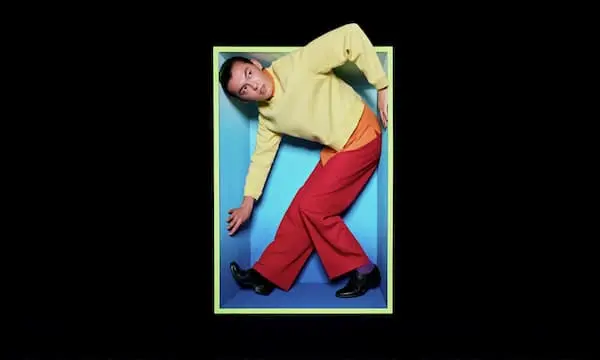
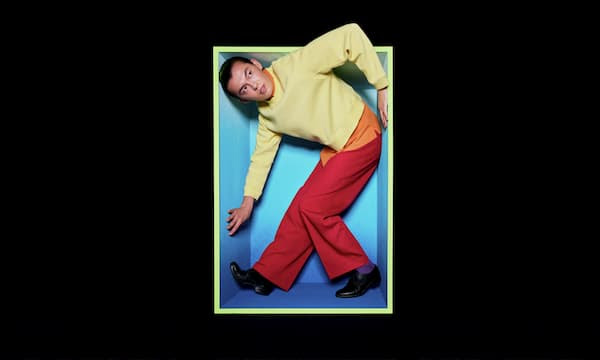
The upcoming Amsterdam mounting will be spearheaded by visionary director and illusionist Jakop Ahlbom, renowned for his distinct physical theatre style that seamlessly bridges the gap between surrealism, dance, and narrative drama. To fully realize the kinetic potential of Shostakovich’s score, Ahlbom has partnered with Marco Gerris—the artistic director and choreographer of the acclaimed ISH Dance Collective—to integrate contemporary movement, breakdance, and dynamic staging into the operatic fabric.
Musical duties will rest in the capable hands of conductor Bassem Akiki, who will lead the illustrious Netherlands Philharmonic Orchestra (NedPhO). Akiki is celebrated for his precise, energetic interpretations of both standard and twentieth-century repertoire. They will preside over a stellar, internationally diverse cast of vocal talents, including Alexander de Jong, Nina van Essen, León Ali Çifteci, Ella Taylor, Michael Wilmering, Thomas Oliemans, Madison Horman, and Martin Mkhize.
By combining physical comedy, innovative choreography, an accessible yet sophisticated musical score, and a top-tier creative team, the Dutch National Opera aims to position Cherry Town not merely as a historical curiosity, but as a vibrant, highly relevant theatrical experience designed to captivate both seasoned opera-goers and newcomers alike.
Detailed Chronology & Production Genesis
The Road to Amsterdam: Conception and Collaboration
The genesis of this ambitious 2026 production lies in the Dutch National Opera’s ongoing commitment to diversifying its seasonal programming by rescuing neglected gems from the twentieth-century operatic canon. For several years, DNO leadership has sought a project that could marry traditional operatic vocalism with modern physical theatre forms, recognizing that contemporary audiences increasingly respond to multidisciplinary storytelling.
Director Jakop Ahlbom, celebrated across Europe for his mime-heavy, cinematic, and often surreal stage productions, was approached to decode Shostakovich’s complex musical humor. Ahlbom quickly realized that Cherry Town required a collaborative approach, particularly regarding spatial dynamics and rhythm. He enlisted Marco Gerris, a pioneer in bringing street dance and hip-hop culture into traditional theatrical spaces through the ISH Dance Collective.
The creative team spent months workshopping how movement could interact with Shostakovich’s waltzes, galops, and parodic quotes. Rather than treating the dance elements as isolated interludes, Ahlbom and Gerris have integrated choreography directly into the character arcs and scene transitions, mirroring the frenetic energy of life in a hastily constructed apartment complex.
Rehearsal and Musical Preparation Timeline
While the performances are slated for October 2026, the logistical machinery behind the production is already in motion. Musical preparation under Bassem Akiki involves intensive score-study and sectional rehearsals with the Netherlands Philharmonic Orchestra, scheduled to ramp up through the summer of 2026.
Because Cherry Town employs a lighter, more transparent orchestration than Shostakovich’s heavy symphonic works, acoustic balancing within the cavernous main auditorium of the Dutch National Opera & Ballet requires meticulous fine-tuning. Akiki, alongside DNO’s rehearsal pianists, began working with the principal cast—featuring Alexander de Jong, Nina van Essen, León Ali Çifteci, Ella Taylor, Michael Wilmering, Thomas Oliemans, Madison Horman, and Martin Mkhize—to establish vocal agility, idiomatic Russian diction (where applicable), and precise comedic timing well ahead of the autumn stage rehearsals.
Supporting Context & Metrics
Understanding Shostakovich’s Cherry Town
To fully appreciate the significance of the Dutch National Opera’s upcoming production, one must examine the unique historical and musical context of Cherry Town within Dmitri Shostakovich’s vast catalogue.
Historical Background
Composed in 1958 and premiered on January 24, 1959, at the Moscow Operetta Theatre, Cherry Town (Moskva, Cheryomushki) was written during a period of relative artistic relaxation in the Soviet Union under Nikita Khrushchev. The Soviet government had launched a massive housing construction campaign to alleviate the severe post-World War II housing shortage. Prefabricated apartment blocks—known colloquially as khrushchyovki—were thrown up rapidly across the suburbs of Moscow. Cheryomushki was one such southern suburb characterized by these uniform, hastily built housing developments.
With a libretto by Vladimir Mass and Mikhail Chervinsky, the operetta follows a group of diverse Moscow citizens as they secure apartments in a newly completed block in Cheryomushki. However, they soon encounter a cascade of farcical bureaucratic hurdles, corrupt officials, shoddy construction standards, and logistical nightmares.
Despite the satirical targets, Shostakovich’s music does not read as bitter dissent; rather, it is affectionate, sparkling, and deeply melodic. The composer folded in self-quotations from his earlier film scores and ballets, alongside parodies of popular Soviet tunes and Western dance rhythms.
Musical and Theatrical Characteristics
- Genre Defiance: Cherry Town sits comfortably on the border between operetta, musical comedy, and satirical opera. It demands singers who possess not only rich, flexible operatic vocal cords, but also the comedic timing of classical farce actors.
- Orchestral Brilliance: While lacking the thunderous percussion sections of his symphonies, Shostakovich’s orchestration for Cherry Town is ingenious. It uses woodwinds and brass to punctuate comedic moments, while lush strings carry the sweeping, nostalgic melodies that reveal the genuine human yearnings hidden beneath the Soviet bureaucracy.
- Thematic Resonance: Although tied to a specific Soviet housing boom, the themes of Cherry Town—housing crises, bureaucratic incompetence, gentrification anxiety, and the desperate search for a home—remain universally and sharply relevant in the twenty-first century.
Production Metrics & Key Personnel
- Venue: Dutch National Opera & Ballet, Amsterdam.
- Run Dates: October 8 – October 20, 2026.
- Composer: Dmitri Shostakovich.
- Director: Jakop Ahlbom.
- Choreographer / ISH Collaboration: Marco Gerris.
- Conductor: Bassem Akiki.
- Orchestra: Netherlands Philharmonic Orchestra (NedPhO).
- Principal Cast:
- Alexander de Jong
- Nina van Essen
- León Ali Çifteci
- Ella Taylor
- Michael Wilmering
- Thomas Oliemans
- Madison Horman
- Martin Mkhize
Official Statements & Artistic Vision
The announcement of the production has generated considerable excitement within the European cultural sector, particularly regarding the fusion of Ahlbom’s directorial aesthetic with Shostakovich’s musical palette.
In an official statement released by the production team, director Jakop Ahlbom articulated his vision for bridging the gap between classical composition and accessible physical theatre:
"The music of ‘Cherry Town’ is light and accessible," Ahlbom stated. "Shostakovich blends humour with nostalgia, lightness with longing. That’s a combination I also see in many of my own inspirations, like the films of Buster Keaton. It’s precisely this mix that makes Cherry Town an inviting first introduction to opera."
Ahlbom’s reference to Buster Keaton is particularly revealing. Keaton’s deadpan physical comedy, resilience in the face of chaotic mechanical environments, and tragicomic vulnerability mirror the experiences of the characters navigating the flawed architecture of Cherry Town. By leaning into this cinematic physical comedy, Ahlbom intends to strip away the intimidating formality that sometimes surrounds the opera house, making the production a welcoming gateway for younger or first-time theatergoers.
Conductor Bassem Akiki has similarly emphasized the unique joy of conducting Shostakovich’s score, noting that it reveals a lesser-known side of a composer frequently pigeonholed as perpetually grim and angst-ridden. Through Akiki’s leadership, the Netherlands Philharmonic Orchestra aims to highlight the sparkling wit, jazz-inflected rhythms, and tender lyricism that define the score from its overture to its buoyant finale.
Future Outlook & Industry Impact
Broadening the Operatic Audience
As major European opera houses grapple with shifting demographics and the ongoing challenge of cultivating younger audiences, the Dutch National Opera’s strategy with Cherry Town serves as a potential masterclass in artistic programming. By selecting a work that is inherently comedic, musically digestible, and visually innovative, DNO is directly addressing the barrier to entry often associated with the art form.
The collaboration with Marco Gerris and the ISH Dance Collective further broadens the production’s demographic appeal. Street dance and contemporary physical theatre draw audiences who might not otherwise purchase tickets for a traditional lyric opera. Conversely, opera enthusiasts receive the reward of hearing a brilliant, neglected orchestral score executed by top-tier musicians and vocalists.
Critical and Cultural Re-evaluation
Beyond its immediate box-office and community-building goals, the 2026 Amsterdam production contributes to a broader cultural re-evaluation of Shostakovich’s theatrical output. While Lady Macbeth of Mtsensk and The Nose receive regular global exposure, his lighter stage works have historically languished in obscurity outside of Russia.
If Ahlbom, Akiki, and the stellar cast successfully capture the mercurial essence of Cherry Town, the production could spark a wave of international revivals, encouraging other houses across Europe and North America to dust off Shostakovich’s sparkling satire.
As the calendar ticks down toward the October 8, 2026 premiere, anticipation will undoubtedly mount. The Dutch National Opera has positioned Cherry Town as a theatrical tentpole of its upcoming seasons—a bold, funny, and deeply human exploration of housing, hope, and humor set against a magnificent musical backdrop.