
Executive Overview
In the modern landscape of music education, choral directors face a relentless balancing act. They must manage the intricate dynamics of vocal pedagogy, keep teenage and adult ensembles engaged, plan progressive rehearsal schedules, and differentiate instruction for varying skill levels—often all within a compressed, fifty-minute class period. For decades, the traditional choral classroom has relied heavily on a localized workflow: the director anchored to a piano bench, playing parts, hammering out rhythms note-by-note, and attempting to monitor fifty distinct voices simultaneously.
Enter the digital paradigm shift. MakeMusic, a pioneering force in music technology and interactive practice tools, has introduced a comprehensive suite of interactive choral resources designed to fundamentally redefine how choirs rehearse, learn, and perform. By moving beyond traditional digital sheet music and offering fully integrated accompaniment, dynamic warm-ups, versatile sight-reading modules, and customizable playlists, MakeMusic provides a robust ecosystem that liberates directors from the piano bench and empowers students to take ownership of their vocal development.
This article provides an in-depth exploration of MakeMusic’s choral offerings. We examine how these digital tools streamline classroom instruction, foster independent student practice, offer robust options for sight-reading mastery, and supply directors with the organizational framework needed to sustain long-term pedagogical success. Through a detailed analysis of its core features, pedagogical methodology, and future outlook, we uncover why MakeMusic has become an indispensable asset for choral educators globally.
Detailed Chronology: The Evolution of Digital Choral Pedagogy
To fully appreciate the impact of MakeMusic’s current interactive choral methods, it is essential to trace the technological and pedagogical evolution that brought the choral classroom to this juncture.
Phase One: The Print Era and Isolated Practice (Pre-2000s)
For generations, choral education was anchored entirely in physical print media. Choral octavos, massive method books, and dog-eared sight-reading anthologies formed the backbone of every music library. While these physical assets remain foundational, the practice model relied almost exclusively on what students could accomplish during rehearsal or what they remembered from hastily penciled marginalia in their scores.
At home, students practiced in isolation. Without a piano at home—or the requisite piano skills to play complex four-part vocal harmony—young singers struggled to isolate their individual lines. Pitch retention issues, rhythmic inaccuracies, and poor vowel alignment frequently went uncorrected until the next full-ensemble rehearsal, eating away at valuable instructional time.
Phase Two: The Advent of Digital Notation and Early Audio (2000s–2010s)
The introduction of digital music notation software, spearheaded by platforms like Finale, began to change how scores were created and distributed. Directors could generate rehearsal tracks, export MIDI audio files, or burn compact discs for their sections.
While these early digital tools were a step forward, they suffered from significant limitations. Audio files were often sterile and robotic, lacking the nuance of human phrasing. Furthermore, these files were static; students could not interact with them, slow them down dynamically, or receive automated feedback on their intonation and rhythm. The technology assisted the director in preparation, but it did little to bridge the gap between classroom instruction and independent student practice.
Phase Three: The Interactive Cloud Ecosystem (Present Day)
MakeMusic revolutionized this landscape by moving from static desktop software to a dynamic, cloud-based interactive subscription model. By integrating full audio accompaniments, real-time assessment, and expansive digital libraries into a single interface, MakeMusic transformed the computer, tablet, or smartphone into a 24-hour virtual rehearsal assistant.
Today’s platform bridges the gap between individual practice and ensemble performance. Choral singers can log in from home, practice their specific voicing alongside professional-grade accompaniment tracks, and build confidence before stepping foot into the rehearsal room. Meanwhile, directors are equipped with suite options that allow them to curate custom curricula, deploy targeted sight-reading exercises, and step away from the piano to observe, diagnose, and mentor their singers in real time.
Supporting Context & Metrics: The Mechanics of Modern Rehearsal Efficiency
To understand the practical value of MakeMusic in a contemporary academic environment, one must examine the specific pain points of choral instruction and how digital integration resolves them.
Freeing the Director from the Piano Bench
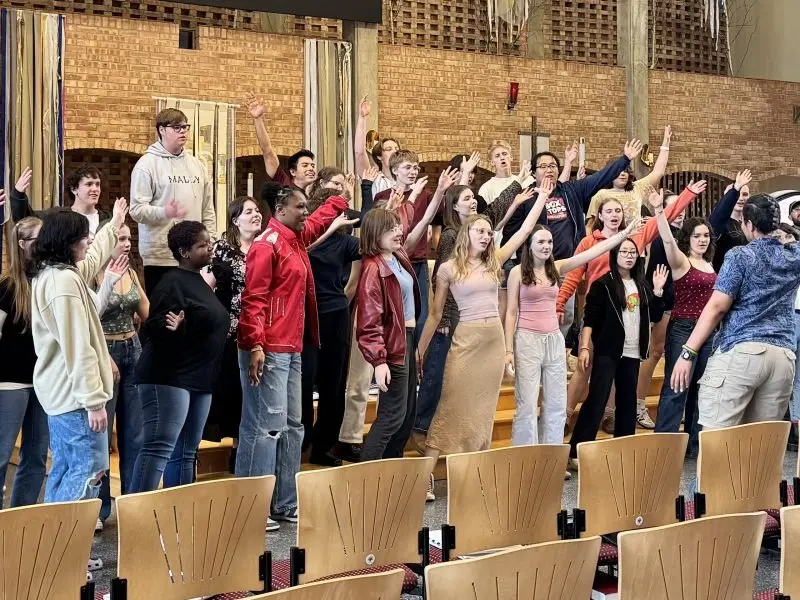
One of the most profound pedagogical shifts enabled by MakeMusic is the physical liberation of the choral conductor. Traditionally, a director’s hands and eyes are glued to the keyboard. They must play the soprano line to teach the sopranos, switch to the alto line, and continuously monitor the keyboard to ensure proper harmonic context. This physical restriction creates a barrier between the conductor and the ensemble.
When MakeMusic acts as the accompanist, the dynamics of the room change instantaneously:
- Enhanced Visual Monitoring: Conductors can step away from the keyboard, walk the risers, and observe physical posture, breathing mechanics, and jaw tension up close.
- Targeted Sectional Diagnostics: Directors can pinpoint specific tuning discrepancies or vowel inconsistencies within a section—such as catching a tenor sliding flat on an upper-register sustained pitch—because their ears and eyes are unburdened by the mechanics of playing the accompaniment.
- Dynamic Engagement: Eye contact, physical gesture, and expressive conducting take center stage when the mechanical execution of notes and accompaniments is offloaded to the platform.
Diversifying Warm-Up Routines
Vocal health and pedagogical preparation depend heavily on varied, intentional warm-ups. However, repetition often creeps into daily routines, leading to disengagement among students and vocal fatigue for directors who must constantly model exercises at the piano.
MakeMusic incorporates a rich repository of warm-up and technical resources designed to keep classes fresh. By cycling through different warm-up tracks on a weekly basis, directors can target specific technical elements—such as breath support, resonant forward placement, flexible agility, and precise intonation—without falling into monotonous patterns. Students remain mentally alert, and directors preserve their speaking and singing voices across long, grueling teaching days.
The Sight-Reading Imperative and Sight Reading Studio
Music literacy remains a core pillar of comprehensive music education, yet sight-reading is frequently marginalized due to time constraints. Sourcing fresh, leveled sight-reading material that matches an ensemble’s precise abilities can consume hours of a director’s planning time.
MakeMusic addresses this challenge through two distinct avenues:
- Pre-Curated Sight-Reading Anthologies: Subscribers gain instant access to structured, leveled sight-reading resources built into the platform, ensuring progressive skill development across a semester or academic year.
- Sight Reading Studio: For educators seeking total customization, Sight Reading Studio allows directors to generate bespoke exercises tailored to exact parameters. Whether an ensemble needs extra rhythmic reinforcement in compound meters for the soprano section, or a deliberate focus on minor key signatures for the bass section, directors can build, deploy, and assign these exercises in minutes.
Official Perspectives and Pedagogical Philosophy
Industry leaders, veteran educators, and curriculum developers consistently emphasize that technology should never replace the human element of music-making; rather, it should amplify it. MakeMusic’s approach to choral education is rooted in this philosophy.
Empowering the Individual Voice
In a choir of eighty singers, individual insecurity is a pervasive hurdle. Many students possess the vocal apparatus to sing beautifully but lack the confidence to do so independently, often relying on the student standing next to them to carry the pitch.
Pedagogical experts note that MakeMusic’s interactive practice environment directly combats this phenomenon. When students practice at home with the full accompaniment playing through their headphones, they experience the sensation of singing with a professional ensemble. This builds psychological safety, muscle memory, and pitch independence. When those same students return to the physical rehearsal room, they do so with fortified confidence, resulting in a more resonant, self-assured ensemble sound.
Workflow Optimization for Educators
Burnout is a silent epidemic among music educators. The administrative and preparatory burden of sourcing repertoire, organizing rehearsal tracks, and drafting lesson plans often spills over into evenings and weekends.
MakeMusic’s organizational architecture—specifically its robust playlist and favorites system—directly addresses educator sustainability. By allowing directors to curate, save, and categorize resources into customized playlists that persist across academic years, the platform transforms annual planning from scratch into a streamlined process of iteration and refinement. Directors build their digital curriculum once, tweak it as their ensembles evolve, and reclaim precious hours of personal time every August.
Future Outlook: The Next Horizon of Choral Technology
As artificial intelligence, cloud infrastructure, and audio processing technologies continue to evolve, the horizon for digital choral methods is expansive. What does the future hold for platforms like MakeMusic and the educators who rely on them?
Advanced Real-Time Pitch and Rhythm Feedback
While current iterations offer stellar accompaniment and structured practice frameworks, the integration of advanced pitch-detection algorithms and real-time rhythmic evaluation is set to deepen. Future developments will likely provide students with immediate, granular feedback on intonation trends (e.g., whether they tend to drift sharp on ascending intervals or flat during extended phrases) and rhythmic precision down to the millisecond. This empowers students to self-correct during independent practice sessions, ensuring that rehearsal time is dedicated to musical interpretation rather than basic error-correction.
Expanded Repertoire and Global Collaboration
As publishing partnerships expand, the digital catalog of interactive choral literature will continue to diversify. We can anticipate broader inclusion of culturally diverse repertoire, global folk traditions, and contemporary compositions paired with interactive media. Furthermore, cloud-based platforms lay the groundwork for cross-institutional collaborations, allowing virtual choir exchanges, shared masterclasses, and standardized adjudication benchmarks across districts and continents.
Sustainable Music Education Ecosystems
Ultimately, the future of choral music education lies in sustainability—making quality instruction accessible, manageable, and deeply engaging for both teachers and students. By removing logistical barriers, streamlining administrative workflows, and keeping students motivated through interactive technology, platforms like MakeMusic ensure that the choral tradition not only survives in the digital age, but thrives.
Conclusion
The modern choral classroom demands tools that are as dynamic, flexible, and ambitious as the educators who lead them. MakeMusic’s comprehensive suite of interactive choral methods—spanning innovative warm-ups, versatile sight-reading modules, customizable playlists, and liberating accompaniment tools—represents a monumental leap forward for the discipline.
Whether an educator is seeking to escape the physical constraints of the piano bench, elevate daily sight-reading proficiency, or organize a multi-tiered curriculum for the long haul, MakeMusic provides the digital infrastructure necessary to support an ensemble from the very first downbeat to the final concert bow.
For directors ready to transform their rehearsal spaces and empower their singers like never before, exploring these resources is the logical next step. To begin your journey, log in to your account or start a free trial today, and discover how technology and artistry can harmonize in your classroom.