
Executive Overview
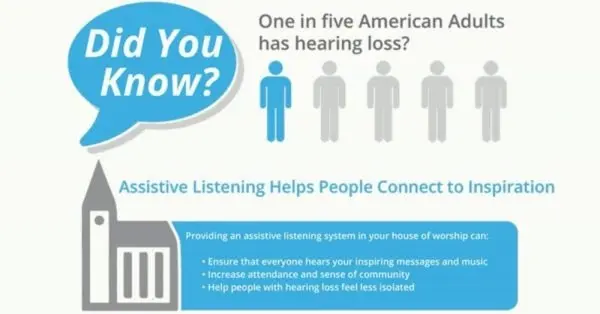
In an era where houses of worship strive to foster environments of radical inclusivity, the acoustic accessibility of religious services remains a critical yet frequently overlooked frontier. For millions of individuals experiencing age-related hearing loss, tinnitus, or clinical deafness, attending a traditional worship service can inadvertently transform into an isolating experience. While sanctuaries are routinely designed to amplify music and spoken word for the general public, the acoustic realities of cavernous architecture, reverberation, and ambient noise often create insurmountable barriers for those with auditory impairments.
Enter the Assistive Listening System (ALS)—a transformative technology designed to bridge the auditory divide between the pulpit and the pew. However, the procurement and deployment of an ALS involve far more than merely purchasing hardware off the shelf. A successful rollout requires a strategic, multi-phased approach that encompasses congregation assessment, financial planning, comprehensive staff training, and aggressive community outreach.
This comprehensive report synthesizes industry best practices, expert recommendations from AVL integration leaders such as CCI Solutions, and technological insights from pioneers like Listen Technologies. By exploring the four critical pillars of implementation—understanding needs, evaluating options, preparing operational teams, and creating broad awareness—this article serves as an authoritative guide for faith-based leadership teams seeking to ensure that no member of their flock misses a single word of grace, connection, and community.
Detailed Chronology: The Four-Step Implementation Roadmap
Transforming a worship space into an acoustically inclusive environment cannot be achieved overnight. It demands a deliberate, chronological methodology that moves from data collection to long-term community engagement. Below is the definitive operational blueprint for implementing an Assistive Listening System.
Phase 1: Conducting a Comprehensive Needs Assessment
The foundational misstep in acoustic upgrades is assuming leadership knows precisely what the congregation requires. Modern sanctuaries are diverse, multi-generational spaces where hearing loss manifests in various ways, from mild high-frequency attenuation to profound deafness.
- Deploying Congregational Surveys: The most scientifically and practically effective launchpad is a structured survey distributed to the congregation. This questionnaire must move beyond generalized inquiries and directly address personal worship experiences. Facilities should ask members how well they hear during various parts of the service (e.g., spoken prayers versus dynamic musical performances), whether they currently utilize hearing aids, and crucially, whether those hearing aids are equipped with Telecoil (t-coil) technology.
- Analyzing Acoustic Data: Survey results should be categorized by age, seating location preferences, and the specific severity of reported hearing difficulties. This data prevents leadership from over-investing in redundant technologies while ensuring that underserved demographics receive prioritized attention.
Phase 2: Evaluating Technological Options and Financial Planning
Once the empirical data from the congregation is synthesized, leadership must align these insights with available hardware and budgetary constraints.
- Navigating the Technology Landscape: Systems generally fall into three categories: Radio Frequency (RF) systems, Infrared (IR) systems, and Audio Induction Loop systems. Each carries distinct financial and structural implications. For instance, loop systems transmit audio directly to t-coil equipped hearing aids, eliminating the need for borrowed receivers, whereas RF systems require users to wear a dedicated headset or neck loop.
- Budgeting and Professional Consultation: Estimating the exact cost of transmitters, receivers, neck loops, and charging stations can quickly become complex. Organizations like CCI Solutions provide vital assistance in this arena, offering specialized consultations designed to help church administrative boards project expenses accurately.
- Capital Campaign Integration: To offset capital expenditures, churches frequently incorporate ALS funding into specialized fundraising drives, capital campaigns, or designate specific memorial gifts and grants targeted at accessibility improvements.
Phase 3: Operationalizing Success Through Training and Protocol
The most advanced sound system in the world is rendered useless if staff and volunteers do not know how to operate, maintain, and distribute the equipment efficiently.
- Appointing "Assistive Listening Ambassadors": Ushers, greeters, and welcome desk volunteers must be reframed as frontline accessibility advocates. Training sessions should not merely cover how to hand over a device, but why these devices matter to the dignity of the recipient.
- Standardized Hand-off Procedures: When a device is checked out, volunteers must take a proactive, compassionate moment to instruct the user on volume control, proper placement, and compatibility.
- Mitigating Friction with Support Materials: To prevent operational bottlenecks at the welcome desk, facilities should design and display a laminated "Frequently Asked Questions" (FAQ) sheet directly at the distribution counter. This ensures that even amidst volunteer turnover, consistent, accurate technical support remains available.
Phase 4: Cultivating Awareness and Community Outreach
An installed system is only valuable if people know it exists. The final phase shifts focus from internal readiness to external and internal marketing.
- Strategic Signage Placement: Universal international symbols for accessibility should be prominently displayed at all primary entrances, outlining precisely where and how visitors can acquire an Assisted Listening Device (ALD).
- Multi-Channel Promotion: Awareness must be reinforced weekly. Bulletins, digital presentation slides before services, and church websites should regularly remind attendees of the available technology.
- Hosting Dedicated Training Events: Consider hosting an interactive orientation workshop. Inviting senior congregants and community members to familiarize themselves with the technology in a low-pressure environment builds confidence and dismantles the stigma often associated with using assistive devices.
- Reaching the Broader Community: Word travels fast when a religious institution demonstrates genuine care for marginalized demographics. By advertising these inclusive upgrades to the surrounding neighborhood—particularly through local senior centers and advocacy groups for the hard of hearing—churches frequently experience an influx of new or returning visitors seeking a place where their physical needs are met with proactive compassion.
Supporting Context & Metrics: The Hidden Crisis of Hearing Loss in Worship
To fully grasp the urgency of implementing Assistive Listening Systems, one must examine the broader socioeconomic and physiological context of hearing loss within modern demographics.
The Demographic Imperative
According to data from the World Health Organization (WHO) and the Hearing Loss Association of America (HLAA), over 48 million Americans experience some degree of hearing loss. Within faith communities—which naturally skew toward older demographic cohorts—this prevalence is significantly higher. Medical studies indicate that nearly one-third of individuals aged 65 to 74 experience disabling hearing loss, and that number surges to nearly 50% for those aged 75 and older.
[General Population Hearing Loss: ~15%]
       VS.
[Typical House of Worship Demographic (65+): 30% - 50%]
In a traditional church setting accommodating 500 attendees, statistical averages suggest that anywhere from 100 to 200 individuals may be struggling to comprehend the spoken liturgy, scripture readings, or pastoral messages.
The Psychological Toll of Auditory Isolation
Hearing loss is rarely a purely physical condition; it carries profound psychological externalities. Research published in the Journal of the American Geriatrics Society highlights a direct correlation between untreated hearing loss and accelerated cognitive decline, social isolation, depression, and anxiety.
When an individual attends a house of worship and finds themselves unable to decipher the spoken word due to poor room acoustics, background HVAC noise, or reverberation, a micro-trauma of exclusion occurs. Over time, this recurring frustration leads to withdrawal. Congregants stop attending, quietly disconnecting from the spiritual and communal safety nets that houses of worship are explicitly designed to provide.
Economic and Technical Realities
From an institutional standpoint, the economic barriers to entry for ALS infrastructure have dropped precipitously over the last decade. Modern digital RF and Wi-Fi-based assistive listening technologies offer crystal-clear audio processing that eliminates the static and interference plaguing older analog systems. Furthermore, legislative frameworks such as the Americans with Disabilities Act (ADA) establish clear compliance expectations for public assembly spaces, making the adoption of assistive listening not merely an act of grace, but a foundational operational standard.

Official Statements and Industry Insights
Industry leaders, accessibility advocates, and architectural consultants overwhelmingly agree that the future of religious assembly design hinges on universal acoustic accessibility.
Mark Peterson, Senior Acoustic Integration Specialist at CCI Solutions, emphasizes the psychological shift required by leadership teams:
"When a church invests in an Assistive Listening System, they are making a profound theological statement. They are declaring that the message being preached is intended for every single person in the room, without exception. The technology is simply the instrument of that radical hospitality."
Furthermore, technological innovators at Listen Technologies have continuously championed the integration of comprehensive educational toolkits for houses of worship. In their published guidance documentation, Listen Technologies notes:
"Reaching out to those who feel disconnected from your community due to hearing loss is central to sharing the message of inclusion. Genuinely compassionate service involves being aware of and caring for the needs of everyone, especially those dealing with impairments. Make sure they are able to hear the beauty and emotion of the spoken word in your church by providing them with the equipment they need to stay connected."
Accessibility advocates point out that compliance and care must merge. The ADA mandates that assembly areas with fixed seating must provide assistive listening systems based on total capacity. However, legal compliance should be viewed merely as a baseline floor, not an operational ceiling. True ministry transcends minimum legal requirements, seeking instead to eliminate every barrier that separates a congregant from full participation in communal worship.
Future Outlook: The Next Horizon of Acoustical Inclusion
As houses of worship look toward the horizon of the next decade, the convergence of audio engineering, personal medical technology, and digital connectivity promises to revolutionize how individuals experience worship services.
The Rise of Bring-Your-Own-Device (BYOD) Systems
Historically, assistive listening relied exclusively on proprietary receivers handed out at a welcome desk—a process that occasionally suffered from loss, maintenance overhead, or user reluctance due to perceived stigma. The future points firmly toward BYOD architectures. Modern Wi-Fi-based assistive listening systems allow users to download a dedicated app onto their own smartphones, connecting directly to the sanctuary’s audio stream via personal earbuds, headphones, or Bluetooth-paired hearing aids. This shift not only reduces hardware overhead for the church but completely eliminates social friction, empowering users to stream clean, localized audio directly through their personal devices seamlessly.
Artificial Intelligence and Real-Time Transcription
Looking further ahead, the integration of Artificial Intelligence (AI) into worship audio processing is poised to break new ground. Emerging technologies are beginning to couple high-definition assistive listening feeds with real-time speech-to-text transcription displayed on sanctuary monitors or personal mobile screens. For individuals with profound deafness or those who process visual information more effectively than auditory inputs, live-captioned worship services represent the next great frontier of inclusion.
Conclusion and Call to Action
The mandate to communicate a message of love, redemption, and community is the defining mission of any house of worship. Yet, that mission remains incomplete so long as a segment of the congregation sits in silence, separated from the spoken word by physical and technological barriers.
By following a structured, methodical approach—understanding needs through surveys, budgeting with professional guidance, training staff as ambassadors of inclusion, and aggressively marketing the availability of these systems—faith communities can heal the invisible wounds of auditory isolation.
For leadership teams ready to take the next step, comprehensive resources are readily available. Organizations can download specialized implementation guides, such as the Listen Technologies Church Assistive Listening Toolkit, which provides sample surveys, printable signage templates, and promotional announcements designed to ease deployment.
The technology exists. The need is undeniable. It is time for houses of worship to ensure that every voice is heard, every story is shared, and every soul remains fully connected to the life of the community.