
Executive Overview
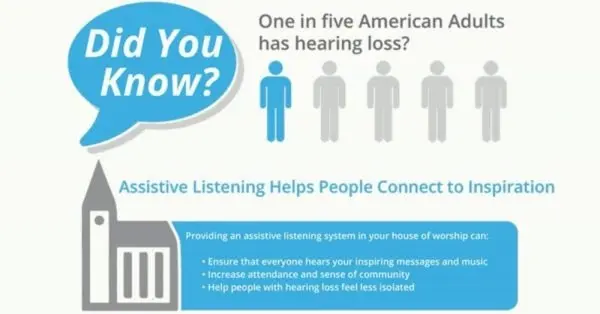
In an era where modern houses of worship strive to foster environments of radical inclusion, community engagement, and spiritual connection, one critical demographic is frequently overlooked: individuals experiencing hearing loss. For many congregants, attending a traditional worship service is not a passive experience of fellowship and spiritual reflection; rather, it is a daily exercise in frustration characterized by muffled audio, ambient room noise, and acoustical challenges inherent to large, open sanctuaries.
The integration of an Assistive Listening System (ALS) bridges this accessibility gap, ensuring that every word of the sermon, every note of the choir, and every shared prayer reaches the ears of every attendee with crystal clarity. However, deploying such a system requires far more than a simple hardware purchase. It demands a strategic, multi-phased approach encompassing congregation assessment, financial planning, staff and volunteer preparation, and proactive community outreach.
This comprehensive report examines the four foundational pillars of implementing a successful Assistive Listening System in a modern house of worship. Drawing on industry insights from audio-visual integration experts and specialized toolkits—such as those provided by Listen Technologies—this article provides a definitive roadmap for church leadership teams, AV technicians, and ministry directors looking to transform their acoustic environments into spaces of absolute auditory inclusion.
Detailed Chronology: The Four-Step Implementation Framework
Successfully deploying an Assistive Listening System within a religious facility requires a methodical, step-by-step progression. Rushing through the procurement phase without understanding user needs, or failing to train personnel on device distribution, can result in underutilized technology and ongoing participant alienation. Leadership teams are advised to follow a structured, four-phase rollout chronology.
[Phase 1: Needs Assessment] ──> [Phase 2: Budgeting & Options] ──> [Phase 3: Operational Prep] ──> [Phase 4: Awareness & Outreach]Phase 1: Understand Your Congregation’s Unique Needs
The foundational step in any audio infrastructure upgrade is a rigorous diagnostic assessment of the audience. Assumptions regarding who can or cannot hear effectively during services often lead to misplaced investments. Church leadership must actively engage the congregation to quantify the prevalence and nature of hearing difficulties within their specific community.
The most effective vehicle for this discovery process is a comprehensive congregational survey. This survey should be carefully constructed to capture actionable data points:
- Service Experience Audits: Ask respondents to rate their ability to understand spoken dialogue, Scripture readings, and musical presentations during standard weekend services.
- Hearing Aid Utilization: Inquire directly about whether attendees currently wear hearing aids or cochlear implants.
- T-Coil Capability: Crucially, determine whether their hearing devices are equipped with telecoil (t-coil) technology, which allows them to interface directly with loop systems or neck-loop receivers without requiring cumbersome auxiliary headsets.
By gathering this empirical data, the AV committee moves away from guesswork and builds a solid business and pastoral case for the exact type of assistive technology required.
Phase 2: Fully Understand Your Technical and Financial Options
Once the congregation’s demographic and technical requirements are clearly mapped, leadership must evaluate the financial commitment involved. Estimating the cost of an assistive listening system that matches the church’s specific architectural layout and capacity is a critical milestone.
Navigating the myriad of options—ranging from FM and Infrared (IR) systems to induction loop installations—can be daunting for non-technical staff. Professional AV integration partners, such as CCI Solutions, offer invaluable assistance during this phase, frequently providing free consultations to help ministries navigate equipment tiers, installation logistics, and budgetary constraints.
Furthermore, churches should look beyond immediate capital expenditure reserves. Funding an ALS can often be accomplished through targeted fundraising initiatives, dedicated benevolence funds, or specialized grants aimed at disability inclusion and public accessibility. Framing the purchase not as an institutional expense, but as a vital ministry of hospitality, can significantly accelerate donor support.
Phase 3: Prepare for Operational Success
The finest audio hardware in the marketplace is ultimately rendered useless if operational protocols fail at the distribution desk. The human element of an ALS rollout is just as critical as the electronic engineering.
To ensure seamless daily execution, church staff and hospitality volunteers must receive rigorous, hands-on training regarding the operation, maintenance, and distribution of the assistive listening devices. Think of these frontline volunteers not merely as ushers, but as Assistive Listening Ambassadors. Their demeanor, knowledge, and proactive hospitality dictate whether a hesitant congregant will feel comfortable accepting a device.
Best practices for operational readiness include:
- Interactive Instruction: When checking out a receiver to a user, staff should never simply hand over the unit in silence. Take thirty seconds to explain the volume controls, headphone connections, and power functions.
- Visual Aid Integration: Maintain a professionally laminated copy of Frequently Asked Questions (FAQs) directly at the reception counter or welcome desk where receivers are housed. This ensures that even substitute volunteers can troubleshoot basic inquiries instantly.
Phase 4: Create Awareness and Community Outreach
An invisible technology is an ineffective technology. Once the system is installed and operational, a comprehensive communication campaign must be launched to inform both current congregants and the surrounding geographic community.

- Signage and Wayfinding: Display prominent, universally recognized international symbols for hearing accessibility at all primary entrances, sanctuary doors, and welcome centers, directing visitors precisely to where Assisted Listening Devices (ALDs) are maintained.
- Print and Digital Reminders: Incorporate concise, welcoming notices within weekly printed bulletins, digital projection screens, and pre-service slide loops.
- Live Educational Demonstrations: Consider hosting a dedicated post-service demonstration or workshop where senior citizens and individuals with mild hearing loss can try the technology in a low-stress environment.
- Community Evangelism: Extend the message outward. Many individuals with age-related or noise-induced hearing loss have stopped attending religious services altogether simply because they could no longer follow the spoken sermon. Advertising your church’s commitment to accessibility can draw back alienated believers and attract new families seeking an accommodating spiritual home.
Supporting Context & Metrics: The Imperative of Auditory Inclusion
To understand the urgency of adopting Assistive Listening Systems, one must examine the broader socio-acoustic context of modern houses of worship and the clinical realities of hearing impairment.
The Acoustical Challenge of Sacred Spaces
Architecturally, houses of worship present unique and formidable acoustic hurdles. Cathedrals, modern auditoriums, and traditional sanctuaries are intentionally designed with high ceilings, hard reflective surfaces (such as stone, hardwood, and glass), and expansive volumes to maximize natural reverberation for choral and acoustic music.
While this architectural grandeur enhances aesthetic worship and musical resonance, it wreaks havoc on speech intelligibility. Reverberation time—the length of time sound persists in a space after the source has stopped—frequently blurs consonant sounds, transforming spoken dialogue into an unintelligible wash of audio for anyone with diminished auditory processing capabilities.
Demographics of Hearing Loss
According to epidemiological data from organizations like the Hearing Loss Association of America (HLAA) and the World Health Organization (WHO):
- Approximately 48 million Americans (roughly 15% of the population) experience some degree of hearing loss.
- Hearing loss is the third most prevalent chronic physical condition in older adults, yet utilization rates for assistive listening technology in public spaces remain dismally low, often hovering below 5% without active administrative intervention.
- The psychological toll of unaddressed hearing loss in communal settings is profound, leading directly to social isolation, depression, withdrawal from community life, and, ultimately, departure from spiritual communities.
| Metric / Indicator | Baseline Data | Impact on House of Worship |
|---|---|---|
| Prevalence | ~15% of the general population | Statistically guarantees a significant portion of every congregation struggles to hear. |
| Acoustic Decay | High reverberation in traditional sanctuaries | Blurs spoken consonants, severely reducing speech intelligibility. |
| Unassisted Adoption | < 5% utilization without intervention | Proves that passive availability is insufficient; active distribution is mandatory. |
| Retention Risk | High correlation with social withdrawal | Unaddressed hearing barriers directly drive congregational attrition. |
Official Statements and Industry Insights
Industry leaders and accessibility advocates have long championed the integration of assistive technologies as a moral and operational baseline for public assembly spaces.
"Reaching out to those who feel disconnected from your community due to hearing loss is central to sharing the message of inclusion," notes an advocacy statement from Listen Technologies. "Genuinely compassionate service involves being aware of and caring for the needs of everyone, especially those dealing with impairments. Make sure they are able to hear the beauty and emotion of the spoken word in your church by providing them with the equipment they need to stay connected."
Audio engineering specialists emphasize that modern assistive listening is no longer an expensive, clunky afterthought; it is a seamless extension of the front-of-house (FOH) audio mix. By routing discrete, highly compressed audio feeds directly to personal receivers, induction loops, or smartphone-based Wi-Fi streaming apps, churches give listeners precise control over their own listening experience without disrupting the acoustic balance of the main sanctuary.
Furthermore, regulatory frameworks such as the Americans with Disabilities Act (ADA) mandate the provision of assistive listening systems in places of public assembly that use amplified sound systems. Beyond mere legal compliance, religious institutions are realizing that true radical hospitality requires going beyond the letter of the law to proactively welcome those who have felt marginalized by their physical limitations.
Future Outlook: The Next Generation of Acoustic Accessibility
As audio technology continues to evolve at a rapid pace, the future of Assistive Listening Systems in houses of worship points away from discrete, standalone hardware and toward integrated, personal-device ecosystems.
1. Bring Your Own Device (BYOD) Streaming
The widespread adoption of smartphones has revolutionized accessibility. Next-generation ALS solutions increasingly leverage local Wi-Fi networks to stream ultra-low-latency audio directly to a congregant’s personal smartphone. Users can plug in their own earbuds, headphones, or Bluetooth-enabled hearing aids, eliminating the administrative overhead and hygiene management associated with maintaining fleets of shared church-owned receivers.
2. Integration with Advanced Hearing Aids and Bluetooth LE Audio
The emergence of Bluetooth Low Energy (LE) Audio and the Auracast broadcast standard represents a massive leap forward. Auracast will allow houses of worship to broadcast high-quality audio directly to multiple audio receivers, hearing aids, and earbuds simultaneously, completely uninhibited by physical distance or specialized intermediary hardware. Churches upgrading their infrastructure today must consult with integration specialists to ensure their investments are forward-compatible with these emerging global standards.
3. Holistic Inclusion as a Core Ministry Metric
Ultimately, the future of church accessibility lies in the complete removal of physical and sensory barriers as an organic expression of pastoral care. As ministries embrace comprehensive toolkits—such as the Listen Technologies Church Assistive Listening Toolkit, which includes sample surveys, standardized signage templates, and bulletin announcements—the cultural stigma surrounding hearing loss continues to dissolve.
By thoughtfully implementing, maintaining, and advertising an Assistive Listening System, houses of worship ensure that every single participant can fully engage with the spoken Word, share in the communal liturgy, and experience the profound emotional depth of corporate worship without hindrance.
Additional Resources & Downloadable Tools
For church leaders, AV technicians, and volunteer coordinators seeking to implement these strategies immediately, comprehensive documentation and operational assets are publicly accessible:
- Comprehensive Implementation Guide: Download the official Listen Technologies Church Assistive Listening Toolkit for sample congregation surveys, installation checklists, and marketing copy.
- Consultation Services: Reach out to specialized audio-visual integration partners like CCI Solutions to evaluate your sanctuary’s specific acoustic profile and request a tailored budgetary estimate.