
In the fast-evolving landscape of digital media, few independent publications have achieved the enduring cultural footprint of Classical Source. As its co-founder and Managing Director, Chris Caspell, celebrates his milestone 60th birthday, the classical music community is afforded a rare moment to reflect not only on an individual’s dedication, but on a digital pioneer who foresaw the trajectory of online arts journalism decades before it became the industry standard.
Founded over thirty years ago alongside two visionary associates, Classical Source emerged during the nascent stages of the internet—a time when print magazines were experiencing a secular decline and the digital domain was viewed by traditionalists with skepticism and suspicion. Eschewing institutional backing, major corporate subsidies, arts council grants, and restrictive paywalls, Caspell and his team charted an uncompromising, independent course. Under his steady technical leadership and financial stewardship, the platform transformed into a vital digital archive, documenting decades of London’s vibrant concert life and championing both emerging artists and established maestros.
Yet, this milestone celebration arrives against a backdrop of resilience and renewal. Following a poignant announcement in February—when Caspell revealed that the platform was facing a natural twilight due to shifting digital consumption habits—the classical music community rallied. Colleagues, contributors, and devoted readers stepped forward to prevent the fading of an invaluable cultural repository. Today, as plans solidify to preserve its legacy and propel the site into a new era, Caspell’s 60th birthday serves as both a personal tribute and a celebration of digital preservation. This comprehensive retrospective explores the genesis of Classical Source, the monumental challenges it overcame, the indelible mark it left on British music criticism, and the bright horizon that awaits its next chapter.
Detailed Chronology: From Dot-Com Optimism to Digital Stewardship
To fully appreciate the magnitude of Chris Caspell’s contributions, one must cast their mind back to the late 1990s. It was an era of dizzying technological optimism, characterized by the dot-com boom, the emergence of peer-to-peer sharing platforms like Napster, the ubiquity of early mobile devices like BlackBerrys, and an internet that felt entirely boundless.
The Birth of an E-Zine Vanguard (Late 1990s)
In 1999, at the precipice of a new millennium, Chris Caspell and his co-founders conceived Classical Source. At the time, the digital frontier for classical music was virtually barren. While traditional print journalism was entrenched in declining column inches and aggressive editorial sub-editing, the internet offered an unchartered expanse. Classical Source was an early adopter, predating subsequent digital ventures such as Bachtrack (2008) and The Arts Desk (2009). Alongside contemporaries like Len Mullinger’s MusicWeb International (1995) and Basil Ramsey and Keith Bramich’s Music & Vision (1999), Classical Source spearheaded a quiet revolution in the United Kingdom, proving that rigorous, high-level classical music criticism could thrive natively online.
From its inception, Caspell operated as the site’s Managing Director, chief financial supporter, and technical backbone. While others focused purely on editorial content, Caspell worked tirelessly behind the scenes—batting for the site’s cause through technological shifts, algorithmic changes, and the economic volatility of the early internet.
Navigating Eras of Change (2000s–2010s)
As the site matured through the 2000s and 2010s, it carved out a distinct editorial identity. Crucially, Caspell and his editorial teams—including the seasoned guidance of editor Colin Anderson and the late deputy editor Kevin Rogers—reinstated a golden age of criticism. In an era where print newspapers were slashing reviews to brief paragraphs, Classical Source offered a literary sanctuary where length was never an issue. Reviewers were given absolute freedom to explore performances in exhaustive detail, without arbitrary restrictions on the number of concerts or compact discs they could evaluate.
The site became a trusted partner to London’s major musical institutions, earning the enthusiastic backing of the BBC Proms, premier London orchestras, and legendary concert halls like the Wigmore Hall and the Royal Festival Hall. For performers, promoters, and artist agents, Classical Source was not merely a review blog; it was an indispensable chronicle of contemporary performance practice.
The Near-Twilight and the Relaunch (2023–Present)
The journey has not been without its formidable challenges. The unexpected passing of Deputy Editor Kevin Rogers in 2023—a beloved chemistry teacher at the City of London School for Boys who had injected media-savvy dynamism into the site since 2007—sent shockwaves through the team.
Compounding these emotional losses were the broader systemic shifts in digital readership. Last February, Caspell issued a stark, characteristically honest update: traffic had slowed, monthly reviews had dwindled to a handful, and the site appeared to be slowly fading away. In a digital ecosystem driven by short-form content and instantaneous social media clips, the painstaking, long-form depth of Classical Source was facing an existential squeeze.
Yet, true to the collaborative spirit that built the platform, the announcement triggered an immediate outpouring of support. Reviewers, readers, and musical peers refused to let the archive vanish into the digital ether. By April, concrete plans were formulated to preserve its historical legacy and relaunch the platform, ensuring that Caspell’s life’s work would endure for future generations of musicologists and enthusiasts.
Supporting Context & Metrics: The Scale of an Independent Giant
To understand the cultural weight of Classical Source, one must examine the metrics of its peak years and the unique philosophy that powered its longevity. Operating entirely independently—free from institutional endowments, arts council handouts, or restrictive paywalls—the site punched far above its weight class.
Peak Metrics and Global Reach
At the height of its digital dominance, Classical Source was an absolute powerhouse of online arts journalism. During busy seasons, the platform regularly hosted up to three distinct reviews daily, offering comprehensive coverage of orchestral concerts, chamber recitals, opera productions, and contemporary premieres.
The analytical data from its mid-2010s zenith underscores its immense reach. For instance, readership reports from March 2017 revealed an impressive 59,492 monthly page views. More tellingly, 46.3% of these visits were generated by returning users—a testament to the site’s loyal, highly engaged core readership of connoisseurs, students, and industry professionals. Furthermore, its social media presence, including a robust community of over 18,000 followers on Twitter (now X), acted as an active digital salon for classical music discourse.
A Sanctuary for Long-Form Criticism
The unique selling proposition of Classical Source lay in its deliberate rejection of modern digital brevity. In professional journalism, the rise of the internet often ushered in the tyranny of the "sub-editor’s blue pencil," where writers were forced to front-load every essential fact into a single introductory paragraph on the assumption that readers would click away.
Caspell’s operational model offered a deliberate counter-narrative. He facilitated a climate reminiscent of the post-war broadsheet era, when critics for The Daily Telegraph or Sunday papers could pen sweeping, philosophically rich essays on newcomers at the Wigmore Hall just as easily as they evaluated established titans like Arthur Rubinstein or Herbert von Karajan at the Royal Festival Hall. By providing the technical infrastructure and financial runway for this unhurried prose, Caspell effectively resurrected a lost golden age of arts criticism within a modern digital framework.
Official Statements and Tributes
As Chris Caspell marks his 60th birthday, leading figures from the worlds of music, journalism, and cultural commentary have come forward to offer their tributes, reflecting on his profound personal and financial dedication to the arts.
-
Rob Pennock:
"Congratulations to Chris on his 60th birthday. His personal and financial support of Classical Source has ensured that it has made a substantial contribution to the world of classical music and dance. I look forward to working with him over the coming years as the site develops and further improves the service it offers to the world’s classical music community."
-
David Rice:
"Chris, I send my warmest wishes to you on your sixtieth birthday. Your tireless efforts to maintain and sustain The Classical Source over the years are deeply appreciated, as is the guidance you have provided to me on numerous occasions. Happy Birthday!"
-
David Gutman:
"Wishing you a fabulous significant birthday. We may be living through an age of uncertainty in so many ways, but now is not the time to underestimate the achievements, nor the joy and support you have given to others over the years. Take care and all the very best."
-
Lisa Stone-Ford:
"Happy Birthday! Wishing you a truly wonderful day and every happiness in the year ahead. Your passion and commitment to sharing classical music with so many people is inspiring, and I hope this year brings you continued success, good health, and many reasons to celebrate. Have a fantastic birthday!"
-
Curtis Rogers:
"Very best wishes on your milestone, and for taking Classical Source through to its next phase."
-
Nick Breckenfield:
"Happy 60th Chris! I can well remember meeting you with Colin at the launch, and look back in amazement at the coverage Classical Source has amassed. What an archive of particularly London concert life. Thank you for your enthusiasm and your commitment. Long may it continue!"
-
Ateş Orga (Reflecting on Caspell’s multifaceted life and legacy):
"Once you marry music, she is your forever lasting love — Piazzolla. Critics lead many lives. Chris isn’t a music professional, but a committed influencer in Britain’s musical arena post-9/11… Pragmatic and focussed, may he remain a guiding star. Happy Sixtieth Chris."
-
Colin Anderson (Editor and Longtime Collaborator):
"Thank-you Chris for remaining at the wicket, despite some googlies along the way, and a very happy birthday to you."
Future Outlook: Preserving a Legacy for the Next Generation
As Chris Caspell steps into his sixth decade, the narrative surrounding Classical Source has shifted gracefully from an impending farewell to a vibrant renaissance. The collective intervention of its writers, supporters, and readers earlier this year has ensured that the platform’s monumental archive—spanning three decades of classical performance history—will not be lost to digital obsolescence.
The Next Phase of Classical Source
The upcoming evolution of the platform is designed to reconcile its rich historical archive with the realities of modern web architecture. Plans for the site focus on sustainable preservation, streamlining access to its decades-long database of reviews, and adapting its operational model to survive in an era dominated by algorithmic feeds and subscription walls. By leaning into its identity as a definitive historical ledger of London concert life, Classical Source is well-positioned to serve researchers, musicologists, and passionate concert-goers for decades to come.
Beyond the Screen: Caspell’s Renaissance Life
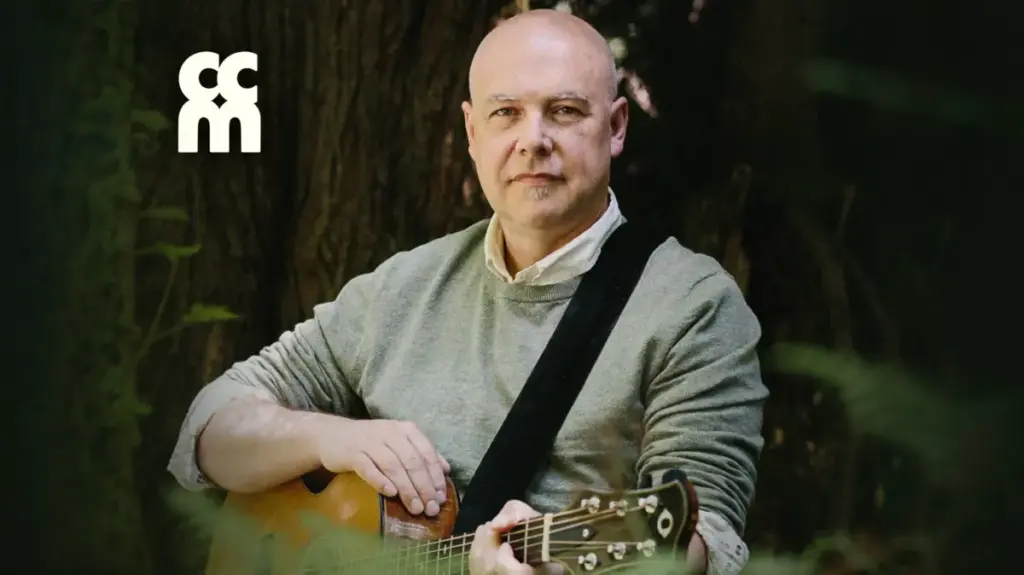
While his contributions to digital media are monumental, those who know Caspell understand that his relationship with music extends far beyond the server racks and editorial desks of an e-zine. Away from taxing matters of web management and publishing, Caspell is a deeply accomplished practicing musician.
A skilled viola-player, conductor, and musical entrepreneur, he is equally at home performing in church choirs, flexing his vocal talents, or stepping onto the dance floor. Indeed, echoing the effortless elegance of Fred Astaire, Caspell is known to dance a little—most notably when his unmissable moustache twirls through a Tango with absolute distinction.
Conclusion
Chris Caspell’s journey embodies the spirit of quiet, steadfast devotion. He did not seek the spotlight, nor did he build Classical Source for commercial gain; he built it out of an unyielding, burning passion for his muse. As he celebrates his 60th birthday, the classical music community does not merely toast a milestone age; it honors a guardian of culture who kept his wicket secure through every cultural bouncer and technological googley the modern world could throw his way.
Here is to Chris Caspell: software visionary, musical practitioner, tango dancer, and the enduring heart of Classical Source. May he remain a guiding star for the global classical community for many years to come.