
Executive Overview
For over two decades, the VocalEssence WITNESS School Program has stood as a cornerstone of musical outreach and cultural education throughout Minnesota classrooms. At the heart of this transformative initiative is veteran musician and educator Anita Ruth, whose 20-year tenure as a VocalEssence Teaching Artist highlights the profound intersection of artistic collaboration, historical pedagogy, and emotional development in public education.
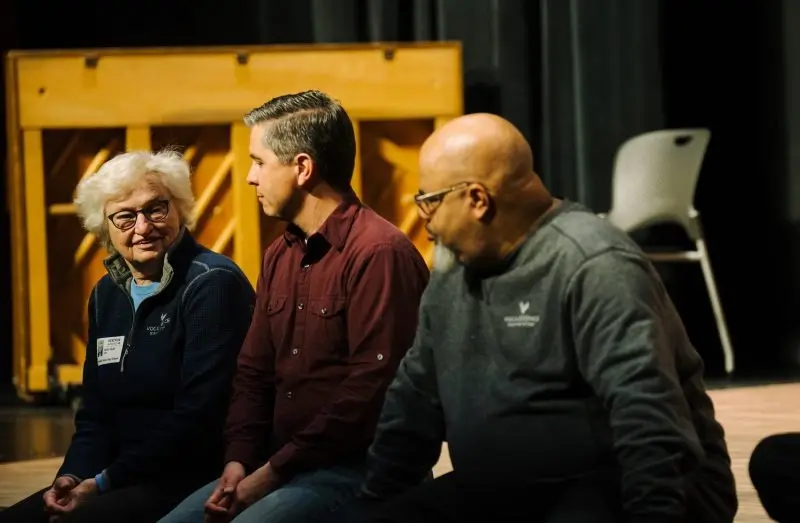
What began as a chance encounter at a local Minneapolis cabaret three decades ago evolved into a lifelong artistic partnership between Ruth and acclaimed performer T. Mychael Rambo. Together, operating under the banner of VocalEssence—formerly known as the Plymouth Music Series—they have brought the history of African American Spirituals, the legacy of enslaved Africans, and the restorative power of music directly to thousands of students, including those in specialized learning environments.
This investigative analysis examines the history, pedagogical methodology, and measurable social impact of Ruth’s work within the WITNESS program. By documenting specific classroom breakthroughs, such as the engagement of non-verbal students through interactive performance, this report details how arts-based interventions address complex educational challenges while preserving foundational American musical heritage.
Detailed Chronology
[Late 1990s] Met T. Mychael Rambo at Ruby's Cabaret (Downtown Minneapolis)
      │
      ▼
[Initial Collaboration] Accompanist for Plymouth Music Series auditorium shows
      │
      ▼
[Pivotal Onstage Moment] Transitioned from accompanist to full WITNESS Teaching Artist
      │
      ▼
[2000s–Present] 20+ Years of School Residencies, Workshops & Classroom Breakthroughs
The Initial Encounter: Ruby’s Cabaret (Late 1990s)
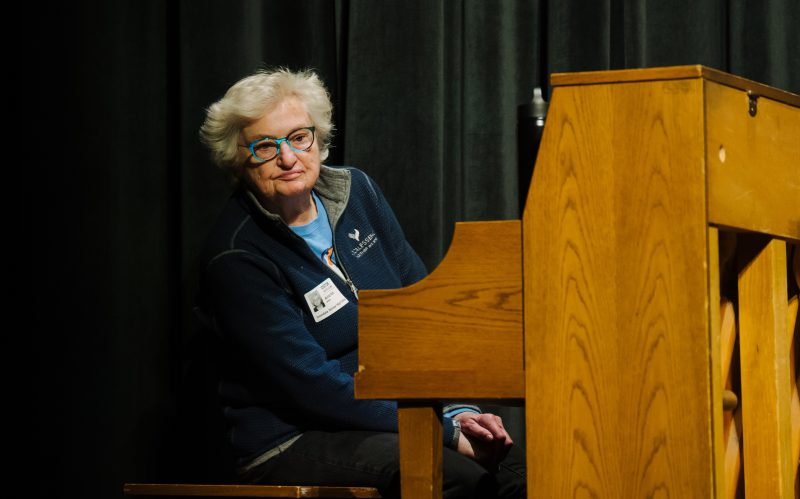
The origin of Anita Ruth’s involvement with the WITNESS program traces back approximately 30 years to a venue in downtown Minneapolis known as Ruby’s Cabaret. Ruth, an accomplished pianist and musical director, was performing when she met T. Mychael Rambo, a vocalist and actor recognized across the Twin Cities for his stage presence and civic engagement.
Rambo quickly recognized Ruth’s versatility at the keyboard and invited her to join him as an accompanist for educational outreach performances sponsored by the Plymouth Music Series. At the time, the organization was expanding its school-based programming to bridge cultural gaps in local school districts.
The Onstage Catalyst and Organizational Evolution
During an auditorium performance early in their partnership, Rambo broke protocol to challenge Ruth’s role behind the instrument. Turning to her mid-performance, he asked, "What are you doing behind that piano?"
This moment marked a key shift in Ruth’s career. Encouraged by Rambo’s advocacy and mentorship, Ruth moved beyond the role of traditional accompanist to become a primary Teaching Artist. Shortly thereafter, as the Plymouth Music Series rebranded into VocalEssence, the WITNESS School Program expanded its residency framework, placing teaching artist teams directly into K-12 classrooms for multi-day workshops.
+-------------------------------------------------------------------------+
|                  EVOLUTION OF THE WITNESS PARTNERSHIP                   |
+-------------------------------------------------------------------------+
|  1. Traditional Accompaniment                                           |
|     • Musician seated strictly behind the keyboard                      |
|     • Supporting role during auditorium assemblies                      |
|                                                                         |
|  2. Interactive Classroom Residencies                                   |
|     • Co-facilitation of African American history & music               |
|     • Direct engagement with specialized student populations           |
|                                                                         |
|  3. Integrated Arts Pedagogy                                            |
|     • Utilization of works by composers like Melanie DeMore             |
|     • Multi-sensory learning involving rhythm, voice, and narrative    |
+-------------------------------------------------------------------------+
Decades of Classroom Interventions
Over the subsequent two decades, Ruth and Rambo worked in diverse classroom environments across the Minneapolis-St. Paul metropolitan area. Their residencies ranged from standard music classes to specialized settings for students managing severe emotional, behavioral, and learning disabilities.
A notable example occurred during a elementary residency featuring a composition by acclaimed songwriter and vocal activist Melanie DeMore. A fourth-grade female student, who had consistently refused to speak or participate in school activities due to deep-seated emotional trauma, remained isolated near a window away from the class circle.
As Ruth and Rambo facilitated the musical exercise, the student incrementally shifted toward the piano over a ten-minute period. Observing the movement, Ruth invited the child to sit next to her on the piano bench. Breaking her long-standing silence, the student responded with a direct "Yes!" and subsequently picked up a tambourine to join the ensemble. This breakthrough served as a stark demonstration of how non-punitive, music-centered engagement can unlock communication pathways in select educational settings.
Supporting Context & Metrics
The Structure and Reach of VocalEssence WITNESS
The VocalEssence WITNESS Program was established to celebrate the contributions of African Americans to fine arts, culture, and the American social landscape. Through school residencies, teacher workshops, and annual young people’s concerts, the program serves thousands of students annually across Minnesota.
                      VOCALESSENCE WITNESS PROGRAM
                                   │
         ┌─────────────────────────┴─────────────────────────┐
         ▼                                                   ▼
┌─────────────────────────┐                         ┌─────────────────────────┐
│ Teacher Training        │                         │ Artist Residencies      │
│ & Curricular Materials  │                         │ & Classroom Workshops   │
└────────┬────────────────┘                         └────────┬────────────────┘
         │                                                   │
         └─────────────────────────┬─────────────────────────┘
                                   ▼
                   ┌───────────────────────────────┐
                   │ Annual Student Concerts       │
                   │ & Community Performance       │
                   └───────────────────────────────┘
Teaching Artists are central to this model. Rather than presenting passive performances, artists like Ruth and Rambo integrate historical narrative, music theory, and vocal performance.
- Historical Focus: Enslaved African Spirituals, work songs, and civil rights anthems.
- Pedagogical Strategy: Interactive call-and-response, rhythmic movement, and context-rich storytelling.
- Target Demographic: K-12 public, private, and charter school students, with deliberate outreach to under-resourced districts and special education cohorts.
Educational and Therapeutic Impact of Music Residencies
Research in music therapy and special education underscores the clinical and developmental benefits of active music-making for neurodivergent learners and children experiencing trauma:
- Neurological Synchronization: Call-and-response structures used in Spirituals assist in auditory processing and group cohesion.
- Reduced Behavioral Anxiety: Rhythmic accompaniment lowers stress responses in sensory-sensitive environments.
- Non-Verbal Communication Pathways: Instrumentation—such as percussion instruments introduced during Ruth’s workshops—provides low-pressure access points for non-verbal or selectively mute students.
+---------------------------------------------------------------------------+
|               KEY PROGRAMMATIC METRICS & OBSERVATIONAL DATA               |
+---------------------------------------------------------------------------+
| Metric Category          | Program Benchmark / Observed Outcome           |
+--------------------------+------------------------------------------------+
| Active Teaching Tenure   | 20+ Years (Anita Ruth)                         |
| Primary Musical Focus    | African American Spirituals & Historical Songs |
| Target Populations       | General K-12, Special Ed, Emotional/Behavioral |
| Key Psychological Effects| Increased social connection, non-verbal entry  |
| Key Partners             | VocalEssence, Local Educator Coalitions        |
+--------------------------+------------------------------------------------+
Official Statements
Reflection from Anita Ruth
Reflecting on her multi-decade career with the program, Anita Ruth highlighted the role of mentorship and collaborative learning in shaping her instructional methods:
"While doing a show at Ruby’s Cabaret in downtown Minneapolis some thirty years ago, I met a lovely gentleman—T. Mychael Rambo. Little did I know that he would change my life and we would become lifelong friends.
With T. Mychael’s support and modeling, I became a full-fledged WITNESS artist. Together, we were able to bring the true history of enslaved Africans to the students who needed to know this story—and best of all, we brought the story to hundreds of students through music. The effect of the enrichment of African American history that VocalEssence Teaching Artists provide is invaluable. I have gained so much knowledge and important insights from working with these wonderful people."
Classroom Interventions and the Power of Music
Describing the breakthrough with the fourth-grade student during the Melanie DeMore unit, Ruth observed:
"In one particular instance, we were told that a young girl, a fourth grader, refused to speak or participate in any activities in the classroom. We were teaching the kids a wonderful Melanie DeMore song, and she was sitting away from the class, looking out the window. As we were teaching, I could see she was edging closer to the group.
After ten minutes, she had worked her way to the piano. I asked if she wanted to sit with me on the bench, and she said ‘Yes!’ The teacher was amazed at that, but even more so when she picked up a tambourine and started to play with us. It was truly an example of the power of music."
Future Outlook
Sustaining Arts Outreach in Modern Curricula
As school districts face growing budget constraints and shifting standardized testing requirements, long-standing programs like VocalEssence WITNESS highlight the importance of external arts residencies. The integration of specialized Teaching Artists offers critical support to district music departments, particularly in delivering culturally responsive education.
  FUTURE STRATEGIC DIRECTIVES FOR COMMUNITY ARTS OUTREACH
  ┌─────────────────────────────────────────────────────────────┐
  │ 1. Expanded Inclusion of Special Education Cohorts          │
  │    Tailoring curriculum for non-verbal and traumatized youth│
  ├─────────────────────────────────────────────────────────────┤
  │ 2. Archival and Legacy Documentation                        │
  │    Recording master teaching methods of veteran artists     │
  ├─────────────────────────────────────────────────────────────┤
  │ 3. Professional Development for Educators                   │
  │    Equipping music educators with culturally rich tools    │
  └─────────────────────────────────────────────────────────────┘
The Enduring Legacy of Teaching Artists
The decades-long collaboration between Anita Ruth, T. Mychael Rambo, and VocalEssence offers a proven model for community-funded arts integration. By bringing African American history to life through the authentic performance of Spirituals and contemporary choral works, these residencies do more than fulfill educational standards—they create safe, expressive spaces for vulnerable students.
As VocalEssence plans future WITNESS workshop cycles, the experiences documented by long-serving artists like Ruth provide a roadmap for future educators. Their work demonstrates that when music education is paired with empathy, cultural context, and artistic mentorship, it can overcome social and psychological barriers in the classroom.