
By Francisco Salazar
Published in partnership with OperaWire
Executive Overview
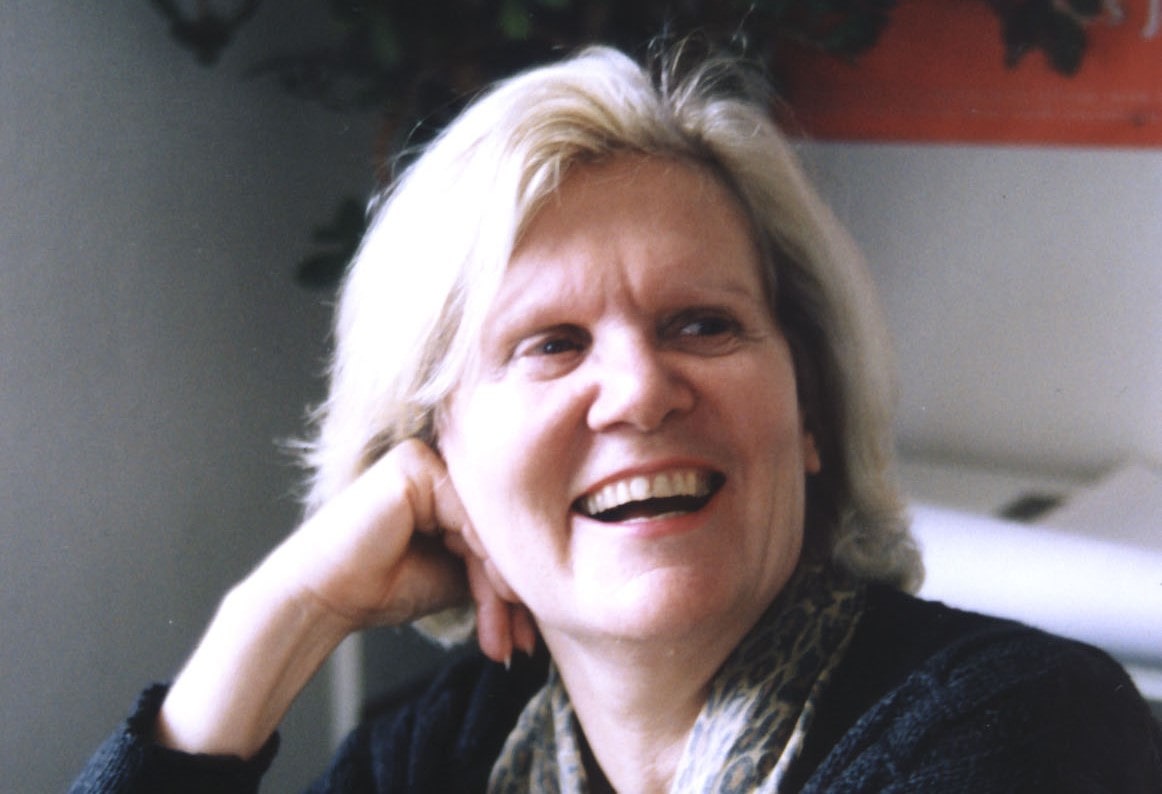
In the grand tapestry of twentieth-century opera, few artists managed to rewrite the rules of performance with the ferocious intensity, psychological depth, and vocal fearlessness of Anja Silja. Her profound influence on the trajectory of music theater is set to receive one of the continent’s most prestigious accolades. Organizers of the Austrian Music Theatre Prize have officially announced that the legendary German soprano and dramatic tour de force will be honored with the Lifetime Achievement Award at their upcoming gala ceremony.
Scheduled for September 8, 2026, at the historic Votive Church in Vienna, the event will pay tribute to a career that spanned over half a century, transforming how the world viewed operatic heroines. Silja did not merely sing notes on a page; she tore through conventional boundaries, breathing visceral, raw life into characters that had previously been treated as ornamental or purely musical vessels.
The announcement highlights a career built on artistic risk-taking, dramatic authenticity, and an uncompromising dedication to theatrical truth. As the opera world looks toward Vienna for the 2026 ceremony, this retrospective honor serves as both a celebration of an irreplaceable legacy and a masterclass in what it means to be a truly transformative performing artist.
Detailed Chronology: From Braunschweig to the Global Stage
The story of Anja Silja is one of prodigious early talent met with relentless ambition and an unshakeable instinct for theatrical subversion. Born into a musical family in Berlin in 1940, Silja’s vocal and dramatic capabilities manifested at an astonishingly young age. Her professional journey officially commenced in 1956 at the Braunschweig State Theatre, where, at just sixteen years old, she stepped onto the stage to make her formal operatic debut as Rosina in Gioachino Rossini’s The Barber of Seville.
Even in her teenage years, critics and audiences alike recognized that Silja possessed a theatrical magnetism that extended far beyond standard vocal proficiency. However, it was her transition into the dramatic soprano and high-mezzo repertoire that would cement her status as a generational phenomenon.
The Bayreuth Years and the Wieland Wagner Era
The most defining chapter of Silja’s early career unfolded on the legendary stage of the Bayreuth Festival. During the late 1950s and 1960s, under the visionary yet controversial artistic direction of Wieland Wagner (grandson of the composer), Silja became the undisputed face of the "New Bayreuth" aesthetic—a movement characterized by minimalist staging, intense psychological exploration, and a sharp departure from traditionalism.
At Bayreuth, Silja tackled some of the most demanding roles in the German canon with breathtaking velocity. Her portrayals of Senta in Der fliegende Holländer, Elsa in Lohengrin, Eva in Die Meistersinger von Nürnberg, and eventually Brünnhilde and Isolde established her as a Wagnerian powerhouse. Her collaboration and personal relationship with Wieland Wagner thrust her into international superstardom, making her the quintessential Wagnerian soprano of her era.
Global Conquest: The Met, Covent Garden, and Paris
Armed with a reputation for theatrical fearlessness, Silja’s career rapidly expanded beyond the borders of Germany. She conquered the world’s most prestigious opera houses with a staggering versatility that allowed her to transition effortlessly from nineteenth-century Romanticism to twentieth-century expressionism and contemporary scores:
- The Metropolitan Opera (New York): Silja made formidable contributions to the North American operatic landscape, captivating New York audiences with her searing intensity and commanding stage presence.
- The Royal Opera House (London): Covent Garden welcomed her in a diverse array of dramatic soprano and character roles, where her commitment to stagecraft left critics searching for new superlatives.
- The Paris Opera: The French capital embraced her fierce intellect and striking dramatic interpretations, particularly in works that demanded intense psychological vulnerability.
- The Vienna State Opera: Her deep ties to the Austrian capital make the 2026 Lifetime Achievement Award in Vienna a poetic homecoming for an artist who defined the house’s stages for decades.
As her voice matured, Silja defied the traditional trajectory of aging sopranos. Rather than retiring or retreating to lighter repertoire, she pivoted brilliantly into the dark, complex character roles of the twentieth-century avant-garde. Her interpretations of Klytämnestra (Elektra), Herodias (Salome), the Kostelnička (Jenůfa), and the Countess (The Queen of Spades) showcased a performer who continued to mine the depths of human suffering and madness with unmatched theatrical precision.
In 2012, her monumental contributions to the art form were formally recognized in the United States when she received the prestigious Opera News Award in New York City, solidifying her status as a revered icon among critics, scholars, and fellow musicians.
Official Statements and Critical Reflections
The announcement of the Lifetime Achievement Award has elicited an outpouring of admiration from the leadership of the Austrian Music Theatre Prize and the broader classical music community.
In an official statement released by the organizing committee, Karl-Michael Ebner, founder and president of the Austrian Music Theatre Prize, offered a profound analysis of Silja’s unique artistic philosophy:
"Anja Silja didn’t interpret roles, she made them her own — with a directness that was often foreign to the musical theatre of her generation… Where others sought fidelity to the work, she sought access to the character, its contradictions, its depths. It is this unconditional commitment to the role that we are honoring with the ‘Lifetime Achievement’ Prize."
Ebner’s words strike at the very core of Silja’s artistic identity. During an era of opera production where vocal beauty was frequently prioritized over dramatic credibility—where singers often stood and delivered lines toward the audience rather than engaging with fellow performers—Silja operated as an actress first and a singer second. Her vocal execution was always subordinate to the emotional and psychological truth of the character she inhabited. Whether portraying the desperate eroticism of Salome or the harrowing grief of the Kostelnička, Silja stripped away operatic artifice, presenting audiences with characters who bled, screamed, and fractured on stage.
Music critics throughout her career frequently noted that attending a performance featuring Silja was not a passive aesthetic experience, but an emotional confrontation. She forced spectators to look directly into the abyss of human trauma, ambition, and despair, making her performances enduring masterclasses in dramatic integrity.
Supporting Context & Metrics: The Scale of Silja’s Legacy
To understand the magnitude of Anja Silja’s impact on twentieth- and twenty-first-century music theater, it is helpful to examine the quantifiable scope of her career alongside the cultural metrics that define operatic greatness.
| Metric / Dimension | Anja Silja’s Artistic Milestone |
|---|---|
| Professional Debut | 1956 (Braunschweig State Theatre as Rosina) |
| Career Span | Over 6 decades of active performance and masterclasses |
| Major International Houses | Bayreuth Festival, Metropolitan Opera, Royal Opera House, Paris Opera, Vienna State Opera |
| Signature Repertoire | Wagner (Der fliegende Holländer, Tristan und Isolde, Der Ring des Nibelungen); Strauss (Salome, Elektra); Janáček (Jenůfa, The Makropulos Affair) |
| Major Accolades | Opera News Award (2012), Austrian Music Theatre Prize Lifetime Achievement Award (2026) |
Redefining Operatic Acting
Beyond her performance metrics, Silja’s legacy is heavily intertwined with the evolution of Regietheater (director-led theater) in opera. When directors like Wieland Wagner, Harry Kupfer, and Nikolaus Lehnhoff sought to dismantle dusty, nineteenth-century staging traditions in favor of psychologically penetrating, modern interpretations, they needed a muse who possessed the physical fearlessness and intellectual agility to bring their visions to life. Silja became that muse.
She discarded the static conventions of the diva. If a production required her to crawl across the floor, sing while suspended, or convey profound psychological breakdown through micro-expressions and shattered vocal phrasing, Silja executed it without hesitation. In doing so, she paved the way for modern operatic acting, establishing a benchmark for contemporary singing-actors who must balance vocal mastery with intense cinematic realism.
Future Outlook: The 2026 Gala and the Enduring Echo of a Master
As the classical music world counts down to September 8, 2026, anticipation is reaching a fever pitch for the gala ceremony at the Votive Church in Vienna. The Austrian Music Theatre Prize has established itself as one of the most prominent celebrations of theatrical excellence in Europe, and honoring Anja Silja places a well-deserved spotlight on an artist whose influence continues to reverberate through every rehearsal room and masterclass today.
While Silja has long since stepped back from the grueling demands of the principal stage, her presence in the cultural consciousness remains undiminished. Through archival recordings, filmed opera productions, and the countless younger artists whom she has mentored and inspired, her methodology lives on.
The 2026 Lifetime Achievement Award is not merely a retrospective look backward at a glorious past; it is a vital reminder of what is possible when an artist refuses to compromise. Anja Silja taught generations of opera lovers that music theater is not a museum piece to be preserved behind glass, but a living, breathing, and occasionally dangerous reflection of the human soul. When she accepts her award in Vienna, she will do so as a titan who did not just participate in the history of opera—she fundamentally altered its course.