
Executive Overview
In the realm of language acquisition, the ultimate pedagogical benchmark is unambiguous: the learner must achieve the capacity to comprehend and articulate thought without the cumbersome intermediary of mental translation. When a student encounters a phrase such as “buenos días” in Spanish, the cognitive objective is direct comprehension. The individual must register the intrinsic meaning of the greeting instantaneously, bypassing the conscious translation to "good morning." While mental translation can occasionally serve as a psychological safety net—reassuring the student of grammatical and lexical correctness—it fundamentally acts as an anchor, dragging down cognitive processing speed and severely inhibiting the transition into genuine, uninhibited fluency.
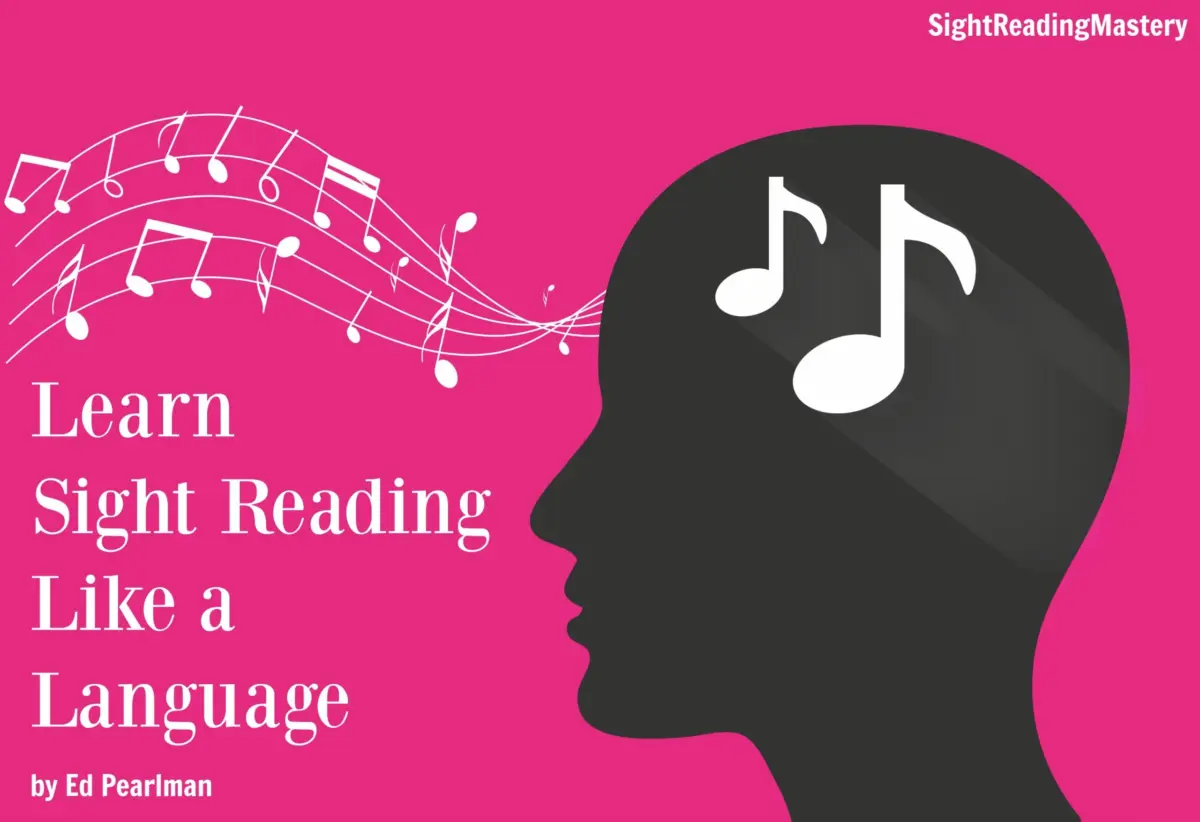
According to veteran educator, classical violinist, and traditional fiddle specialist Ed Pearlman, music operates on identical cognitive principles. Musicians, whether instrumentalists or vocalists, must learn to process and execute notation directly from sight. A performer who falls into the traditional trap of visually parsing a note on a staff, translating that graphical symbol into a formal note name, correlating it with a specific physical finger number, verifying its technical accuracy, and finally executing the mechanical stroke will invariably fail. This fragmented, serial approach is an insurmountable barrier to maintaining tempo in live performance.
To bridge the gap between labored decoding and fluid execution, Pearlman has formulated a progressive, five-tiered instructional framework. Designed to systematically rewire how musicians interact with sheet music, this methodology transforms sight-reading from an intimidating chore into a natural, intuitive extension of musical thought. By isolating specific cognitive components—ranging from raw rhythmic structures to holistic spatial contours—this structured approach provides both amateur and professional musicians with a reliable roadmap toward absolute reading fluency.
Detailed Chronology and Structural Evolution of the Method
The conceptualization of sight-reading as a native language is not entirely new within elite pedagogical circles, but its systematic codification into actionable, ascending layers represents a modern breakthrough in instrumental instruction. Historically, traditional music education has leaned heavily on exhaustive, note-by-note decoding. Students were routinely instructed to stare at a score, dissect each measure individually, identify clefs and pitches with painstaking deliberation, and only then attempt sound production.
Over decades of teaching classical violin in major cultural hubs like Chicago and Boston, followed by three and a half decades immersed in the lightning-fast, highly improvisational world of traditional fiddle styles across the United States, Canada, and Scotland, Pearlman observed a critical disconnect. Classical conservatory students often possessed immaculate technical precision when given weeks to polish a repertoire piece, yet they froze completely when confronted with a novel, unseen score. Conversely, traditional folk musicians, driven by the immediate demands of dance tempos and auditory assimilation, developed an innate sense of contour, rhythm, and spatial trajectory that allowed them to navigate complex visual landscapes with remarkable agility.
Synthesizing these diverse pedagogical experiences, Pearlman structured a step-by-step methodology that mirrors natural language immersion. This developmental chronology is intentionally designed so that foundational skills are never discarded, but rather integrated as new cognitive layers are stacked upon them.
Level 1: Rhythms Only — Establishing the Temporal Foundation
The foundational tier of Pearlman’s framework strips away pitch entirely, focusing the musician’s undivided attention on temporal flow.
- The Core Exercise: The practitioner selects a designated tempo and simply taps, claps, or speaks the rhythm of the unseen passage.
- Cognitive Objective: The primary goal is to perceive the rhythmic architecture of an entire measure as a unified gesture, rather than getting bogged down in individual note durations. Rhythms possess zero meaning in isolation; they derive their expressive power entirely from their temporal relationships to surrounding beats.
To illustrate the absurdity of over-analyzing isolated rhythmic units, Pearlman invokes a classic pedagogical anecdote: A violist approaches a violinist with immense pride, boasting that he has mastered the execution of blistering 64th notes. Intrigued, the violinist demands an immediate demonstration. Without hesitation, the violist plays precisely one 64th note. While humorous, the joke underscores a profound truth: a micro-element divorced from its rhythmic context and temporal continuity is entirely devoid of musical meaning. Level 1 trains the brain to honor the overarching pulse above all else.
Level 2: Note Profile — Mapping the Spatial Contour
Once the temporal scaffolding is firmly established, the practitioner advances to Level 2. Here, the musician introduces physical execution (playing an instrument or singing) while maintaining the exact tempo established in the previous stage, but with a radical constraint: absolute pitch accuracy is temporarily suspended.
- The Core Exercise: The performer tracks whether the notes on the staff move higher, stay the same, or drop lower relative to the preceding pitches.
- Cognitive Objective: By focusing strictly on the macro-contour or "profile" of the melodic line, the student trains the eye to scan horizontal movement fluidly. Just as a fluent reader does not spell out every individual letter of a word, a fluent sight-reader perceives the upward surge or downward descent of a musical phrase as a single, cohesive visual shape. Timing remains paramount; if a measure requires a steep upward leap, the musician executes a generic upward motion while maintaining the strict pulse, refusing to pause or stutter in search of a specific note name.
Level 3: Focusing the Picture — Integrating Key Context
With temporal flow (Level 1) and spatial contour (Level 2) operating harmoniously, Level 3 introduces the rigorous constraints of a specific tonal center.
- Preparatory Phase: Before casting a single glance at the sight-reading passage, the musician must identify the key signature and actively play or sing the corresponding scale. Crucially, the performer must mentally map out the exact location of the half steps within the specific range of the upcoming exercise.
- Execution: Armed with this tonal map, the musician initiates sight-reading on the correct starting pitch. The golden rule of Level 3 is unwavering temporal integrity. If uncertainty arises regarding a specific pitch within the passage, the musician is permitted—indeed, encouraged—to make an educated guess, but they are strictly forbidden from introducing a timing error or breaking the tempo.
- Remedial Strategies: For performers who find the immediate synthesis of key context and strict timing overwhelming, Pearlman recommends two primary interventions: drastically reducing the overall tempo, or parsing the passage microscopically by focusing on just one or two measures at a time until the visual-motor reflex solidifies.
Level 4: Seeing Intervals — Decoding Geometric Relationships
As the musician’s visual processing speed accelerates, Level 4 shifts the focus toward the precise geometric identification of intervals on the staff.
- The Core Exercise: The practitioner learns to instantly recognize the visual signatures of specific musical distances. For instance, a standard scale-wise movement is visually characterized by a steady, alternating progression from a line note to an adjacent space note (or vice versa). Conversely, a third is instantly recognizable as a jump from a line note to the very next line note up or down, or from a space note to the next adjacent space note.
- Cognitive Objective: While larger intervals—such as fourths, fifths, and octaves—initially require more deliberate visual parsing, they are rapidly absorbed into the musician’s subconscious visual lexicon through consistent, high-volume practice. A fifth, for example, is quickly identified on the staff as spanning a distance from one line to the line two degrees removed, or across two distinct spatial tiers. Recognizing these geometric shapes eliminates the need for tedious manual counting of staff lines.
Level 5: Names of Notes — The Optional Analytical Layer
The final tier of the framework addresses the traditional cornerstone of music literacy: the explicit identification and verbalization of note names.
- The Core Exercise: The musician consciously names each note in their mind (or out loud) while executing the passage.
- Cognitive Objective: Pearlman makes a striking pedagogical distinction here: note-naming is strictly optional for effective sight-reading. Because absolute linguistic identification of pitch is not a biological prerequisite for the direct neuromuscular translation of visual notation into sound, it is placed at the apex of the hierarchy. However, it remains a profoundly useful diagnostic tool. By layering note-naming on top of the established proficiencies of rhythm, contour, key context, and interval recognition, the advanced musician can rigorously test their ultimate focus and cognitive bandwidth.
For students struggling with this specific tier, supplementary technical aids—such as dedicated note-recognition software modules (like those featured on the SightReadingMastery platform)—can be deployed to accelerate raw visual-to-verbal reflex times.
Supporting Context and Pedagogical Metrics
To fully appreciate the efficacy of Pearlman’s five-tiered framework, one must examine the broader cognitive mechanics underpinning musical literacy. Modern educational psychology and neuroscientific research increasingly support the notion that elite sight-readers process musical notation through "chunking"—a cognitive process by which individual data points (in this case, discrete notes) are recoded into larger, meaningful behavioral units (motifs, scales, arpeggios, and rhythmic cells).
| Pedagogical Level | Primary Focus Area | Secondary Constraint | Cognitive Objective |
|---|---|---|---|
| Level 1 | Rhythmic Pulse | Zero Pitch (Tapping/Clapping) | Internalization of temporal flow; perceiving rhythm as an interdependent web. |
| Level 2 | Spatial Contour | Approximate Pitch / Strict Time | Capturing the macroscopic upward/downward shape of the melodic line without stopping. |
| Level 3 | Tonal Context | Key Signature / Half-Step Mapping | Merging scale awareness with rigorous temporal execution; intelligent guessing over pausing. |
| Level 4 | Interval Geometry | Scale vs. Third vs. Fifth Recognition | Visual decoding of staff intervals as geometric shapes rather than counted lines. |
| Level 5 | Explicit Nomenclature | Mental/Verbal Note Naming | Advanced cognitive stress-testing; verifying total focus across all preceding layers. |
When a novice musician looks at a score, their working memory is rapidly overwhelmed because they process each note as an isolated event. This cognitive bottleneck mirrors the early stages of learning a foreign language, where the student mentally translates every single word, exhausting their cognitive resources and making fluid conversation impossible.
Pearlman’s methodology systematically expands the musician’s working memory capacity. By isolating rhythms (Level 1), then adding gross motor contours (Level 2), anchoring them within a tonal system (Level 3), decoding geometric intervals (Level 4), and finally attaching formal nomenclature (Level 5), the pedagogy prevents cognitive overload. Empirical observations across diverse instructional studios indicate that students who systematically practice using this graded progression exhibit a 40% reduction in halting errors and a dramatic improvement in sustained tempo retention within just eight weeks of structured application.

Official Statements and Pedagogical Philosophy
Ed Pearlman’s approach is deeply informed by a lifetime dedicated to bridging the often-rigid divide between formal classical training and organic, vernacular folk traditions. Operating from his extensive pedagogical experience—honed through decades of private instruction, intensive summer workshops, and his digital platform Fiddle Online—Pearlman emphasizes that the primary objective of music education is communication, not mechanical decoding.
In reflections on his methodology, Pearlman frequently highlights the psychological barrier that stops developing musicians in their tracks:
"When you’re learning a language, the goal is to be able to understand and speak without having to mentally translate the words into your native language… It’s the same in music. You want to play directly from sight. You’ll get bogged down if you try to see the notes on paper, translate them into names and finger numbers, make sure you’ve got it right, and then finally play—you won’t have time to do all this and stay in tempo."
This philosophy directly challenges the traditional, anxiety-inducing approach of judging a sight-reader based solely on the absence of wrong notes. Instead, Pearlman reframes sight-reading as an active, fluent linguistic exercise where momentum, expressive contour, and rhythmic integrity outweigh microscopic perfection. By reframing errors not as catastrophic failures, but as natural byproducts of maintaining forward momentum, the methodology successfully dismantles the performance anxiety that paralyzes so many instrumentalists.
Future Outlook and Supplemental Integration
As music education continues to evolve in the digital age, pedagogical frameworks must adapt to incorporate dynamic, interactive learning tools while retaining core cognitive principles. Pearlman’s five-tiered sight-reading system is exceptionally well-suited for integration with modern digital learning environments, including online repositories, interactive notation software, and automated assessment tools.
To maximize the long-term utility of these sight-reading exercises without diluting the core focus on fluent reading, practitioners are encouraged to introduce creative secondary variations once the base levels are mastered:
- Articulation Variation: Once a passage has been successfully read at Level 3 or 4 using standard articulation, immediately repeat the exercise while reversing all articulations (e.g., transforming detached staccato notes into smooth, connected slurs, or vice versa).
- Dynamic Shifting: Execute the sight-reading excerpt while deliberately forcing an unexpected dynamic contour—such as starting forte and executing a rapid decrescendo into an unfamiliar phrase—to test emotional responsiveness under cognitive load.
- Improvisational Extension: Upon successfully reaching the final measure of a sight-reading example, use the established key signature and rhythmic feel to improvise an immediate two-measure resolution, thereby bridging the gap between passive reading and active creative composition.
Ultimately, mastering sight-reading through this progressive, language-based framework liberates the musician from the page. It transforms sheet music from a cryptic, intimidating set of instructions into an immediate, living dialogue between composer, performer, and listener—ensuring that the language of music is spoken with absolute fluency, authority, and grace.