By Francisco Salazar Published in partnership with OperaWire
Executive Overview
The Metropolitan Opera has announced a significant late-breaking cast adjustment for its current season, securing acclaimed British-Italian tenor Freddie De Tommaso to step into the iconic role of Rodolfo for upcoming performances of Giacomo Puccini’s timeless masterpiece, La Bohème. De Tommaso, who has rapidly ascended to international prominence as one of the definitive lirico-spinto tenors of his generation, will take the stage on September 25 and September 27.
This strategic casting insertion comes at a time when De Tommaso’s artistic schedule is already operating at peak intensity. The tenor is currently deep into performances for a high-profile run of Verdi’s Macbeth at the house. His return to La Bohème follows a critically lauded run in the same production during the previous Metropolitan Opera season—a run that earned him widespread praise for his vocal radiance, dramatic intensity, and stylistic authenticity.
De Tommaso joins an extraordinary ensemble cast featuring sopranos Juliana Grigoryan and Rosa Feola, alongside baritones Hansung Yoo and Gihoon Kim, bass-baritone Le Bu, and veteran baritone Donald Maxwell. Leading the musical forces from the pit is conductor Ramón Tebar, who will helm Franco Zeffirelli’s legendary, cinematic production—a staging that remains a cornerstone of the Metropolitan Opera’s repertoire.
This report provides a comprehensive examination of the cast change, contextualizes De Tommaso’s rising career trajectory within the opera world, analyzes the production’s musical and theatrical landscape, and outlines the broader operational implications for the Met during a demanding autumn repertory season.
Detailed Chronology of the Announcement and Repertoire Integration
The operational logistics of running a major international opera house like the Metropolitan Opera require constant vigilance, flexibility, and rapid contingency planning. When key artists must navigate multiple concurrent productions, scheduling adjustments inevitably arise.
The Shift to the Garret
The announcement, finalized by company administration, specifies that De Tommaso will assume the mantle of the impoverished poet Rodolfo for the mid-week and late-week performances on September 25 and September 27. These dates sit squarely within the busy autumn opening stretch of the Met’s 2025–26 theatrical calendar, a period defined by overlapping rehearsals, technical changeovers, and simultaneous performance runs.
For De Tommaso, stepping from the bloody, supernatural landscapes of Verdi’s Scotland in Macbeth back into the freezing, candle-lit Parisian garret of La Bohème requires considerable vocal dexterity and stylistic code-switching. While Macbeth demands a dark, menacing, and incisive dramatic baritonal weight from its supporting and leading forces, Puccini’s Bohème calls for soaring Italianate lines, shimmering high notes, and an effortless blend of youthful exuberance and crushing heartbreak.
Despite the demanding repertoire switch, company insiders note that De Tommaso’s familiarity with the Zeffirelli production minimizes the need for extensive restaging rehearsals. Having spent considerable time blocking and interacting within the massive, hyper-detailed physical sets of the Zeffirelli vision last season, the tenor is uniquely positioned to integrate seamlessly into the existing ensemble dynamics with minimal disruption.
Supporting Context & Metrics: De Tommaso’s Meteoric Rise and Critical Reception
To understand the weight of this casting update, one must examine Freddie De Tommaso’s trajectory over the past several seasons. Born in Kent to an Italian father and a British mother, the tenor’s vocal education at the Royal Academy of Music in London laid the groundwork for a voice that many critics have compared to the golden-age Italian tenors of the mid-20th century.
Critical Acclaim at the Met
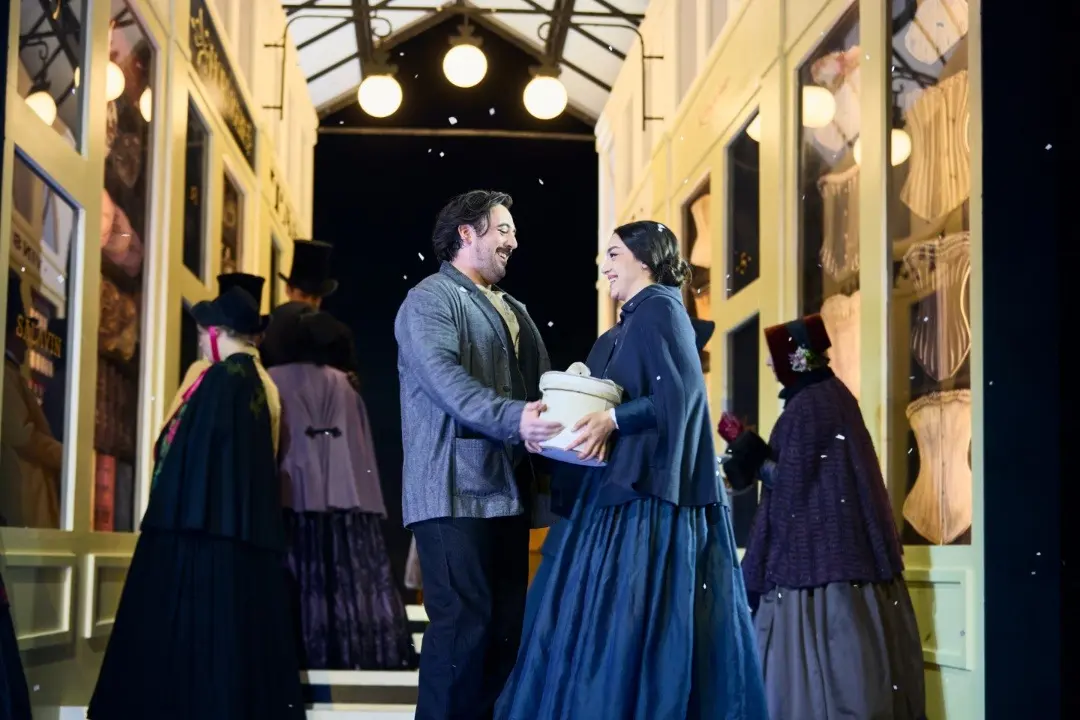
During his previous outing in La Bohème at the Metropolitan Opera last season, De Tommaso commanded the stage with a vocal security and emotional depth that immediately resonated with New York audiences and critics alike. In its review of the production, OperaWire noted:
"Tenor Freddie De Tommaso had a strong impact, bringing a thrilling, full-throated delivery to Rodolfo that captured both the youthful carelessness and the devastating despair of the character."
His ability to project effortlessly over Puccini’s lush orchestrations while maintaining a warm, rounded Italianate timbre has made him a darling of opera houses across Europe and North America. Metrics from his recent engagements indicate near-capacity audience turnout and strong digital streaming engagement whenever his name appears on the marquee.
The Ensembles and Musical Leadership
De Tommaso will not be navigating the Parisian Latin Quarter alone. He is supported by an enviable roster of rising and established international vocal talent:
Juliana Grigoryan and Rosa Feola share the emotional and vocal heavy lifting of Mimi and Musetta, bringing contrasting yet complementary shades of lirico-spinto beauty and sparkling soubrette charm to the production.
Hansung Yoo and Gihoon Kim anchor the bohemian camaraderie as Marcello and Schaunard, infusing the score with youthful vitality and rich, resonant baritonal colors.
Le Bu and Donald Maxwell round out the company as Colline and Benoit/Alcindoro, grounding the ensemble with deep foundation tones and seasoned theatrical timing.
At the podium stands Ramón Tebar, a conductor celebrated for his idiomatic command of the Spanish and Italian repertoires. Tebar’s ability to balance the orchestral pit with the vocal demands on stage ensures that Puccini’s transparent, emotionally charged scoring will be handled with both structural rigor and passionate elasticity.
The Production: Franco Zeffirelli’s Monumental Vision
No discussion of La Bohème at the Metropolitan Opera is complete without addressing the physical and theatrical monument that is Franco Zeffirelli’s 1981 production. Often referred to simply as the "Zeffirelli Bohème," this staging remains the most performed production in the history of the Metropolitan Opera.
A Masterclass in Theatrical Realism
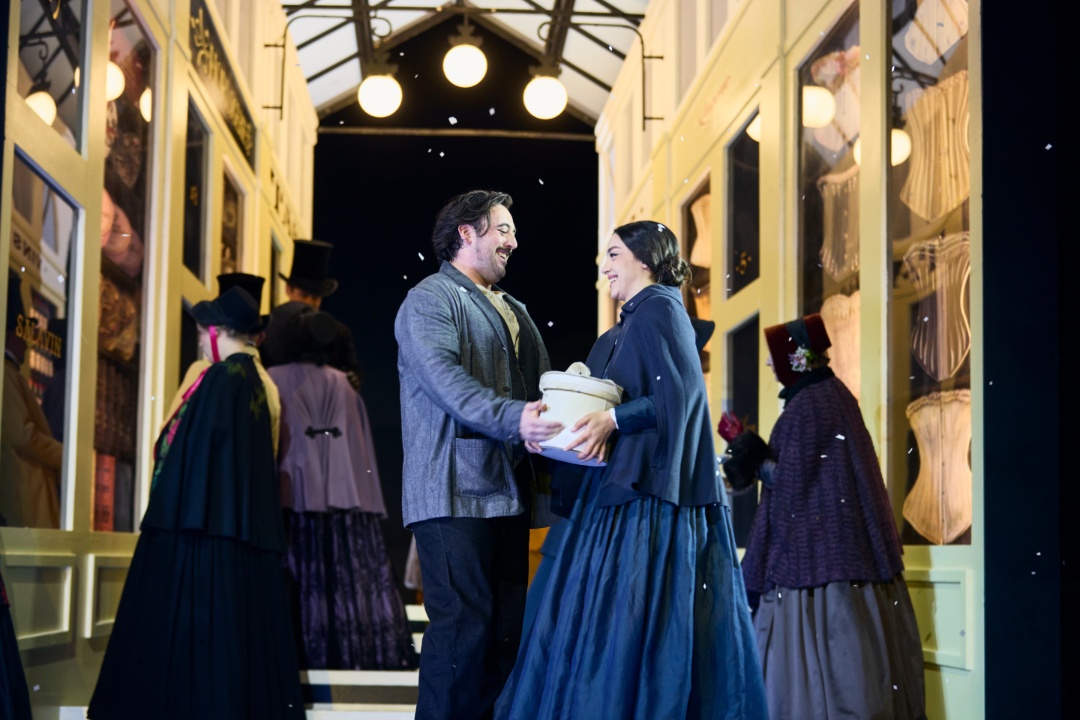
Grand in scale, breathtaking in architectural detail, and unapologetically romantic, Zeffirelli’s vision recreates 1830s Paris with staggering fidelity.
Act I and IV: The drafty, cramped attic overlooking the Parisian rooftops feels claustrophobic yet intimate, capturing the bohemian struggle for warmth and art.
Act II: The Cafe Momus scene stands as one of the greatest spectacles in all of grand opera. Featuring hundreds of extras, children’s choruses, marching bands, horses, and a multi-tiered street set, it recreates the bustling chaos of Christmas Eve on the Boulevard du Montparnasse with jaw-dropping verisimilitude.
While modern regie-theater directors often favor stripped-down, conceptual reinterpretations of standard repertory works, the Zeffirelli Bohème endures precisely because it honors the libretto’s stage directions and emotional core. It offers audiences a visual feast that matches the overwhelming emotional generosity of Puccini’s music. For a tenor like De Tommaso, performing within this monumental architectural framework requires a delicate balance: the artist must possess enough vocal and physical presence to avoid being swallowed by the massive sets, while retaining the fragile, human intimacy required of the dying Mimi and the grieving Rodolfo.
Official Statements and Administrative Perspective
While major opera houses frequently adjust casts due to the unpredictable nature of vocal health, travel logistics, and concurrent rehearsal schedules, the Metropolitan Opera administration has emphasized its commitment to maintaining the highest possible artistic standards for every performance.
In brief comments accompanying the updated casting sheets, house management highlighted the adaptability of their roster. Securing an artist of De Tommaso’s caliber on short notice—particularly while he is already in-residence performing a demanding role in Macbeth—underscores the deep artistic ties the tenor has cultivated with the New York institution.
Furthermore, industry observers note that such high-level substitutions often generate renewed box-office momentum and critical interest. Operagoers holding tickets for the September 25 and 27 performances are now guaranteed an evening featuring one of the most exciting young tenors in the operatic firmament, performing in one of the medium’s most beloved and visually stunning productions.
Future Outlook: What Lies Ahead for De Tommaso and the Met
As the current season progresses, Freddie De Tommaso’s star continues to rise. His ongoing presence at the Metropolitan Opera—shifting seamlessly from the psychological horrors of Verdi’s Scottish play to the heartbreaking romanticism of Puccini’s garret—cements his status as a versatile, indispensable pillar of the modern international operatic stage.
Upcoming Milestones
Following his brief return as Rodolfo on September 25 and 27, De Tommaso will continue his heavy autumn schedule, cementing a repertoire that increasingly spans both heavy Verdi roles and core Italian verismo and romantic masterpieces. For the Metropolitan Opera, successfully navigating these intricate casting shifts demonstrates the operational resilience required to run a world-class repertory house in the 21st century.
Audiences attending the upcoming performances of La Bohème can expect an evening of soaring high notes, profound theatrical chemistry, and the timeless magic of Zeffirelli’s Paris, anchored by a tenor who is quickly defining the sound of a new operatic generation. Tickets for the remaining autumn dates are available through the Metropolitan Opera box office and official digital channels, with high demand anticipated for the specific dates featuring De Tommaso’s return.