
Executive Overview
For contemporary musical artists, the modern digital ecosystem operates as a double-edged sword capable of catapulting a track into global ubiquity one moment, while weaponizing it against their core values the next. Few creators understand this volatile dynamic quite as intimately as the founding members of the multi-platinum British electronic group Clean Bandit.
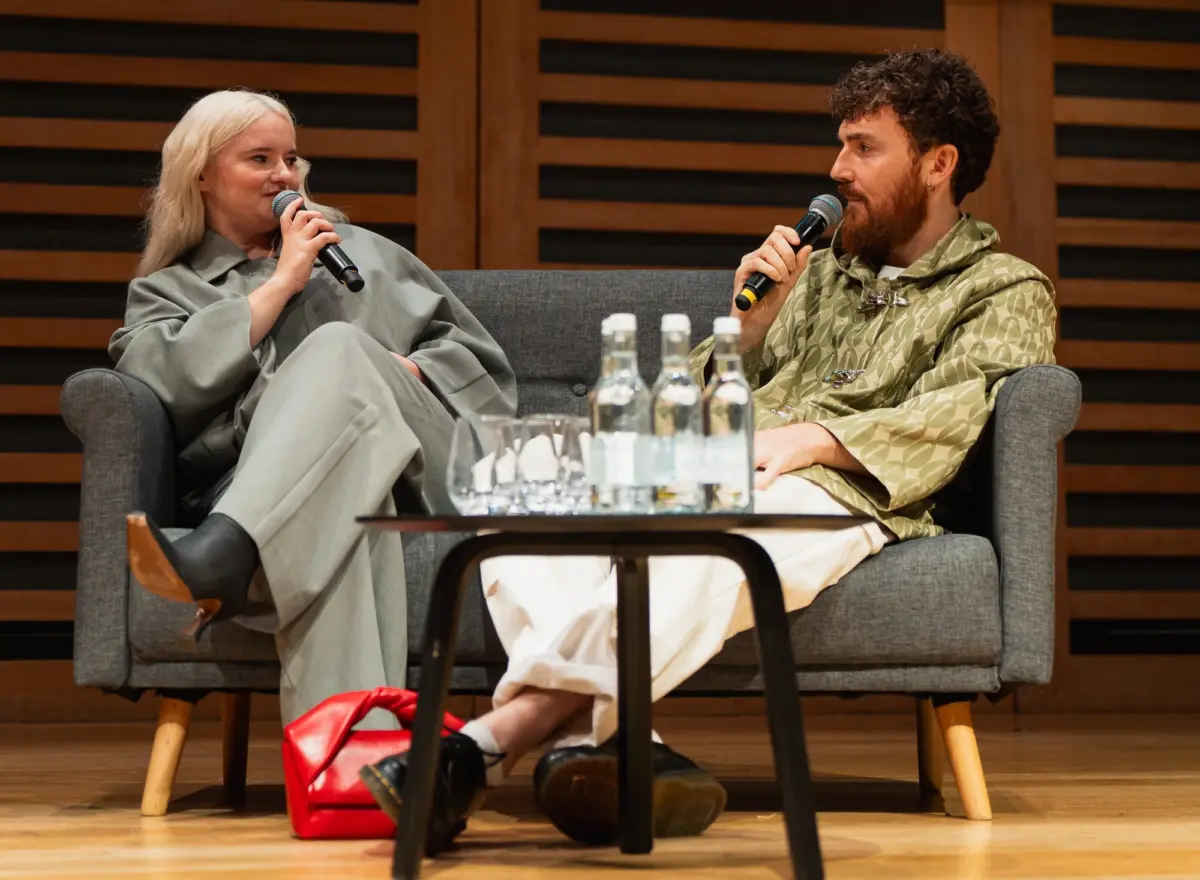
During a candid appearance at the recent Music Ally Publishing Summit, band members Jack Patterson and Grace Chatto—alongside Ella Kirby, ByteDance’s Head of Music Publishing Licensing and Partnerships (EMEA)—unpacked the realities of modern pop stardom. Their discussion offered an unvarnished look at the realities of the digital age: from the distressing hijacking of their music by political entities to the strange, serendipitous rise of viral animal memes, and the arduous corporate struggles behind major-label contracts.
The headline-grabbing flashpoint of their recent experiences occurred in July 2025, when the White House utilized the Jess Glynne smash hit “Hold My Hand”—co-written by Patterson—as the soundtrack for an official social media video depicting human deportations executed by the US Immigration and Customs Enforcement Agency (ICE). For Patterson, watching an uplifting dance track pressed into the service of state-sanctioned immigration enforcement was a jarring lesson in the loss of artistic control once a song enters the public domain.
Yet, this dark encounter with political co-optation stands in stark contrast to the whimsical, organic ways the group’s catalog has been embraced by billions worldwide. From bizarre, dolphin-heavy TikTok memes breathing new life into their Zara Larsson collaboration “Symphony,” to discovering fresh talent via late-night digital doomscrolling, Clean Bandit’s trajectory reflects the broader systemic shifts currently reshaping the global music industry. Having officially severed ties with Atlantic Records in 2024 to reclaim their independence via a newly minted imprint, CBX, the group is entering a liberating yet uncertain chapter. This comprehensive report examines the complex intersection of copyright law, political appropriation, algorithmic discovery, and the enduring quest for creative autonomy in the streaming era.
Detailed Chronology: From Underground Pioneers to Major Label Stalwarts and Back
The journey of Clean Bandit reads as a masterclass in adaptation, tracing the evolving architecture of the music industry over the past decade and a half. Long before topping the UK Singles Chart or collecting Grammy Awards, the outfit originated as a DIY, self-releasing collective operating on the fringes of the British underground dance scene.
The Independent Genesis and the Bob Geldof Intervention
In their early days, Chatto and Patterson navigated the industry entirely unmanaged and unsigned. Their breakthrough moment arrived with the track “Mozart’s House,” an eclectic fusion of classical arrangements and garage beats that quickly caught the attention of BBC Radio 1. As the accompanying DIY music video began to gain viral traction on YouTube, major record labels came calling with lucrative, high-stakes offers.
Reflecting on that pivotal crossroads, Chatto recalled a sharp internal disagreement between the co-founders:
"Jack was like, ‘No, we must stay independent, you’re not going to like not having any control.’ But I was like, ‘But how are we going to pay our rent?’"
The deadlock was broken by sheer happenstance in a London dive bar, where the cash-strapped musicians bumped into legendary activist and musician Bob Geldof. Upon hearing their dilemma, Geldof offered advice that proved decisive: if a corporate entity offers money for music, take it. Heeding that counsel, Clean Bandit signed with Atlantic Records in 2012, setting off a twelve-year corporate partnership.
The Golden Years at Atlantic
By all accounts, the initial phase of the major label relationship was remarkably fruitful. Atlantic afforded the group substantial creative latitude, trusting their instincts regarding release schedules, promotional rollouts, and artistic direction. This freedom fueled a string of global chart-toppers, cementing Clean Bandit’s reputation as masters of high-concept, guest-vocal-driven pop.
However, the corporate climate shifted dramatically following the release of their second studio album. Internal restructuring within the label’s executive ranks altered the band’s standing within the corporate hierarchy.
"Suddenly, we felt we kind of lost our creative control for the first time, and it was really difficult," Chatto explained at the summit.
Facing a creative bottleneck where completed albums sat indefinitely in corporate vaults—Chatto revealed that the group had amassed roughly three unreleased albums over a three-year span—the band initiated exit talks. Relying on a long-standing personal relationship with a sympathetic label executive, they successfully negotiated an early release from their contract in 2024, expressing profound gratitude for the mutually beneficial years that preceded the split.
The Birth of CBX and Independent Resurgence
Returning to full independence, Clean Bandit launched their own imprint, CBX, distributed globally via The Orchard. This structural pivot has unblocked their creative pipeline, promising a flood of new material that had previously stalled under major-label bureaucracy. Free from the heavy-handed A&R mandates of major corporate stakeholders, the group is charting an autonomous course that leans heavily into digital-first discovery and grassroots collaboration.
Supporting Context & Metrics: The Mechanics of Modern Viral Culture
The modern music economy is increasingly dictated by algorithmic behavior, short-form video platforms, and viral cultural phenomena that often operate entirely outside the traditional PR machinery. Clean Bandit’s recent experiences underscore the profound psychological and commercial impacts of these digital dynamics.
The TikTok Phenomenon: From Dolphins to A&R
While platforms like TikTok can occasionally introduce legacy tracks to entirely new demographics en masse, they also generate unpredictable cultural artifacts. A prime example is the viral "dolphin meme" trend surrounding "Symphony," which saw millions of users pairing the soaring emotional chorus of the Zara Larsson collaboration with surreal imagery of marine mammals.
Rather than viewing the absurd trend with cynicism, the band embraced its underlying emotional resonance. Chatto noted that the meme actually echoed the original thematic intentions the songwriters poured into the composition seven years prior.
Furthermore, TikTok has quietly supplanted traditional boardroom A&R meetings for the group. In a lighthearted exchange at the summit, Chatto ribbed Patterson about his late-night scrolling habits:
"You have your A&R meetings in bed, don’t you!"
"Yeah, I have my TikTok A&R meetings every night," Patterson replied, explaining how his partner curates a nightly digest of content—spanning everything from cooking tutorials to emerging creative talent—which ultimately sparks real-world musical partnerships.
This unconventional A&R pipeline directly yielded their latest single, "La Dolce Vita," a collaboration with Tàra, a Palestinian-Italian artist discovered by the band natively on the platform. Impressed by her self-produced visuals and striking artistic vision, Clean Bandit bypassed conventional management channels to initiate a direct, digitally native collaboration.
The Legal Gray Area of Political Co-optation
Conversely, the democratization of audio assets via social media has exposed artists to severe violations of their moral rights. The July 2025 incident involving the White House’s official social media channel highlights a glaring loophole in digital content moderation. When political campaigns or government bodies rip audio tracks from commercial libraries to score polarizing political content—in this instance, weaponizing an upbeat dance pop track to humanize immigration enforcement raids—songwriters possess frustratingly limited legal recourse if the usage falls under vague platform exemptions or fair-use grey areas.
Industry watchdogs and legal experts point out that while copyright holders can issue DMCA takedowns, government accounts and high-profile political figures frequently operate with a degree of digital immunity or drag out legal responses long after the targeted propaganda video has achieved its viral reach. For creators whose life’s work is rooted in joy, inclusivity, and human connection, watching their art distorted into an instrument of state intimidation remains an acute psychological wound.
Official Statements & Key Commentary
Below is a curated synthesis of primary statements delivered by Clean Bandit members Jack Patterson and Grace Chatto during their featured panel at the Music Ally Publishing Summit:
- On the Misuse of "Hold My Hand" by the White House:
"It was very surreal to see what I thought was quite-joyful music being used in such a horrible way. It’s quite disturbing." — Jack Patterson
- On the Reality of Major Label Creative Bottlenecks:
"We’ve probably made about three albums over the last three years, and none of them have come out." — Grace Chatto
- On Discovering Collaborators via Social Media:
"Her artistic vision is just incredible, and she makes her own videos as well, like us. We were really blown away by the videos that she makes, as well as her music." — Grace Chatto, discussing Palestinian-Italian artist Tàra.
- On the Surreal Joy of TikTok Memes:
"Those memes really cracked me up. Some of them were so funny, but they kind of also made total sense to us, because they actually echoed one of the original meanings that we found in that song seven years ago." — Grace Chatto
Future Outlook: The Independent Horizon for Clean Bandit
As Clean Bandit consolidates its operations under the CBX banner, the group stands as a bellwether for established legacy artists reclaiming control over their masters and creative output. The shift away from traditional major label ecosystems is no longer merely a trend for underground upstarts; it is increasingly becoming the preferred operational model for veteran acts seeking shelter from the unpredictable whims of corporate restructurings and delayed release schedules.
Looking ahead, the primary challenge for Patterson and Chatto will be balancing the liberated release schedule of their independent imprint with the harsh realities of self-distribution in an oversaturated market. Yet, armed with a direct pipeline to digital audiences via algorithmic discovery engines like TikTok, and unburdened by the editorial red tape of major conglomerates, Clean Bandit appears uniquely positioned to capitalize on their hard-won autonomy.
At the same time, the broader music community continues to grapple with the urgent need for robust digital protections against political exploitation. As long as social media algorithms allow government entities and political operatives to hijack pop anthems without artist consent, creators will remain vulnerable to having their art subverted against their will. For Clean Bandit, the lesson of 2025 is clear: while the digital frontier offers unprecedented avenues for connection and discovery, eternal vigilance remains the price of artistic independence.