
Executive Overview
For generations of music educators and students, sight-reading has occupied a paradoxical space in the curriculum: universally acknowledged as foundational to lifelong musicianship, yet notoriously difficult to teach, scale, and sustain. Strong sight-readers accelerate their learning curves, rehearse with heightened efficiency, and approach adjudicated festivals and auditions with cool confidence rather than debilitating anxiety. More importantly, the ability to read independently serves as the ultimate gateway for students to continue making music long after formal classroom instruction ends—whether performing in a volunteer community band, anchoring a sacred church choir, or trading licks in a garage jam session with friends.
Yet, music teachers have long faced a frustrating operational bottleneck: the human brain’s remarkable capacity for memory. True reading improvement requires continuous, daily engagement with unfamiliar musical material. Traditional method books, while indispensable for structuring foundational technique, possess finite pages. After a student reads through an exercise two or three times, visual decoding ceases. Instead, the brain defaults to memorization, rendering the exercise useless as a tool for authentic sight-reading development. Educators have traditionally been forced to spend hours hunting down supplementary leveled material, hand-copying notation onto chalkboards, or manually drafting exercises to match specific pedagogical sequences.
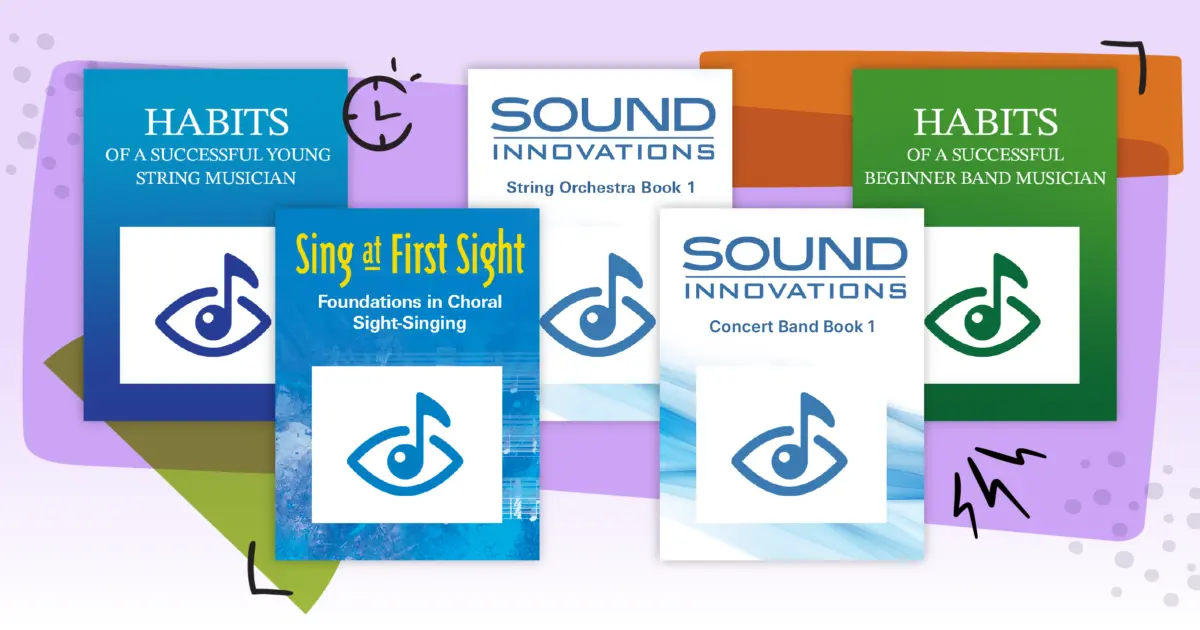
Enter MakeMusic, a titan in digital music education technology, which has fundamentally transformed this dynamic with the launch of its innovative Correlated Sight Reading Generators. Built directly into the MakeMusic Cloud ecosystem, these pre-configured Sight Reading Studio templates align lesson-by-lesson with widely trusted music methodologies. By bridging the gap between standard curriculum books and infinite digital generation, MakeMusic is sparing educators countless hours of weekly prep time while providing students with a virtually limitless stream of tailored, fresh notation. This release marks a watershed moment in instructional technology, promising to shift the paradigm of how music literacy is taught, practiced, and mastered globally.
Detailed Chronology: The Evolution of Sight-Reading Pedagogy and the Road to Automation
To understand the profound impact of MakeMusic’s latest release, one must examine the evolutionary trajectory of sight-reading instruction over the past century.
The Analog Era and Its Limitations
In the early-to-mid 20th century, music pedagogy relied entirely on printed anthologies. Method books designed by legendary educators established strict, logical progressions for rhythm, pitch, and articulation. However, the physical constraints of print media meant that educators frequently ran out of supplementary material. Teachers across elementary, middle, and high school band, orchestra, and vocal programs resorted to cutting up old method books, scavenging through filing cabinets for photocopied excerpts from obscure 1970s texts, or spending late nights at the piano composing custom eight-bar phrases by hand.
The Digital Dawn and Fragmentation
As notation software and early educational technology emerged in the late 1990s and 2000s, teachers gained the ability to draft exercises digitally. Software allowed for cleaner scores, but the process remained deeply manual. Educators still had to determine the precise parameter bounds—restricting intervals, limiting rhythmic values, and adjusting key signatures—to match where their students were in a specific textbook. The workflow was fragmented: teachers had to juggle the physical method book, a notation program, and a printing apparatus, creating a high-friction environment where consistent sight-reading integration often took a back seat to preparing concert repertoire.
The MakeMusic Cloud Revolution
The introduction of MakeMusic Cloud (formerly SmartMusic) changed the landscape by introducing interactive accompaniment and instant assessment. However, generating targeted sight-reading that mirrored a specific curriculum required teachers to manually configure parameters in Sight Reading Studio. While powerful, this still required a working knowledge of tool settings and time to map them against a class’s exact pacing through a method book.
The release of the Correlated Sight Reading Generators represents the culmination of years of platform refinement. By analyzing the structural progression of premier method books and mapping them directly to algorithmic generation templates, MakeMusic has removed the friction entirely. Instructors no longer need to translate textbook lessons into software parameters; the platform does the heavy lifting, ensuring that a student finishing Lesson 14 on Wednesday receives a computer-generated sight-reading exercise on Thursday that precisely matches the notes, rhythms, and conceptual hurdles introduced in that specific lesson—and only those hurdles.
Supporting Context & Metrics: The Science of Sight-Reading and Educator Burnout
The urgency behind MakeMusic’s new tool is underscored by mounting data regarding music teacher workloads and cognitive learning theories surrounding literacy acquisition.
The Cognitive Science of Sight-Reading
Cognitive psychologists distinguish between decoding—the active translation of visual symbols on a page into physical actions and auditory expectations—and retrieval from memory. When a student plays a piece from memory, the visual processing centers of the brain down-shift, bypassing the neural pathways required for real-time pattern recognition.
Studies in music cognition indicate that true sight-reading fluency requires sustained exposure to novel micro-patterns (such as specific scalar runs, interval leaps, and syncopated rhythmic cells) embedded within varied contexts. When students are exposed to stale, repeated material, their motor memory takes over. MakeMusic’s infinite generation engine directly targets this neurological need, ensuring that every time a student opens an assignment, they are forced to engage in genuine visual decoding.
The Educator Burnout Crisis
Behind the podium, music educators face unprecedented administrative and prep-time pressures. According to recent surveys across music education associations, the average instrumental or vocal teacher spends between 4 to 7 hours per week outside of direct instruction time hunting for, formatting, and copying supplementary instructional materials. Sight-reading preparation accounts for a significant portion of this uncompensated labor.
By automating the alignment process, MakeMusic’s correlated generators return these critical hours to educators. Instead of spending Sunday evenings drafting exercises or searching the internet for leveled material, teachers can reallocate that energy toward:
- Providing individualized coaching during ensemble rehearsals.
- Analyzing performance data to identify specific student struggling points.
- Designing creative, expressive components of the curriculum that software cannot replicate.
- Mitigating burnout, a primary driver of teacher attrition in the arts.
Official Statements and Industry Reception
The rollout of the Correlated Sight Reading Generators has sent ripples of excitement through the music education community. Industry leaders, method book authors, and classroom practitioners have praised the intuitive design and pedagogical integrity of the new feature.
"For decades, we’ve told teachers that daily sight-reading is non-negotiable, while simultaneously giving them a finite toolbox with which to do it," noted a senior product strategist at MakeMusic during the launch briefing. "Teachers were set up to fail by the physical limitations of print media. With our new correlated templates, we are marrying the structure of trusted pedagogical methods with the infinite scale of digital generation. We are giving teachers their prep time back while ensuring students never have to look at the exact same musical exercise twice."
Early adopters in middle and high school classrooms have echoed these sentiments, highlighting the seamless integration within daily lesson flows.
“In the past, generating custom sight-reading meant stopping class to write on a whiteboard, which killed momentum, or spending hours generating PDFs that didn’t quite match where we were in our book,” shared a veteran high school band director in the Midwest. “Now, I open MakeMusic Cloud, click the template matching our current method book page, and hit generate. My students get instant, relevant practice, and I don’t have to reinvent the wheel every single night.”
Pedagogical experts have also praised the tool for its versatility across both synchronous classroom environments and asynchronous at-home practice routines. By extending the classroom workflow directly into the student’s home via cloud assignments, districts are seeing unprecedented spikes in independent student engagement.
Future Outlook: The Next Frontier in Digital Music Literacy
As educational technology continues to evolve, the integration of algorithmic generation with established pedagogical frameworks points toward a deeply personalized future for music students.
Predictive Analytics and Adaptive Learning
Industry analysts predict that tools like MakeMusic’s Correlated Sight Reading Generators are the foundational stepping stones toward fully adaptive music education ecosystems. Future iterations may leverage machine learning to analyze a student’s individual error rates—detecting whether a particular student consistently stumbles over dotted-quarter and eighth-note figures in 6/8 time, for instance—and automatically fine-tune subsequent generated exercises to target those specific weaknesses while maintaining the broader curriculum context.
Broadening Methodological Ecosystems
While the initial rollout targets foundational methods widely adopted across school districts, industry watchers anticipate rapid expansion. MakeMusic has signaled plans to onboard additional string, wind, percussion, and vocal methodologies in response to overwhelming demand from international and specialized arts educators. This continuous expansion will cement MakeMusic Cloud as an all-encompassing hub for global music literacy.
Lifelong Musical Engagement
Ultimately, the broader societal impact of these technological advancements reaches far beyond the K-12 and collegiate classroom. By instilling robust, friction-free sight-reading habits during formative developmental years, tools like the Correlated Sight Reading Generators dismantle the intimidation factor associated with picking up a new piece of music.
When students graduate with absolute confidence in their ability to decode uncharted scores, they are far more likely to sustain their artistic passions into adulthood. Whether sitting down with a community orchestra, joining a musical theater pit band, or simply exploring classical and contemporary literature for personal fulfillment, these individuals carry forward an invaluable cultural literacy. MakeMusic has not merely streamlined a classroom chore; it has engineered a sustainable pipeline for a more musical world.
Get Started Today
For educators eager to reclaim their weekends and elevate their students’ sight-reading fluency, getting started requires just a few clicks:
- Log In: Access your account via the MakeMusic Cloud portal.
- Explore Templates: Navigate directly to the correlated sight reading templates search page.
- Sync and Assign: Locate your curriculum’s method book, jump straight to your current instructional page, and deploy fresh, targeted sight-reading exercises to your students instantly.
Transform sight-reading from a source of rehearsal anxiety into an engaging, infinite pathway to lifelong musical independence.