
Executive Overview
For generations of music educators, the pursuit of student sight-reading proficiency has been a paradox. Every band, orchestra, and vocal director understands that strong sight-reading skills are the bedrock of lifelong musicianship. Students who read well learn repertoire exponentially faster, rehearse with greater efficiency, and approach festival evaluations with quiet confidence rather than debilitating anxiety. More importantly, independent music reading is the master key that unlocks lifelong participation in community bands, church choirs, and amateur ensembles long after formal classroom instruction ends.
Yet, despite its undeniable importance, sight-reading instruction has long been hampered by a stubborn logistical bottleneck: the sheer scarcity of fresh, appropriately leveled material. Traditional method books contain a finite number of exercises. Once a student plays or sings through a page two or three times, cognitive reading ceases. Muscle memory and rote memorization take over, turning a sight-reading exercise into a memory test. To combat this, educators have historically spent countless unpaid hours hunting down supplementary literature, transposing melodies, or painstakingly writing exercises by hand on chalkboards, whiteboards, or digital notation software.
Enter MakeMusic’s latest pedagogical innovation: Correlated Sight Reading Generators.
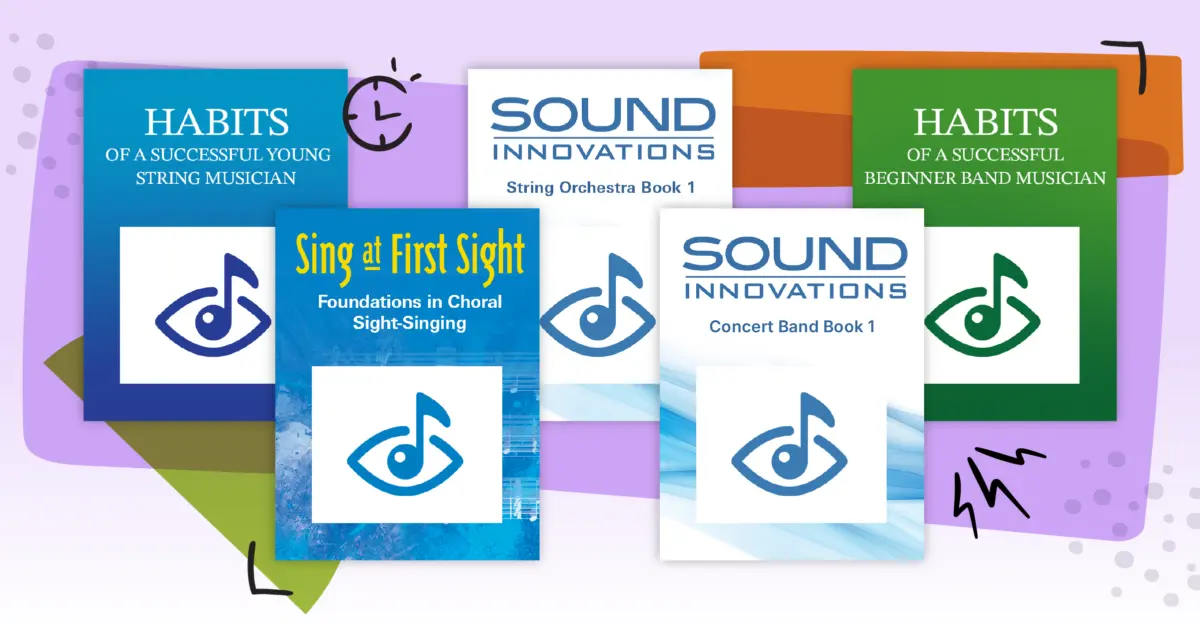
Designed to integrate directly with the MakeMusic Cloud platform, these pre-built Sight Reading Studio templates bridge the gap between core curriculum and limitless practice. By aligning lesson-by-lesson with widely trusted method books, the new generators provide educators with an inexhaustible stream of fresh, pedagogically sound sight-reading exercises tailored to exact curriculum milestones.
This development represents a seismic shift in music education technology. By automating the creation of leveled sight-reading content, MakeMusic is not merely saving teachers time; it is fundamentally altering how musical literacy is acquired, practiced, and mastered in both the classroom and the home.
Detailed Chronology: The Evolution of Sight-Reading Technology
To understand the significance of MakeMusic’s Correlated Sight Reading Generators, it is vital to examine the historical trajectory of sight-reading pedagogy and the technological evolution that made this breakthrough possible.
The Era of Static Print (Pre-Digital)
For centuries, music education relied exclusively on physical print media. Method books—such as standard instrumental and vocal primers developed throughout the 20th century—laid out systematic sequences of note learning, rhythm acquisition, and technical development. However, these books were bounded by the physical realities of publishing. A typical method book might dedicate only two or three lines of staff space to sight-reading practice per unit.
Directors quickly realized these resources were insufficient. To prevent students from memorizing the pages, teachers resorted to photocopying excerpts from obscure method books, orchestrating complex library rotations of supplementary anthologies, or writing custom exercises on staff boards. This process consumed vast amounts of preparation time, often pulling educators away from instructional design and student mentorship.
The Dawn of Digital Notation
The late 1990s and 2000s saw the rise of computer-aided music notation software, which allowed teachers to compose and print custom sight-reading exercises with relative ease. While this was a step forward, it remained labor-intensive. An educator still had to manually input notes, ensure strict adherence to specific pedagogical constraints (such as limiting the range to five notes or excluding certain rhythmic values), and print physical handouts or export PDFs for distribution. The friction of preparation remained high.
The Birth of Algorithmic Sight-Reading
The paradigm shifted with the introduction of algorithmic, web-based practice tools like MakeMusic’s Sight Reading Studio. These platforms allowed teachers to generate endless streams of sight-reading exercises by setting specific parameters—such as key signature, time signature, highest and lowest pitches, and rhythmic complexity.
While powerful, these early generative tools operated largely in a vacuum. They were independent of the specific method books used in daily instruction. A middle school band director using a popular foundational method book still had to translate their current curriculum spot (e.g., "Page 14, introducing the concert F-sharp and eighth-note pairs") into the disparate parameter menus of a standalone generator. The connection between daily method-book learning and supplementary sight-reading generation required deliberate, manual translation by the instructor.
The Breakthrough: Correlation and Automation
The launch of MakeMusic’s Correlated Sight Reading Generators represents the culmination of this technological evolution. By embedding lesson-by-lesson alignment directly into the software infrastructure, MakeMusic has eliminated the translation layer. The platform now speaks the language of the method book.
When a class masters a specific conceptual milestone on a precise page of their primary curriculum, the educator can instantly deploy a generator keyed directly to those exact parameters. This seamless integration marks the first time that algorithmic generation and canonical curriculum have been unified at scale.
Supporting Context & Metrics: The Anatomy of Musical Literacy
The pedagogical imperative behind MakeMusic’s new tool is supported by decades of cognitive research in music education and literacy acquisition.
The Cognitive Science of Sight-Reading
Sight-reading is a complex neurocognitive process involving visual pattern recognition, working memory, fine motor planning, and real-time error correction. Neurological studies indicate that expert sight-readers do not read individual notes sequentially; instead, they chunk musical notation into familiar visual and structural patterns—such as scales, arpeggios, and rhythmic motifs—much like reading words rather than spelling out individual letters.
For this chunking mechanism to develop, students must be exposed to high-volume, low-stakes reading practice with unfamiliar material. When students encounter the same exercise repeatedly, cognitive processing bypasses visual-spatial reading and shifts to motor memory. The brain stops decoding symbols and starts executing physical habits. Consequently, the primary neural pathways responsible for sight-reading proficiency fail to strengthen.
The Time Cost of Teacher Prep
Administrative burden and teacher burnout are critical challenges in contemporary music education. Surveys of instrumental and vocal directors consistently reveal that non-instructional tasks—such as lesson planning, music library management, and material preparation—consume up to 30% of an educator’s weekly professional hours.
Developing leveled sight-reading materials manually is a major contributor to this burden. Consider a middle school band director with four concert bands, each at a different developmental stage. Creating unique, pedagogically sound sight-reading examples for each ensemble on a weekly basis requires hours of meticulous work. By automating this workflow through correlated templates, MakeMusic directly addresses a primary pain point in music education administration.
Implementation and Classroom Dynamics
The true measure of any educational technology is its utility in real-world environments. The Correlated Sight Reading Generators have been designed with a philosophy of radical simplicity: select, click, and generate.
Inside the Classroom
In a live ensemble setting, every minute of rehearsal is precious. Traditional sight-reading routines often grind to a halt while directors write examples on the board, explain complex parameter changes, or wait for students to sort through loose papers.
With the new correlated templates, the workflow is frictionless:
- Curriculum Synchronization: The director identifies the current lesson or page in the ensemble’s primary method book.
- Template Selection: Within the MakeMusic Cloud interface, the director navigates to the pre-built Sight Reading Studio template aligned with that specific book and lesson.
- Instant Generation: A single click produces a pristine, professionally formatted sight-reading exercise built strictly around the technical and theoretical vocabulary introduced in that lesson.
- Iterative Practice: If the director wants to test the concept further or provide a different version for sectionals, a second click generates an entirely new exercise maintaining the exact same difficulty parameters.
This instantaneous delivery transforms sight-reading from a dreaded, time-consuming administrative chore into a fluid, dynamic component of daily warm-ups. Directors can project exercises onto a smartboard, push them directly to student devices, or print them instantly, keeping momentum high and student engagement focused.
Beyond the Classroom: Empowering Home Practice
Music acquisition does not stop when the school bell rings. However, independent home practice often breaks down because students lack structured guidance outside of their assigned ensemble repertoire. Method books provide practice at home, but as noted, students quickly memorize the limited exercises provided.
The correlated generators extend the classroom ecosystem directly into the student’s home via MakeMusic Cloud:
- Targeted Reinforcement: Students can access the exact same correlated templates at home, allowing them to practice sight-reading skills that directly mirror what they learned in rehearsal that day.
- Immediate Feedback: Integrated assessment tools within the platform provide students with real-time feedback on pitch and rhythm accuracy, fostering autonomous learning and accountability.
- Elimination of Guesswork: Parents and students no longer need to guess whether a piece of supplementary music is too difficult or too easy; the correlated system ensures that every at-home sight-reading prompt is perfectly matched to the student’s current proficiency level.
Future Outlook: The Next Frontier in Music EdTech
The introduction of correlated sight-reading generators signals a broader transformation in how digital tools will support music education in the years ahead. As artificial intelligence, adaptive learning algorithms, and cloud infrastructure continue to converge, the boundary between core curricula and supplementary resources will continue to blur.
Toward Hyper-Personalized Learning
Future iterations of these technologies are poised to move beyond class-wide or book-wide correlation toward individualized, adaptive pathways. Imagine a platform that analyzes a student’s specific error patterns during a digital sight-reading assessment—such as persistent struggles with dotted eighth-sixteenth rhythms in the key of B-flat major—and automatically generates a bespoke, correlated micro-exercise designed to remediate that exact deficiency.
Deepening Curriculum Partnerships
As MakeMusic expands its library of templates to encompass a broader array of method books, pedagogical publishers and software developers will likely forge even closer integrations. The vision of a fully digitized, responsive music curriculum—where physical texts and cloud-based generation engines operate in real-time synergy—is rapidly becoming reality.
Preserving the Joy of Music Making
Ultimately, technology in music education must serve a singular, human purpose: empowering students to make music independently, creatively, and joyfully. By removing the administrative friction of material preparation and providing an infinite well of appropriately leveled reading material, MakeMusic’s Correlated Sight Reading Generators free educators to do what they do best—teach, inspire, and connect with their students.
For music educators eager to reclaim their preparation time and elevate their students’ reading fluency, the path forward is clear. By logging into MakeMusic Cloud and exploring the new correlated templates, directors can turn the page on prep fatigue and open a new chapter in musical literacy.