
Executive Overview
In the contemporary landscape of indie and alternative music, few artists manage to seamlessly bridge the gap between high-literary abstraction and the raw, unvarnished pulse of urban subcultures. Enter Mena, an artist whose sonic and thematic ambitions continue to push the boundaries of modern songwriting. Following last month’s release of the haunting single “Black bear,” Mena has officially pulled back the curtain on the details surrounding their forthcoming album, Pure Luck.
Serving as a follow-up to the acclaimed Multi Adolescence and the gums EP, Pure Luck is not merely a collection of songs; it is an immersive sonic tableau. Rooted deeply in Mena’s formal background in jazz guitar and heavily informed by the kinetic, often chaotic energy of New York City’s queer nightlife, the record examines the margins of romance. Rather than focusing solely on the saccharine highs or devastating lows of romantic love itself, the album turns its lens toward the periphery—the invisible scaffolding, the erratic circumstances, and the environmental pressures that make interpersonal connections feel so fleeting, random, and ultimately unsolvable.
Spanning a diverse tracklist that touches on existential alienation, flight, and urban survival, Pure Luck is shaping up to be a defining artistic statement. With the release of the album’s latest narrative anchor, “Jamie”—a track that kicks off a two-part love story inspired by James Baldwin’s classic 1956 novel Giovanni’s Room—Mena is cementing a reputation as a songwriter unafraid to tackle complex psychological landscapes. This comprehensive deep-dive explores the genesis of Pure Luck, the literary and physical spaces that birthed it, the thematic undercurrents of tracks like “Jamie” and “Troublemakers,” and what this pivotal release means for the trajectory of Mena’s burgeoning career.
Detailed Chronology of the Pure Luck Era
The rollout for Pure Luck has been characterized by a deliberate, methodical unveiling of thematic chapters, allowing audiences to digest the complex narrative framework piece by piece. Understanding the trajectory of this release requires tracing the timeline from its earliest conceptualization in the recording studio to the unfolding singles campaign.
The Genesis and Composition Phase
The creation of Pure Luck was a nomadic, cross-country endeavor that spanned multiple creative hubs. Writing for the album took place over an extended period across a geographically diverse set of environments: the urban grit of Brooklyn, the sun-bleached isolation of Los Angeles backhouses, the polished professional isolation of XL Recordings’ Manhattan studio, and the contemplative quiet of Upstate New York.
This shifting geography heavily influenced the album’s sonic texture. The friction between the claustrophobia of city life and the expansive quiet of rural retreats mirrors the emotional duality present in Mena’s lyricism. Drawing heavily upon a foundational background in jazz guitar—an idiom known for its harmonic complexity and improvisational freedom—Mena utilizes chordal structures and phrasing that break standard pop conventions. Yet, this academic and technical foundation is continually grounded by the visceral, bass-heavy thud and kinetic panic of New York City’s underground queer nightlife.
The Singles Campaign: From "Black bear" to "Jamie"
The promotional campaign kicked into high gear last month with the release of “Black bear,” a track that established the moody, introspective atmosphere of the impending record. While “Black bear” acted as a striking atmospheric introduction, it is the subsequent release of “Jamie” that truly signals the conceptual ambition of Pure Luck.
“Jamie” operates as the first installment of a two-part narrative arc directly inspired by James Baldwin’s seminal novel, Giovanni’s Room. In Baldwin’s text, the protagonist David navigates a labyrinth of internalized homophobia, emotional transience, and self-sabotage in Paris. In Mena’s musical adaptation, the artist steps directly into David’s conflicted shoes.
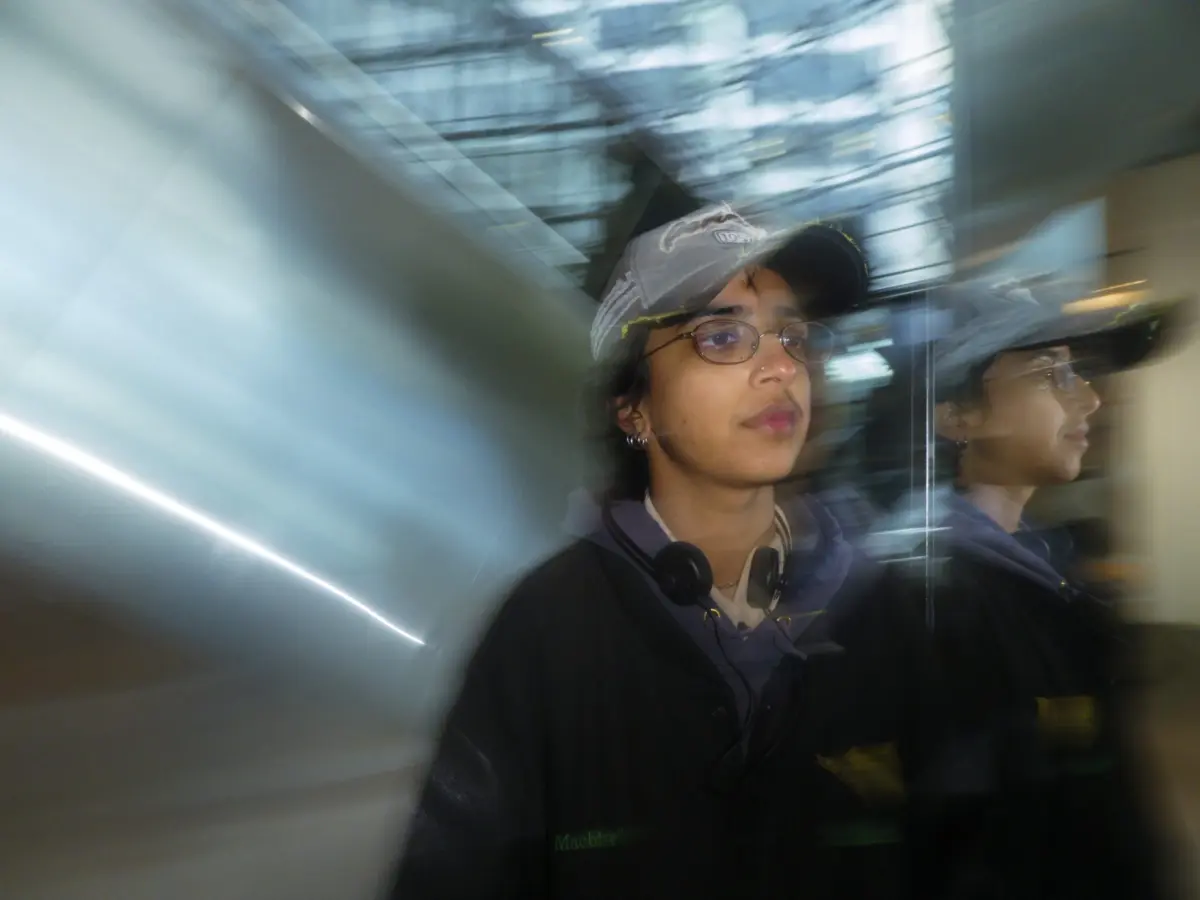
Accompanying the track is a self-directed music video shot entirely by Mena on the streets of New York City. The visual medium complements the lyrical narrative, capturing the blur of urban existence and the psychological state of a person perpetually on the run. By anchoring a modern indie-pop/jazz-fusion track to a mid-century literary masterpiece, Mena bridges generations of queer trauma and longing, proving that the existential dilemmas faced by Baldwin’s characters nearly seventy years ago remain terrifyingly relevant in contemporary nightlife.
Supporting Context & Metrics: The World of Pure Luck
To fully appreciate the scope of Pure Luck, one must examine the building blocks of the project: its physical design, its sonic lineage, and its tracklist architecture. The album acts as a natural progression from Mena’s prior releases, including Multi Adolescence and the gums EP, yet it represents a significant leap forward in thematic cohesion and production polish.
Thematic Focus: The Architecture of Romance’s Periphery
In contemporary music, the vast majority of albums deal with love as a binary: heartbreak or euphoria. Mena rejects this simplistic dichotomy. In statements surrounding the release, the artist noted:
“These songs are less about romantic love than everything surrounding it, the circumstances that make love feel so fleeting, random, and unsolvable.”
This philosophical stance elevates Pure Luck from a standard break-up album to an existential study of modern living. The songs investigate the external pressures—economic instability, substance use, spatial displacement, and the relentless velocity of city life—that act as invisible wrecking balls in relationships.
Visual and Tracklist Breakdown
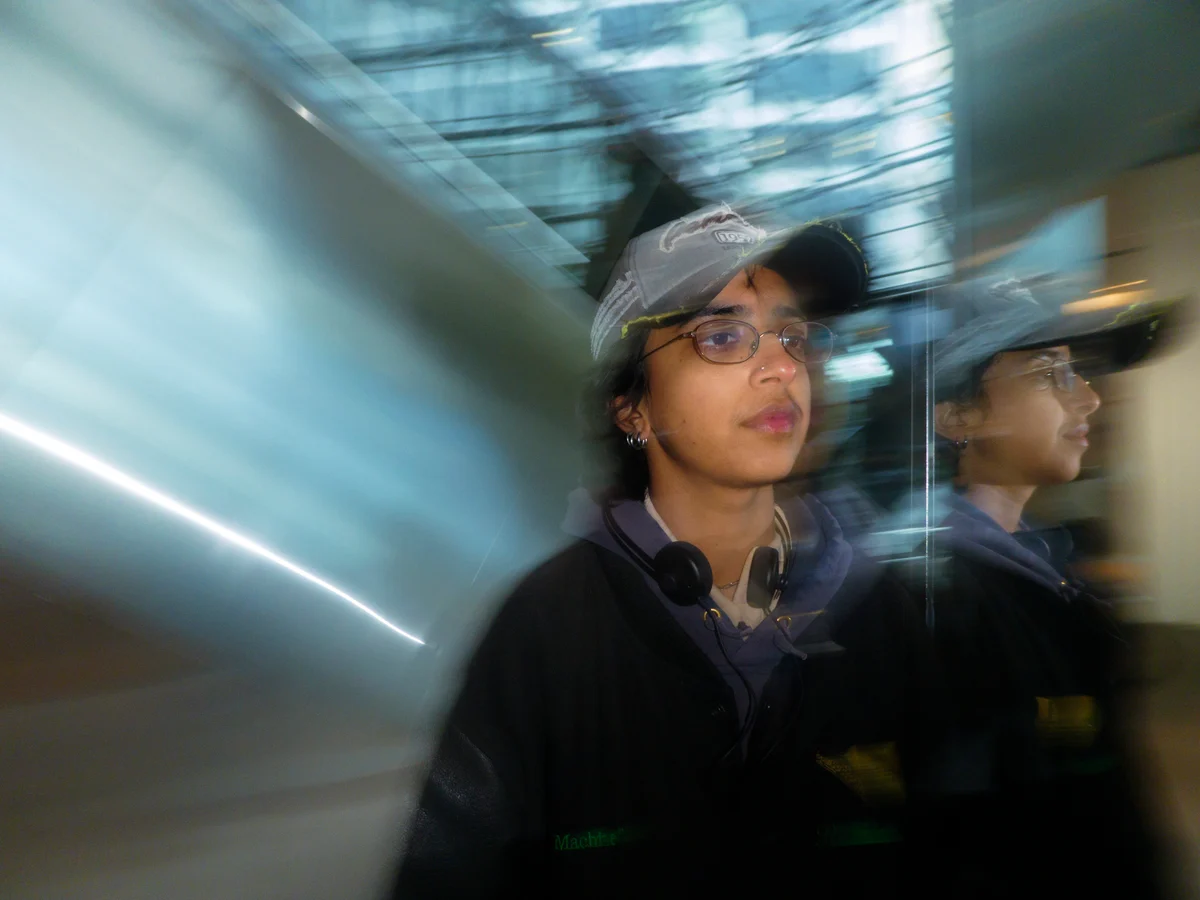
The visual identity of Pure Luck, captured in its official album artwork, mirrors the sparse yet evocative nature of the music. It suggests a journey into the unknown, aligning with the album’s recurring motifs of transit, movement, and emotional migration.
The complete tracklist for Pure Luck reveals a carefully sequenced emotional journey, moving from physical sensation and movement to introspection, vulnerability, and eventual void-gazing:
- “Wind slicing hair” – An evocative, kinetic opener that sets a cinematic tone of movement and displacement.
- “Black bear” – The brooding precursor single that established the record’s moody, textural palette.
- “I wanna be where you are” – A yearning exploration of geographic and emotional distance.
- “Hydro palette” – A fluid, impressionistic track highlighting Mena’s jazz-inflected guitar work.
- “Jamie” – The Baldwin-inspired narrative centerpiece and Part 1 of the album’s literary love story.
- “Angel’s side” – A delicate, celestial mid-album pivot examining protection and morality.
- “Page turn” – A transitional narrative marker emphasizing the passing of time and chapter shifts.
- “Exit 100” – A highway-bound reflection on leaving urban centers behind.
- “Troublemakers” – The emotional anchor of the album, focusing on trans survival, nightlife, and reckless youth.
- “Xanadu” – A hallucinatory, escapist dreamscape.
- “Curses and blessings” – A meditation on the dual-edged sword of intense emotional attachments.
- “Passion for the void” – A sprawling, philosophical conclusion looking into the abyss of modern isolation.
Official Statements and Artistic Philosophy
Mena’s commentary on the creation of Pure Luck offers crucial insight into the psychological underpinnings of the record. By dissecting specific tracks, the artist provides a roadmap for listeners willing to look beyond the surface-level melodies.
Deconstructing “Jamie” and the Ghost of James Baldwin
Speaking on the inspiration behind “Jamie” and its ties to Giovanni’s Room, Mena offered a deeply personal interpretation of the novel’s protagonist, David:
“Jamie is my version of David, or at least the parts of David that I relate to, a person that is running away from his problems and swept up in the wind of his own life.”
This confession highlights a central theme across Pure Luck: the archetype of the fugitive. Whether running from commitments, trauma, or identity, Mena’s protagonists are perpetually in motion. The self-directed New York video shoot further emphasizes this, casting the city not as a romanticized backdrop, but as a whirlwind that catches the characters up and carries them past stability.
“Troublemakers”: A Tribute to Trans Survival in the Nightlife Underground
Perhaps no track on the album is more vital to understanding Mena’s socio-cultural positioning than “Troublemakers.” Describing the song as containing some of their favorite songwriting on the entire record, Mena provides a gritty, unfiltered window into its inspiration:
“This is about being trans in New York, trying to exist in nightlife, drugs, sex. Queer kids up to no good because they have nowhere else to be.”
This statement cuts to the core of the album’s gritty realism. While Pure Luck flirts with high-art literary references like James Baldwin, it is equally anchored in the sticky floors, strobe lights, and hazardous survival tactics of underground queer spaces. It acknowledges that for many marginalized youth, "making trouble" is not an act of malice, but an inevitable byproduct of existing in a society that offers them no physical or emotional sanctuary. The track validates the delinquency born of displacement, celebrating the resilience of those who find community in the shadows.
Future Outlook: The Cultural Impact of Pure Luck
As the music industry prepares for the full arrival of Pure Luck, the broader implications of Mena’s artistic trajectory become increasingly clear. In an era where hyper-commercialized, algorithm-driven pop often prioritizes immediate, frictionless consumption, Mena’s work stands as a defiant counter-narrative.
By fusing the sophisticated, harmonic sensibilities of a jazz background with the raw narrative power of queer literature and nightlife, Mena is carving out a unique lane. Pure Luck challenges listeners to sit with discomfort, to examine the spaces between romantic encounters, and to recognize the profound humanity inherent in urban survival and youthful misbehavior.
The rollout of singles like “Black bear” and “Jamie,” coupled with the looming emotional weight of tracks like “Troublemakers,” suggests that Pure Luck will be a critical darling upon its release. More importantly, it marks Mena as an essential voice in contemporary alternative music—an artist capable of turning personal introspection and subcultural observation into timeless, literary-grade art. As the final pieces of the puzzle fall into place, the journey from Brooklyn basements to Upstate retreats has resulted in a masterpiece of modern vulnerability.