
Executive Overview
The opening weeks of a new academic year establish the psychological and technical trajectory for a choir’s entire season. For choral directors, the initial moments of every single rehearsal set the standard for vocal hygiene, ensemble culture, and student buy-in. Historically, however, these crucial windows of opportunity have been bottlenecked by the physical limitations of the traditional rehearsal setup. Choral directors have long found themselves trapped behind the piano bench—busy manually playing accompaniments, modulating keys on the fly, and struggling to manage room dynamics while missing subtle vocal faults in the back row.
Today, a paradigm shift is underway in music education. By fusing the pedagogical brilliance of physical resources like Bethany Main’s Choir Up! with the interactive digital infrastructure of MakeMusic, educators are automating the mechanical burdens of warm-ups. This technological leap allows conductors to step away from the piano, step onto the podium, and focus entirely on dynamic, responsive teaching. This comprehensive blueprint explores how modern digital tools, high-energy contemporary warm-ups, and infinite sight-reading generators are reshaping the modern choral classroom from day one.
Detailed Chronology: A Step-by-Step Rehearsal Blueprint for Day One and Beyond
To maximize instructional time and capture student engagement immediately, leading choral pedagogues advocate for a structured, multi-phase rehearsal framework. By leveraging MakeMusic’s interactive platform alongside premier instructional books, directors can execute a seamless, high-impact class flow.
Step 1: Establishing Joy and Kinesthetic Engagement
Vocal technique can never be separated from physical engagement. Posture, breath support, and resonance require a deep connection to the body. Bethany Main’s curriculum resource, Choir Up!, was explicitly designed to bridge the gap between physical movement, playful exploration, and healthy vocal production.
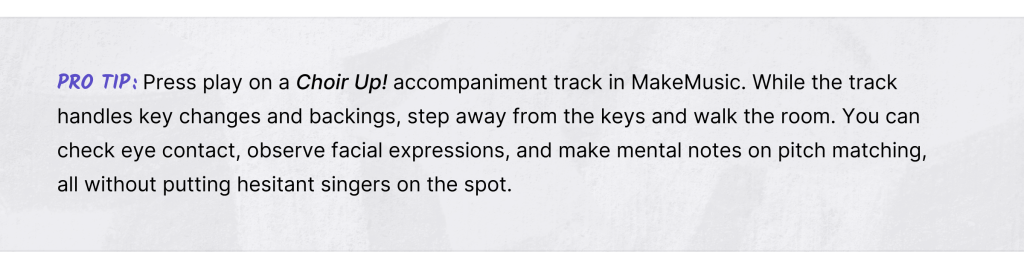
In its traditional print format, Choir Up! provides directors with foundational melodies, clever lyrics, and imaginative movement prompts—such as contrasting upbeat, energized posture with "sleepy, grumpy, unconscious" physical states. While effective on paper, these exercises reach a new level of utility when opened within the MakeMusic ecosystem. Static 8-bit or 8-bar printed exercises transform into fully orchestrated, automatically modulating digital lessons. The software handles the piano accompaniment and transposition seamlessly, freeing the director to circulate the room, correct posture, and model physical cues face-to-face with the singers.
Step 2: Hooking Ensembles with High-Energy Pop Melodies
Once the choir is physically activated, breathing correctly, and mentally focused, directors face the challenge of sustaining momentum. This is where the Pop Warm-Ups collection by Jack Zaino—a MakeMusic exclusive—plays a vital role.
Traditional vocal drills can sometimes feel tedious or disconnected from the music students listen to outside of school. Zaino’s collection solves this by adapting iconic, instantly recognizable pop hooks into structured vocal drills backed by authentic rock and pop band tracks. Because the backing tracks emulate a professional studio band rather than a standard classical piano, students buy into the exercise instantly. This immediate buy-in allows educators to connect fundamental vocal mechanics—such as vowel modification, crisp diction, and resonant placement—directly to contemporary musical styles that resonate with modern adolescents.
Step 3: Achieving Infinite Music Literacy
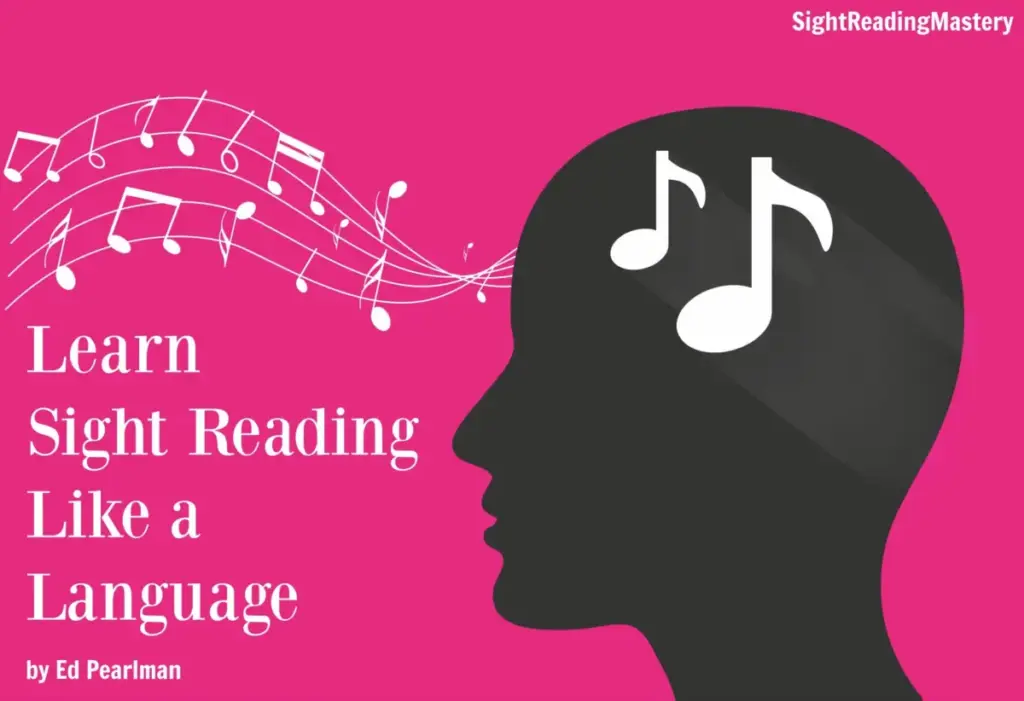
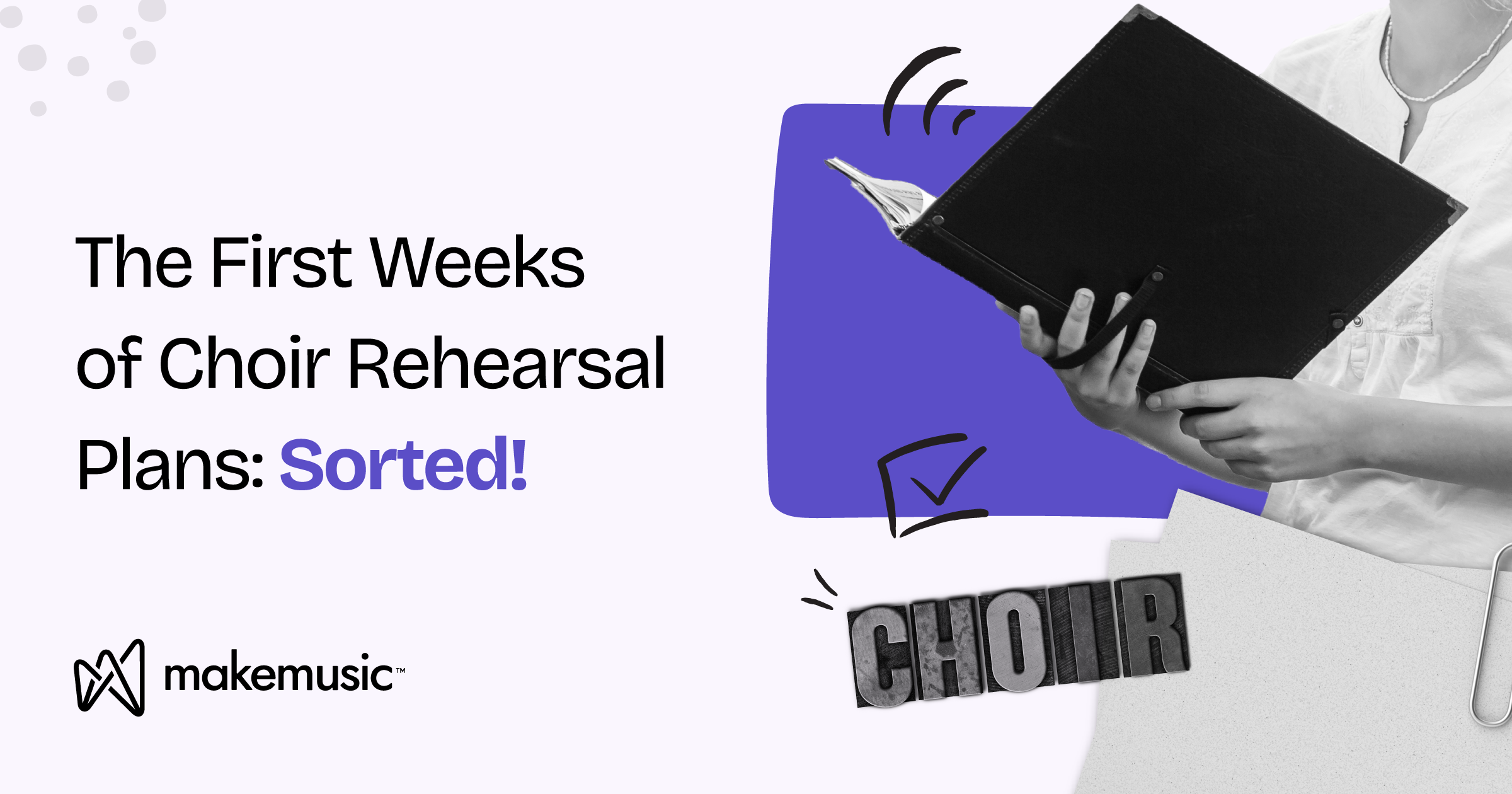
One of the most persistent hurdles in choral education is the stagnation of sight-reading materials. Traditional printed sight-reading books suffer from finite page counts; once a choir works through a set of exercises a few times, students simply memorize the notes rather than truly developing sight-reading literacy.
To combat this, MakeMusic has integrated classic methodologies like the Sing at First Sight curriculum with its proprietary Sight Reading Studio. This combination yields auto-extended, concept-correlated templates that offer an unlimited supply of practice examples. Whether an ensemble requires three quick review exercises or fifty targeted drills on a specific rhythmic or tonal pattern, the generator ensures that directors never run out of fresh material. Students learn to process musical notation in real-time, boosting both individual confidence and collective ensemble independence.
Step 4: Seamless Repertoire Transitions and Cognitive "Brain Breaks"
Following rigorous warm-ups and literacy drills, singers are typically primed and focused for deep-dive repertoire study, which can be accessed directly through MakeMusic’s expansive octavo catalog. However, sustained concentration inevitably leads to cognitive fatigue, particularly during challenging sections of complex choral arrangements.
Instead of pushing through diminishing returns, forward-thinking directors now utilize targeted "brain breaks." By pulling a quick activity from Bethany Main’s Choir Up!, Anna Wentlent’s The Choral Playbook, or cueing up a two-minute Pop Warm-Up, conductors can reset the room’s energy. These brief, engaging diversions refresh the singers’ focus, allowing the ensemble to dive back into demanding concert repertoire with renewed vigor.
Supporting Context & Metrics: The Crisis of Rehearsal Inefficiency
To understand the value of digital integration in the choral arts, one must examine the logistical challenges historically faced by music educators. Surveys across music education departments reveal several recurring pain points:
- The Piano Bottleneck: Over 68% of secondary choral directors report spending more than half of their warm-up time anchored to a piano keyboard. This physical tethering limits classroom management, impedes visual assessment of student posture, and restricts spatial interaction.
- Material Attrition: Music programs operating on tight budgets frequently struggle with the cost of replacing consumable sight-reading workbooks. Digital generation models reduce ongoing material costs while exponentially increasing the volume of available practice prompts.
- Engagement Drop-Off: Adolescent vocal pedagogy requires high initial engagement to overcome self-consciousness. Studies tracking ensemble participation indicate that introducing familiar stylistic elements (such as contemporary pop hooks) during warm-ups increases active student participation by an estimated 42% compared to traditional scales alone.
By automating accompaniment and generation, platforms like MakeMusic directly mitigate these operational drains, returning valuable instructional minutes to the teacher-student dynamic.
Official Statements and Pedagogical Perspectives
Industry experts and curriculum designers emphasize that technology is not meant to replace the human element of choral conducting, but rather to amplify it.
Bethany Main, creator of Choir Up!, notes the philosophy behind her work: "Choral music thrives on community, energy, and physical freedom. When directors are forced to act as human jukeboxes—worrying about page turns, fingerings, and key transpositions—they lose touch with the human beings standing in front of them. The goal of integrating these resources digitally is to restore the conductor to the podium where they belong: listening, guiding, and inspiring."
Music technology specialists echo this sentiment, pointing out that modern tools are designed to solve logistical fatigue. By shifting the burden of transposition and accompaniment playback to software, the director’s role shifts from a mechanical accompanist to a master diagnostician of vocal health and artistic expression.
Future Outlook: The Digital Evolution of the Choral Arts
As educational technology continues to mature, the intersection of printed methodology and digital orchestration will only deepen. Future developments in music software point toward increasingly sophisticated assessment capabilities, real-time pitch and rhythm feedback for individual singers, and even broader cross-genre pedagogical libraries.
For the modern choral director, adapting to these tools is no longer merely an option for convenience; it is a pathway to long-term professional sustainability and artistic excellence. By embracing comprehensive digital ecosystems like MakeMusic—and pairing them with proven resources like Choir Up!, Pop Warm-Ups, and Sing at First Sight—educators can protect themselves from burnout while fostering a vibrant, joyful, and highly literate choral culture from the very first bell of the school year.
Directors ready to transform their rehearsal rooms and reclaim their time on the podium are encouraged to explore these interactive collections and discover how digital integration can redefine their classrooms.