
Executive Overview
The intersection of streaming data and live-music ticketing is undergoing a seismic shift. In May 2026, music streaming giant Spotify officially pulled back the curtain on "Reserved," a forward-thinking ticketing initiative designed to solve one of the live entertainment industry’s most persistent headaches: ensuring that the most dedicated fans—rather than automated bots or predatory scalpers—actually get access to coveted concert tickets.
Following a successful low-profile pilot program in June 2026 featuring indie-pop artist Role Model, Spotify is significantly scaling up the capabilities of the "Reserved" ecosystem. The platform has announced a suite of new additions aimed at transforming the ticketing experience from a simple transactional hurdle into an end-to-end fan journey. These updates include a dedicated in-app hub, bespoke tour setlist playlists powered by real-time data from Setlist·fm, and personalized social media "share cards" designed to gamify and broadcast fan status.
This comprehensive overview delves into the mechanics of Spotify’s "Reserved" feature, tracing its evolution from its spring announcement to its latest autumn updates. We will examine how this feature impacts the broader music economy, how artists stand to benefit from direct-to-fan engagement, and what the future holds as streaming platforms increasingly blur the lines between listening and live event consumption.
Detailed Chronology: From Concept to Rollout
May 2026: The Genesis of ‘Reserved’
For years, Spotify utilized tools like "Fans First" emails to offer early ticket access codes to top listeners. However, these traditional methods were frequently plagued by bottlenecks, leaks, and user-experience friction. Recognizing the immense monetization potential of the live music sector—and seeking to deepen its footprint in the ticketing value chain—Spotify announced the "Reserved" feature in May 2026.
The core premise of "Reserved" is algorithmic curation combined with exclusivity. By analyzing listening habits, streaming frequency, and overall affinity metrics, Spotify’s backend identifies the keenest superfans of participating artists. Instead of merely sending a code that leads to a chaotic, high-pressure queue on a third-party ticketing site, "Reserved" bypasses traditional hurdles by setting aside blocks of tickets specifically for these identified superfans, giving them a guaranteed, streamlined window to secure admission.
June 2026: The Role Model Pilot Test
Theory met practice in June 2026, when indie-pop singer-songwriter Role Model became the first artist to trial the "Reserved" ticketing system.
While the pilot was conducted on a relatively intimate scale to stress-test the platform’s infrastructure, the results were closely monitored by artist management teams, promoters, and industry analysts alike. The test proved that Spotify’s listener-ranking algorithms could successfully pinpoint genuine superfans and deliver tickets smoothly without crashing systems or sparking widespread scalper intervention. The success of the Role Model trial provided Spotify with the data and confidence needed to expand the program’s scope and developer roadmap ahead of the bustling autumn concert season.
September 2026: Expanding the Ecosystem
Building on the momentum of the summer test, Spotify rolled out a wave of enhancements designed to enrich the post-purchase and pre-concert phases of the live music experience. Recognizing that buying a ticket is only the beginning of a fan’s journey, the platform introduced three major features:
- Dedicated Tour Setlist Playlists: Partnering with Setlist·fm, Spotify now automatically generates customized tour setlists for each participating concert. These playlists update dynamically based on recent tour data, allowing fans to familiarize themselves with the exact arrangements and deep cuts they are likely to hear live. Once the concert concludes, the playlist "freezes," capturing an immortalized digital snapshot of the exact songs performed on that specific night.
- The In-App ‘Reserved’ Hub: To keep users from having to hunt through scattered notifications and emails, Spotify launched a centralized hub within its application. This hub acts as a command center for users who have received offers, housing their dedicated setlist playlists, essential concert information, and ticketing status updates all in one place.
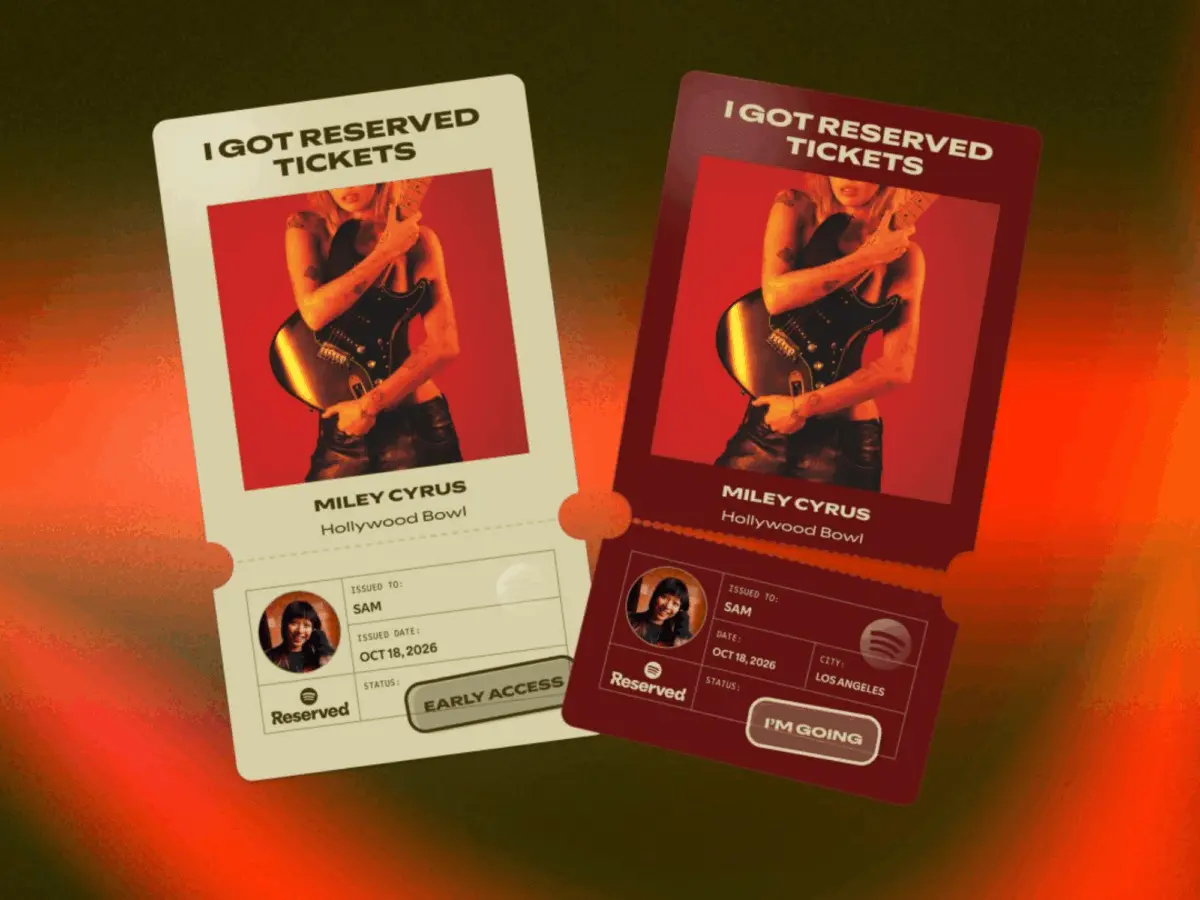
- Personalized Social Share Cards: Capitalizing on the psychological power of fandom and digital identity, Spotify introduced dynamic graphic assets known as share cards. These personalized visual summaries allow users to flex across Instagram, TikTok, X (formerly Twitter), and messaging apps, announcing two distinct milestones: first, that they were hand-selected by the algorithm for a "Reserved" offer; and second, that they successfully secured their tickets.
Supporting Context & Metrics: The Battle for the Superfan Economy
To understand why Spotify is heavily investing in "Reserved," one must examine the current economic realities of the global music industry. Recorded music streaming revenues, while steady, face plateauing subscriber growth in mature Western markets. Consequently, both major labels and streaming services are desperately looking toward the live music sector—which has experienced a post-pandemic boom characterized by sky-high ticket prices and unprecedented demand.
The Problem with Modern Ticketing
For the past decade, the live ticketing ecosystem has been plagued by friction. High-profile ticket sales routinely collapse under massive traffic surges, leaving genuine fans locked out while secondary ticket marketplaces instantly flood with scalped seats priced at astronomical markups. Artists frequently express frustration that their most loyal supporters are priced out or beaten by bots.
Spotify’s "Reserved" model offers a compelling antidote. By utilizing first-party listening data—such as hours streamed, repeat plays, and merchandise clicks—Spotify can construct a high-fidelity profile of genuine fandom that bots cannot easily fake.
[Spotify Listening Data]
       │
       ▼
[Superfan Algorithm Identification]
       │
       ▼
[Guaranteed Ticket Reservation] ──> [In-App Hub & Setlist Playlists]
       │
       ▼
[Social Sharing & Live Event Execution]
Leveraging the Data Advantage
Spotify’s unique value proposition lies in its data monopoly over hundreds of millions of active listeners. While traditional ticketing agencies only see a consumer at the moment of purchase, Spotify understands the consumer’s entire musical journey over months and years.
By tying ticket access directly to streaming loyalty, Spotify achieves three critical goals:
- Incentivizing Platform Engagement: Listeners are subtly encouraged to stream more music on Spotify to boost their algorithmic ranking for upcoming tours of their favorite acts.
- Strengthening Artist-Fan Relationships: Artists gain a direct pipeline to their most devoted listeners, fostering stronger community loyalty and higher attendance rates.
- Capturing Ticketing Revenue and Data: While Spotify is careful to partner with established ticketing infrastructure rather than building a fully independent box office from scratch, the feature cements Spotify as an indispensable gatekeeper in the live music value chain.
Official Statements and Industry Reception
While Spotify has rolled out the feature iteratively via newsroom posts and targeted updates, the industry response has been overwhelmingly analytical and largely optimistic.
Industry analysts note that the introduction of social share cards and Setlist·fm integration points to a broader trend: the gamification of music consumption. By turning ticket acquisition and concert preparation into a visible, shareable badge of honor, Spotify is tapping into the psychological drivers that make fandoms like Taylor Swift’s "Swifties" or K-pop stans so fiercely loyal.
"By integrating real-time setlists, centralized hubs, and social bragging rights, Spotify is moving beyond a passive utility and engineering a lifestyle ecosystem around the live show," notes one prominent digital music strategist. "When a fan posts their ‘Reserved’ share card, they aren’t just promoting a concert—they are validating their identity as a true superfan, which in turn acts as free, hyper-targeted marketing for both the artist and Spotify."
Music managers and promoters have also expressed relief at finding alternative pathways around traditional ticketing monopolies. Although primary ticketing systems still execute the final transaction, bypassing the speculative queue phase via algorithmic curation dramatically reduces friction and fan alienation.
Future Outlook: What’s Next for Spotify ‘Reserved’?
As the "Reserved" feature transitions from its initial pilot phase into a broader autumn rollout, industry watchers are already speculating about its long-term roadmap.
1. Global Scaling and Genre Diversification
While early tests have focused on pop and indie-pop acts like Role Model, the true test of the algorithm will be its deployment across massive global genres such as hip-hop, electronic dance music (EDM), Latin music, and rock. Each genre possesses vastly different fan consumption patterns, requiring Spotify to continuously fine-tune its ranking algorithms to prevent edge cases and complaints from aggrieved listeners.
2. Deepening Integration with Setlist·fm and Live Nation/AEG
The partnership with Setlist·fm is likely just the beginning. Future iterations of the "Reserved" hub could incorporate pre-show merchandise pre-orders, VIP upgrade paths, exclusive audio messages from artists recorded specifically for ticket holders, and post-concert photo galleries. Furthermore, deeper technical integrations with major promoters like Live Nation and AEG could streamline the checkout process so smoothly that users never technically have to leave the Spotify application environment.
3. The Monetization Horizon
As Spotify continues to explore high-margin auxiliary revenue streams—following the footsteps of features like Spotify Wrapped and ticket presale experiments—"Reserved" could eventually introduce tiered monetization models or premium subscriber perks. Whether Spotify ultimately takes a direct cut of ticketing fees or utilizes the feature primarily as a retention tool to lock users into its ecosystem, the writing is on the wall: streaming and live entertainment are officially fusing into a single, cohesive product.
Conclusion
Spotify’s evolution of the "Reserved" ticketing feature signals a mature phase in the platform’s strategy. By blending hard data with emotional engagement tools like Setlist·fm playlists and social share cards, Spotify is not only solving the logistical nightmare of modern concert ticketing—it is redefining what it means to be a superfan in the digital age. As more artists adopt the feature in the months ahead, the traditional barrier between streaming a song in your headphones and screaming it back to an artist in a stadium crowd has never felt thinner.