
By Investigative Journalism Desk
Published: Special Feature Case Log
Executive Overview
For centuries, vocal training has been shrouded in mysticism. Instructors have traditionally relied on abstract metaphors—telling students to "sing from the soul," "project from the heels," or "swallow the sound"—leaving aspiring vocalists to navigate a labyrinth of confusion. However, a quiet revolution in vocal pedagogy is challenging this paradigm by treating the human voice not as an emotional mystery, but as a precise instrument governed by anatomy, physics, and geometry.
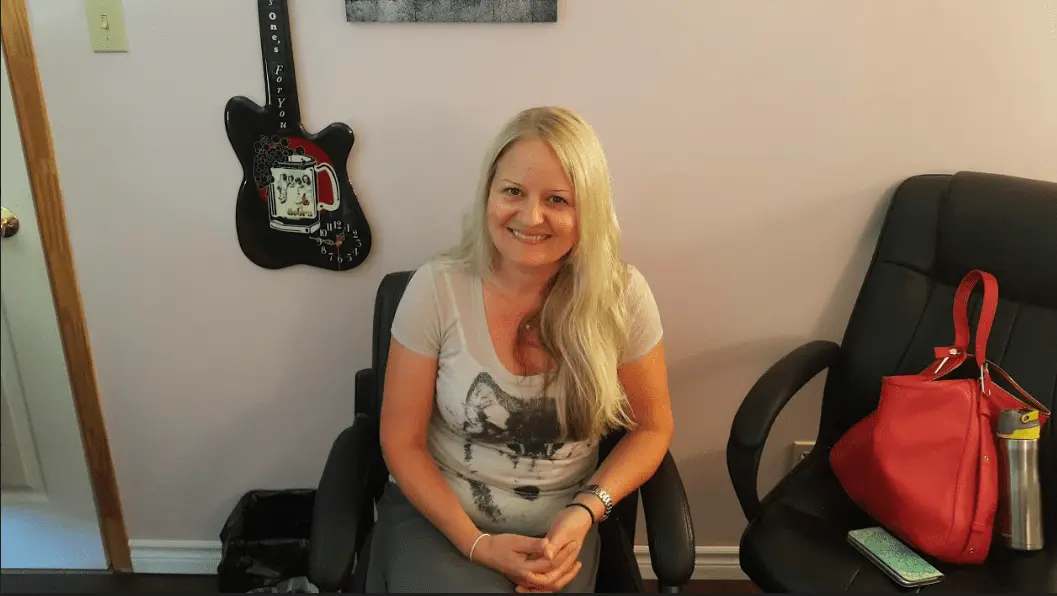
At the center of this methodology is the Vocal Science™ technique, developed by Diana Yampolsky. To understand how this innovative system bridges the gap between scientific mechanics and artistic expression, this case study examines the real-time progress of Lisa O., a high school mathematics teacher from Stouffville, Ontario, Canada.
Lisa came to Vocal Science with no aspirations of a professional singing career. Instead, she sought a structured, logical approach to improving her vocal clarity, strength, and confidence during casual musical gatherings with musician friends. As a high school math teacher and a fitness enthusiast, Lisa provided a unique analytical lens through which to evaluate a technique that relies heavily on structural alignment, respiratory physics, and muscular synchronization.
Over a rigorous series of sessions in late May 2018, Lisa documented her transformation. Her journey reveals a systematic blueprint for optimal vocal production—proving that before an artist can soar, they must master the mathematical precision of walking.
Detailed Chronology: The May 2018 Case Log
The transformation of Lisa O.’s vocal capabilities is best understood through the chronological progression of her intensive training log, recorded between May 18 and May 30, 2018.
Phase 1: Breaking the Mold and Introducing the X-Y Axis of Sound
Dates: Friday, May 18, and Monday, May 21, 2018
When Lisa attended her initial introductory session and first official lesson, she harbored typical skepticism. Having read numerous testimonials about Diana Yampolsky’s innovative methods, she remained unsure what "Vocal Science" truly entailed. Her first impression of Yampolsky was defined by a refreshing, direct candor.
"I was first struck with Diana’s straightforward manner. She tells it like it is. I appreciate people who are direct. Constructive criticism is the only way to really learn and improve."
Unlike conventional vocal coaches who often trap students in open-ended, multi-year financial commitments, Yampolsky established a clearly defined trajectory. She immediately assessed Lisa’s baseline potential, outlining a finite, goal-oriented roadmap designed to take the student efficiently from point A to point B.
As the physical exercises commenced, Lisa recognized the stark divergence between traditional vocal instruction and Yampolsky’s scientific framework. For a math teacher and fitness devotee, the methodology struck an immediate chord:
- Anatomical Efficiency: Tying the diaphragm and breath directly to the facial muscles, thereby bypassing and protecting the delicate vocal cords from physical strain.
- Geometrical Visualization: Visualizing sound not as an abstract cloud, but as "circles of sound" mapped onto a mathematical grid—an x-y axis where height and breadth mathematically define the sonic output.
- Athletic Posture: Abandoning the traditional, rigid stance of classical vocal instruction in favor of an athletic posture designed to maximize respiratory efficiency.
However, intellectual understanding did not equate to immediate physical execution. Lisa soon discovered that the elegance of the system belied the intense physical coordination required to implement it. She likened the process to "superimposing puzzle pieces to allow one small beam of light to pass through." The absolute alignment of breath, musculature, sound, and anatomical position required a level of hyper-focus that produced an immediate, switch-like effect when executed correctly.
Phase 2: The Crucible of Muscle Memory and Real-World Application
Date: Friday, May 25, 2018
By the third major session, the honeymoon phase of conceptual learning gave way to the grueling reality of physical conditioning. Lisa realized that while Yampolsky’s expertise provided the catalytic "magic," true progress demanded relentless hard work, humility, and persistence.
"It’s often very humbling. It’s often frustrating. Ultimately; however, when you’re able to get the sound that Diana is after, it’s very satisfying."
The true test of this burgeoning muscle memory occurred less than 24 hours later. On Saturday, May 26, Lisa attended a social gathering with a circle of musician friends who frequently jam together. Armed with her newly internalized mechanics—specifically, a subconscious awareness of breathing posture—Lisa sang multiple numbers.
While her musician friends praised her general performance, her husband pinpointed the structural shift: her vocal confidence and clarity had noticeably elevated. Even without consciously reviewing every anatomical rule mid-song, Lisa’s nervous system had begun automating the structural adjustments mandated by the Vocal Science technique.
Phase 3: Raising the Bar and Mastering the Foundation
Date: Sunday, May 27, 2018
As Lisa’s mastery over facial positions and physical posture solidified, Yampolsky escalated her expectations. True to the hallmarks of elite pedagogy, Yampolsky’s listening faculty proved hyper-acute, capable of detecting the most minute micro-fluctuations in breath and tone. She demanded uncompromising precision.
To Lisa’s initial surprise, a significant portion of a session dedicated to singing was spent meticulously refining her speaking voice. Yampolsky’s philosophy adheres to the immutable athletic maxim: You cannot learn to run until you know how to walk.
Rather than teaching songs from the outset, the curriculum focuses on building foundational blocks. These blocks enable optimal acoustic resonance while exerting zero destructive strain on the vocal cords, ensuring longevity and health for both speakers and singers.
Phase 4: Scaling the Peak of Complexity
Date: Wednesday, May 30, 2018
The May training block culminated in a lesson that merged fundamental acoustic production with advanced musical application. Yampolsky introduced a sophisticated, 3-part singing practice recording designed to test dynamic range, speed, tonal adaptability, and clarity.
Lisa successfully navigated the foundational first tier of the sequence while previewing the higher levels of complexity to come. Recognizing the advanced nature of the subsequent tiers, Lisa framed them not as an insurmountable obstacle, but as a long-term challenge to push the boundaries of her newly unlocked vocal capacity under expert guidance.
Supporting Context & Metrics: The Anatomy of Vocal Science
To fully appreciate the implications of Lisa O.’s case study, one must examine the core tenets of the Vocal Science™ methodology. Traditional vocal coaching often focuses on psychological encouragement and emotive delivery. In contrast, Vocal Science approaches the human vocal apparatus as an organic bio-mechanical system subject to the laws of physics.
Comparative Metrics of Vocal Pedagogy
| Parameter | Traditional Vocal Instruction | Vocal Science™ Methodology |
|---|---|---|
| Primary Focus | Emotive expression and stylistic interpretation. | Anatomical mechanics, bio-mechanics, and structural physics. |
| Vocal Cord Protection | Often relies on natural intuition; high risk of strain and nodules. | Active bypassing of vocal cords via facial muscle resonance and diaphragmatic locking. |
| Posture Model | Rigid classical stance (chest out, stagnant lower body). | Dynamic athletic posture optimized for maximal respiratory output. |
| Pedagogical Approach | Abstract metaphors ("sing from the heart"). | Mathematical and geometrical visualization (x-y axis sound grids). |
| Curriculum Timeline | Open-ended, indefinite lessons spanning years. | Defined, goal-oriented trajectories moving strictly from point A to point B. |
By treating vocal resonance as a mathematical grid, individuals with analytical backgrounds—such as engineers, scientists, and mathematicians like Lisa—find an immediate, logical framework that accelerates their learning curve. When breath, muscular tension, skeletal alignment, and facial placement align perfectly, the vocal tract operates at maximum efficiency, minimizing friction and maximizing acoustic output.
Official Statements and Expert Insights
Reflecting on her intensive two-week immersion, Lisa O.’s experience underscores a vital lesson for professionals who rely heavily on their voices—be they teachers, public speakers, or amateur vocalists.
"It’s not about learning how to sing. It’s about building the blocks that allow for the optimal sound with the least amount of strain on your vocal cords."
Industry experts and speech pathologists have long noted that vocal strain is one of the leading occupational hazards for educators. Teachers like Lisa face daily vocal fatigue due to prolonged projection in acoustically unoptimized environments. By integrating the structural alignment and breath-support mechanisms championed by Diana Yampolsky, professionals can safeguard their vocal health while radically enhancing their communicative presence.
Diana Yampolsky’s direct, uncompromising pedagogical style ensures that students discard bad habits immediately. By substituting vague coaching terminology with clear, physics-based directives, the Vocal Science technique demystifies vocal training, transforming an elusive artistic talent into a quantifiable, masterable skill set.
Future Outlook
The case of Lisa O. opens a broader conversation regarding the future of vocal education. As interdisciplinary learning becomes more prevalent, the integration of mathematics, biomechanics, and acoustics into artistic training fields will likely expand.
For Lisa, the conclusion of her May 2018 case log marked not an ending, but a beginning. Armed with a newly re-engineered understanding of breath support, facial posture, and muscular memory, she returned to her high school mathematics classroom and her social music circles with a transformed instrument. Her journey proves that when art meets science, barriers dissolve, and the human voice achieves its truest, most resonant potential.
End of Case Study Report.