
Executive Overview
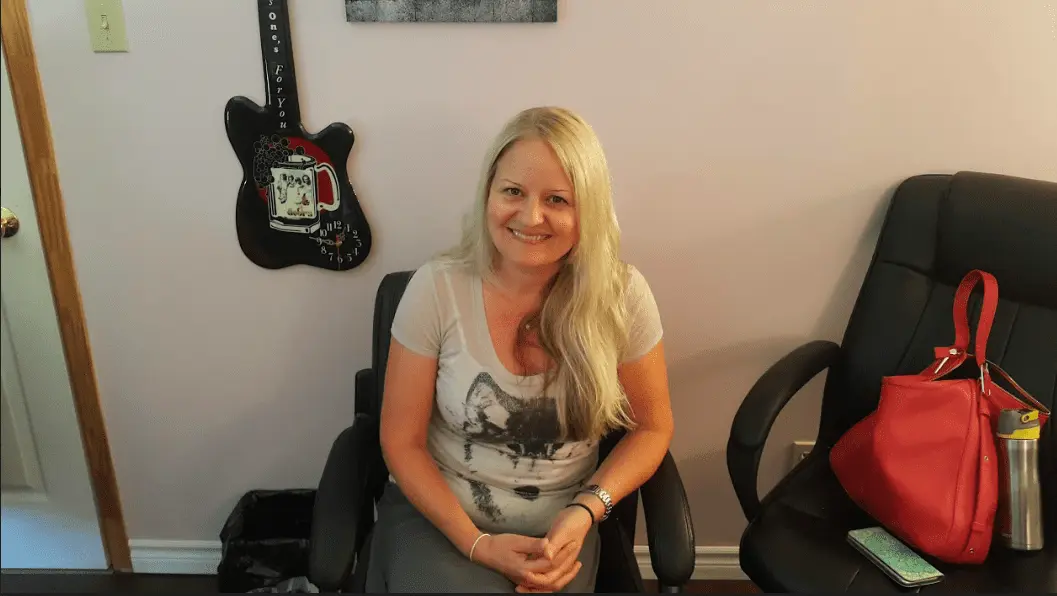
In the realm of vocal pedagogy, traditional training often relies heavily on subjective imagery, abstract emotional delivery, and long-term, open-ended apprenticeships. However, when an analytical mind encounters an innovative methodology, the learning paradigm shifts entirely. This investigative case study explores the transformative vocal journey of Lisa O., a high school mathematics teacher from Stouffville, Ontario, Canada. Over a concentrated two-week period in late May 2018, Lisa undertook a rigorous series of sessions under the direct tutelage of renowned vocal coach Diana and the proprietary Vocal Science™ methodology.
As an educator accustomed to absolute logic, geometric proofs, and physical conditioning, Lisa approached the unconventional training with a unique perspective. Rather than viewing vocal production as a mysterious artistic gift, she began to decode it through the lenses of physics, biomechanics, and spatial geometry. This report chronicles her experiential log from May 18 to May 30, 2018, detailing how an analytical framework can demystify vocal mechanics, accelerate muscle memory development, and yield immediate, real-world improvements in both speaking and singing clarity.
Detailed Chronology: The Two-Week Transformation
Phase I: Initial Encounters and Paradigm Shifts (May 18 – May 21, 2018)
Entering her introductory session and first official lesson, Lisa O. possessed few preconceptions about Diana’s methodology beyond knowing its reputation for innovation. The very moniker "Vocal Science" initially posed an intriguing question mark. Yet, any preliminary ambiguity was swiftly dispelled by Diana’s characteristically direct and uncompromising communication style.
For an analytical professional, the absence of sugarcoating is often a welcome asset. Diana provided immediate, constructive feedback paired with a precise assessment of Lisa’s vocal potential. Crucially, the instructional roadmap was defined and measured. Unlike conventional programs that encourage endless years of open-ended lessons, this curriculum was goal-oriented—designed to transition a student efficiently from Point A to Point B.
During the foundational exercises, the underlying philosophy of the Vocal Science technique came into sharp focus. Traditional voice lessons Lisa had casually experienced in the past were quickly eclipsed by a system that resonated deeply with her professional and personal background:
- Anatomical Efficiency: The technique tied the diaphragm and breath directly to the facial muscles, effectively bypassing and neutralizing harmful strain on the vocal cords.
- Spatial Geometry: Diana’s conceptualization of "circles of sound" mapped effortlessly onto a Cartesian coordinate system. To Lisa, vocal resonance could be visualized along an x-y axis, where height and breadth mathematically defined the sonic output.
- Athletic Posture: Rather than traditional vocal stances that overemphasize the localized extension of the diaphragm, Diana’s posture requirements mirrored athletic conditioning, utilizing full-body structural alignment to enhance breath support.
Despite the intellectual clarity of these concepts, translating theory into physical reality proved profoundly challenging. Lisa likened the process to superimposing intricate puzzle pieces until a single, unobstructed beam of light could pass through. Achieving this required the simultaneous, synchronized alignment of breath, musculature, sound, and anatomical positioning. Under Diana’s microscopic direction, however, mastering this alignment functioned like an electrical switch: when locked down correctly, the acoustic improvement was instantaneous.
Phase II: The Crucible of Muscle Memory (May 25, 2018)
By the third session on Friday, May 25, the honeymoon phase of conceptual discovery gave way to the rigorous crucible of execution. Lisa confronted the reality that while Diana’s expertise could unlock immediate "magic," true progress demanded relentless hard work, persistence, and humility. The process was frequently frustrating, yet achieving the precise tonal target demanded by the coach offered unmatched psychological and artistic satisfaction.
The practical efficacy of this intensive training was tested less than 24 hours later. On Saturday, May 26, Lisa attended a social gathering with friends, many of whom were accomplished musicians. During an impromptu jam session, Lisa performed several vocal numbers. She experienced a heightened sense of vocal strength and internal confidence.
While her musician friends offered generous compliments, the most objective validation came from her husband. He noted a marked, quantifiable improvement in both her vocal clarity and her overall delivery confidence. Remarkably, Lisa achieved this without consciously over-analyzing the mechanical steps she had practiced the day before—indicating that the foundational breath postures were already beginning to migrate into her subconscious muscle memory.
Phase III: Raising the Bar and Mastering the Foundation (May 27, 2018)
On Sunday, May 27, as Lisa’s command of facial positioning and postural alignment improved, Diana naturally elevated her expectations. True to the hallmark of an elite educator, Diana’s critical ear grew even more discerning, capable of detecting the most micro-auditory nuances in breath and resonance. She demanded heightened precision—a challenge Lisa welcomed.
A striking revelation during this phase was the disproportionate amount of time dedicated not to singing songs, but to refining Lisa’s speaking voice. To the uninitiated, this might seem counterintuitive for someone seeking vocal performance training. However, the pedagogical rationale is absolute: one cannot learn to run before mastering how to walk. By focusing on the structural building blocks of everyday speech, the methodology engineered optimal sound production while minimizing vocal cord fatigue, establishing a resilient foundation for any future vocal application.
Phase IV: Advanced Integration and Complex Sequencing (May 30, 2018)
The culmination of this initial case study log occurred on Wednesday, May 30, marked by a lesson that bridged foundational mechanics with advanced musical execution. In the latter half of the session, Diana introduced a structured, three-part singing practice recording designed to test and expand upon everything Lisa had learned.
Lisa successfully navigated the first segment of the exercise and immediately recognized the structured brilliance of the curriculum. The practice sequence was engineered to systematically increase in complexity, mimicking the diverse vocal challenges encountered across various musical arrangements:
- Variable tempos and pacing requirements.
- Complex tonal modulations and shifts.
- Uncompromising standards for acoustic clarity.
While acknowledging that the advanced stages of the sequence presented a formidable challenge, Lisa embraced the journey not as an impossible hurdle, but as an inspiring metric for personal growth under expert guidance.
Supporting Context & Metrics
To contextualize Lisa O.’s rapid advancement, it is valuable to examine the core metrics and structural differences separating traditional vocal instruction from the Vocal Science approach:
| Pedagogical Metric | Traditional Voice Instruction | The Vocal Science Methodology |
|---|---|---|
| Duration of Training | Open-ended, multi-year commitments | Defined, goal-oriented short-term trajectories |
| Primary Focus | Repertoire memorization and emotional delivery | Biomechanical efficiency and vocal cord preservation |
| Diagnostic Approach | Subjective auditory feedback | Mathematical, spatial, and anatomical alignment |
| Posture Model | Localized diaphragmatic extension | Athletic, whole-body structural alignment |
| Primary Instrument | Exclusively singing voice | Foundational speech integrated with singing |
By reframing vocal production through mechanical and spatial paradigms, students like Lisa—who possess analytical or fitness-oriented backgrounds—bypass months of trial-and-error. The reliance on precise muscle memory formation ensures that structural integrity is maintained whether the practitioner is speaking in a classroom or singing at a social gathering.
Official Statements and Analytical Reflections
Reflecting on her intensive two-week case study, Lisa O. offered key insights into the psychological and physical shifts she experienced:
"When we began the exercises, I started to get a feel for what her technique was about… Diana’s method made sense from a scientific and mathematical standpoint; for example, tying the diaphragm and the breath to the facial muscles, bypassing the strain on the vocal cords."
Addressing the rigorous nature of the training, Lisa emphasized the balance between expert guidance and personal accountability:
"It was at this session when I realized the amount of work involved in this process. Yes, Diana is the professional and magic does happen, but it’s not without putting your share of hard work and persistence into the process. It’s often very humbling… Ultimately, when you’re able to get the sound that Diana is after, it’s very satisfying."
Highlighting the unique pedagogical emphasis on speech mechanics, she added:
"It’s amazing to me that much of our lesson involves just my speaking voice when I’ve come to her for vocal singing lessons. The results speak for themselves, though. As they say, you can’t learn to run until you know how to walk."
Future Outlook
The case study of Lisa O. illuminates a compelling trajectory for modern vocal pedagogy. As professionals from non-traditional artistic backgrounds—such as educators, scientists, and athletes—seek to optimize their vocal delivery for public speaking, teaching, or recreational performance, methodologies that prioritize biomechanical transparency will undoubtedly gain prominence.
For Lisa, the conclusion of this initial May 2018 log does not represent an end, but a sustainable beginning. Armed with a newly calibrated subconscious muscle memory, an analytical grasp of spatial resonance, and a deeply protected vocal apparatus, she possesses the tools to independently navigate complex musical arrangements and high-demand professional speaking environments.
As the Vocal Science methodology continues to demonstrate, when art is successfully married to precise science, the human voice ceases to be an unpredictable instrument—it becomes a mastered equation of breath, posture, and resonance.