
By Joe Sparrow
Published October 21, 2026
Executive Overview
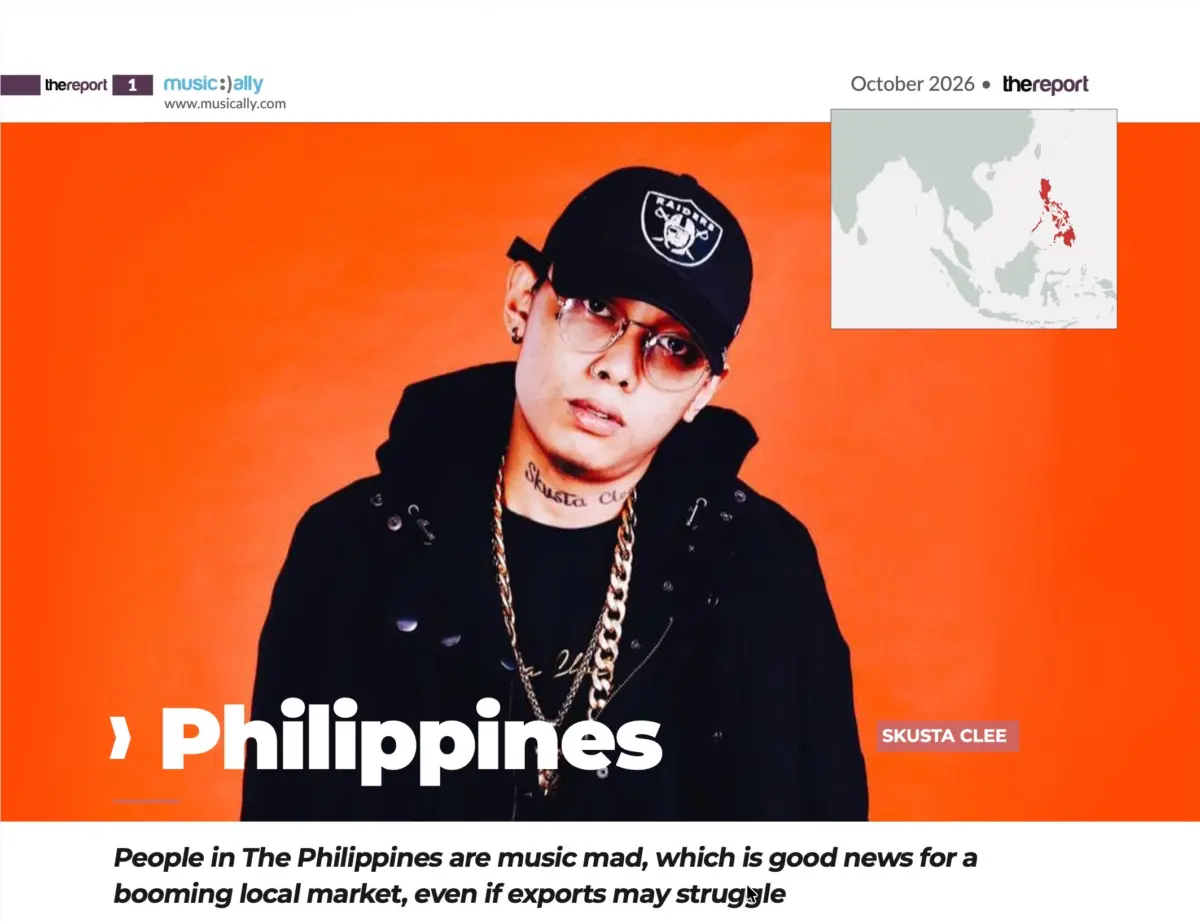
The Republic of the Philippines stands today as one of the most vibrant, music-obsessed populations in Southeast Asia. For the domestic entertainment industry, this cultural affinity has translated into a rapidly expanding, highly lucrative local marketplace characterized by intense consumer engagement, high streaming hours, and a fiercely loyal domestic fanbase. Yet, beneath the surface of this booming internal economy lies a persistent structural challenge: while domestic consumption shatters records year after year, exporting Filipino musical talent and repertoire to the global stage remains an uphill battle.
As digital distribution platforms deepen their penetration across the archipelago’s 7,641 islands, stakeholders, executives, and creators are forced to confront a nuanced reality. The Philippines is a powerhouse of consumption—a goldmine for domestic stakeholders and a priority market for global DSPs (Digital Service Providers). However, bridging the gap between localized fanaticism and international crossover appeal requires overcoming deep-seated logistical, cultural, and industry-wide hurdles. This report provides a comprehensive analysis of the contemporary Philippine music market, exploring the mechanics of its domestic success, the barriers to global exports, and the strategic shifts required to turn local hits into international phenomena.
Detailed Chronology: The Evolution of the Modern Philippine Music Industry
To understand the current state of the Philippine music landscape, it is essential to trace the pivotal milestones that have shaped the modern digital era within the country.

- The Pre-Digital and Physical Era (Late 1990s–2000s): For decades, the Philippine music industry operated on traditional models heavily reliant on physical CD sales, cassette tapes, and karaoke culture. Dominated by major label branches and OPM (Original Pilipino Music) powerhouses, the industry suffered severely from widespread piracy, which choked revenues and limited infrastructure investment.
- The Early Mobile and Ringback Tone Boom (2010–2015): As smartphone adoption began to climb, telecommunications companies became the primary gatekeepers and monetizers of music via caller ringback tones (CRBTs) and value-added services (VAS). This era proved that Filipinos were willing to spend money on mobile-accessible music, laying the groundwork for digital adoption.
- The Arrival of Global DSPs (2016–2018): Major international streaming services, including Spotify and Apple Music, officially launched or expanded their footprints in the Philippines. Simultaneously, affordable mobile data packages introduced by local telcos (Globe Telecom and Smart Communications) democratized internet access, causing a massive migration of listeners from piracy sites to legal streaming platforms.
- The Pandemic Acceleration (2020–2021): Lockdowns during the global COVID-19 pandemic catalyzed unprecedented digital consumption. Confined to their homes, Filipino consumers turned to social media—particularly TikTok and YouTube—and streaming platforms for entertainment. This period saw the explosive growth of domestic genres, particularly OPM balladeers, indie-pop acts, and P-Pop (Pinoy Pop) groups modeled after modern idol frameworks.
- The Institutionalization of P-Pop and Localization (2022–2024): Groups like BINI and SB19 achieved monumental mainstream success, proving that locally produced idol pop could compete directly with K-Pop and Western pop imports. Major global labels (such as Sony Music, Universal Music Group, and Warner Music) significantly scaled up their Manila offices, shifting from mere distribution hubs to active A&R (Artist and Repertoire) discovery centers.
- The Current Landscape (2025–2026): Today, the Philippine market is defined by a paradox of high domestic profitability and constrained international exports. Local streaming metrics rival those of larger regional neighbors, yet international chart penetration remains largely elusive outside of specific diaspora communities.
Supporting Context & Metrics: A Nation Built on Sound
To fully grasp why the Philippines is considered a "music-mad" nation, one must examine the quantitative metrics that define consumer behavior in the region.
High Daily Engagement and Consumption Hours
According to industry data compiled across various DSPs, Filipino users consistently rank among the highest globally in terms of daily media consumption and streaming hours. Music is not merely a background amenity in the Philippines; it is an integral part of daily life, deeply intertwined with commuting, social gatherings, workplace environments, and, most notably, karaoke (locally known as videoke).
The Dominance of Mobile and Social Discovery
The Philippine internet ecosystem is distinctly mobile-first. With desktop computer penetration relatively low compared to mobile devices, platforms like TikTok, YouTube, and Facebook serve as the primary discovery engines for new music. A track’s viral trajectory on TikTok frequently dictates its ascension onto the Spotify Philippines Top 50 chart. This hyper-reliance on social video platforms has compressed attention spans while amplifying the impact of catchy hooks, emotional resonance, and visual accompaniment.
The Financial Health of the Local Ecosystem
Unlike mature Western markets where streaming growth has plateaued, the Philippine market is still in a high-growth phase. Monetization per user (ARPU) remains lower than in North America or Western Europe due to prevailing economic realities and the prevalence of ad-supported tiers. However, volume makes up for lower subscription yields. As digital payment methods (such as GCash and Maya) become ubiquitous, paid subscription conversion rates are slowly ticking upward, bolstering the long-term viability of the local music economy.

The Export Conundrum: Why Local Hits Stay Local
The central thesis of the contemporary Philippine music market is clear: the domestic engine is roaring, but the export vehicle is struggling to hit top gear. Several systemic factors explain this phenomenon.
1. Linguistic and Cultural Nuance
A significant portion of mainstream OPM is performed in Tagalog (Filipino) or a blend of Tagalog and English (Taglish). While this linguistic blend fosters deep emotional connections and cultural authenticity at home, it can present a psychological barrier for non-Tagalog-speaking audiences abroad. Unlike K-Pop, which successfully deployed high-concept visual packaging, serialized storytelling, and meticulous international marketing to overcome language barriers, the infrastructure supporting OPM exports has historically lacked equivalent state or corporate backing.
2. Marketing Budgets and Global A&R Priorities
Global major labels operating in Manila often find their primary fiscal responsibilities lie in maximizing domestic return on investment (ROI). Because the local market is so voracious and profitable on its own, regional and global headquarters frequently hesitate to allocate the multimillion-dollar marketing budgets required to break a Filipino artist into fiercely competitive Western or Latin American markets. Consequently, international exposure often occurs organically via social media algorithms rather than through coordinated, multi-territory push campaigns.
3. Touring Infrastructure and Regional Logistics
Touring outside the Philippines poses logistical and financial challenges for domestic artists. High travel costs, visa hurdles for international destinations, and the absence of established regional touring circuits specifically tailored for Southeast Asian exchanges complicate efforts to build overseas fanbases through live performance—a traditional cornerstone of artist development.

Official Statements and Industry Insights
Key figures within the Southeast Asian music ecosystem have increasingly spoken out about the dual nature of the Philippine market.
Industry analysts tracking the region note that the sheer enthusiasm of the Filipino audience creates a false sense of security for localized business models. “The domestic appetite is an incredible cushion,” observes a senior regional streaming strategist. “An artist can achieve multi-platinum status, stadium-selling domestic tours, and massive streaming revenue without ever leaving the borders of the archipelago. That is a dream for local stakeholders, but it can inadvertently disincentivize the grueling, expensive work required to build a global footprint.”
Meanwhile, representatives from major publishing and distribution houses emphasize that the tide is slowly beginning to turn. Label executives point to the explosive international engagement of acts like SB19 and BINI as proof that the global appetite for Filipino talent exists. “We are no longer asking if the talent is world-class; the talent has always been world-class,” notes a Manila-based A&R director. “The question now is about scaling our infrastructure, refining our collaborative songwriting camps, and forging strategic partnerships with international labels that can champion OPM on global playlists.”
Future Outlook: Unlocking the Next Phase of Growth
As the Philippine music market looks toward the remainder of the decade and beyond, its trajectory will depend heavily on how stakeholders navigate the tension between domestic saturation and global ambition.

1. The Rise of Cross-Border Collaborations
One of the most promising avenues for export growth is collaborative songwriting and regional crossover projects. By pairing Filipino artists, producers, and songwriters with counterparts in South Korea, Japan, Indonesia, and the West, local creators can infuse OPM with broader stylistic palettes while tapping into established foreign fanbases.
2. Institutional and Governmental Support
Unlike South Korea, whose global cultural wave (Hallyu) was systematically backed, funded, and strategized by government ministries, the expansion of OPM has been largely organic and private-sector driven. Moving forward, increased collaboration between the Philippine creative industries and government bodies (such as the National Commission for Culture and the Arts) could unlock crucial funding, cultural export grants, and streamlined diplomatic channels for international touring.
3. Data-Driven Global Targeting
As streaming analytics become more sophisticated, independent labels and major publishers are increasingly utilizing granular listener data to identify micro-markets abroad—such as diaspora communities in the United States, Canada, the Middle East, and parts of Europe—where targeted digital campaigns can yield high-intent listeners without requiring massive upfront capital expenditures.
Conclusion
The Philippines remains an undisputed heavyweight of musical passion in Southeast Asia. Its domestic market is a thriving, resilient ecosystem capable of turning local artists into national icons and generating robust commercial returns. Yet, the true test of the industry’s maturity in the years ahead will not be how well it can captivate its own shores, but how effectively it can package, export, and celebrate the rich, diverse sounds of the archipelago to the rest of the world.