Forty years ago, four musicians draped in high-contrast yellow-and-black spandex achieved the seemingly impossible. Emerging from the vibrant, hedonistic vortex of the 1980s Sunset Strip heavy metal scene, Stryper accomplished a feat that baffled both secular industry executives and conservative religious gatekeepers. They fused the thunderous, high-octane guitar riffs and arena-scale pyrotechnics of secular heavy metal with an uncompromised, unapologetic Christian message.
When their landmark studio album, To Hell with the Devil, was released in October 1986, it did not merely nudge the boundaries of contemporary Christian music; it violently detonated them. The record challenged the structural mechanics of the mainstream recording industry, proving definitively that a explicitly faith-based rock outfit could compete shoulder-to-shoulder with the period’s biggest commercial heavyweights without diluting its theological convictions.
Four decades later, the sonic, cultural, and spiritual reverberations of that release are still being felt across the global entertainment landscape. The barrier-breaking trajectory established by Stryper paved the way for modern Christian crossover acts, reshaping how the music industry views the intersection of faith and mainstream commerce. Yet, the story of To Hell with the Devil is far more complex than simple chart success. It is a narrative defined by internal conviction, unexpected mainstream adoption, severe ecclesiastical backlash, and an enduring artistic longevity that continues to defy the conventional lifespans of 1980s rock acts.
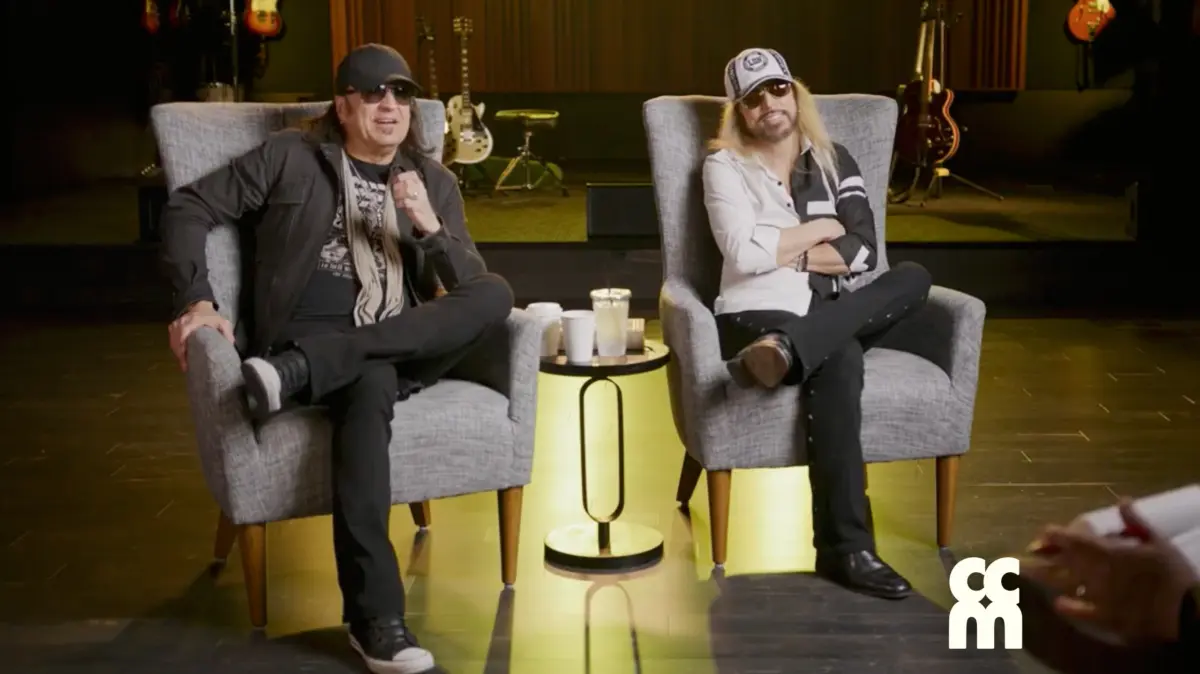
In a recent, exclusive retrospective interview with brothers Michael and Robert Sweet—the foundational architects of the band—the profound weight of that defining moment in music history comes sharply into focus. From cramped cassette decks in Ford Escorts to the upper echelons of MTV countdowns, the legacy of the "Yellow and Black Attack" remains as potent, controversial, and vital as it was on day one.
Detailed Chronology: From Garage Ambitions to the MTV Pinnacle
To understand the cultural earthquake of late 1986, one must first examine the precarious landscape from which Stryper arose. Originally formed in Orange County, California, under the moniker Roxx Regime before changing their name to Stryper (derived from the biblical passage Isaiah 53:5, "by his stripes we are healed"), the band operated in an environment where heavy metal was synonymous with rebellion, excess, and anti-establishment posturing.
By the time the band entered the studio to record their sophomore full-length album, To Hell with the Devil, the stakes could not have been higher. They needed a record that could bridge the chasm between the slick production values of secular hair metal and the deeply held spiritual tenets of their faith.
The Spark: Pre-Release Epiphanies
Even before the record hit store shelves, the band members possessed an intuitive, almost visceral understanding that they had captured lightning in a bottle. Drummer Robert Sweet vividly recalls the pre-release moments that signaled a monumental shift in their fortunes.
"I remember driving home in my IROC-Z Camaro and popping in ‘Sing-Along Song,’ and I was just like, wow, something’s going to happen here," Robert shared during the retrospective interview.
Frontman and primary songwriter Michael Sweet experienced an equally transcendent, paradigm-shifting moment while reviewing the initial studio mixes.
"The first time we listened to the first mix was ‘To Hell with the Devil,’ that song," Michael recalled. "And we listened in his black Ford Escort in a little cassette player. We popped it in and we were both listening, and we kind of looked at each other."
Describing the encounter as a "holy moly moment," Michael noted that the immediate realization was undeniable: "We got something going on here. And you could just feel it."
However, looking back through a spiritual lens, Michael asserts that human engineering alone cannot account for the explosive energy captured on those master tapes.
"It was definitely a God thing," Michael reflected. "It was anointed and the power came out of that album. God’s power, unlike anything else."
The MTV Breakthrough
In 1986, the music industry orbited a singular, monolithic cultural sun: MTV. The cable network possessed absolute, autocratic power over commercial success, minting global superstars, dictating fashion trends, and moving millions of units based purely on heavy video rotation. For a Christian band, breaking through the MTV barrier was widely considered an insurmountable challenge. Cable programmers and network executives were historically hesitant to touch overtly religious content, fearing alienating secular audiences or sparking regulatory controversies.
Stryper shattered that glass ceiling with calculated precision.
"We had TV," Michael explained, detailing the breakthrough. "When MTV started Dial MTV, that really pushed To Hell with the Devil over the top."
Crucially, Stryper was not relegated to a specialized, niche Christian programming block or tucked away into a late-night obscurity slot. They were competing directly in the mainstream arena.
"Here is the difference with us," Michael emphasized. "We were on a countdown of ten videos, ten songs up in the countdown against Mötley [Crüe], Bon Jovi, Poison and going to number one. It was unheard of. I even think MTV was floored by that. They didn’t know what to think about that."
Sonically, Stryper were chameleons of their era, matching the soaring vocal harmonies, cascading guitar solos, and infectious melodic hooks favored by contemporary arena-rock royalty. Lyrically, however, they were steering the ship in the exact opposite direction of their peers. Yet, the traditional gatekeepers of musical taste—the consumers—proved remarkably indifferent to rigid industry categorization. Audiences cared about high-octane musicianship, memorable choruses, and authentic performance. Stryper delivered all three in abundance.
Supporting Context & Metrics: Cultural Impact and the Paradox of Opposition
The commercial milestones achieved by To Hell with the Devil are staggering when viewed through the prism of 1980s music economics. The album ultimately achieved multi-platinum status—a monumental achievement for any heavy metal record of that era, let alone one bearing explicit biblical messaging and a stark theological title. It earned a Grammy nomination in 1988 for Best Gospel/Contemporary Christian Music Performance, further blurring the lines between secular critical recognition and sacred art.
The Irony of Ecclesiastical Backlash
Perhaps the most enduring sociological irony of Stryper’s meteoric rise is where the fiercest resistance originated. While mainstream secular audiences, heavy metal headbangers, and MTV viewers enthusiastically embraced the band, substantial segments of the traditional Christian community launched aggressive, vocal campaigns against them.
"Back then you had a lot of people going, ‘These guys are the devil, you know, have nothing to do with these guys,’" Robert recalled.
Michael quickly interjected, highlighting the harsh reality: "Preaching against us."
The hostility often manifested in surreal, almost theatrical scenarios. Robert Sweet recounted a particularly absurd vignette from the height of their touring cycle:
"We were playing in an arena on that tour and pulling up, getting ready to go inside, and we were being picketed by a large crowd of Christians. And AC/DC is playing right next to us and they’re not picketed."
This institutional resistance carried deep emotional and professional costs. Decades later, Robert still grapples with the hypothetical boundaries placed upon their ministry by the very people they sought to reach and represent.
"How many people would have been touched if they could have understood what we were saying?" Robert pondered. "And we were legitimate. We were sincere. We mean it. And it’s so out front. It’s right there. You can’t deny it."
The insular nature of the 1980s Christian subculture meant that even future giants of the faith-based music industry were subjected to strict ideological boundaries regarding Stryper’s music. During the interview, Michael referenced a striking anecdote involving John Cooper, frontman of modern Christian rock powerhouse Skillet: Cooper was famously forbidden from listening to Stryper during his formative years.
Let that sociological reality sink in: one of the undisputed titans of modern Christian rock grew up in a domestic and communal environment where consuming the music of the genre’s most pioneering and influential band was strictly off-limits.
Despite the external crossfire—combating secular skepticism on one side and religious condemnation on the other—Stryper forged ahead. "But still, despite all that, we still broke out," Michael stated.
Official Statements and Reflections
The survival of Stryper across four decades is a testament to the unshakeable bond between the Sweet brothers and their enduring artistic vision. For Michael Sweet, there was a prolonged period where he believed the narrative of the band had permanently concluded.
"I thought it was over in ’91 when we went our separate ways… and I really, truly thought that that was one part of my life," Michael confessed, reflecting on the band’s initial 1990s hiatus as the alternative rock revolution swept away the traditional hair metal infrastructure.
Instead of serving as a final epithet, the band’s eventual 2003 reunion catalyzed an entirely unprecedented, high-output second act.
"We got back together in ’03, and we’ve done more now from ’03 to ’26 than ’84 to ’91, and I mean way more, three times as much," Michael revealed with evident pride.
Reflecting on their advanced tenure in the music business, Robert Sweet marveled at the sheer improbability of their ongoing career trajectory:
"I don’t think Michael and I sat down and went, ‘Wow, we’re going to be doing this when we’re 66 and 63.’ But God’s given us the ability to do it."
For Michael, the motivation remains rooted in a fundamental sense of divine calling and personal identity:
"This is what we do. This is what we were born to do. This is what we always dreamed about doing. So let’s enjoy the ride… the ride is still going. It’s not over."
Future Outlook: The Enduring Legacy of the Yellow and Black Attack
As we evaluate the contemporary musical ecosystem four decades after the release of To Hell with the Devil, the landscape has transformed beyond recognition. Today, the notion of faith-based artists crossing over into mainstream cultural spaces, collaborating with secular musicians, and commanding major commercial platforms is viewed as standard industry practice rather than an impossible anomaly. Modern Christian rock and metal acts routinely headline major secular festivals, stream to millions of secular listeners globally, and participate in the broader entertainment economy without facing the existential panic that characterized the mid-1980s.
That structural evolution did not happen organically. It was forced open by pioneers who refused to accept the artificial boundaries imposed by cultural gatekeepers on either side of the ideological divide. Stryper did not wait for permission, validation, or ecclesiastical sign-off; they simply plugged in their instruments, cranked up their Marshall stacks, and delivered world-class heavy metal that resonated deeply with the human condition.
The fundamental message embedded within their art never wavered. Forty years later, the yellow-and-black aesthetic remains an enduring symbol of artistic integrity, spiritual conviction, and sheer sonic power.
Not bad for a record that a vocal faction of the religious community once actively campaigned to keep out of listeners’ hands.
For fans eager to dive deeper into this musical milestone, CCM Magazine’s exclusive retrospective conversation with Michael and Robert Sweet offers an intimate look at the meticulous making of To Hell with the Devil, its groundbreaking chart success, the cultural controversies it ignited, and Stryper’s incredible, unbroken four-decade legacy.