
Executive Overview
The 50th-anniversary celebrations of the prestigious Innsbruck Festival of Early Music were poised for a profoundly emotional centerpiece: a grand homecoming concert marking the return of legendary conductor René Jacobs, joined by his trusted musical companions and the world-renowned Freiburger Barockorchester. However, an undercurrent of poignant regret swept through the festival’s devoted following prior to the performance when it was announced that Jacobs, hindered by health reasons, would be unable to take the podium.
In his stead stepped long-time collaborator and distinguished maestro Attilio Cremonesi. Facing the formidable challenge of stepping into the shoes of a titan and satisfying an audience bearing sky-high expectations, Cremonesi did not merely manage the transition; he commanded it. Conducting George Frideric Handel’s early Roman masterpiece—Il trionfo del Tempo e del Disinganno—Cremonesi crafted an interpretation that crackled with dramatic tension, seamlessly bridging the theatricality of the stage and the intimate elegance of a chamber cantata.
Hosted within the striking Großer Saal of the Haus der Musik, directly facing the historic Hofburg palace, the evening evolved into a masterclass of historical performance practice. Featuring an elite roster of soloists including Sunhae Im, Kateryna Kasper, Thomas Walker, and Filippo Mineccia, the concert defied initial anxieties. Instead of a compromised substitute performance, the audience witnessed an inspired, highly charged reinvention of a foundational baroque score. This performance underscored the resilient legacy of René Jacobs, proving that his artistic philosophy thrives even in his physical absence.
Detailed Chronology: An Evening of Baroque Mastery
Setting the Scene: Architecture, Atmosphere, and Anticipation
The venue itself played a vital role in shaping the evening’s aesthetic. The Großer Saal features a breathtaking stage background: a vast, two-tier glass wall framing the timeless architecture and sprawling trees of historic Innsbruck outside. As the sun began its western descent, the hall was bathed in the serene, golden glow of a summer sunset, visually mirroring the shifting allegorical themes of Handel’s moral drama.
Yet, as the audience took their seats, a shadow of apprehension hung in the air. In an era dominated by ubiquitous digital memory and pristine studio recordings, live events are inevitably measured against idealized past performances stored in the listener’s mind. With the absence of Jacobs—who had toured this very work with soprano Sunhae Im in 2018—the tension between expectation and reality was palpable.
Cremonesi’s Vision and the Orchestra’s Brilliance
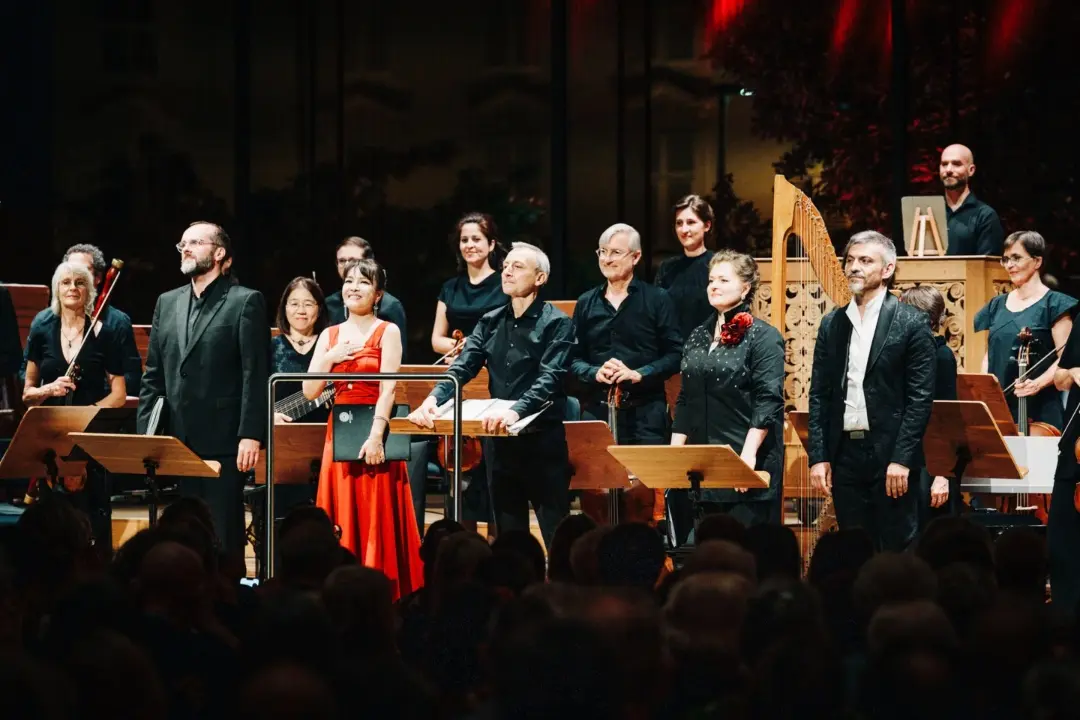
Any audience anxiety was swiftly put to rest. Cremonesi delivered a performance characterized by a rare blend of humility and resolute leadership. Following the final notes of the evening, the Italian maestro addressed the hall with deep sincerity, offering heartfelt wishes for Jacobs’s swift recovery, while simultaneously cementing his own clear, uncompromising artistic vision.
The Freiburger Barockorchester performed at a near-immaculate level. Aside from isolated moments of minor intonation drift in the woodwinds, the instrumental ensemble was nothing short of breathtaking. The concertmasters engaged in brilliant, conversational dueling violin work, while the basso continuo group—comprising harpsichord, organ, harp, lute, and cello—demonstrated extraordinary artistry. Their inventive passage-work, tasteful fills, and vivid harmonic commentary created an immersive, shimmering aura. For any student of historical performance practice present in the hall, the evening offered a masterclass in continuo realization and stylistic nuance.
Vocal Interpretations: Navigating Allegory and Emotion
Sunhae Im as Bellezza
Soprano Sunhae Im, a cherished favorite of both Jacobs and European audiences, returned to Innsbruck draped in a striking red gown to embody Bellezza (Beauty). Though a touch of initial tightness marked her opening aria, Im recalibrated with astonishing speed, soaring into peak form.
A consummate interpreter of the role, Im mapped Bellezza’s psychological awakening with directness, charm, and a captivating feminine allure. Her performance was defined by:
- Exquisite Recitatives: Delivered with supreme textual mastery, painting vivid atmospheric pictures.
- Nuanced Vocalism: In the aria "Io sperai trovar nel vero," her dialogue with the oboe yielded a poignant, winding portrayal of internal turmoil.
- Emotional Depth: In "Voglio cangiar desio," her sighing phrases and sudden dynamic shifts left an indelible mark, showcasing a mature artist revisiting familiar terrain with boundless freedom and inner radiance.
Kateryna Kasper as Piacere
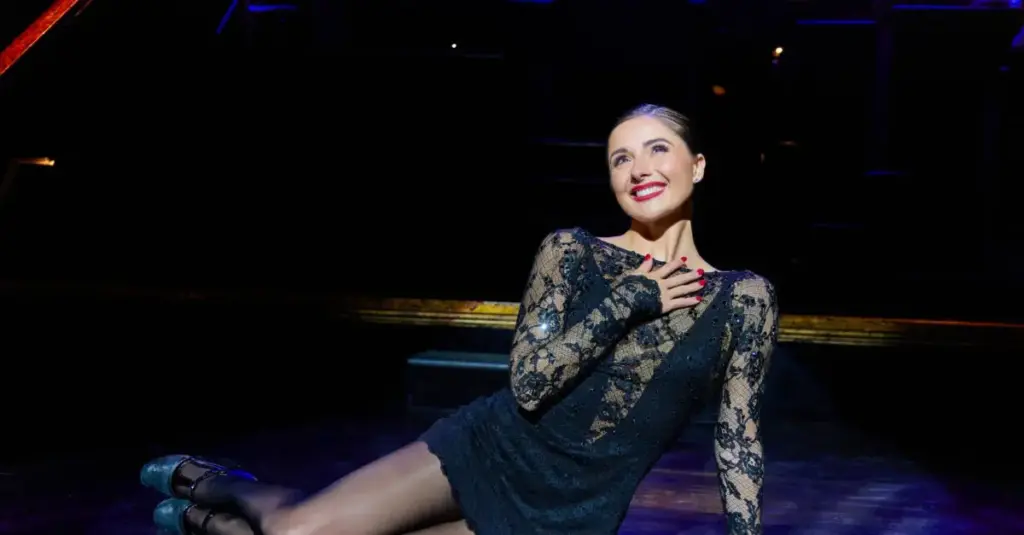
Making her Innsbruck Festival debut, soprano Kateryna Kasper approached the role of Piacere (Pleasure) with a daring, risk-taking intensity. Pushing dynamic contrasts far beyond conventional boundaries, Kasper engaged in radical embellishment during the da capo (A’) sections, employing chiselled micro-meter changes and sweeping rephrasing underpinned by a full-bodied, robust timbre.
Her dramatic journey was equally gripping:
- When realizing her hold on Bellezza was slipping during "Tu giurasti di mai non lasciarmi," Kasper poured out anguish over icy, heavily dotted string rhythms, reaching a choked intensity where speech seemed on the verge of breaking.
- Her exit aria, "Come nembo che fugge col vento," flanked by the virtuosic playing of the concertmasters, mirrored a tempestuous storm cloud driven off by the wind, culminating in a flawlessly controlled, long crescendo that swept the hall like a whirlwind.
The vocal alchemy between Im and Kasper—one free and spontaneous, the other solid and lush—anchored the oratorio’s central conflict with undeniable artistic synergy.
Supporting Moral Counselors: Walker and Mineccia
Tenor Thomas Walker returned as Tempo (Time), refining his portrayal by shedding earlier stiffness and delivering a deeply three-dimensional character. His restless drive to persuade Bellezza was vividly illustrated in the turbulent wave-motifs of "È ben folle quel nocchier."
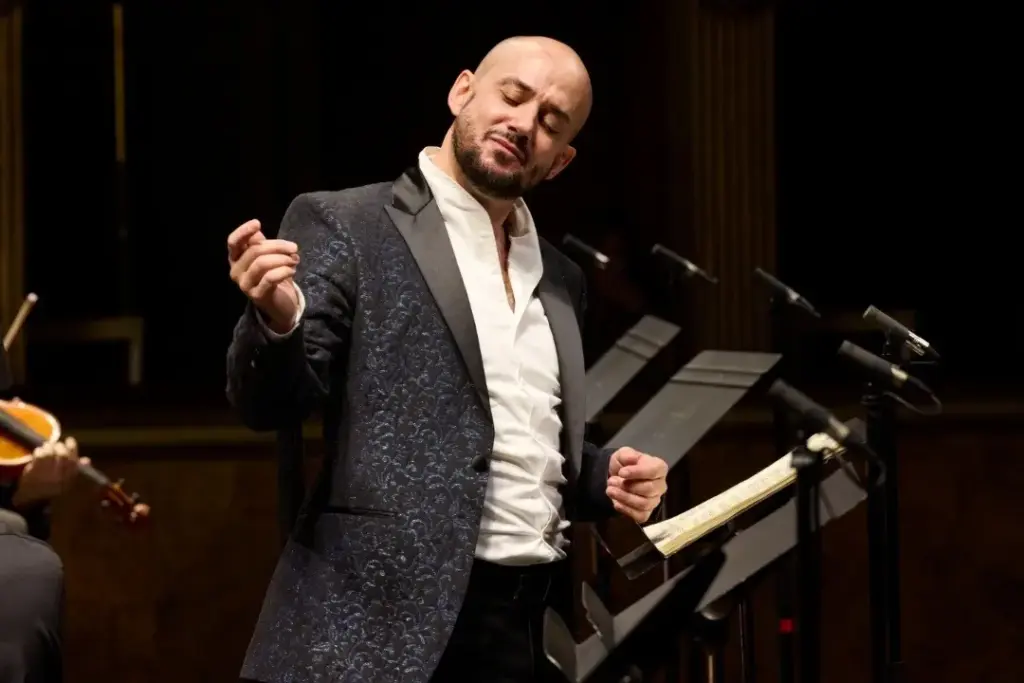
Countertenor Filippo Mineccia stepped in for the originally scheduled Christophe Dumaux, bringing an operatic gravity that complemented Walker’s static authority. Mineccia’s delivery in "Crede l’uom ch’egli riposi" induced a hypnotic, delicate stillness, while "Più non cura valle oscura" captured a vast spatial atmosphere, offering genuine psychological consolation.
The evening reached its inevitable, transcendent climax as the sky outside faded into dark blue. Cloaked in a white mantle, Sunhae Im brought the oratorio to a close with exquisite restraint, singing over the heartbeat-like pulse of the Freiburger Barockorchester.
Supporting Context & Metrics: Handel’s Roman Masterpiece
- Historical Significance: Il trionfo del Tempo e del Disinganno (HWV 46a) holds a unique place in music history as Handel’s very first oratorio, composed in Rome in 1707 during his formative Italian years. Originally premiered in the private palaces of Roman cardinals—specifically Benedetto Pamphili, who also authored the allegory-laden libretto—the work explores the vanity of earthly beauty through the interplay of four characters: Bellezza (Beauty), Piacere (Pleasure), Disinganno (Disillusionment), and Tempo (Time).
- Recycled Material: The score is renowned for containing some of Handel’s most sublime youthful inspirations, several of which the composer famously recycled into later operatic masterworks, most notably Rinaldo (HWV 7a), featuring the immortal aria "Lascia ch’io pianga."
- Festival Milestone: The performance served as a cornerstone of the Innsbruck Festival’s 50th-anniversary milestone. Over five decades, the festival has established itself as the global epicenter for historically informed performance practice, frequently collaborating with elite ensembles like the Freiburger Barockorchester.
Official Statements and Critical Reception
While no formal political press releases accompanied the sudden change in conducting personnel, the festival administration and participating artists reflected deeply on the evening’s emotional resonance:
"Attilio Cremonesi’s ability to step into the breach with such profound musical authority is a testament to the deep artistic bonds shared within the Jacobs circle. Tonight was not merely a replacement; it was a continuation of a living musical tradition."
— Innsbruck Festival Editorial Commentary
Following the final curtain, maestro Cremonesi addressed the capacity audience in the Großer Saal:
"We share this magnificent music tonight with heavy hearts regarding our dear friend and mentor, René Jacobs. His spirit, precision, and relentless pursuit of truth in early music guide every bow stroke and vocal line you have heard this evening. We dedicate this performance to his swift and complete recovery."
— Attilio Cremonesi, Conductor
Critics and musicologists in attendance universally praised the seamless transition of leadership. Rather than sounding under-rehearsed, the performance radiated an urgent, spontaneous vitality, proving that the artistic ecosystem cultivated by Jacobs possesses a self-sustaining momentum and structural integrity capable of weathering unexpected crises.
Future Outlook: The Enduring Legacy of the Jacobs School
The triumph of Il trionfo del Tempo e del Disinganno at the 50th Innsbruck Festival signals a crucial evolution in the landscape of early music performance. As foundational figures of the historical performance movement mature, the question of institutional and artistic legacy becomes increasingly pressing.
This performance provided a definitive answer: the greatest legacy a master like René Jacobs can bestow upon his collaborators is not merely a set of stylistic rules, but an unyielding artistic courage—the willingness to innovate, take interpretive risks, and find fresh, modern relevance in centuries-old scores.
As the Freiburger Barockorchester and artists like Sunhae Im and Kateryna Kasper continue their international touring schedules, the blueprint established in Innsbruck proves that early music is not a museum artifact, but a living, breathing theatrical art form. Future festival programming will undoubtedly build upon the high-water mark set by Cremonesi and his cast, ensuring that the rigorous intellectual and emotional standards of the Jacobs era will continue to challenge, inspire, and captivate audiences for decades to come.