
Executive Overview
In the landscape of instrumental and vocal music education, few skills are as universally lauded—and as frequently neglected in daily instruction—as sight reading. Educators have long understood that strong sight-reading capabilities form the bedrock of musical independence. Students who master this skill learn new repertoire faster, execute rehearsals with heightened efficiency, and approach adjudications, festivals, and auditions with self-assurance rather than anxiety. More importantly, independent music literacy is the primary vehicle that empowers students to continue making music long after they graduate, enabling lifelong participation in community concert bands, church choirs, local orchestras, and casual ensemble playing.
Yet, despite its recognized importance, teaching sight reading effectively has presented a persistent logistical challenge for music educators. Traditional pedagogical models rely heavily on static method books, which possess a finite number of practice exercises. Once a student plays through a specific exercise two or three times, cognitive recognition of the notation fades; instead of actively reading the musical text, the student relies on muscle memory and rote memorization. Consequently, finding fresh, appropriately leveled material requires educators to spend countless hours composing supplemental exercises, searching the internet, or transcribing notation by hand.
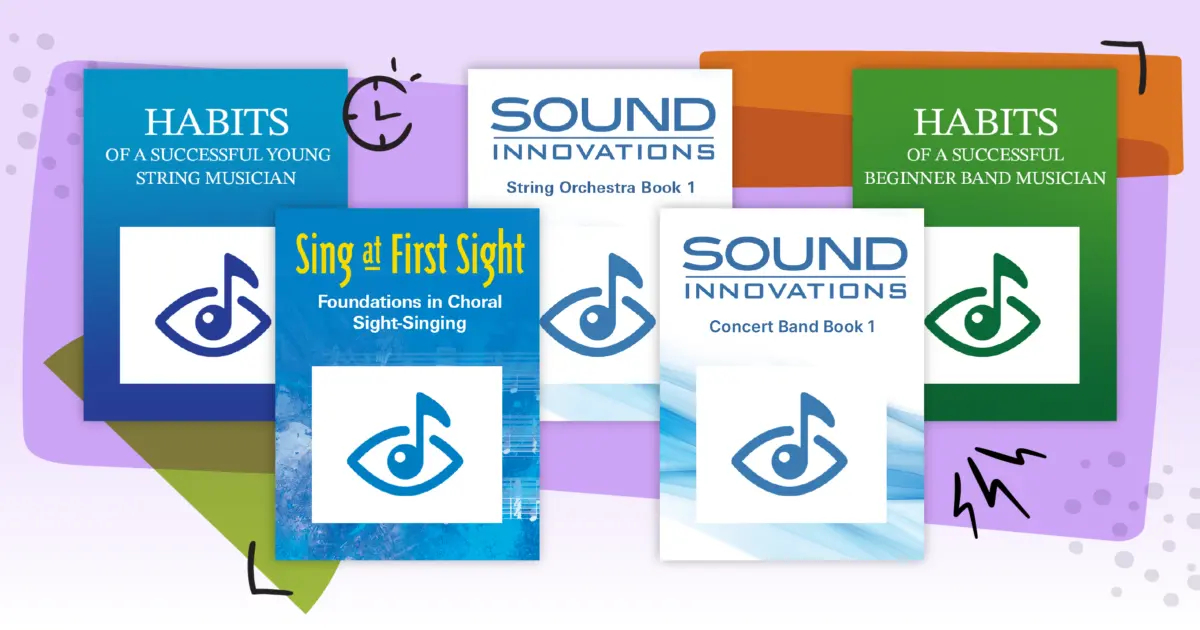
To solve this systemic bottleneck, MakeMusic has introduced a groundbreaking solution: Correlated Sight Reading Generators. Integrated directly into the MakeMusic Cloud platform via Sight Reading Studio, these pre-built templates align lesson-by-lesson with widely trusted educational method books. By dynamically generating an infinite stream of fresh, pedagogically accurate exercises that match a specific point in a curriculum, MakeMusic is eliminating prep fatigue for educators while ensuring that students receive the endless, varied practice required to truly master sight reading.
Detailed Chronology: The Evolution of Sight Reading Pedagogy and Technology
The Analog Era of Musical Literacy
For centuries, the instruction of sight reading remained tethered to the printed page. In the nineteenth and twentieth centuries, European and American conservatories relied on exhaustive anthologies of solfège and instrumental etudes—works by masters like Heinrich Panofka, Giuseppe Concone, and Béla Bartók (via his Mikrokosmos). While these volumes provided rigorous material, they suffered from a fundamental physical limitation: paper is static.
As music education expanded into public school systems in the mid-to-late twentieth century, method books became the primary curriculum vehicles. Series developed by legendary music educators introduced systematic progressions of rhythm, pitch, and articulation. However, the core constraint remained unchanged. A single method book might feature six to ten pages dedicated to introducing eighth notes or a new key signature, yielding perhaps fifteen to twenty short exercises. For an average student, these exercises are exhausted within a week of consistent practice.
The Digital Shift and Early Software Solutions
As personal computers entered classrooms in the 1990s and 2000s, music notation software and early computer-assisted instruction began to shift the paradigm. Educators could now use programs like Finale or Sibelius to generate custom exercises. However, this early digital shift introduced a new trade-off: while teachers no longer had to write music by hand with a pencil and manuscript paper, digital composition still required significant time investment. Building a properly leveled, aesthetically formatted eight-bar sight-reading exercise could take ten to fifteen minutes per iteration. For an educator managing multiple concert bands, jazz ensembles, and beginner classes across different grade levels, this was an unsustainable luxury.
The Advent of Algorithmic Generation
The launch of dedicated digital practice platforms in the 2010s began to automate the generation of musical content. By establishing algorithmic parameters—such as allowable ranges, rhythmic complexities, and key signatures—platforms could theoretically produce infinite variations of musical exercises. Yet, a disconnect remained: these generated exercises often existed in a vacuum. They were rarely synchronized with the specific, incremental curriculum being taught in the classroom. If a band director was teaching page 14 of their chosen method book—which introduces specific chromatic alterations and syncopated rhythms—generic sight-reading software might generate an exercise utilizing concepts several lessons ahead or behind, fragmenting the student’s cognitive load.
The MakeMusic Breakthrough: Correlated Generators
Recognizing this pedagogical disconnect, MakeMusic embarked on an initiative to bridge the gap between static method books and dynamic algorithmic generation. By analyzing the structural progression of the industry’s most trusted method books, curriculum designers mapped out granular, lesson-by-lesson skill maps.
The culmination of this development is the newly released Correlated Sight Reading Generator system. By embedding these curriculum-aligned templates directly into the Sight Reading Studio framework, MakeMusic has achieved a seamless integration between core curriculum and supplemental skill acquisition. Teachers can now select the exact method book they use in class, navigate to the specific page or lesson number they are currently teaching, and instantly deploy an unlimited, auto-graded stream of customized sight-reading prompts.
Supporting Context, Mechanics, and Practical Application
To fully appreciate the impact of the Correlated Sight Reading Generators, it is necessary to examine how they function mechanically both inside the physical classroom and within at-home practice environments.
The Mechanics of the Generation Engine
At its core, Sight Reading Studio leverages advanced algorithmic generation governed by strict pedagogical rules. When a teacher selects a correlated template corresponding to a specific lesson in a method book, the generation engine cross-references a multi-variable database containing:
- Pitch Parameters: Restricting notes to the exact range introduced up to that specific lesson.
- Rhythmic Vocabulary: Limiting temporal subdivisions (e.g., quarter notes, half notes, eighth-note pairs) to those officially unlocked in the curriculum.
- Articulative and Dynamic Constraints: Ensuring markings like slurs, staccatos, crescendos, and accents match the student’s current level of technical development.
Every time the user clicks "generate," the software crafts a brand-new musical sentence that honors these strict constraints. The result is an inexhaustible reservoir of material that feels intimately familiar to the student’s current learning trajectory while remaining entirely novel upon every reading.
Classroom Implementation Strategies
Music educators are utilizing the correlated generators in several innovative ways to maximize instructional time:
- Warm-Up Routines: Upon entering the band, orchestra, or choir room, students find a freshly generated sight-reading exercise projected on the smartboard. Because the exercise mirrors yesterday’s lesson, it serves as an immediate, low-stakes cognitive warm-up that reinforces recent concepts before diving into core concert repertoire.
- Differentiated Instruction: In mixed-ability classrooms, keeping all students engaged can be difficult. With the digital platform, teachers can instantly generate varied levels of the same conceptual skill, providing advanced students with greater complexity while supporting developing learners with foundational reinforcement.
- Formative Assessment: Educators use the integrated recording and assessment features to capture student sight-reading attempts in real time, providing immediate feedback without requiring the teacher to manually grade thirty separate paper tests.
At-Home Practice Dynamics
The benefits of the new system extend far beyond the rehearsal room walls. Historically, independent at-home practice has been plagued by the "practice trap"—students open their method books, play through their assigned exercises twice, memorize the notes, and spend the remaining twenty minutes of their practice session staring blankly at the page or playing unfocused passages.
By utilizing MakeMusic Cloud at home, students access the same correlated generators used in school. Parents and teachers note several transformative changes in home practice habits:
- Elimination of Rote Memorization: Because a fresh exercise is generated every single time the student logs in, they are forced to actively decode notation rather than relying on auditory memory.
- Immediate Self-Correction: Interactive playback and assessment tools allow students to hear a correct realization of the exercise, identifying pitch and rhythm errors independently before their next class.
- Gamification and Engagement: The infinite nature of the tool turns daily sight reading into an engaging, dynamic challenge rather than a tedious chore.
Official Insights and Pedagogical Perspective
The release of the correlated sight-reading templates addresses a longstanding debate among music educators regarding the balance between repertoire preparation and fundamental literacy training. Industry experts and curriculum developers emphasize that sight reading should never be treated as an isolated, high-stakes testing event, but rather as an organic extension of daily musical literacy.
According to curriculum specialists involved in the development of the MakeMusic integration, the psychological barrier to sight reading is largely rooted in fear of failure. When students encounter unfamiliar notation, the fight-or-flight response can trigger physical tension, locking up fingers and vocal cords.
"When sight reading is disconnected from the daily lesson, it feels like an ambush," explains one participating curriculum designer. "Students walk into a festival room and are handed a piece of music that looks like alien hieroglyphics because they have spent three months memorizing three concert pieces for a performance. By embedding correlated generation directly into the method book sequence, we normalize sight reading. It stops being a terrifying test and becomes simply what musicians do every day: read new notes."
Furthermore, educators have highlighted the profound impact of this tool on instructional equity. In under-resourced school districts where teachers may be stretched across multiple schools with overloaded schedules, the hours required to curate, format, and photocopy supplementary sight-reading materials are often simply unavailable. By automating this administrative burden, the technology democratizes access to high-tier pedagogical resources, ensuring that every student—regardless of district funding—receives the comprehensive literacy training necessary for long-term musical success.
Future Outlook: The Next Horizon in Digital Music Education
As educational technology continues to evolve at a rapid pace, the integration of algorithmic generation and structured pedagogical frameworks points toward an increasingly personalized future for music instruction.
The Rise of Adaptive Machine Learning
The next evolutionary step for platforms like MakeMusic Cloud lies in the integration of adaptive machine learning algorithms. While current correlated generators allow teachers to select templates based on lesson milestones, future iterations are poised to track individual student errors in real time. If a student consistently struggles with dotted-eighth-sixteenth note figures in a specific key signature, the generation engine could autonomously adjust future exercises to provide targeted remediation for that specific micro-skill, creating a fully personalized tutoring loop.
Redefining Festival and Adjudication Standards
As digital sight-reading tools become ubiquitous in classrooms, state music education associations and festival adjudicators are beginning to re-evaluate how sight-reading proficiency is evaluated. The predictability of traditional adjudicated sight-reading rooms is increasingly giving way to modernized standards that reward adaptive decoding skills and instantaneous musicality over rote pattern recognition. Platforms that offer limitless, standards-aligned practice environments are uniquely positioned to prepare students for these evolving assessment frameworks.
Sustaining Lifelong Musical Communities
Ultimately, the broader cultural impact of these technological advancements extends far beyond the K-12 classroom. By lowering the barrier to entry for fluent sight reading, tools like MakeMusic’s Correlated Sight Reading Generators are cultivating a more confident, capable generation of amateur and professional musicians.
When students graduate with absolute confidence in their ability to open a fake book, join a community orchestra, or sight-read vocal parts in a community choir without hesitation, the true mission of music education is fulfilled. Music ceases to be something performed only under the watchful eye of a conductor and becomes a lifelong, accessible language of human expression.
Getting Started
For educators looking to reclaim their preparation time and transform sight reading from a classroom chore into an engaging daily habit, the implementation process is immediate and streamlined:
- Access the Platform: Log in to your existing MakeMusic Cloud account (or establish a new educator profile).
- Navigate to the Resource Library: Search for the newly released correlated sight reading templates within the Sight Reading Studio module.
- Align with Your Curriculum: Locate the specific method book series currently utilized in your band, orchestra, or vocal ensemble.
- Deploy in Class or at Home: Jump directly to your current lesson number, click generate, and immediately provide your students with fresh, perfectly leveled material designed to foster lifelong musical independence.