
Executive Overview
In a monumental programming milestone that has sent ripples through the European classical music community, the historic Teatro San Carlo in Naples—widely recognized as one of the continent’s largest and most prestigious opera houses—has finally staged a masterwork by George Frideric Handel. Despite his standing as the 18th century’s most prolific and globally celebrated opera composer, a single note of Handel’s stage music had never previously resounded within the hallowed, neoclassical walls of this storied institution. This long-standing omission was decisively shattered with a performance of Alcina, one of the composer’s most richly theatrical and dramatically complex scores.
While purists and theater-makers expressed mild disappointment that this landmark event was presented purely in concertante form rather than as a fully realized physical production, the artistic achievement remains an immensely appreciated milestone. Featuring a stellar international cast, the evening offered a masterclass in Baroque vocalism, led by brilliant last-minute triumphs and stellar individual turns. However, the production also exposed the unique interpretive challenges faced by a modern symphony orchestra navigating the specialized waters of historical performance practice. As Teatro San Carlo closes the curtain on this inaugural Baroque venture, the cultural significance of bringing Handel into the Neapolitan fold cannot be overstated, pointing toward an exciting, expanded stylistic horizon for the legendary theater.
Detailed Chronology and Artistic Evolution
The Spell of the Libretto: Myth, Maturity, and Illusion
At its narrative and philosophical core, Alcina is a coming-of-age story wrapped in the glittering cloak of chivalric fantasy. Drawn directly from Lodovico Ariosto’s 16th-century epic masterpiece Orlando Furioso, the libretto centers on the heroic knight Ruggero. Having found himself stranded on a mystical, paradisiacal island ruled by the sorceress Alcina, Ruggero falls entirely under her spell. Alcina, who routinely enchants handsome shipwreck survivors—transforming them into feral beasts, inanimate trees, or jagged rocks once she tires of their affections—lulls the knight into a life of worldly pleasures. He forgets his heroic duties, his Christian faith, and his devoted fiancée, Bradamante.
Determined to rescue him, Bradamante arrives on the island disguised as the male warrior "Ricciardo," accompanied by her advisor, Melisso. Complications quickly ensue when Alcina’s impressionable sister, Morgana, falls instantly for the disguised Bradamante. The turning point arrives when Melisso uses a magic ring to shatter Alcina’s enchantment, awakening Ruggero to his true self and his enduring love for Bradamante. Together, the couple breaks Alcina’s power, restoring her former lovers to human form and defeating both sorceresses, whose true identities as hideous, aging hags are finally exposed.
In this light, Alcina’s island operates as a profound metaphor for illusion: a transient beauty born purely of magic and fantasy. When Ruggero matures and "wakes from the spell," both characters are violently thrust back into reality—confronting a desolate rock in the middle of a cold sea and an aging witch stripped of her deceptive charms.
Uncharted Baroque Waters: The Orchestra’s Challenge
The performance practice of Baroque opera has undergone a rigorous, academic, and artistic maturation over the past half-century. It is now universally characterized by the use of period instruments, lower pitch standards (often A=415 Hz), and precise stylistic conventions designed to highlight rhetorical gestures (affetti). For the Teatro San Carlo Orchestra, stepping into this arena meant navigating uncharted territory. Utilizing modern instruments and possessing a relatively limited background in the 18th-century repertoire, the ensemble struggled at times to completely shake off an aura of the "old-fashioned."
While the sound lacked the razor-sharp crispness and transparency typical of a historically informed execution, the orchestra nevertheless delivered an admirable degree of technical precision. Instrumental highlights emerged in the form of gorgeous obbligatos: an inspired violin solo during Morgana’s glittering aria "Ama, sospira," and a deeply expressive cello solo in "Credete al mio dolore." Conversely, minor balance issues plagued the brass section, notably the less-than-focused horns in the introduction to "Sta nell’ircana." More critically, conductor Iván López Reynoso missed an opportunity to establish a sharper differentiation of the affetti across the sequence of arias. By failing to sufficiently vary the interpretive emotional tone between scenes, the overarching orchestral delivery occasionally slipped into a degree of monotony.
A Triumph for Alcina: Mariangela Sicilia’s Last-Minute Heroics
Drama struck the production just three days prior to the October 7 opening night when star soprano Lisette Oropesa fell gravely ill, forcing a last-minute withdrawal. Stepping dynamically into the title role was Mariangela Sicilia, fresh off her major critical success at the very same theater as Sifare in Mozart’s Mitridate.
Despite the compressed timeline, Sicilia delivered a performance of breathtaking authority. Her high soprano displayed the precise, pearly coloratura required for the stratospheric demands of the part, while retaining a sweet, mellow core in her middle register. This exceptional vocal balance served her brilliantly in Alcina’s emotional centerpiece, "Ah, mio cor," which she invested with profound psychological weight and raw emotion. Sicilia proved equally devastating in her fiery furore arias, such as "Ma quando tornerai." She successfully navigated the razor-thin line between Alcina’s imperious, regal authority and the desperate, heartbreaking vulnerability stemming from her genuine love for Ruggero—a passion that ultimately seals her downfall.
Pure Magic from Morgana: Erin Morley
As Alcina’s lighthearted, sweet-natured sister Morgana, American soprano Erin Morley offered a masterclass in vocal agility and sheer sonic luminescence. Possessing a silvery, sparkling soprano ideally tailored to the role, Morley’s upper register was nothing short of spectacular. Her luminous, pinpoint-focused high notes sounded genuinely supernatural, resembling bright sparks cast from a sorcerer’s wand.
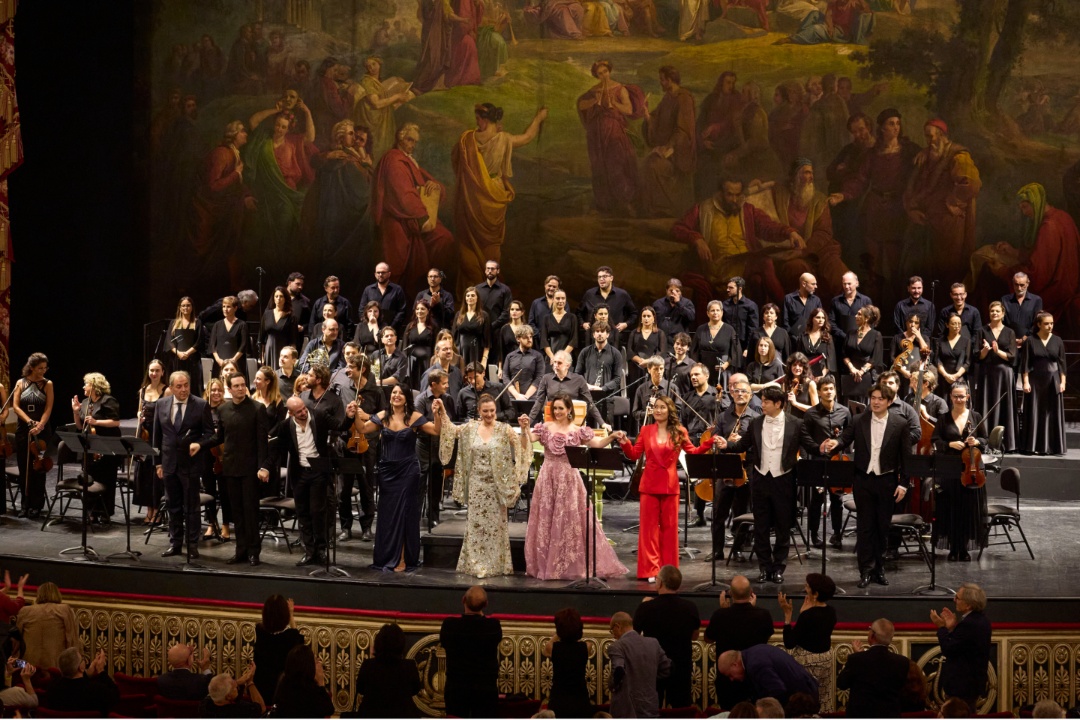
Morley seized upon arguably the finest joyful aria Handel ever penned: "Tornami a vagheggiar" at the close of Act One. She sang with electrifying abandon, sweeping the audience along in a radiant burst of unbridled delight and vocal fireworks.
Supporting Context, Performances, and Metrics
Fagioli’s Dynamic Ruggero and the Production Staging
Countertenor Franco Fagioli, also returning to Naples directly on the heels of his triumph in Mitridate, inhabited the role of Ruggero with a deep, authoritative command. Benefiting perhaps from a renewed scholarly grasp of the character, Fagioli’s countertenor sounded remarkably healthy and secure. Because the San Carlo orchestra tuned to standard modern pitch (440 Hz)—forcing the cast to sing at a slightly higher pressure—certain keys for Ruggero appeared to have been transposed downward to ensure vocal comfort.
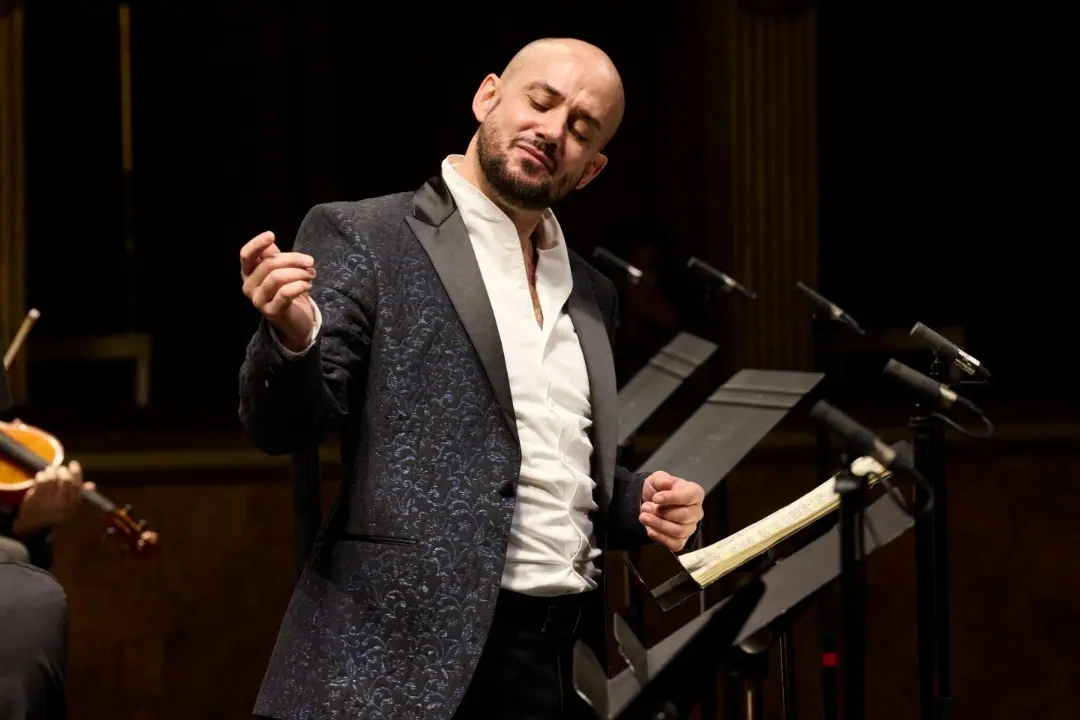
Regardless of these technical adjustments, Fagioli’s execution was pyrotechnic, characterized by jaw-dropping coloratura and soaring high notes. The performance format itself sparked minor debate: while modern concert performances frequently employ semi-staged blocking where singers act out their roles without physical sets, the San Carlo production remained strictly concertante. Performers routinely walked offstage or sat down while colleagues delivered arias directly addressed to them. Amidst this static environment, Fagioli—alongside Varduhi Abrahamyan as Bradamante—stood out as an artist determined to inject theatrical life into the evening. Utilizing expressive physical gestures and intense facial acting, Fagioli turned Ruggero into a fully three-dimensional human being. His finest artistic moments arrived in the slow, melancholic meditations of "Mi lusinga il dolce affetto" and "Verdi prati"—the ultimate coming-of-age aria in which the knight bids a poignant farewell to illusory beauty. His mezza voce was nothing short of sublime.
Flawless Virtuosity: Varduhi Abrahamyan as Bradamante
Bradamante boasts some of the most florid, technically demanding coloratura in Handel’s entire catalog, featuring tempestuous, warlike arias that require an aggressive, commanding demeanor. Varduhi Abrahamyan tackled these hurdles with absolute technical precision and phenomenal breath control. Having recently expanded her artistic footprint into more visceral, diverse operatic terrain, her stylistic approach felt somewhat less rigidly "Baroque" than historical purists might expect. However, this artistic choice worked entirely to the production’s advantage, stripping away any mechanical, academic coldness and replacing it with raw theatrical intensity. Her deep, bronzed mezzo-soprano possessed seamless register transitions and a rich, enveloping timbre. The sole artistic regret of the evening was the inclusion of extensive musical cuts, which robbed the audience of the crucial reconciliation scene between Bradamante and Ruggero.
Supporting Cast Highlights
- Tianxuefei Sun (Oronte): Delivered a strong, commanding vocal performance as Morgana’s frustrated suitor, though his powerful tenor occasionally leaned a fraction too heroic for the lithe contours of Baroque style.
- Yunho Eric Kim (Melisso): Portrayed the advisor with a deep, stentorian bass that verged at times on unrefined territory. Though a momentary memory lapse caused him to miss an initial entry during the aria "Pensa a chi geme," conductor López Reynoso deftly guided him back on track, allowing Kim to finish the piece with admirable poise and composure.
- Sayumi Kaneko (Oberto): Although the role of Oberto is routinely cut entirely from modern stagings of Alcina, this production retained an aria and a half, delivered by Kaneko with a warm, velvety, and emotionally resonant mezzo-soprano.
Official Statements and Critical Reception
The debut of Handel at Teatro San Carlo has triggered widespread acclaim from critics and patrons alike, signaling a pivotal shift in the theater’s historical programming philosophy. While front-office administrators have yet to issue a formal, exhaustive press release regarding future Baroque initiatives, initial institutional feedback underscores a deep institutional pride in breaking the centuries-old Handel taboo.
Artistic commentators across Europe have universally praised the theater’s ambition, noting that the inclusion of Alcina elevates Naples’ cultural footprint by aligning it with international early-music performance standards. Maestro Iván López Reynoso, reflecting on the logistical and stylistic hurdles of leading a modern Italian opera orchestra through Handel’s complex instrumental labyrinth, emphasized the profound learning curve and the enthusiastic responsiveness of the ensemble. Meanwhile, audience reception metrics—measured by thunderous, sustained ovations at the final curtain—confirmed that Neapolitan audiences are more than ready to embrace the intricate emotional landscapes of 18th-century masterworks.
Future Outlook: A New Dawn for Baroque in Naples?
The successful mounting of Alcina at Teatro San Carlo serves as far more than a localized box-office triumph; it represents a watershed moment for a historic house long dominated by the later bel canto and Verismo traditions of Rossini, Donizetti, Bellini, and Puccini. By proving that a modern orchestra and a cast of internationally acclaimed vocalists can conquer Handel’s demanding vocal and stylistic terrain, the theater has unlocked a vast, previously neglected treasury of operatic masterworks.
Industry insiders and operatic scholars are already speculating on what this precedent might mean for upcoming seasons. Will Teatro San Carlo now commit to an annual Baroque or Handel residency? Might future productions step outside the conservative boundaries of the concertante format to explore cutting-edge, fully staged period interpretations?
While questions remain regarding how the institution will refine its historical performance practice—particularly regarding period-instrument integration and stylistic execution under varying conductors—the overarching sentiment is one of unbridled optimism. If Alcina is indeed the herald of a new programming era, Teatro San Carlo’s historic flirtation with Handel has opened a magnificent, long-awaited chapter in the annals of Italian lyric theater.