
Executive Overview
The modern music industry operates under a paradox of abundance. Never before has it been easier for an independent artist to distribute a track to digital service providers (DSPs) across the globe, yet never has it been harder to stand out in a hyper-saturated ecosystem dominated by passive streaming metrics and algorithmic gatekeeping. For years, independent musicians, grassroots promoters, and boutique record labels have watched traditional chart systems—such as those administered by the Official Charts Company in the UK—become largely impervious to real-world grassroots momentum. Because these legacy frameworks are heavily weighted toward streaming volume, major-label marketing budgets and playlist placements routinely dictate who sits at the top.
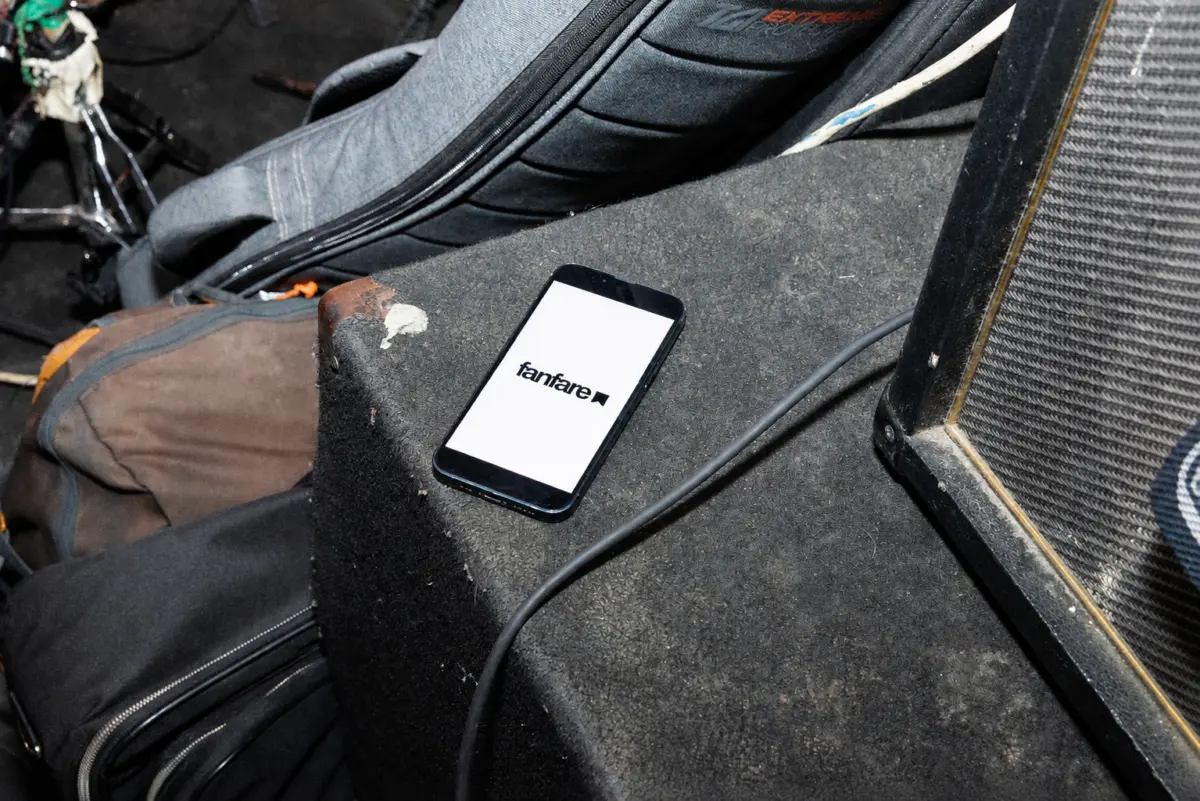
Enter Fanfare, an ambitious UK-based startup poised to disrupt the status quo. Officially launching on September 1, Fanfare arrives not merely as another e-commerce tool, but as an integrated ecosystem designed to empower independent artists and labels to seamlessly sell physical music formats and merchandise both online and directly at live concert venues. Crucially, the platform is anchoring its value proposition to a disruptive marketing and data innovation: two dedicated monthly charts tracking independent sales—one specifically for physical music and another for merchandise.
By shifting the spotlight away from the opaque and heavily gamed metrics of digital streams, Fanfare aims to provide an unvarnished, transparent reflection of true fan engagement and commercial viability. While exceptions exist—such as savvy indie acts like The Reytons, The Lottery Winners, and Overpass launching coordinated physical-sales campaigns to crack the official top-tier albums chart—the broader independent community remains largely sidelined by systemic barriers. Fanfare’s launch represents a timely, necessary counter-narrative: a calculated bid to measure success by the tangible, physical connections forged between artists and their audiences.
Detailed Chronology: The Genesis and Launch of Fanfare
The journey toward Fanfare’s September 1 launch represents a response to years of mounting frustration within the grassroots and independent music sectors. To understand the genesis of the platform, one must examine the shifting economics of independent musicianship over the past decade.
Phase One: Identifying the Independent Bottleneck
In the early days of the digital streaming boom, the promise was democratization. Any artist with a laptop and a distributor could place their music side-by-side with global superstars. However, as streaming market saturation peaked, the reality of royalty payouts and algorithmic visibility set in. Independent artists quickly realized that while streaming generated broad reach, it rarely converted into sustainable financial independence.
Concurrently, physical media—particularly vinyl records, cassettes, and specialized compact discs—experienced a miraculous renaissance. Music consumers, fatigued by ephemeral digital libraries and micro-targeted playlists, began craving tactile ownership. Merchandise sales at live shows also transformed from a minor supplemental income stream into the primary financial lifeline for touring artists. Yet, despite this massive underground economy, no centralized mechanism existed to quantify, aggregate, and celebrate these physical milestones on a national scale.
Phase Two: Building the Dual-Pronged Platform
Recognizing this market gap, co-founder Adam Washington and the Fanfare team spent months developing a comprehensive software and logistics infrastructure tailored specifically to the needs of independent acts and boutique record labels. The platform was engineered to solve a logistical nightmare: unifying e-commerce sales and on-the-ground live-event merchandising into a single, cohesive dashboard.
Unlike generic e-commerce platforms that charge steep transaction fees or fail to integrate with real-time tour inventories, Fanfare was built from the ground up to address the unique workflow of working musicians. Whether an artist is selling a limited-edition colored vinyl via their website or pushing t-shirts and hoodies from the merchandise booth at a sweaty 300-capacity club in Manchester, Fanfare captures the transaction.
Phase Three: The September 1 Launch Strategy
Rather than quietly rolling out software, Fanfare’s leadership understood that capturing industry attention required a bold statement. By coupling their launch with the introduction of the UK’s first dedicated independent physical music and merch charts, Fanfare instantly positioned itself as a cultural movement rather than a mere tech utility.
The strategy behind the launch is twofold:
- Empowerment Through Infrastructure: Providing DIY artists with institutional-grade sales tools that were previously the exclusive domain of major-label artists backed by multinational distribution networks.
- Cultural Validation: Offering a legitimate alternative chart system that honors tangible support—fans spending hard-earned money on vinyl, CDs, and apparel—over automated, low-value background streams.
Supporting Context & Metrics: The Broken Mirror of Legacy Charts
To fully appreciate Fanfare’s market intervention, one must critically analyze the current state of mainstream music charts and the economic realities facing contemporary independent artists.
The Streaming Monopoly and the "Stream-Equivalent" Problem
For decades, music charts served as the definitive cultural scorecard. A number-one album or single was an objective indicator of mass commercial success. However, the integration of streaming into chart methodologies fundamentally altered this dynamic. Under modern formulas, thousands of individual audio streams are aggregated to equal a single "album sale" or "track sale."
While this adaptation kept charts relevant in the streaming era, it inadvertently created a system skewed toward major-label muscle. Pop, hip-hop, and mainstream dance acts backed by massive capital can generate millions of ambient streams daily through algorithmic playlisting, corporate partnerships, and automated background listening.
For an independent folk, punk, or electronic artist operating outside this machinery, competing on streaming volume alone is a fool’s errand. Even when independent acts manage to build fiercely loyal fanbases, their streaming numbers are often dwarfed by the major-label industrial complex, effectively locking them out of visibility on official charts.
The Rise of the Physical Resistance
Despite the dominance of streaming, physical formats have mounted a staggering comeback. Vinyl sales, in particular, have grown for nearly two decades consecutively, driven by collectors, audiophiles, and younger generations seeking tangible connections to their favorite artists. Furthermore, for touring musicians, merchandise sales often account for up to 50% or more of total tour revenue. In an era where live performance is the primary engine of artist survival, merch is no longer just a promotional tool—it is economic oxygen.

Some independent artists have successfully hacked the legacy system by exploiting loopholes in physical sales weightings. In recent years, groups like The Reytons have famously achieved number-one albums through hyper-targeted direct-to-fan campaigns, bypassing traditional radio support entirely. Similarly, indie-pop outfit The Lottery Winners secured a chart-topping album through brilliant grassroots mobilization and direct-to-consumer bundles.
However, these success stories are the exception, not the rule. They require monumental logistical efforts, upfront financial capital, and aggressive marketing campaigns that exhaust small independent teams. For every band that beats the system, dozens of equally talented independent acts are drowned out by the noise.
Quantifying the Independent Economy
Market data underscores the sheer scale of the independent music sector. While major labels control the lion’s share of global streaming market value, the independent sector (comprising self-releasing artists and independent distribution networks like Merlin, Believe, and various aggregator services) accounts for a massive percentage of overall musical output and niche cultural influence.
By capturing this fragmented data through Fanfare’s proprietary tracking system, the startup is creating an invaluable repository of market intelligence. Brands, booking agents, and festival bookers will soon be able to look at Fanfare’s charts to identify bubbling underground trends long before they register on mainstream radar screens.
Official Statements and Industry Perspectives
The announcement of Fanfare’s launch has already sent ripples through the UK music community, sparking a vital debate about how we define and measure musical success.
Addressing the philosophical core of the platform, co-founder Adam Washington pulled no punches regarding the inadequacy of legacy charts. In a definitive statement accompanying the launch, Washington remarked:
"Fanfare’s charts exist because the current charts are not a signal new and independent artists can use, and it never will be while streaming and other barriers are clogging it up."
Washington’s critique strikes at the heart of industry disillusionment. For new and independent acts, official chart positions are often useless as promotional tools. If an artist cannot leverage a chart placement to secure bookings, press, or investor interest because the chart is viewed as an opaque reflection of algorithmic playlisting, the metric loses its utility. By establishing a transparent, sales-driven alternative, Fanfare is offering artists a credible badge of honor that they can proudly present to industry gatekeepers.
Independent labels and managers have similarly voiced cautious optimism. Unlike streaming data—which is often buried behind non-disclosure agreements, delayed royalty statements, and complex pro-rata payout formulas—physical sales and merchandise data are direct, immediate, and unambiguous. When a fan purchases a vinyl record or a concert t-shirt, the economic transaction is clear: direct financial support for the creator.
Future Outlook: Can Fanfare Redefine Grassroots Success?
As Fanfare officially opens its digital doors on September 1, the startup faces both immense opportunity and significant operational challenges.
Overcoming Adoption Hurdles
The primary challenge for any new charting body is establishing industry-wide credibility. For Fanfare’s charts to become the gold standard of independent music, they must achieve critical mass. This requires convincing thousands of independent artists, grassroots record stores, and boutique labels to route their sales through the Fanfare platform.
To achieve this, Fanfare must prove that its e-commerce infrastructure is superior, cheaper, or more convenient than established alternatives like Bandcamp, Shopify, or Big Cartel. Fortunately, by bundling e-commerce tools with the unique incentive of chart eligibility and visibility, Fanfare offers a compelling value proposition that standard web-hosting platforms cannot match.
Expanding Beyond the UK
While Fanfare is launching firmly within the UK market—a notoriously vibrant incubator for independent music—the structural issues plaguing chart systems are global. If the startup’s dual-chart model proves successful in the UK, international expansion into Europe, North America, and beyond represents a logical and lucrative long-term trajectory. Independent music ecosystems in countries like the United States, Germany, and Australia face the exact same marginalization by streaming-heavy legacy charts.
The Cultural Impact on Music Discovery
Ultimately, Fanfare’s long-term success will be measured by its cultural impact. If the platform succeeds in making its monthly physical and merchandise charts culturally relevant, it could fundamentally shift how music fans discover new talent.
Imagine a future where music enthusiasts look to Fanfare’s monthly indie charts not as an alternative novelty, but as the premier destination for discovering which underground bands are actually moving units, selling out shows, and building sustainable careers. By restoring transparency and celebrating tangible support, Fanfare may well become the catalyst for a true independent renaissance in the modern music industry.