
Executive Overview
In an era defined by an escalating youth mental health crisis, educators, artists, and advocates are desperately searching for innovative frameworks to reach young people before they reach a point of crisis. Traditional counseling models within schools—often stretched thin by high student-to-counselor ratios—frequently react to trauma rather than proactively building emotional resilience. Enter The Kind Mind, a groundbreaking organization founded by Stacie Karp Weisbrot that marries theatrical practices with comprehensive mental health curricula.
The organization’s official launch event, held on August 14 at the Bay Street Theater in Sag Harbor, New York, offered a masterclass in how storytelling can dismantle stigma. Centered around a special production of the Tony Award-winning musical Dear Evan Hansen, the launch brought together prominent mental health advocates, Broadway performers, and arts educators. The evening’s centerpiece—an unscripted, deeply vulnerable panel discussion featuring digital creator Remi Bader and Broadway actor Maya Days—exemplified the core mission of The Kind Mind: creating safe, empathetic spaces where individuals can speak honestly about difficult experiences and find profound connection in the process.
This feature explores the genesis of The Kind Mind, the psychological mechanisms through which the arts foster empathy, the structural gaps in current school-based mental health systems, and the long-term vision of an organization poised to redefine how students navigate emotional well-being.
Detailed Chronology: An Evening of Vulnerability at Bay Street Theater
The genesis of The Kind Mind was marked not by a sterile corporate gala, but by raw human connection. On August 14, industry professionals, community leaders, and theatre enthusiasts gathered at the historic Bay Street Theater in Sag Harbor, New York, for a performance of Dear Evan Hansen—a musical universally recognized for its unflinching exploration of isolation, teenage anxiety, and the desperate human need to belong.
The Pasek Perspective
The evening’s philosophical tone was set before the curtain even rose. Weeks prior to the event, Stacie Karp Weisbrot connected with Benj Pasek, the co-creator of Dear Evan Hansen, through a mutual industry introduction. Weisbrot asked Pasek if he would lend his voice to the evening by filming an introductory video to frame the panel discussion.
Pasek readily agreed. In his video message, he discussed the genesis of the show, the universality of its themes, and his hopes for what audiences and participants might take away from the evening. Watching the audience, panelists, and presenters engage with Pasek’s words from the stage, Weisbrot noted the seamless bridge it built between the fiction onstage and the real-world dialogues unfolding in the auditorium.
The Bader-Days Exchange
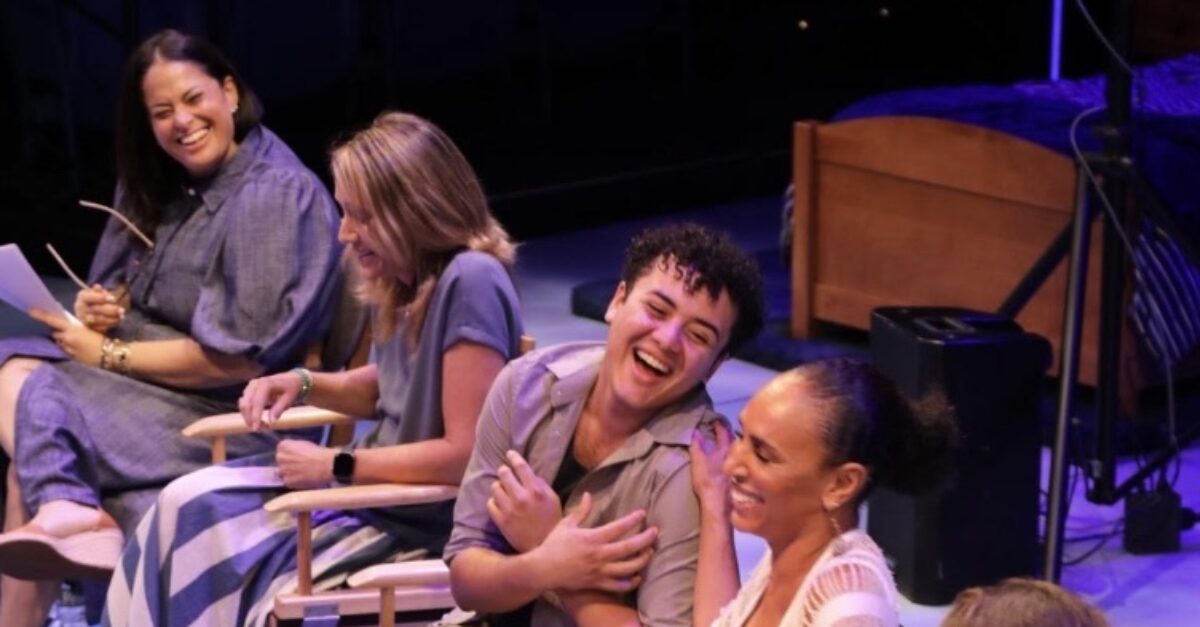
Following the performance, the lights came up for a panel discussion centered on mental health, identity, and resilience. Among the panelists was Remi Bader, a prominent content creator and advocate for size inclusivity in fashion boasting a following of over 800,000 users. Bader spoke with disarming candor about her lifelong struggles with eating disorders and her heavily scrutinized decision to undergo weight-loss surgery.
In a moment of poignant transparency, Bader revealed that she had lost approximately 100,000 social media followers in the wake of her surgery announcement nearly two years prior—a stark illustration of the toxic pressures of public digital scrutiny.
As Bader detailed the emotional toll of this backlash, fellow panelist Maya Days—who portrays Heidi Hansen (Evan’s mother) in the production—reached across the panel table and gently touched Bader’s arm. As Bader continued speaking, Days openly applauded her vulnerability, authenticity, and courage.
Stacie Karp Weisbrot, observing from the sidelines, described the unscripted moment as a powerful anchor for the organization’s ethos. It was a visceral demonstration of solidarity between two women who had never met prior to that evening, and its ripple effect was palpable throughout the theatre. For Weisbrot, that single gesture encapsulated the entire mission of The Kind Mind: lowering defenses, sharing burdens, and realizing that healing happens in community.
Supporting Context & Metrics: The Crisis in Youth Mental Health and the Power of Arts Education
The Structural Deficit in Schools
To understand the necessity of The Kind Mind, one must examine the current landscape of youth mental health. Across the United States, adolescents and young adults are experiencing unprecedented rates of anxiety, depression, and social isolation. While numerous community-based organizations and mental health charities offer valuable resources, schools remain the primary ecosystem where young people spend their formative hours. Yet, systemic support within these institutions often remains inadequate.
Weisbrot is quick to praise the tireless work of existing school counselors and psychologists, but she emphasizes a fundamental structural flaw: schools rely far too heavily on a reactive model.
"Simply put, I don’t think there is enough emphasis in schools on addressing mental health," Weisbrot explains. "Conversations about mental health and well-being should be thoughtfully integrated into the everyday school environment and curriculum. Schools should provide students with a proactive system, one that addresses mental health before a student reaches a point of crisis."
Relying on one or two overworked counselors to triage the emotional needs of hundreds—sometimes thousands—of students is a failing strategy. The Kind Mind proposes a systemic integration, blending experiential learning with emotional literacy so that mental health maintenance becomes as routine as math or history.
The Arts as an Empathy Engine
Why theatre? For Weisbrot, the performing arts are not merely extracurricular diversions; they are essential cognitive tools.
"I am a champion of arts education because I believe that by immersing ourselves in other people’s stories and experiences, we can form meaningful connections to one another," she notes.
Psychological research consistently supports this assertion. Engaging with narrative art—whether through a script, poem, musical score, or dramatic scene—activates the brain’s default mode network, stimulating regions associated with theory of mind (the ability to attribute mental states to oneself and others). When a student watches a character grapple with isolation, grief, or inadequacy on stage, they are granted a safe psychological distance through which to process their own latent emotions.
Through The Kind Mind’s programming, students are encouraged to read, analyze, and role-play theatrical texts not just for artistic merit, but as entry points for difficult conversations. Topics that might otherwise feel taboo—such as body image, suicidal ideation, systemic pressure, and grief—become approachable when filtered through the lens of a character’s journey. In this structured environment, students learn to share, listen, debate, and support one another, cultivating self-awareness and empathy simultaneously.
Official Statements and Visionary Philosophy
The Kind Mind operates under a philosophy that measures success not by vanity metrics or massive institutional scaling, but by depth of impact.
When asked about the benchmarks for the organization’s inaugural year, Weisbrot’s response is refreshingly grounded:

"The Kind Mind will be successful if it reaches even one student. If it helps that student better navigate their own mental health challenges or, alternatively, gives them the knowledge and tools to support a friend or family member, that’s everything."
This philosophy underpins every facet of the organization’s design. The ultimate objective is for participants to leave programs feeling more resilient, deeply connected, and genuinely empowered to communicate openly with peers, educators, and family members.
Weisbrot emphasizes that the value of an arts-based mental health intervention does not evaporate when the curtain falls or the classroom bell rings. The stories linger; the conversations persist. A moment of recognition experienced during a workshop can serve as a catalyst for a student to seek help, check in on a struggling classmate, or advocate for their own emotional boundaries.
Future Outlook: Scaling Compassion and Cultivating Student Ownership
As The Kind Mind looks toward the horizon following its successful summer launch, the organization has laid out an ambitious yet intentional roadmap for growth.
Expanding Reach Across New York and Beyond
In its first year of operation, Weisbrot and her team aim to introduce The Kind Mind’s programming to schools and community centers throughout New York City. By partnering with local educational institutions and regional theatres, the organization hopes to establish a replicable model that can eventually scale to additional cities and states nationwide.
Empowering Student-Led Initiatives
True to its educational roots, growth for The Kind Mind does not mean top-down corporate expansion. Instead, Weisbrot envisions a decentralized movement where students and teachers take ownership of the work.
"I would love to see students inspired to create their own ‘Kind Mind’ missions," Weisbrot shares. Whether through student-led mental health awareness campaigns, peer support circles, or classroom-based creative projects, the goal is to ignite a culture of everyday kindness that sustains itself long after external facilitators have left the room.
A Welcome Mat for Every Young Person
When a young person encounters The Kind Mind for the first time, Weisbrot’s primary aspiration is instantaneous: she wants them to feel unconditionally welcomed. She envisions spaces where students feel safe shedding their armor, sharing their authentic experiences with peers without fear of judgment, and walking away with a renewed sense of inner strength to face life’s inevitable adversities.
The work ahead is undeniably complex. Mental health education requires sustained attention, financial investment, interdisciplinary collaboration, and deep empathetic reserves. Yet, by leaning into the timeless power of shared stories—exemplified by a creator lending his voice, a public figure speaking her truth, a Broadway actor offering a reassuring touch, and a community gathering in the dark of a theatre—The Kind Mind has forged a luminous path forward.
To learn more about the initiatives supporting this work, visit SituationProject.org. To explore programming, curriculum details, and ways to get involved with The Kind Mind, visit TheKindMind.org.