
Executive Overview
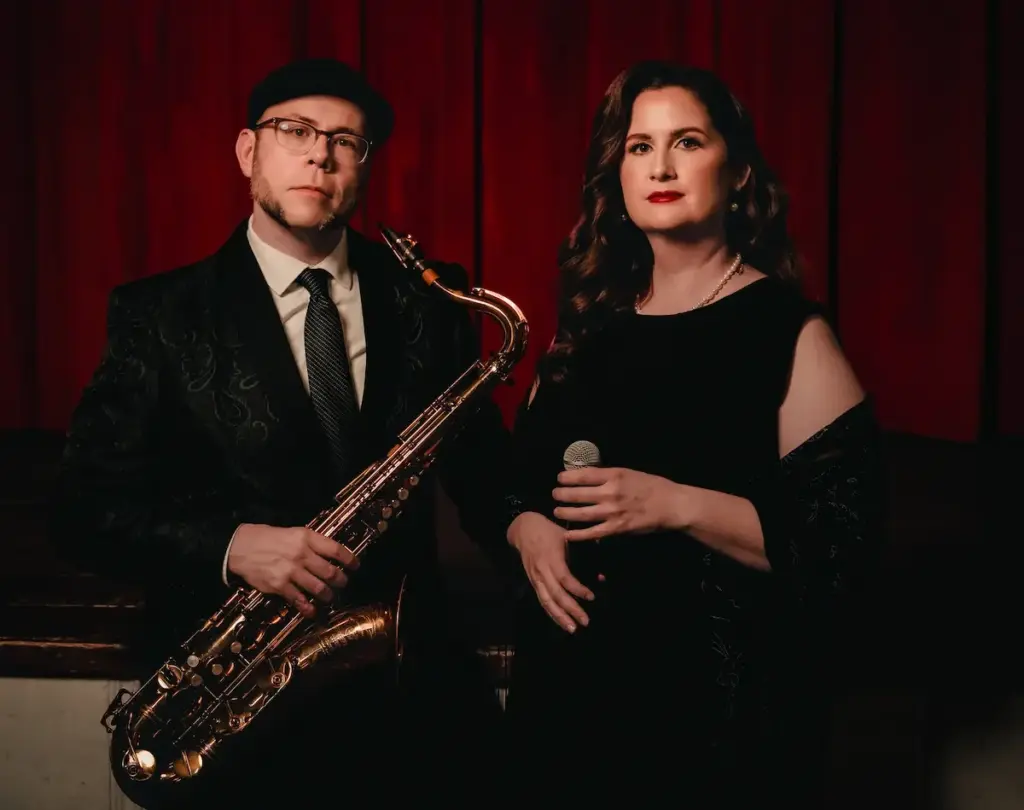
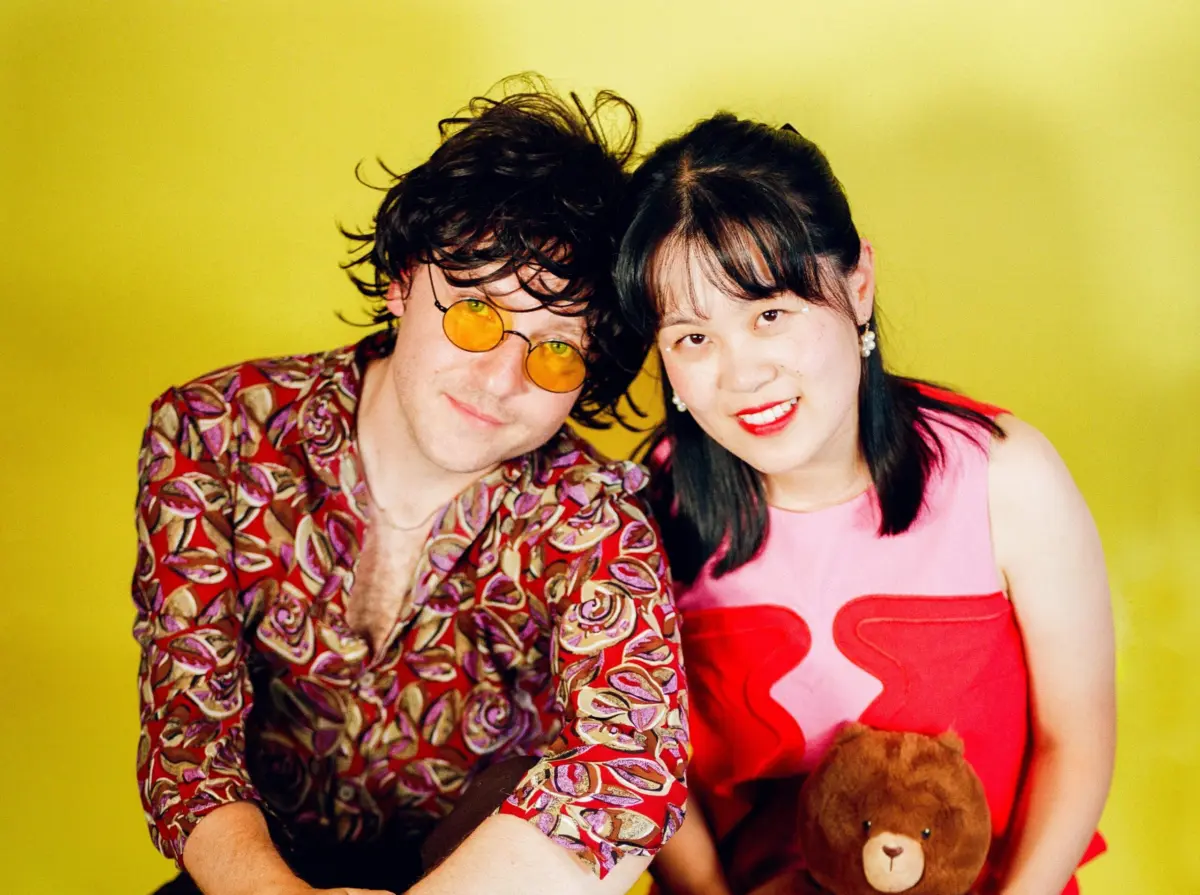
Seattle-based indie-pop duo Chinese American Bear—comprising the creative partnership of Anne Tong and Bryce Barfield—have officially expanded their vibrant sonic universe with the surprise release of their latest single, "Dance Dance Dance" (跳舞跳舞跳舞). Initially recorded during the rigorous writing and production sessions for their sophomore full-length studio album, Dim Sum & Then Some, which dropped to critical acclaim in May, this previously unreleased cut represents a fascinating detour from the album’s primary narrative arc while retaining the duo’s signature cross-cultural whimsy and retro-futuristic aesthetic.
Characterized by Tong as a "groovy, riff-laden, slightly psychedelic, disco bop," "Dance Dance Dance" distills the kinetic energy of late-night dance floors and 1970s funk laboratories into a modern indie-pop framework. Built upon a foundation of hypnotic basslines, driving vintage drum machine patterns, and bilingual vocal interplay, the track serves as both an unadulterated celebration of physical movement and a masterclass in minimalist songwriting.
This analytical feature explores the genesis of "Dance Dance Dance," situating the single within the broader trajectory of Chinese American Bear’s discography. By examining the technical production choices, the artistic philosophy of Tong and Barfield, and the shifting landscape of bilingual indie pop in the Pacific Northwest and beyond, this article provides a comprehensive look at one of the underground scene’s most imaginative projects.
Detailed Chronology: From the Dim Sum Vaults to the Digital Realm
The Genesis: Late-Night Studio Sessions
The story of "Dance Dance Dance" begins in the early months of last year, amidst the frantic, high-output writing cycles that defined the creation of Dim Sum & Then Some. Operating out of their Seattle home studio, multi-instrumentalist Bryce Barfield and vocalist/lyricist Anne Tong had established a rhythm of continuous experimentation. Where previous tracks often leaned heavily into whimsical storytelling, childhood nostalgia, or culinary metaphors, this particular session was driven entirely by visceral, bodily instinct.
According to production notes from the duo, the track originated from a spontaneous bedroom jam session. Barfield, tinkering with a vintage bass synthesizer and a classic drum machine patch, laid down the foundational groove. Within minutes of looping the four-bar bassline, the raw kinetic potential of the instrumental became undeniable.
"Bryce had written the bass line and drums first," recalls Anne Tong, reflecting on the initial playback sessions. "We remember listening back and just wanting to bop and move our bodies immediately. So, as the song developed organically, we decided that the lyrical concept should reflect that exact physical reaction. It’s a simple song about getting down to the groove."
The Editing and Culling Process
During the sequencing phase for Dim Sum & Then Some, artists invariably face the agonizing task of killing their darlings. Despite its undeniable infectiousness, "Dance Dance Dance" was initially shelved. The album’s narrative and sonic palette was already tightly curated, leaning into a specific balance of synth-pop, indie rock, and narrative-driven lyricism.
While the track fit the broader stylistic umbrella of Chinese American Bear, its relentless, hypnotic focus on dance-floor mechanics made it an outlier among the more structurally complex songs on the record. Rather than forcing it into a tracklist where it might disrupt the album’s pacing, Barfield and Tong made the executive decision to preserve the track in the vaults, waiting for the right moment to share it with their growing listenership.
The Autumn Reveal
That moment arrived months after the dust had settled on the Dim Sum & Then Some campaign. Recognizing a hunger among fans for fresh material—and eager to maintain the momentum generated by their spring tour dates—the duo dusted off the multitrack stems, applied a final round of mixing and mastering polish, and prepared the single for independent distribution.
Accompanying the release with its Chinese characters (跳舞跳舞跳舞), the single bridges the gap between the band’s cross-cultural identity and universal club culture, proving that a compelling groove requires no translation.
Supporting Context & Metrics: The Rise of Chinese American Bear
Defining the Sound: Psychedelic Disco Meets Modern Indie
To fully appreciate "Dance Dance Dance," one must examine the unique sonic blueprint that Chinese American Bear has cultivated since their inception. The duo merges disparate eras and geographies: the warm, analog analog saturation of 1970s disco and funk, the kaleidoscopic textures of modern psychedelic pop, and the playful, melodic sensibilities of contemporary indie-pop.
| Track Attribute | Detail / Description |
|---|---|
| Primary Instruments | Vintage Bass Synth, Drum Machines, Electric Guitar, Dual Vocals |
| Lyrical Themes | Movement, bodily rhythm, pure kinetic joy, unpretentious celebration |
| Linguistic Profile | Bilingual (English and Mandarin Chinese integration) |
| Production Style | Lo-fi warmth meets Hi-fi modern mixing; analog warmth |
| Primary Influences | 70s Disco, Funk, Shibuya-kei, Contemporary Indietronica |
In "Dance Dance Dance," these elements converge in a way that feels simultaneously nostalgic and fresh. The bassline anchors the song with a relentless funk cadence, while shimmering guitar flourishes and atmospheric synth pads evoke the hazy, dreamlike qualities of neo-psychedelia.
The Pacific Northwest Indie Ecosystem
Based in Seattle, Washington, Chinese American Bear operates within one of the nation’s most storied and fertile indie-pop landscapes. While the city’s historical DNA is deeply intertwined with grunge and alternative rock, the contemporary Seattle underground boasts a vibrant, highly diverse ecosystem of electronic producers, indie-pop innovators, and cross-cultural artists.
Chinese American Bear has carved out a distinct niche within this scene. By championing a sound that is unapologetically joyful, colorful, and culturally fluid, they stand in stark contrast to the moody, rain-soaked introspection traditionally associated with Pacific Northwest indie music. Their ability to pack venues and amass a dedicated international streaming following underscores a broader shift in modern music consumption: audiences are increasingly drawn to artists who seamlessly blend global identities with universally accessible pop craftsmanship.
Official Statements and Artistic Philosophy
Anne Tong on the Philosophy of Simplicty
In contemporary indie music, there is often an implicit pressure for artists to over-complicate their compositions—to layer arrangements with labyrinthine chord progressions or dense, high-concept lyricism to prove their artistic validity. Anne Tong and Bryce Barfield deliberately subvert this expectation on "Dance Dance Dance."
Tong’s commentary on the track highlights a deliberate embrace of unpretentious songwriting:
"It’s a simple song, about getting down to the groove! The lyrics are about moving, grooving, and listening to the beat. Sometimes, music doesn’t need to overthink itself; it just needs to serve the physical body."
This philosophy aligns with the broader ethos of disco and funk music, genres historically rooted in liberation, community, and physical release. By stripping away narrative complexity in favor of pure rhythmic imperative, Chinese American Bear taps into a primal musical lineage.
Bryce Barfield on Production and Groove Mechanics
Behind the boards, Bryce Barfield approaches production with a minimalist’s eye and a crate-digger’s ear. The construction of "Dance Dance Dance" relied heavily on creating a pocket—a rhythmic space where drums and bass lock together so tightly that the listener has no choice but to react physically.
Speaking on the technical construction of the track, Barfield emphasizes the importance of analog texture and spacious mixing:
"When you have a groove that strong, your job as a producer is largely to get out of its way. We wanted the low end to feel warm and physical, something that vibrates the chest, contrasted with these airy, psychedelic guitar lines floating on top. It’s about creating depth without clutter."
Future Outlook: What’s Next for Chinese American Bear?
Expanding the Sonic Palette
The surprise drop of "Dance Dance Dance" signals that Chinese American Bear are far from finished exploring the creative territory opened up by Dim Sum & Then Some. Rather than retreating into a quiet period post-album cycle, Tong and Barfield are utilizing their vault material and ongoing studio sessions to test new boundaries.
Industry analysts and fans alike are watching closely to see whether "Dance Dance Dance" points toward a stylistic evolution on their next major project. Will the duo lean further into disco-infused dance production, or is this single a delightful, one-off postscript to an already successful album campaign?
Live Performances and Global Reach
As their streaming numbers continue to climb across North America and Asia, the logistical demands on Chinese American Bear are shifting. Their unique bilingual approach positions them uniquely for international crossover appeal. Integrating newly unlocked fan-favorite cuts like "Dance Dance Dance" into their live setlists promises to elevate their stage presence, transforming intimate indie-pop shows into full-scale dance parties.
Conclusion
"Dance Dance Dance (跳舞跳舞跳舞)" is more than just a discarded demo rescued from a hard drive; it is a testament to the creative chemistry of Anne Tong and Bryce Barfield. By honoring their initial gut reaction—the simple, irrepressible urge to dance—Chinese American Bear has delivered a track that reminds listeners why music remains humanity’s most enduring physical language. As they look toward the horizon of their next artistic chapter, the Seattle duo proves that when you follow the groove, you can never truly go wrong.