
Executive Overview
Festival culture thrives on the unpredictable, the unscripted, and the wonderfully absurd. At the intersection of alternative comedy and avant-garde rock music, few moments from the recent festival circuit match the sharp-witted friction of British comedian Stewart Lee cross-examining members of the celebrated experimental sextet Black Country, New Road.
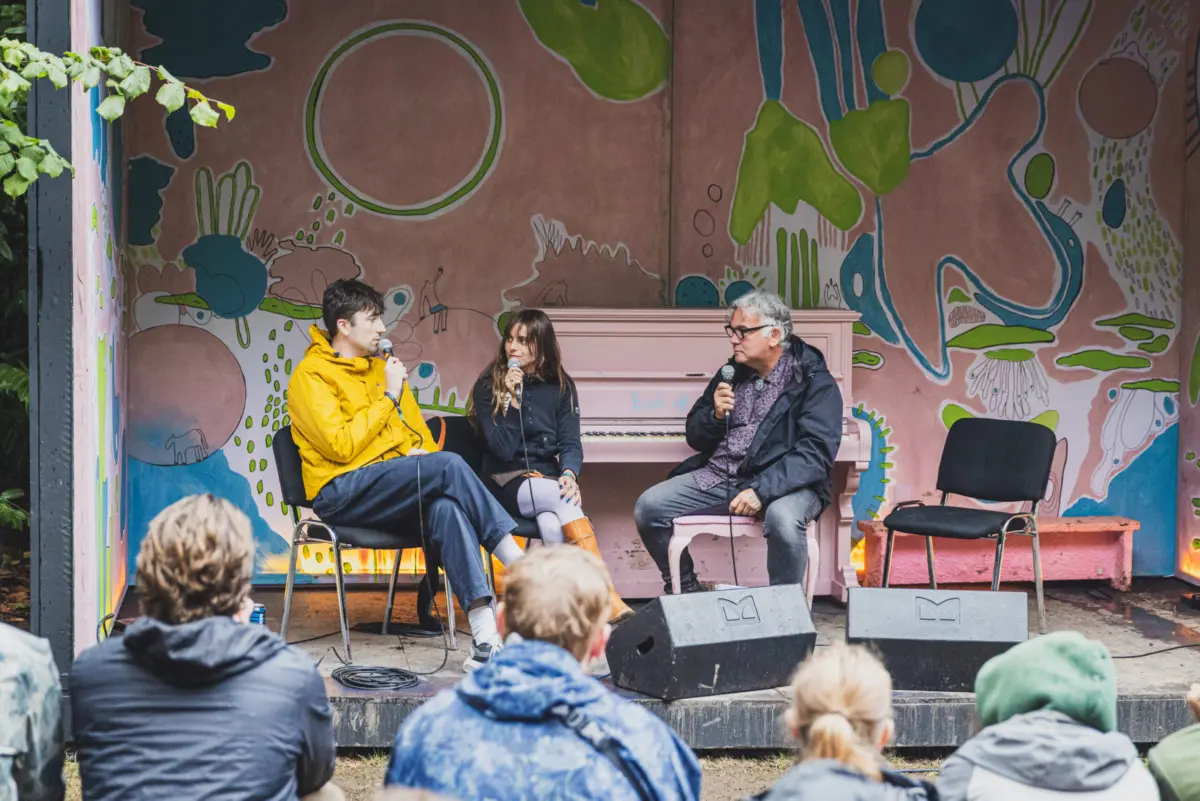
Staged during a series of clandestine, unannounced sessions, the deadpan comic—who had performed his own acclaimed set earlier that same weekend—found himself moderating an intimate, roving conversation that quickly transformed from a standard artistic retrospective into a gently merciless comedic grilling. At the center of the crossfire was Lewis Evans, the band’s multi-instrumentalist whose duties encompass both the saxophone and the flute. Lee, deploying his trademark dry cadence and mock-authoritative posture, dialed in on the group’s rigorous reinvention strategies, their democratic approach to collective songwriting, and a burning, playful question: why Evans had ostensibly abandoned lead vocal duties.
The exchange highlights a broader, fascinating trend within contemporary music curation: the intentional blurring of lines between high-art comedy, literary critique, and indie-rock performance. As music festivals search for novel ways to engage audiences beyond the traditional barricade-and-stage dynamic, intimate interview series have emerged as cultural touchstones in their own right. This particular encounter not only provided festivalgoers with an unforgettable memory but also captured a rare, vulnerable glimpse into the internal mechanics of one of Britain’s most uncompromising modern musical ensembles.
Detailed Chronology: The Anatomy of a Festival Ambush
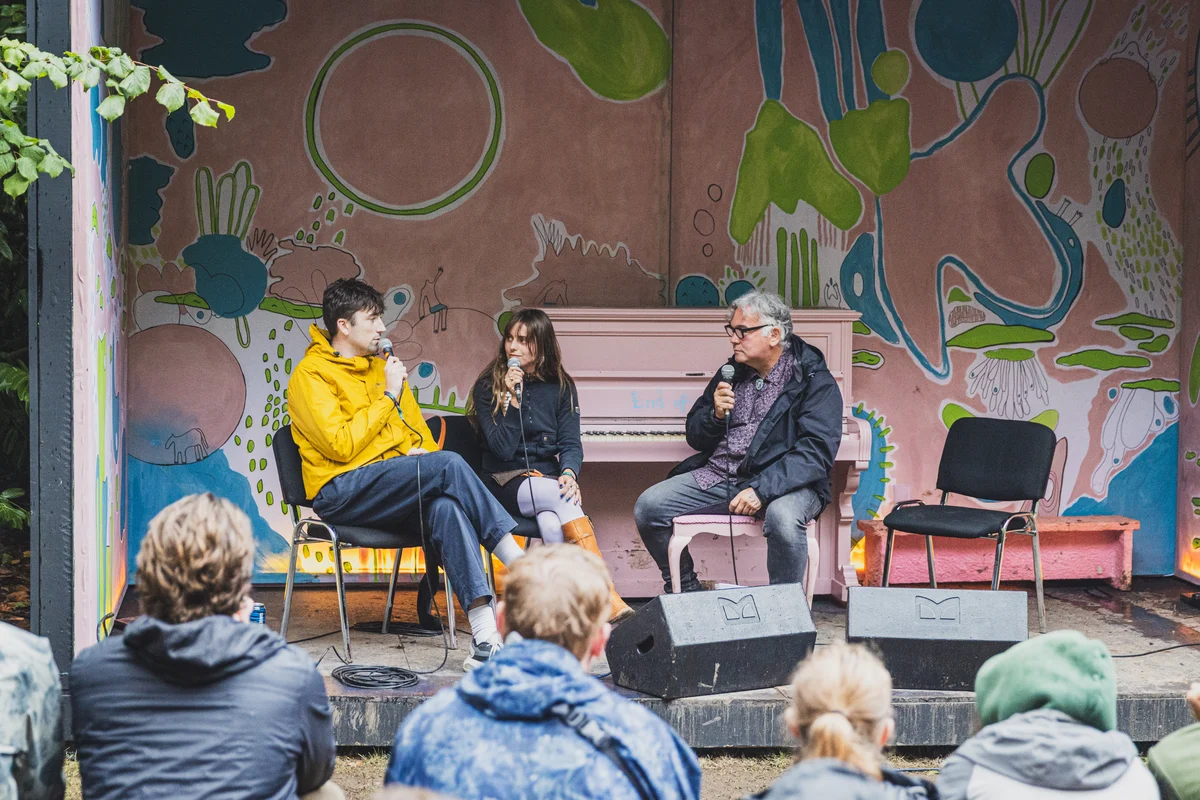
The setting for this impromptu interrogation was part of an exclusive series of intimate, pop-up events organized by Best Fit at the End of the Road Festival. Far from the cavernous main stages where headliners project to tens of thousands, these secret sessions rely on proximity. Artists, journalists, and fans gather in stripped-down environments—often surrounded by minimal equipment and maximum acoustic intimacy—where the usual armor of rock-star posturing is completely stripped away.
Deconstructing the Collective
Stewart Lee, a towering figure in British alternative comedy known for his exhaustive deconstructions of form and audience expectation, took the conversational lead with the precision of a seasoned arts journalist and the impish glee of a seasoned provocateur. Having delivered his own blistering festival set earlier in the weekend, Lee’s entry into the musical arena felt organic yet entirely jarring.
The conversation began with broad strokes, probing the band’s ongoing evolution. Black Country, New Road are no strangers to radical reinvention. Following the departure of their original lead vocalist, Isaac Wood, the remaining six members faced an existential crossroads. Rather than seeking a direct replacement, the group chose to completely overhaul their creative DNA, scrapping existing material and adopting a fiercely democratic approach to songwriting. Every member now contributes vocally and compositionally, turning the ensemble into a shifting, hydra-headed collective of modern chamber-pop and post-rock.
Lee seized upon this democratic pivot, questioning the logistical and psychological hurdles of collective consensus. How, he wondered aloud, do six fiercely distinct creative egos surrender their individual impulses in the interest of a unified, democratic soundboard? The answers offered by the band members illuminated the grueling, often exhausting process of rebuilding an acclaimed musical vehicle from the chassis up.
The Grilling of Lewis Evans
The tone shifted from analytical discourse to affectionate roasting when Lee’s gaze locked onto Lewis Evans. Best known to fans as the emotive saxophonist and flautist of the sextet, Evans was once a more prominent vocal presence in the band’s earlier incarnations. Lee, deadpan and unyielding, decided to interrogate this stylistic shift directly in front of the assembled crowd.
"You’re the fan favourite, Lewis," Lee insisted, his deadpan delivery masking the setup for a comedic jab. Without missing a beat, he leaned into the microphone to add, "All the little kids love you."
The remark drew immediate laughter from the intimate crowd, acknowledging Evans’ status as a focal point of audience affection. Visibly caught off guard by the unexpected ambush, Evans shot back with quick comedic timing: "I didn’t think I’d be getting roasted onstage by Stewart Lee."
This unscripted verbal sparring match encapsulated the unique ethos of the secret sessions. It dismantled the barrier between cultural icon and indie musician, reframing a serious artistic discussion as a piece of performance art in its own right. The audio and visual records of this exchange quickly circulated among fans, cementing the interaction as one of the definitive cultural highlights of the festival calendar.
Supporting Context & Metrics: The Ecosystem of Secret Sessions
To fully understand the weight of Stewart Lee’s appearance with Black Country, New Road, one must examine the institutional history of these secret festival sessions and the broader ecosystem that fosters them.
A Legacy of Unannounced Magic
For years, Best Fit’s secret sessions at End of the Road have functioned as an alternative heart for the festival. While the main schedule dictates the macro-experience of the weekend, these hidden performances operate as a micro-economy of cultural currency. They provide a space where legendary acts and rising luminaries can step outside their comfort zones, play acoustic interpretations of deep cuts, collaborate with unexpected peers, and engage in unfiltered dialogue with their audiences.
The roster of past participants reads like a comprehensive blueprint of modern alternative music royalty:
- Lucy Dacus & Phoebe Bridgers-adjacent collaborations: Intimate vocal harmony showcases that have occasionally brought weeping crowds to a standstill.
- St. Vincent: Stripped-down sonic explorations that expose the raw structural bones of her meticulously produced catalog.
- Jeff Tweedy (Wilco): Masterclasses in Americana songwriting delivered with world-weary charm.
- Moses Sumney & Laura Marling: Vocal masterclasses emphasizing spatial awareness and acoustic purity.
- Patti Smith: Spoken word and poetic interludes that bridge the gap between punk rock history and avant-garde literature.
- Frightened Rabbit: The late, great Scott Hutchison’s transcendent, now-iconic performance of "The Modern Leper," which remains etched into the collective memory of the festival’s faithful attendees.
The 2025 Milestone: Celebrating Two Decades
As the festival prepares to mark its milestone 20th-anniversary edition, the weight of these secret sessions becomes even more pronounced. Organizers have curated a massive lineup featuring 15 distinct artists scheduled for intimate pop-up performances, ensuring that the spirit of spontaneous collaboration remains alive and well.
Beyond Black Country, New Road, the surrounding slate of unannounced and pop-up sets from the previous year featured a dizzying array of talent, bridging generations and genres:
- Throwing Muses: Alternative rock pioneers bringing decades of poetic grit to micro-stages.
- Squid: Post-punk innovators testing the boundaries of rhythmic tension in daylight settings.
- The Orchestra (For Now), Truman Sinclair, Tyler Ballgame, Jake Xerxes Fussell: Ranging from Appalachian folk classicism to hyper-modern indie experimentation.
- The Sophs, Ellie O’Neill, Man/Woman/Chainsaw, jasmine.4.t, and Lily Seabird: Representing the vanguard of emerging underground talent.
These metrics and lineups demonstrate that the festival is not merely a nostalgia-driven celebration of legacy acts, but a living, breathing laboratory for cross-generational artistic dialogue. Stewart Lee’s presence as an interrogator rather than a musical act underscores this ethos, proving that humor and critical theory are just as vital to the festival experience as a wall of guitar amplifiers.
Official Statements & Industry Perspectives
The convergence of alternative comedy and contemporary music at festivals like End of the Road points to a broader shift in how artists engage with their audiences in the digital age. In official commentary surrounding the secret sessions, curators have emphasized the necessity of creating "safe, unscripted spaces" where the hyper-curated facade of modern artist branding can temporarily dissolve.
Industry analysts note that as touring costs rise and streaming algorithms homogenize discovery, physical festivals must offer irreplaceable, live-only experiences to justify their existence. An unannounced interview where a legendary comedian playfully bullies an avant-garde saxophonist cannot be replicated on a playlist or streamed as a polished YouTube documentary; it exists solely in the ephemeral present of the festival grounds.
Members of Black Country, New Road have frequently spoken about the anxieties and liberations of their post-Wood era. In various interviews leading up to and following their festival appearances, the band has emphasized that democratic songwriting is not a romantic utopia, but a grueling process of negotiation. Every arrangement is debated, every vocal line is scrutinized, and every ego is checked at the rehearsal room door.
Stewart Lee’s onstage intervention, albeit delivered through the filter of stand-up satire, hit uncomfortably close to the truth of this process. By asking why Evans no longer sings, Lee tapped into the public curiosity regarding the band’s internal hierarchy and emotional transitions. In doing so, he provided the band with a rare comedic framework to address their own transformation—transforming potential tension into shared, communal laughter.
Future Outlook: The Evolution of Live Music Discourse
As the festival landscape looks toward the horizon—marked by milestone anniversaries, shifting economic realities, and changing audience demographics—the role of unscripted cultural programming will only expand.
The success of the Stewart Lee and Black Country, New Road pairing suggests a lucrative and creatively fertile avenue for future events: the deliberate collision of disparate artistic disciplines. When comedians interview musicians, when authors collaborate with electronic producers, and when visual artists construct physical spaces for spontaneous acoustic performances, the festival transforms from a passive listening experience into an active, intellectual town square.
For Black Country, New Road, the road ahead involves continuing to tour their reinvented catalog, proving to global audiences that a beloved band can survive the departure of a foundational member and emerge stronger, weirder, and more unified than before. And for Stewart Lee, the encounter reinforces his status as a cultural arbiter who is just as comfortable dissecting the pretensions of the contemporary indie scene as he is skewering political orthodoxy.
As festival organizers prepare for the next wave of secret sessions, attendees are left with a clear takeaway: at End of the Road, you never quite know who is watching, who is listening, and who is waiting in the wings with a microphone and a sharply honed punchline.
Watch the complete, unedited conversation and subsequent musical performances via the official festival archives linked below.