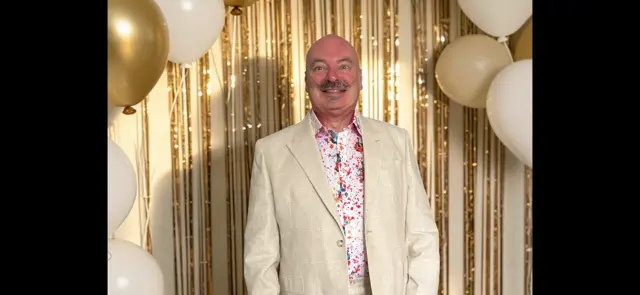
As the holiday season approaches, musicians and educators continually seek fresh, engaging ways to celebrate timeless traditions through performance. Among the most beloved seasonal melodies is "The First Noel" (frequently spelled "The First Nowell"), a traditional Cornish Christmas carol whose history stretches back centuries. To bridge the gap between classical heritage and modern piano pedagogy, Ben Dunnett LRSM—founder of the Music Theory Academy and an experienced music teacher, examiner, composer, and pianist with over two decades in music education—has curated a comprehensive learning package.
This release features three distinct piano arrangements tailored to progressive skill levels: an easy introductory version, an expressive intermediate arrangement, and a formally challenging advanced adaptation pulled directly from Dunnett’s professional Christmas piano album, 10 Christmas Carols.
Designed to accommodate students, hobbyists, and advanced virtuosos alike, this collection is paired with historical context, structural analysis, and the complete traditional lyrics. By offering targeted technical guidance—such as thumb-tucking mechanics for beginners and independent fingering choices for intermediates—Dunnett’s package ensures that pianists of all backgrounds can elevate their performance of this classic nativity narrative.
Detailed Chronology & Historical Background of "The First Noel"
To truly master any piece of classical or traditional music, performers benefit immensely from understanding its origins. "The First Noel" is deeply embedded in Western holiday culture, yet its exact provenance remains a fascinating subject of musicological study.
Origins and Early Evolution
Classified primarily as a traditional English or Cornish carol, "The First Noel" traces its roots deep into the oral traditions of the British Isles. While stylistic evidence suggests parts of the melody and text date back to the 16th or 17th century—and possibly even earlier—the carol first appeared in print in 1823. It was published in Carols Ancient and Modern, edited by William Sandys. This publication was crucial in preserving many traditional English carols that might otherwise have been lost to industrialization and shifting cultural paradigms.
The word "Noel" itself derives from the French term noël, originating from the Latin natalis (meaning "birth"). For centuries, the term has been used interchangeably to denote the Christmas season or a joyful shout of celebration surrounding the Nativity.
Modern Adaptation and Commercial Longevity
Over the generations, "The First Noel" transitioned from rural churchyards and community gatherings to the global stage. Its stately, stepwise melody and majestic refrain have made it a favorite for choirs, instrumentalists, and pop icons alike. In the modern era, the carol has been recorded and reinterpreted by an array of global superstars, including Whitney Houston, Mariah Carey, and the cast of the hit television series Glee.
By introducing his three-tier piano arrangements, Ben Dunnett connects contemporary pianists directly to this rich lineage, allowing performers to recreate a centuries-old tradition through a modern pedagogical lens.
Supporting Context & Pedagogical Metrics: The Three Arrangement Levels
Ben Dunnett’s tiered approach is grounded in sound music education principles. Rather than providing a one-size-fits-all score, the collection addresses the specific technical hurdles faced by pianists at different stages of development. Below is a detailed breakdown of the three tiers featured in the release.
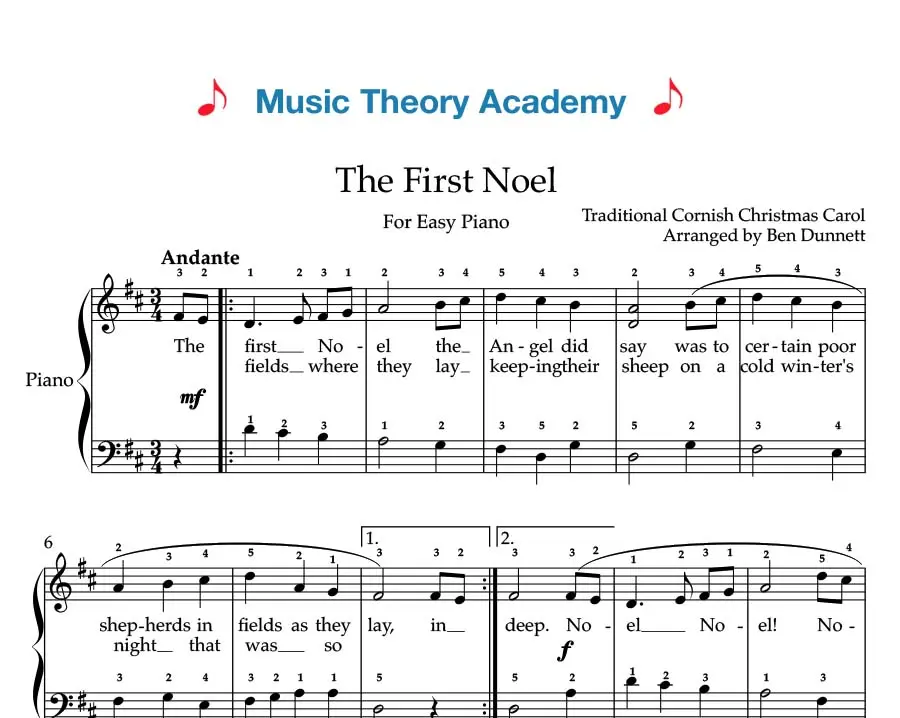
1. The Easy Piano Arrangement: Building Foundational Mechanics
Target Audience: Beginners and early-grade piano students.
Structural Design: This version focuses on a clean, unambiguous melody line in the right hand supported by a straightforward, harmonic bass line in the left hand.
Pedagogical Focus: Beginners often struggle with horizontal navigation across the keyboard during longer scalic passages. Dunnett has thoughtfully added explicit fingering annotations to this score. Particular emphasis is placed on teaching students when and how to tuck the thumb under the hand—a foundational technique required for smooth scale execution. By mastering these finger numbers early, novice players avoid tension and build muscle memory that will serve them across all future repertoire.
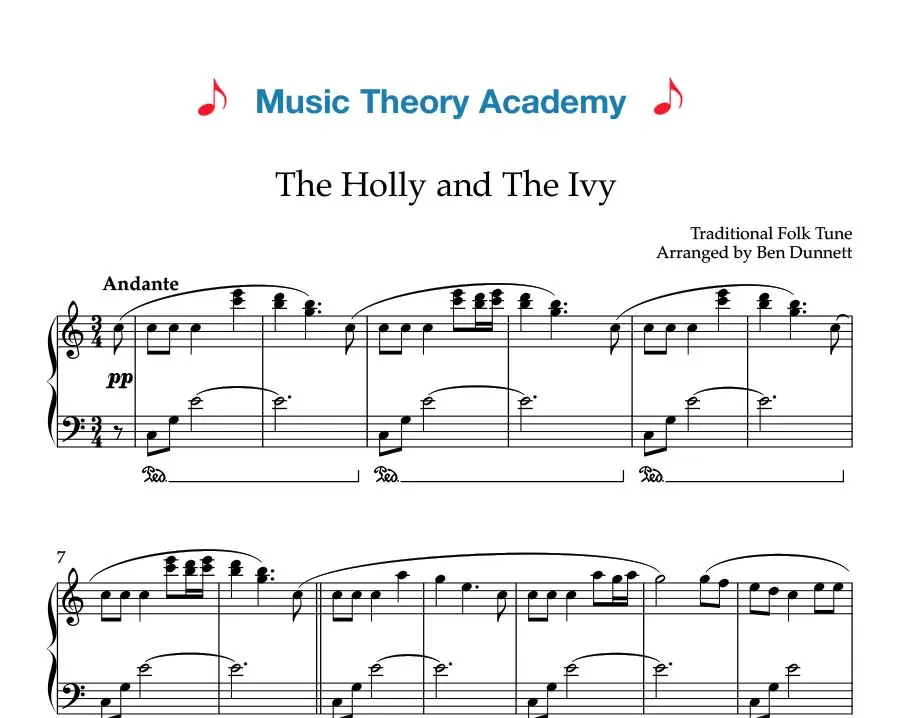
2. The Intermediate Piano Arrangement: Fostering Independence
Target Audience: Intermediate players looking to enrich their textural palette.
Structural Design: The intermediate tier expands upon the basic melody by weaving extra harmonic notes into the right hand, creating a fuller, more resonant texture. Toward the climax of the piece, the left hand encounters a technically demanding spread chord.
Pedagogical Focus: Uniquely, Dunnett has left the fingering blank on this intermediate version. This editorial choice is intentional: it acts as a practical exercise designed to encourage intermediate players to analyze harmonic shapes, hand spans, and ergonomic efficiency independently. Determining the most appropriate fingerings fosters critical thinking and deepens the student’s overall musicianship.
3. The Advanced Piano Arrangement: Professional Concert Performance
Target Audience: Advanced pianists, professional performers, and advanced hobbyists.
Structural Design: Originally composed and recorded for Dunnett’s professional album, 10 Christmas Carols, this advanced arrangement presents a sophisticated, fully realized concert piece. It demands refined dynamic control, advanced chordal balancing, and absolute fluidity across registers.
Pedagogical Focus: Dunnett encourages advanced pianists to study the score while listening to his recorded performance (available via YouTube and Spotify). Observing how the written notes translate into expressive rubato, phrasing, and tonal color offers invaluable insight into professional-level interpretation.
Official Statements and Educational Philosophy
Reflecting on the release of these complementary arrangements, Ben Dunnett LRSM emphasizes the importance of accessible, high-quality educational resources for seasonal music:
"The holiday season is a magical time for music-making, but finding arrangements that strike the right balance between accessibility and musical satisfaction can be difficult for students and teachers alike," notes Dunnett. "By breaking ‘The First Noel’ down into three distinct levels, my goal is to ensure that every pianist—whether they are playing their very first scale-based melody or tackling a rich, professional concert arrangement from my album—finds both a challenge and a joy in learning this magnificent traditional carol."
With over twenty years of experience as a teacher, examiner, and composer, Dunnett’s educational philosophy centers on equipping musicians with the structural tools and historical context needed to understand why music works, rather than merely memorizing notes on a page. This holistic approach is evident in the careful curation of the fingering guides, harmonic enrichment, and accompanying video demonstrations.
Future Outlook: Integrating Traditional Carols into Modern Music Education
As digital platforms continue to transform how music education is accessed and consumed, resources like the Music Theory Academy play a vital role in preserving classical and traditional repertoires. The shift toward hybrid learning—where students utilize free PDF downloads, embedded video tutorials, and streaming audio simultaneously—allows for a more immersive educational experience.
Looking ahead, educational frameworks are increasingly prioritizing flexible, multi-level repertoire packages that accommodate diverse learning speeds within classrooms and private studios. Dunnett’s release of "The First Noel" serves as a benchmark for how traditional holiday music can be repackaged for the 21st-century learner. By combining authoritative pedagogical guidance with accessible digital resources, educators can ensure that historical masterworks like The First Noel continue to inspire, educate, and delight new generations of pianists for years to come.
Appendix: Complete Lyrics to "The First Noel"
For performers and vocalists seeking to accompany themselves or align their phrasing with the narrative structure of the text, the complete traditional lyrics are provided below:
The first Noel the angel did say Was to certain poor shepherds in fields as they lay; In fields where they lay, keeping their sheep, On a cold winter’s night that was so deep:
Refrain: Nowell, Nowell, Nowell, Nowell, Born is the King of Israel.
They looked up and saw a star Shining in the east beyond them far; And to the earth it gave great light, And so it continued both day and night.
And by the light of that same star Three wise men came from country far; To seek for a king was their intent, And to follow the star wherever it went.
This star drew nigh to the northwest; O’er Bethlehem it took its rest, And there it did both stop and stay, Right over the place where Jesus lay.
Then entered in those wise men three, Full reverently upon their knee, And offered there in his presence Their gold, and myrrh, and frankincense.
Then let us all with one accord Sing praises to our heavenly Lord, That hath made heaven and earth of nought, And with his blood our life hath bought.