
By David Salazar
Published by Special Arrangement
Executive Overview
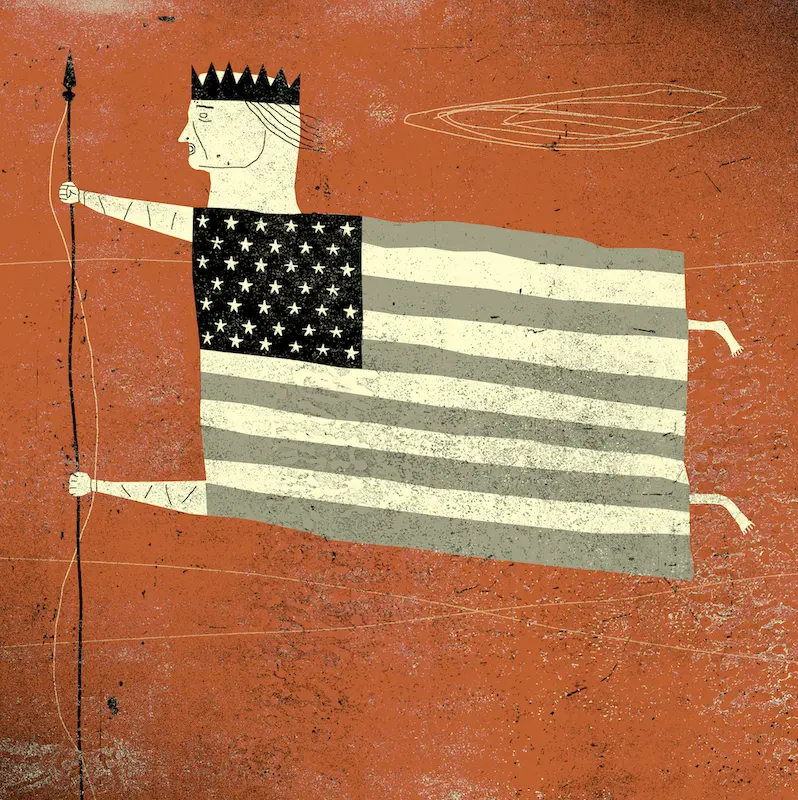
In an era defined by hyper-polarized political discourse, cultural friction, and the relentless re-evaluation of historical art forms, the innovative opera company IN Series has announced a provocative theatrical opening for its upcoming 2026–27 season. Set to debut in October 2026, the company will present The M.A.K.A.do: Make America Kingly Again! An Operatico-Politico-Buffo-Satirico—a radical, no-holds-barred satirical reimagining of Gilbert and Sullivan’s classic 1885 comic opera, The Mikado.
This daring production will premiere at The Kogod Cradle, housed within the prestigious Arena Stage Mead Center for American Theater in Washington, D.C., running from October 10 through October 18, 2026. Following its engagement in the nation’s capital, the production will travel north to the Baltimore Theater Project, where it will run from October 23 through October 25, 2026.
The M.A.K.A.do represents more than just a clever play on contemporary political catchphrases. It is an intentional, intellectually rigorous intervention in ongoing debates surrounding artistic censorship, the "cancel culture" phenomenon, and the viability of staging historical works that carry problematic colonial or racial caricatures from the Victorian era. Featuring an entirely new libretto penned by Bari Biern and a radically re-orchestrated score by IN Series Artistic Director Timothy Nelson—custom-tailored for a rousing John Philip Sousa-style marching band—the production promises to skewer contemporary American governance, media ecosystems, and societal absurdities with equal-opportunity irreverence.
Supported by a stellar cast of vocal talents including Andrew Adelsberger, Robin McGinness, Hunter Shaner, Greg Slikovich, and Teresa Ferrara, and anchored musically by conductor Dana Scott, The M.A.K.A.do is poised to be one of the most talked-about cultural events of the mid-2020s performing arts calendar. This comprehensive report breaks down the genesis of the production, the artistic framework driving its creation, the mechanics of its re-imagined score, and the broader cultural implications of IN Series’ mission to challenge tyranny through joyful, subversive comedy.
Detailed Chronology: From Victorian Titipu to Modern-Day Satire
The Historical Footprint of The Mikado
To understand the audacity of The M.A.K.A.do, one must first examine the rich yet controversial legacy of the work it lampoons. W.S. Gilbert and Arthur Sullivan’s The Mikado; or, The Town of Titipu premiered in London in 1885 and quickly became one of the most successful collaborative works in theatrical history. Set in a fictionalized, exoticized "Japan," the original operetta used the safe distance of an Asian setting to ruthlessly mock British politics, bureaucracy, class snobbery, and institutional hypocrisy.
However, as cultural sensitivities evolved into the 21st century, the original production—frequently characterized by Western actors adopting stylized, stereotypical Japanese makeup, accents, and mannerisms (a practice known as "yellowface")—drew intense scrutiny. Modern regional opera companies and community theaters have increasingly struggled to stage The Mikado authentically without perpetuating offensive racial tropes. While some companies have successfully updated the setting to a fictional Edwardian hotel or a futuristic corporate board room, the underlying text has often remained a minefield for modern directors.
The Conception of The M.A.K.A.do
Recognizing both the brilliance of Sullivan’s immortal melodies and the comedic elasticity of Gilbert’s satirical framework, IN Series Artistic Director Timothy Nelson and librettist Bari Biern chose not to abandon the source material, but to hijack it. Rather than attempting a sanitized, reverent revival of a 19th-century British view of Japan, the creative team decided to redirect the satirical crosshairs directly at the contemporary United States.
The development phase of The M.A.K.A.do began years ahead of its 2026 premiere, driven by workshops and iterative script drafts designed to mirror the rapidly shifting landscape of American politics. Biern’s new libretto adapts the original plot—in which the threat of capital punishment for flirting leads to bureaucratic absurdity—and transforms it into a scathing allegory about modern authoritarian impulses, populist political branding, media saturation, and the performative nature of contemporary political warfare.
The Performance Schedule and Venues
The production’s rollout is strategically designed to bridge two major mid-Atlantic cultural hubs:
- Washington, D.C. Engagement (Oct. 10–18, 2026): Staged in The Kogod Cradle at Arena Stage, the production benefits from an intimate, flexible, black-box theater environment. This architectural setup breaks down the traditional fourth wall, allowing the performers to directly engage and confront the audience, heightening the satirical impact of a show rooted in modern American political anxieties.
- Baltimore Engagement (Oct. 23–25, 2026): Moving to the historic Baltimore Theater Project, the production shifts into an urban, independent artistic incubator known for championing boundary-pushing, politically engaged theater. This multi-city footprint ensures that the production reaches diverse audiences across the regional corridor.
Supporting Context & Metrics: Artistic Architecture and Musical Mechanics
The Sound of Sousa: Re-orchestrating Sullivan
One of the most radical departures in The M.A.K.A.do lies in its musical architecture. Arthur Sullivan’s original orchestration called for a standard grand pit orchestra, balancing British comic opera traditions with symphonic grandeur. For this production, Timothy Nelson has entirely re-orchestrated the score, reimagining Sullivan’s melodies through the lens of a John Philip Sousa-style marching band.
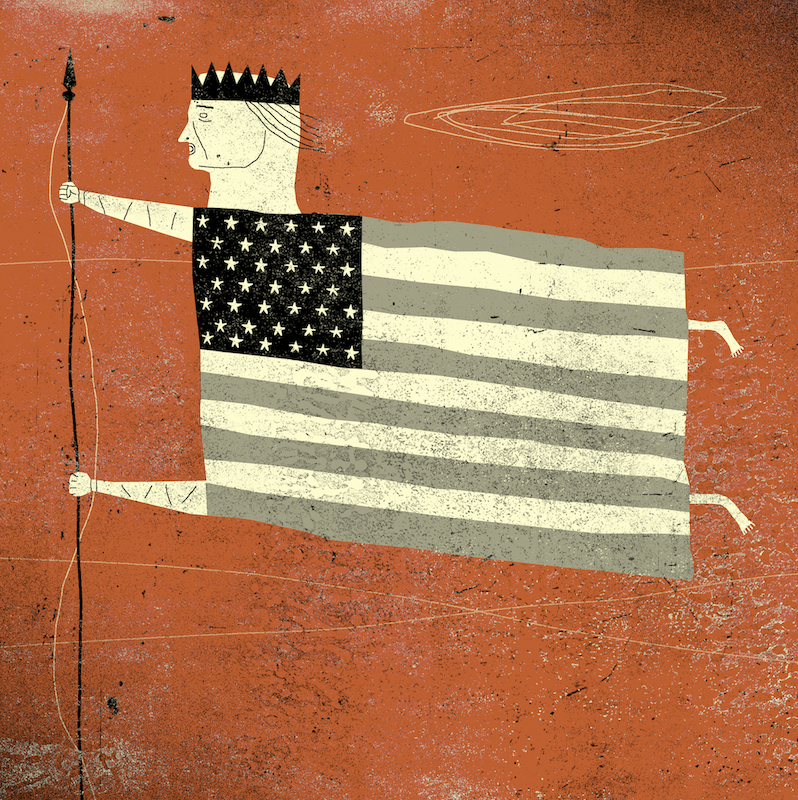
This choice is far more than a stylistic novelty; it is a stroke of conceptual brilliance. Sousa’s brass-heavy, percussion-driven marches are deeply intertwined with the iconography of American patriotism, military pageantry, civic parades, and nationalistic pride. By funneling Victorian comic opera through the brassy, bombastic aesthetics of the March King, the production sonically equates the pomp of British imperialism with modern American political rallies, campaign trails, and military-industrial triumphalism.
Music Director Dana Scott leads the instrumental ensemble, ensuring that the intricate vocal harmonies and rapid-fire lyric delivery of Gilbert’s rhythmically complex numbers remain crisp, intelligible, and biting within the booming timbre of cornets, trombones, tubas, and marching percussion.
The Cast and Creative Personnel
The production leans heavily on a dynamic ensemble cast renowned for their versatility in both classical vocal performance and comedic theatricality:
- Andrew Adelsberger: Bringing a commanding vocal presence and sharp comedic timing.
- Robin McGinness: A rising star in the opera world known for his agile baritone and expressive stagecraft.
- Hunter Shaner: Bringing dynamic energy and character acting chops.
- Greg Slikovich: Adding depth and comedic weight to the ensemble.
- Teresa Ferrara: Bringing virtuosic vocal capabilities and fierce theatricality to the stage.
Official Statements: Confronting Tyranny and Cancel Culture
In an industry often paralyzed by the fear of controversy, IN Series has positioned The M.A.K.A.do as a direct counter-narrative to artistic self-censorship. In an official press release accompanying the season announcement, Artistic Director Timothy Nelson did not mince words regarding the company’s cultural philosophy:
"IN Series’ 2026–2027 season positions its art in opposition to all forms of tyranny, even cancel culture itself," Nelson stated.
"Our production not only dares to show how ‘cancelled’ works can actually be performed in ways that make them powerful today, but also uses this opera to lampoon American politics and society. Comedy, like music, is uniquely able to do this in a way wrapped with joy, respect, and love."
Nelson’s comments highlight a central philosophical dilemma facing contemporary arts institutions: how to engage with historical repertoires that contain problematic elements without either erasing them entirely or reproducing historical harms. By choosing to completely subvert The Mikado—turning its orientalist framework inside out to critique American political hubris—IN Series offers a masterclass in how historical art can be repurposed as an active weapon of contemporary critique.
Furthermore, Nelson frames laughter not as a mechanism of dismissal, but as an act of communal resilience. By wrapping sharp political satire in the joyous, approachable, and infectious energy of a Sousa band and comic opera, the company aims to disarm audiences, inviting them to laugh at the absurdities of their own political climate rather than retreating into ideological bunkers.
Future Outlook: The 2026–27 Season and Beyond
The premiere of The M.A.K.A.do serves as the flagship event for IN Series’ broader 2026–27 theatrical slate, setting a high-water mark for a company that has built its reputation on defying traditional genre boundaries. Known for creating hybrid works that cross opera, theater, cabaret, and visual art, IN Series continues to prove that regional opera companies can be nimble, fearless civic actors.
As the political landscape of the United States approaches the late 2020s—fraught with debates over nationalism, democratic norms, and cultural expression—productions like The M.A.K.A.do will serve as vital cultural lightning rods. By taking a Victorian masterpiece that was once deemed a liability and transforming it into a mirror for modern American political theater, IN Series is not merely staging an opera; they are sparking a much-needed national conversation about the power of satire, the ethics of adaptation, and the enduring resilience of art in the face of tyranny.
Tickets and subscription packages for the IN Series 2026–27 season, including engagements for The M.A.K.A.do at Arena Stage’s Kogod Cradle and the Baltimore Theater Project, are anticipated to draw heavy demand from both opera aficionados and political theater enthusiasts alike.