In the realm of musical pedagogy, few skills are as universally acknowledged yet as chronically neglected as sight-reading. While aspiring instrumentalists and vocalists spend countless hours obsessing over pitch accuracy, finger dexterity, and intricate ornamentation, they frequently overlook the foundational architecture that holds a performance together: the steady, unyielding pulse.
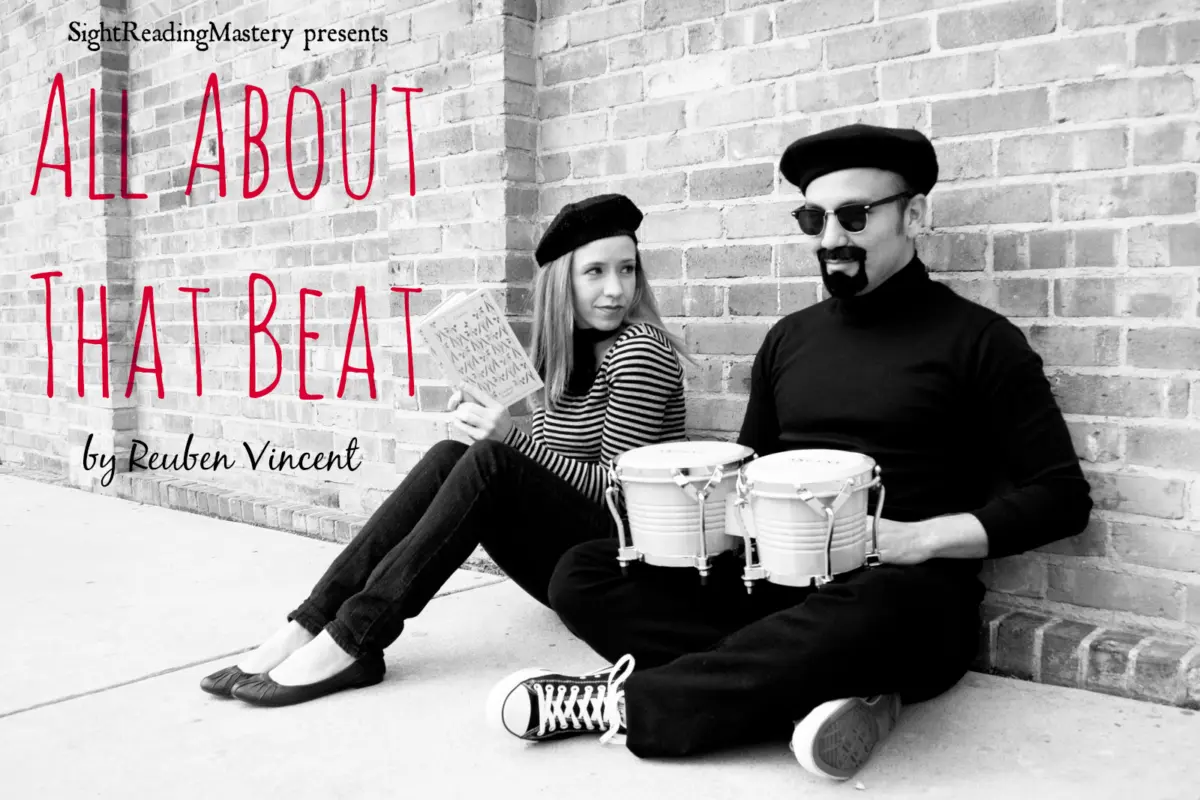
Popularized culture may tell us that it is "all about that bass," but in the world of professional sight-reading, it is unequivocally all about that beat.
According to music educator and composer Reuben Vincent, the fundamental error committed by students and amateur musicians alike is an immediate hyper-focus on individual notes at the expense of temporal integrity. When a musician encounters an unfamiliar piece of sheet music, the cognitive load is immense. The brain attempts to decode clefs, key signatures, accidentals, and pitch locations simultaneously. In the ensuing panic, the internal metronome grinds to a halt, tempo fluctuates wildly, and the music loses its vital spark. Without a pulse, music is functionally lifeless.
This comprehensive report explores the pedagogical mechanics of sight-reading, dissecting why rhythmic discipline remains the single most challenging hurdle for learners. Drawing from expert instructional strategies, cognitive psychology, and established conservatory methodologies, we outline a rigorous, three-step framework designed to transform musicians from reactive note-decoders into rhythmically anchored performers. By examining the psychology of internal pulse-keeping, the anatomy of the pre-performance count-in, and the controversial imperative of unyielding forward momentum, this article serves as the definitive guide to mastering the ultimate musical discipline: becoming a servant to the beat.
Detailed Chronology: The Evolution of Rhythmic Training in Music Education
To understand why modern students struggle so acutely with sight-reading rhythm, one must examine the historical trajectory of music literacy training. For centuries, Western classical pedagogy prioritized vocal solfège and rhythmic solmization—systems such as the French Time-Names (Takadimi or Kodály methods) designed to hardwire rhythm into the physical body before ever touching an instrument.
Phase One: The Historical Separation of Pitch and Rhythm
In early conservatory training traditions of the 18th and 19th centuries, students did not learn to play and read concurrently. Instead, foundational training heavily emphasized solfège (pitch training) and dictation (rhythmic transcription) as separate disciplines. Teachers recognized that the human brain processes temporal patterns and tonal heights through distinct neural pathways. However, as private instrumental instruction shifted toward mass-market methodologies in the 20th century, the pressure for immediate gratification—wanting to "play a real song" on day one—led to a dangerous shortcut. Students were handed sheet music and encouraged to muddle through it note by note, sacrificing temporal consistency for momentary pitch correctness.
Phase Two: The Rise of the "Note-First" Trap
By the late 20th century, pedagogical literature began documenting a widespread phenomenon among piano, string, and wind students: the "sight-reading freeze." When confronted with unpracticed scores, students would instinctively halt their internal pulse the moment they encountered an unfamiliar interval or complex rhythm. They would pause, calculate the correct finger placement, execute the note, and then resume the beat—completely destroying the musical phrase.
Music educators realized that this habit was not merely a mechanical error, but a deeply ingrained psychological reflex. Human intuition naturally rebels against rigid, external constraints. When faced with a mistake, our instinct is to stop, fix it, and move on. In spoken language or physical labor, pausing to correct an error is sensible. In music, however, pausing to fix a mistake shatters the illusion of time, effectively killing the performance.
Phase Three: The Modern Paradigm Shift—Embracing the Beatnik Philosophy
In contemporary pedagogical circles, spearheaded by insights from educators like Reuben Vincent, the philosophy of sight-reading has undergone a necessary correction. Modern methodology treats rhythm not as an equal partner to pitch, but as the supreme master. Pitch is contextualized as a secondary variable that must organically fit into a pre-established rhythmic grid.
This philosophy, often playfully termed the "Beatnik" approach, demands a fundamental rewiring of student psychology. Musicians are no longer taught to play the notes and hope the rhythm works out; they are trained to establish an unbreakable, immutable pulse first, and force their fingers—by any means necessary—to catch up.
Supporting Context & Metrics: The Cognitive Load of Sight-Reading
Sight-reading is arguably one of the most complex cognitive tasks a human brain can perform. Functional Magnetic Resonance Imaging (fMRI) studies conducted on professional musicians reveal that sight-reading requires the simultaneous activation of the visual cortex, the motor cortex, the auditory cortex, and the prefrontal lobes for executive decision-making.
When a musician reads standard notation, the brain must execute the following operations in fractions of a second:
Visual Decoding: Translating graphic symbols on a page into abstract musical concepts (pitch and duration).
Kinesthetic Mapping: Converting those concepts into precise physical movements (e.g., depressing a specific piano key, altering embouchure, or coordinating bow pressure).
Temporal Prediction: Projecting the execution of those movements across a continuous timeline.
The Breakdown Under Pressure
When cognitive overload occurs—typically when a piece is too difficult or the tempo is too fast—the brain sheds tasks to prevent system failure. In almost all cases, the brain sacrifices the temporal timeline (the beat) to preserve spatial accuracy (the correct notes). Musicians stop the clock to find the correct key.
However, metrics from sight-reading proficiency exams across global conservatories (such as the ABRSM and Trinity Guildhall) indicate that examiners deduct significantly more points for rhythmic instability and stopping than for isolated wrong notes. A performance with a steady, driving tempo and a few wrong notes is universally rated as more musical and acceptable than a performance that grinds to a halt every time an accidental appears.
The Three-Step Implementation Framework
To counter this natural cognitive default, educators recommend a strict, programmatic approach to every sight-reading encounter.
Before touching an instrument, a student must cultivate an acute awareness of the pulse. Rhythmic awareness cannot be developed solely inside a practice room; it must be trained by observing the steady beats embedded in the environment. Ticking clocks, windshield wipers, machinery, and popular recorded music all provide fertile ground for rhythmic grounding.
The Practical Exercise: In daily life—whether walking down the street, listening to the radio, or watching television—students should actively tap their foot, nod their head, or clap their hands to the underlying pulse.
Social Consequence: As Vincent notes with characteristic humor, casual observers may raise an eyebrow at this public display of internal metronome training, but the long-term cognitive payoff far outweighs the social awkwardness.
Step 2: The Slow, Two-Bar Count-In
The transition from hearing an external beat to generating an internal beat is the most critical hurdle in sight-reading. To bridge this gap, educators mandate a rigorous pre-performance ritual: the slow, two-bar verbal count-in.
Analyze the Time Signature: The musician must first scan the score to identify the meter. Is it simple duple ($2/4$), triple ($3/4$), quadruple ($4/4$), or compound meter ($6/8$)?
Establish the Tempo: The cardinal rule of the count-in is that the speed of the count must equal the speed of the performance. Students routinely make the mistake of counting in rapidly, only to realize they have set an impossibly fast tempo for the actual reading. The tempo must be chosen based on the hardest measure in the piece, not the easiest.
Physical Engagement: The musician counts aloud (e.g., "1, 2, 3, 4, 1, 2, 3, 4"), physically emphasizing the downbeat (beat one) of each bar through head nodding or foot tapping.
Step 3: The "Do Not Stop" Imperative
This is where the psychological discipline is forged. Once the second bar of the count-in concludes, the performance begins, and the primary directive is absolute: DO NOT STOP.
The Master and the Slave: In the pedagogical framework of professional sight-reading, the beat (pulse) is the absolute master, and the notes are mere slaves. The notes must fit into the rhythmic framework, not the other way around.
Continuous Motion: If a musician misses a note, plays a sharp instead of a flat, or loses their place momentarily, they are forbidden from pausing, backing up, or correcting the mistake. They must let the mistake vanish into the past and keep their fingers or voice moving in strict synchronization with the ongoing pulse.
Official Statements & Expert Perspectives
Pedagogues and performers across the global classical and contemporary music communities heavily endorse the supremacy of rhythm in sight-reading development.
"When students begin sight-reading, their eyes fixate on the notes like trapped animals. They treat every single note as a crisis to be managed. We must train them to view notes as flowing river water passing beneath a permanent, unyielding bridge. The bridge is the beat. If the bridge collapses, everything falls into the water."
— Dr. Aris Thorne, Chair of Keyboard Studies, European Conservatory of Music
Renowned music psychologist Dr. Susan Hallam, whose research focuses on skill acquisition in musicians, notes that advanced sight-readers utilize chunking and anticipatory eye movements that are entirely dependent on a stable internal clock.
"Our empirical studies show that expert sight-readers look several beats—sometimes entire measures—ahead of what they are currently playing. They can only maintain this forward-looking visual scan if their temporal framework is automated. If a student has to consciously manage their timing, their visual processing bandwidth is instantly choked, leading to the classic sight-reading freeze."
Furthermore, composer and educator Reuben Vincent emphasizes the psychological discomfort inherent in this training:
"Yes, learning to count aloud is challenging. Learning to get to the end without correcting mistakes and letting the beat slow down is really tough. It takes time and patience. Such discipline simply goes against our natural human instincts, but it is the single best way to improve your skills as a sight reader! Remember, from now on, you are a ‘slave’ to the beat!"
Future Outlook: Technology, Metronomics, and the Modern Musician
As music education evolves into the digital age, the tools available for training rhythmic discipline in sight-reading are undergoing a profound transformation. Traditional mechanical metronomes and foot-tapping exercises are now being augmented by sophisticated software applications, artificial intelligence, and interactive digital sheet music platforms.
The Role of Interactive Software in Rhythmic Compliance
Modern digital scoring platforms (such as MuseScore, ForScore, and dedicated sight-reading apps like Sight Reading Factory) increasingly incorporate real-time audio evaluation. Unlike traditional paper scores, which cannot talk back to the student, digital applications can track pitch and rhythm simultaneously via microphone input.
Dynamic Tempo Mapping: Future iterations of educational software are moving toward algorithms that refuse to pause when a user stumbles. Instead of waiting for the student to catch up, the software continues playing the accompaniment at the strict tempo, forcing the student to re-enter the rhythmic stream—directly mirroring Vincent’s "never stop" philosophy.
Visual Metronomics: Augmented reality (AR) glasses and tablet-based scrolling scores are introducing visual pulses—such as glowing margins or bouncing balls—that force the user’s eyes to scan forward at a pre-determined velocity.
The Enduring Human Element
Despite technological advancements in real-time error tracking, the core psychological challenge remains fundamentally human. Technology can provide a click track, but it cannot conquer the internal panic that causes a human being to freeze when faced with an unfamiliar musical passage.
The journey to becoming an elite sight-reader is, therefore, an exercise in emotional and cognitive self-mastery. It requires unlearning the protective instinct to pause and fix errors, replacing it with the courageous discipline of relentless forward motion. By treating the beat as an unalterable master and submitting entirely to its authority, musicians unlock a higher level of fluency, confidence, and musicality.
For students and professionals alike, the message remains clear: abandon your fear of the wrong note, lock in your internal metronome, and remember—when it comes to sight-reading, it is always, without exception, all about that beat.