
Executive Overview
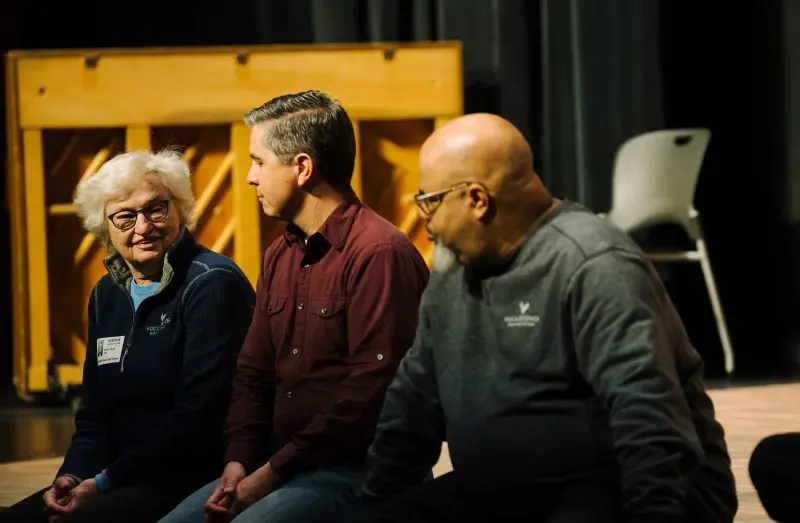
For over two decades, the intersection of music, historical storytelling, and pedagogical outreach has served as a cornerstone of community engagement in Minnesota’s Twin Cities. At the center of this movement is pianist and musical director Anita Ruth, whose 20-year tenure as a Teaching Artist for the VocalEssence WITNESS School Program has helped reshape how regional public school students engage with African American history and sacred music traditions.
Originally established under the umbrella of the Plymouth Music Series before rebranded as VocalEssence, the WITNESS program was conceived to highlight the seminal contributions of African American artists, composers, and historical figures to the broader tapestry of American culture. Through in-school residencies, interactive workshops, and large-scale auditorium performances, teaching artists act as living conduits between historical narrative and contemporary youth.
The partnership between Anita Ruth and celebrated Twin Cities vocalist and actor T. Mychael Rambo illustrates the profound impact of arts integration in educational settings. What began as a chance meeting in a downtown Minneapolis cabaret evolved into a powerful educational team. Together, Ruth and Rambo have delivered curricula centered on the history of enslaved Africans, the nuanced coding of African American Spirituals, and the therapeutic power of collective song to thousands of students—including those in specialized, emotional, and behavioral learning environments.
This deep-dive investigation examines the origin, methodologies, and quantitative and qualitative impacts of Ruth’s tenure within the VocalEssence WITNESS framework, illustrating how arts-integrated pedagogy bridges gaps in traditional history education and offers clinical-level behavioral breakthroughs in K–12 classrooms.
Detailed Chronology
[Late 1980s/Early 1990s]
Ruth & Rambo meet at Ruby's Cabaret (Minneapolis)
       │
       ▼
[Mid-1990s]
Initial collaboration via Plymouth Music Series (now VocalEssence)
       │
       ▼
[Late 1990s]
Rambo encourages Ruth to step into full Teaching Artist role
       │
       ▼
[2000–Present]
20+ years of WITNESS residencies, specialized workshops, and clinical breakthroughs
The Initial Encounter: Ruby’s Cabaret
The trajectory of this educational endeavor began roughly three decades ago in the vibrant nightlife scene of downtown Minneapolis. Anita Ruth, an accomplished accompanist and musical director, was performing a show at Ruby’s Cabaret when she met T. Mychael Rambo. Rambo, already establishing himself as a formidable vocal talent and charismatic stage presence, formed an immediate professional and personal rapport with Ruth.
The Transition to Educational Outreach
Recognizing Ruth’s skill at the keyboard and her innate musical sensitivity, Rambo invited her to accompany him during a series of school auditorium performances hosted by the Plymouth Music Series—an organization founded in 1969 by conductor Philip Brunelle, which would later evolve into VocalEssence.
During these early educational tours, Ruth served primarily as a traditional accompanist, positioned behind the grand piano while Rambo held center stage. However, during a pivotal live performance, Rambo turned to Ruth mid-show and posed a transformative question: "What are you doing behind that piano?"
This unscripted moment marked a paradigm shift in Ruth’s career. Encouraged by Rambo’s mentorship and advocacy, Ruth stepped out from the role of a background musician to become a full-fledged WITNESS Teaching Artist. She transitioned from providing instrumental support to co-facilitating workshops, engaging directly with students, and designing musical dialogues that contextualized historical content.
Decades of Residency and Institutional Evolution
Over the subsequent twenty years, Ruth and Rambo became central figures within the VocalEssence WITNESS School Program outreach residencies. As VocalEssence expanded its footprint across the Twin Cities metro area and greater Minnesota, the duo navigated evolving educational standards, integrating musical instruction with state social studies curricula. Their work expanded from high-capacity auditorium shows to intimate classroom residencies, allowing them to work directly with diverse student populations, including general education cohorts, English language learners, and students receiving special education services.
Supporting Context & Metrics
The Structure and Reach of the VocalEssence WITNESS Program
The VocalEssence WITNESS program operates through a multi-tiered educational model designed to integrate arts education into standard school curricula. Rather than presenting music as an isolated extracurricular activity, WITNESS utilizes music as a primary lens through which students analyze historical periods, systemic oppression, and cultural resilience.
+--------------------------------------------------------------------------+
|                  VOCALESSENCE WITNESS PROGRAM STRUCTURE                 |
+--------------------------------------------------------------------------+
|  1. Teacher Training & Curriculum Distribution                           |
|     • Educators receive resource guides aligning music with social studies |
+--------------------------------------------------------------------------+
|  2. Teaching Artist In-School Residencies                                |
|     • Artists like Ruth & Rambo conduct hands-on workshops               |
+--------------------------------------------------------------------------+
|  3. Young People's Concerts                                              |
|     • Culminating performance at major venues (e.g., Orchestra Hall)      |
+--------------------------------------------------------------------------+
Key structural components of the program include:
- Teacher Workshops & Curriculum Guides: Before artists enter the classroom, partner teachers are equipped with comprehensive study guides that link African American history to music theory, literature, and social sciences.
- In-School Residencies: Teaching Artists conduct multi-day workshops, teaching vocal technique, historical context, and rhythmic improvisation directly to students.
- Young People’s Concerts: The program culminates in full-scale performances at major regional venues, such as Minneapolis’s Orchestra Hall, where thousands of participating students join the VocalEssence Ensemble Singers and guest artists.
Pedagogical Impact: Music as a Non-Verbal Intervention
The integration of music into specialized education environments—particularly classrooms serving students with Severe Emotional and Learning Disabilities (EBD)—yields measurable therapeutic and developmental benefits. Neurological and educational research consistently indicates that music processing engages alternate neural pathways, enabling individuals experiencing trauma, sensory overload, or selective mutism to communicate without relying solely on speech.
TRADITIONAL PEDAGOGY                       ARTS-INTEGRATED PEDAGOGY
[Lectures & Reading]                       [Rhythm, Song, & Gesture]
        │                                              │
        ▼                                              ▼
Requires verbal fluency &                      Bypasses cognitive defense;
cognitive compliance                           engages emotional resonance
        │                                              │
        ▼                                              ▼
High friction for EBD students                 Enables non-verbal participation
A poignant case study from Ruth’s tenure highlights this phenomenon. During a WITNESS residency in a primary school, Ruth and Rambo were assigned to a fourth-grade classroom containing students with complex emotional and behavioral challenges. School administrators informed the artists that one particular female student suffered from severe selective mutism, consistently refusing to speak, participate, or engage with peers or staff.
During the workshop, while the class learned a song composed by renowned singer-songwriter and activist Melanie DeMore, the young girl initially sat entirely detached at the perimeter of the room, looking out the window. Rather than forcing compliance, Ruth and Rambo allowed the music to set the environmental tone.
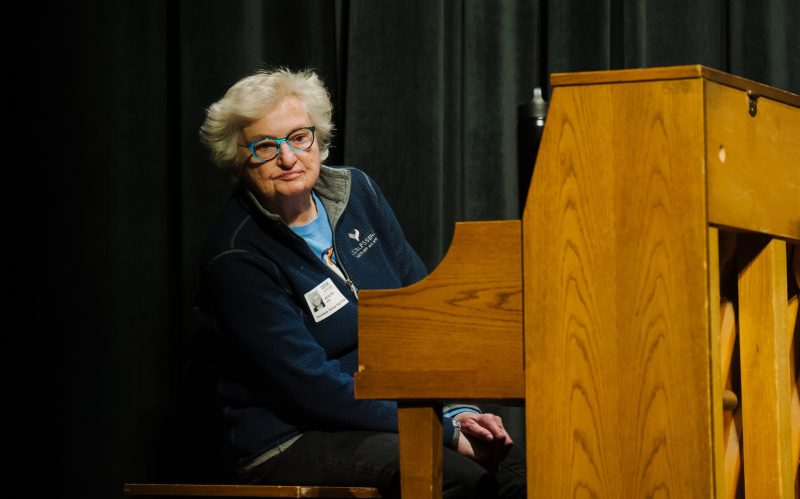
Over a ten-minute period, the student incrementally shifted her physical position, moving closer to the piano. Eventually, she stood directly beside the instrument. Recognizing the approach, Ruth invited the child to share the piano bench. The student verbally responded with a clear "Yes!"—her first spoken communication in that classroom setting—before taking a tambourine and joining the ensemble’s rhythmic pattern.
[Student Disengaged at Window] ──(10 mins of music)──> [Moves to Piano] ──> [Speaks "Yes!"] ──> [Plays Tambourine]This incident demonstrates how arts-integrated programming functions as both an academic tool and a low-stakes psychological intervention, breaking down barriers that standard instructional formats often fail to address.
Official Statements & Personal Testimonies
Reflections on the Teaching Partnership
Reflecting on her decades of service and the initial pivot from accompanist to educator, Anita Ruth highlighted the transformative impact of working alongside T. Mychael Rambo and the broader network of VocalEssence artists:
"While doing a show at Ruby’s Cabaret in downtown Minneapolis some thirty years ago, I met a lovely gentleman. T. Mychael Rambo was his name, a man with a sweet voice and a lovely regard for anyone he met. Little did I know that he would change my life and we would become life long friends.
"T. Mychael asked me to accompany him during some auditorium shows he was doing for the then Plymouth Music Series (now VocalEssence) WITNESS program. After doing a few of these performances, he turned to me onstage and said, ‘What are you doing behind that piano?’ That was the day my life changed—so much for the better. With T. Mychael’s support and modeling, I became a full-fledged WITNESS artist!"
Preserving History Through the African American Spiritual
Central to the WITNESS curriculum is the exploration of African American Spirituals—a musical genre born out of the transatlantic slave trade that served simultaneously as religious expression, emotional resilience, and clandestine communication (e.g., Underground Railroad signal songs).
Ruth emphasized the gravity and educational necessity of introducing this material to young audiences:
"Together with T. Mychael we were able to bring the true history of enslaved Africans to the students who needed to know this story. And best of all, we brought the story to hundreds of students through music! T. Mychael is a wonderful interpreter of the songs created by enslaved Africans—the Spirituals. The effect of the enrichment of African American history that VocalEssence Teaching Artists provide is invaluable. I have gained so much knowledge and important insights from working with these wonderful people."
On the Therapeutic Power of Music in Special Education
Describing the breakthrough moment with the non-verbal fourth-grade student, Ruth recalled the profound atmosphere in the room when arts-based communication superseded traditional behavioral constraints:
"While doing WITNESS residencies, T. Mychael and I were often in classrooms with students who had severe emotional and learning disabilities. We were fortunate to have the gift of music to share in our communications… As we were teaching, I could see she was edging closer to the group. After ten minutes she had worked her way to the piano. I asked if she wanted to sit with me on the bench, and she said ‘Yes!’ The teacher was amazed at that, but even more so when she picked up a tambourine and started to play with us! It was truly an example of the power of music."
Future Outlook
Sustaining Arts-Integrated Curricula in Public Education
As public school districts across the United States face tightening operational budgets and heightened pressure to prioritize standardized testing, community-funded arts residencies like VocalEssence WITNESS serve a crucial function. The program’s longevity demonstrates that integrating cultural arts into core subjects enhances, rather than detracts from, academic performance and social-emotional development.
+-------------------------------------------------------------------+
|               FUTURE PRIORITIES FOR ARTS INTEGRATION               |
+-------------------------------------------------------------------+
|  1. Expanding Special Education Reach                             |
|     Targeting EBD & neurodivergent classrooms with music therapy  |
|                                                                   |
|  2. Preserving Oral Traditions                                    |
|     Digitizing curricula and archiving historical spirituals      |
|                                                                   |
|  3. Mentoring Next-Gen Teaching Artists                           |
|     Passing the mantle from veteran educators to rising talent    |
+-------------------------------------------------------------------+
Looking forward, the VocalEssence WITNESS School Program continues to evolve its educational frameworks by:
- Expanding Access in Special Education: Leveraging documented breakthroughs—such as those observed by Ruth and Rambo—to tailor specific residency tracks for neurodivergent students and specialized education settings.
- Developing Digital and Hybrid Resources: Ensuring that instructional content, artist bios, historical background materials, and video modules remain accessible to rural and under-resourced schools outside the immediate Twin Cities metro area.
- Intergenerational Teaching Artist Mentorship: Cultivating the next generation of musical educators to inherit the methodologies established by long-standing artists like Ruth, Rambo, and participating classroom educators (such as Jason Etten).
The 20-year legacy of Anita Ruth within the VocalEssence WITNESS program underscores a vital educational truth: when history is stripped of its human rhythm, it risks becoming abstract dates on a page. Through the intentional pairing of historical context, vocal mastery, and collaborative instrumental performance, Ruth and her colleagues ensure that the stories of resilience, struggle, and triumph embedded in American music continue to resonate in hearts and classrooms for generations to come.